
Preparing your backpack for one of the world’s most legendary treks can bring as much excitement as nerves. Will it be freezing at night? How much weight can I actually carry? Don’t worry, these doubts are completely normal. The key to enjoying the Peruvian Andes isn’t bringing more things—it’s bringing the right ones.
At Viajero Tours, we know that the success of your adventure depends largely on your preparation. That is why we have designed this ultimate Inca Trail packing list, based on years of experience guiding trekkers to the Sun Gate. Here you will find exactly what you need to hike light, comfortable, and safe.
Understanding the Challenge: Weather and Weight
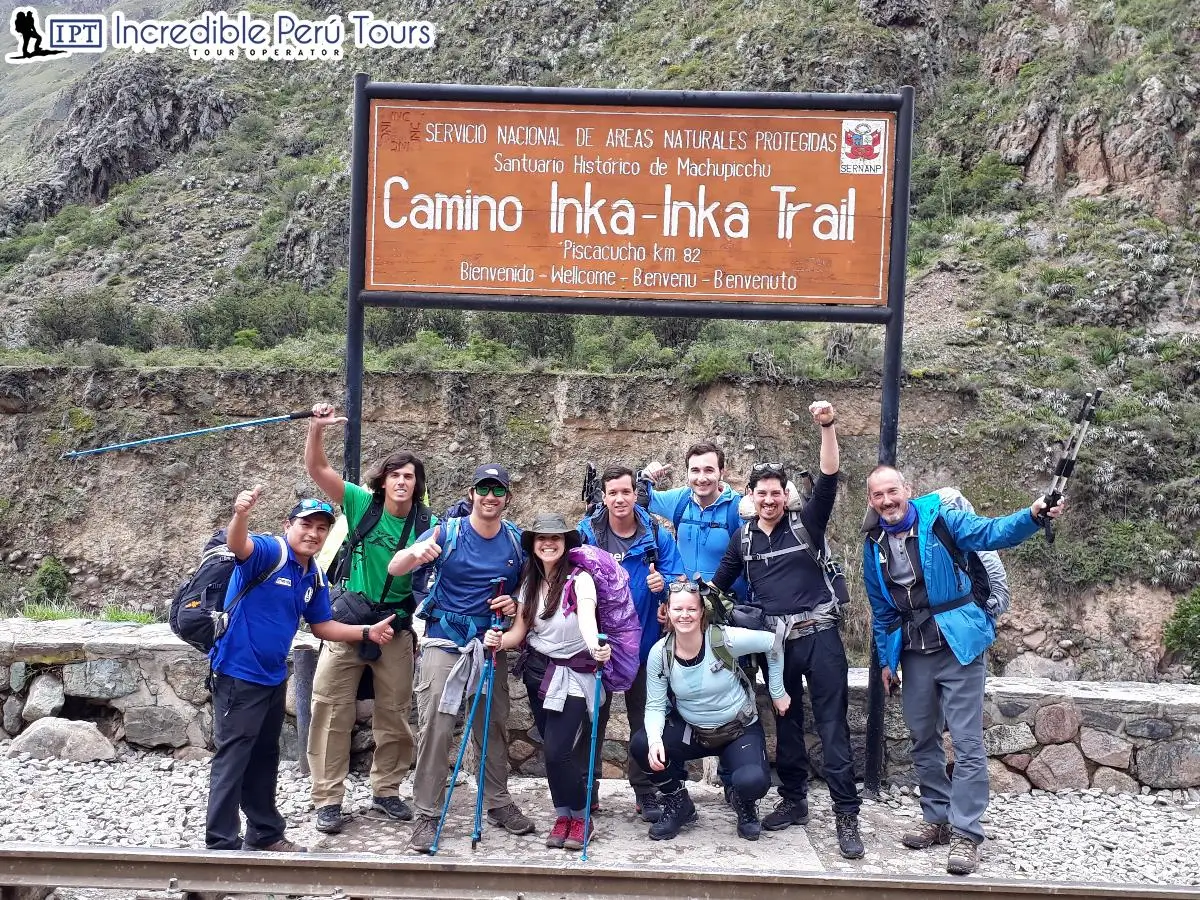
Before tossing clothes into your suitcase, you must understand the terrain. During the 4-day trek, you will pass through very diverse microclimates: from the dry, cold air of mountain passes at over 4,200 m.a.s.l. (13,779 ft) to the humid heat of the cloud forest where the citadel is located.
Additionally, there is a golden rule: if you hire a service with porters, you usually have a weight limit of 5 to 7 kg (11 to 15 lbs) for your personal gear (which they will carry in a duffel bag). Your daypack (the one you carry) should be as light as possible.
Inca Trail Packing List: Your Layering System
The best strategy for facing drastic temperature changes is “layering.” This is the essential part of our Inca Trail packing list:
1. Base Layer (Dry skin)
This clothing goes directly against your skin to wick away sweat.
- Synthetic T-shirts: Bring 3 or 4 (short and long sleeves). Avoid cotton, as it takes a long time to dry and will make you cold.
- Thermal underwear: Essential for sleeping warm at campsites like Ayapata or Pacaymayo.
2. Mid Layer (Insulation)
Its function is to retain body heat.
- Fleece jacket: Lightweight and warm.
- Trekking pants: Convertible zip-off pants are ideal. This way, when the sun gets hot at noon, you can turn them into shorts.
3. Outer Layer (Protection)
Protects you from wind, rain, and snow.
- Waterproof/Windbreaker jacket: Weather in the Andes is unpredictable.
- Rain poncho: An absolute staple. Sometimes it’s more practical than a technical jacket during torrential downpours.
What clothes to wear to Machu Picchu?
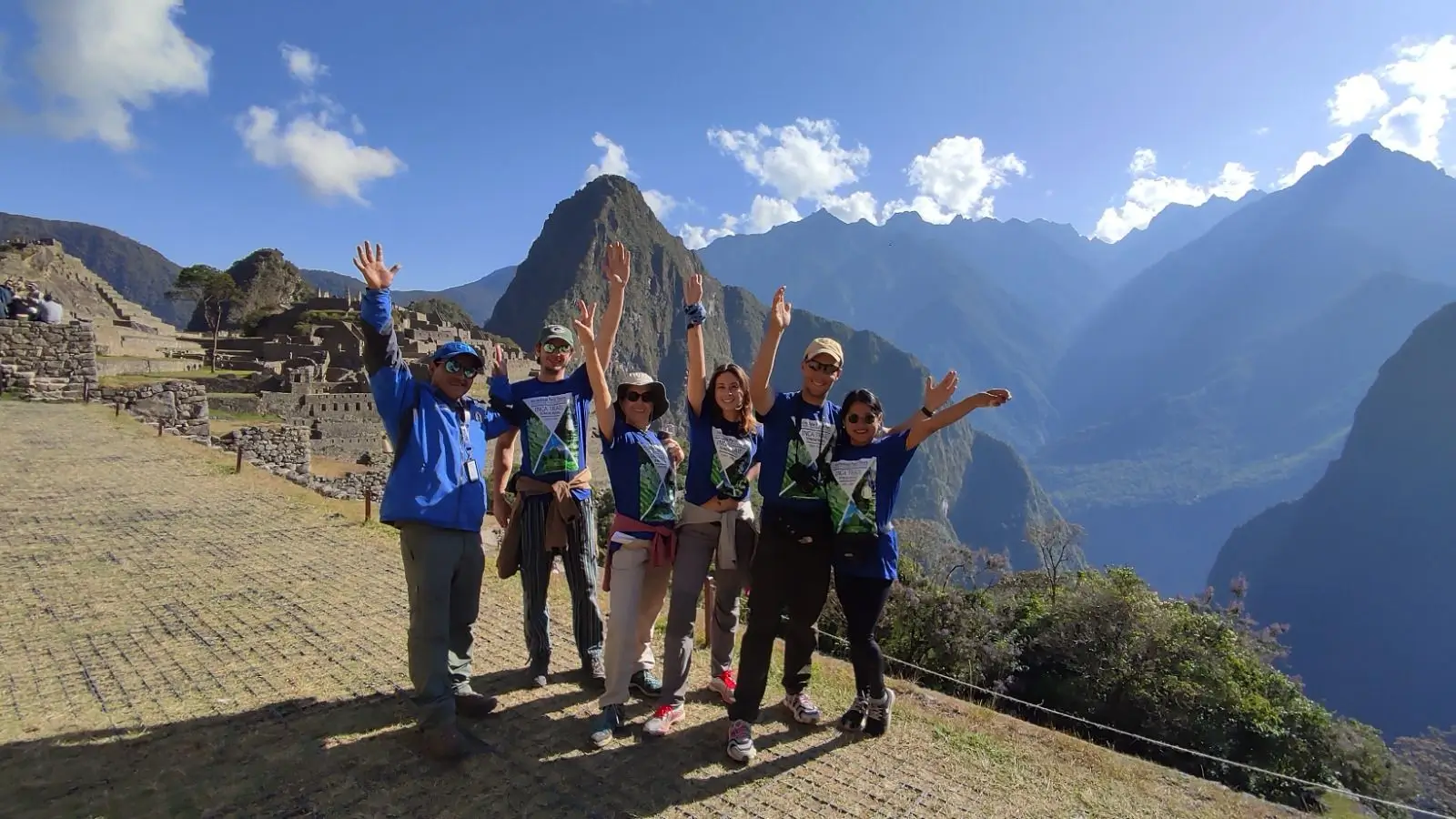
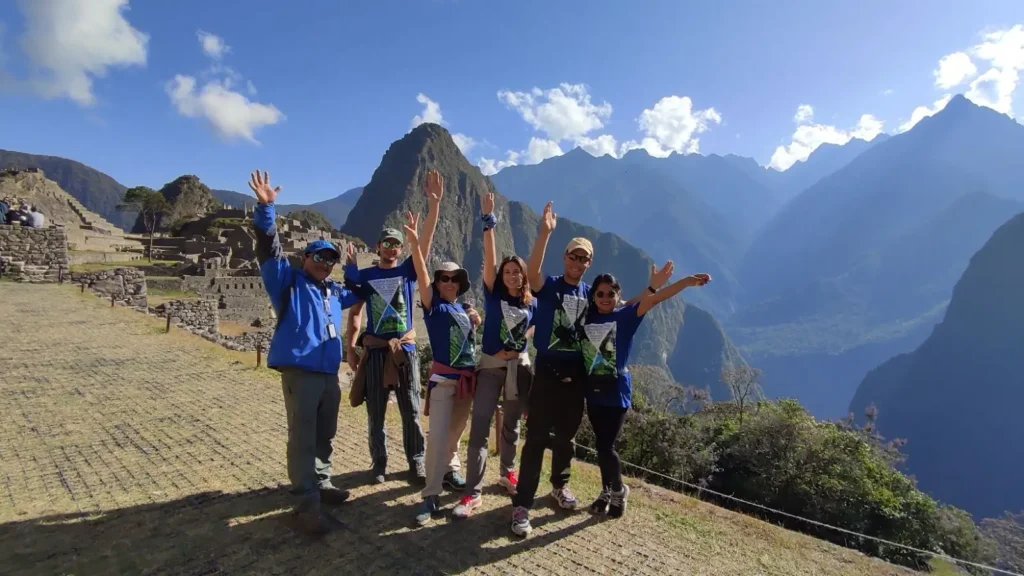
On the final day, you’ll want to look good in your photos. Many travelers keep a clean, fresh T-shirt specifically for the arrival at the citadel. Remember that the weather at Machu Picchu is warmer (high jungle), so a light hoodie or a fresh trekking shirt is ideal.
Essential Cusco Trekking Gear
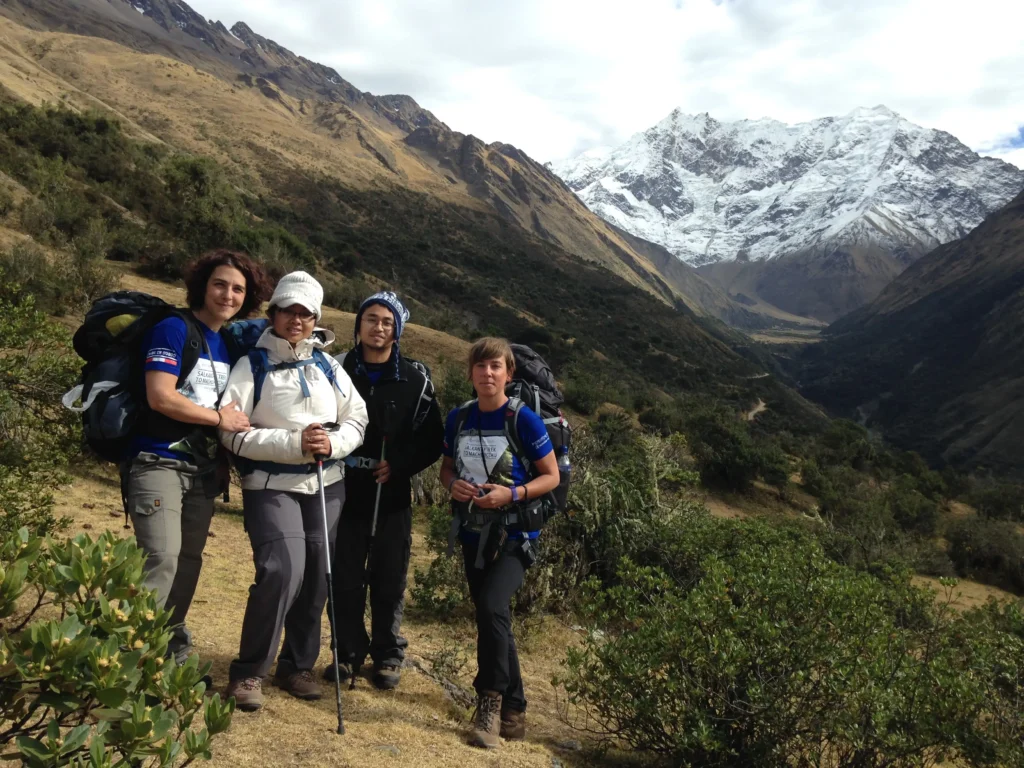
Beyond clothing, you will need tools to make your hike easier. This is the Cusco trekking gear you cannot miss:
- Daypack: 20 to 30 liters. This is where you’ll carry your water, camera, sunscreen, and extra layers. Make sure it has a rain cover.
- Hiking boots: Please, do not bring brand-new shoes! They must be “broken in” (previously used) to avoid blisters. Mid-cut boots are recommended to protect your ankles.
- Trekking poles: They help reduce the impact on your knees by up to 25%. Note: Tips must be rubber to avoid damaging the original Inca stonework.
- Sleeping bag: It should be rated for temperatures of at least -5°C or -10°C (14°F to 23°F). If you don’t have one, Viajero Tours can provide professional equipment rentals.
- Headlamp: Crucial for moving around the campsite at night and for the pre-dawn hike to Intipunku on the last day.
Hygiene, Health, and Documents
Sometimes the smallest items are the most important.
Documentation (Vital)
- Original Passport: Without this, you cannot enter the Inca Trail or Machu Picchu. Copies are not accepted.
- Cash (Soles): For tipping porters, buying snacks along the way, or using bathrooms on the first day. Small bills are better.
Toiletries and First Aid
- Sunscreen and Sunglasses: UV radiation at high altitudes is extreme.
- Insect Repellent: Highly necessary for the cloud forest area. Look for one with a high DEET percentage.
- Personal Medications: Paracetamol, digestive pills, and any prescribed medication.
- Toilet Paper and Hand Sanitizer: You can never have enough.
Expert Tips from Viajero Tours
As a local agency, we’ve seen it all. Here are 3 tips that will save your life:
- Extra Batteries: Cold weather drains camera and phone batteries much faster. Carry a powerful Power Bank and sleep with your batteries inside your sleeping bag to keep them warm.
- Ziploc Bags: Organize your clothes inside the duffel bag in plastic bags. If it rains heavily, even “waterproof” backpacks can leak. This keeps your clothes 100% dry.
- Smart Hydration: Carry a reusable bottle or a Camelbak system (2 liters). Drinking water constantly is the best natural remedy for altitude sickness.
Conclusion
The Inca Trail is a life-changing experience that challenges your body and feeds your spirit. Don’t let a poorly packed bag ruin the moment. By following this Inca Trail packing list, you can be confident that you are prepared for any weather or situation, allowing you to focus on what truly matters: the landscapes and the history.


