
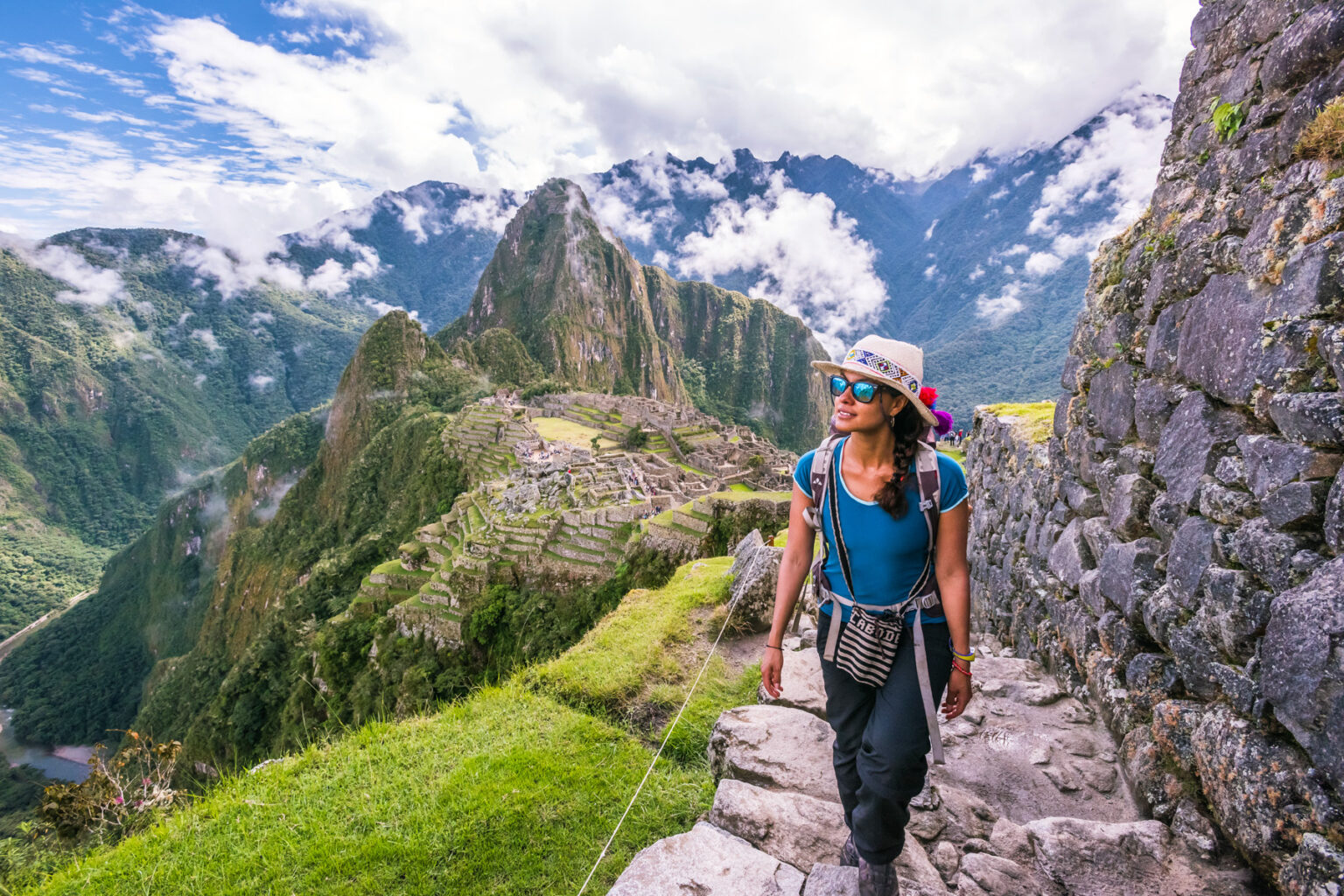
The Inca Trail is one of the most photographed routes in the world, and not exactly because travelers bring the best cameras. It is because over four days the trail delivers a range of scenes that is hard to find on any other trek on the planet: Inca architecture still standing after five hundred years, dramatic changes in vegetation from one day to the next, snowcapped peaks that appear and disappear with the fog, and that final moment at the Sun Gate that concentrates the full emotional weight of the journey into a single frame.
This guide is not a list of GPS coordinates. It is an honest, chronological description of the places where photography has the best chance of capturing something truly worthwhile, along with the time of day when each one offers the best lighting conditions and what you should anticipate so you do not miss it for lack of prior information.
Day 1: the first miles and the site of Llactapata
Day one begins at kilometer 82 with the crossing of the Urubamba River over a suspension bridge that already deserves a photo on its own: the contrast between the bridge structure, the river below, and the first slopes of the valley creates a frame with depth that works well at any hour of the morning. It is also the moment when the group is at its freshest and full of energy, and that shows in the images.
Throughout the first day, the trail moves along the valley floor with light that in the early morning is side-lit and warm, ideal for portraits and for capturing the texture of Inca stone on the first paved sections. As the day goes on and the sun rises higher, the light becomes harsher and less favorable for landscape photography. The best images on the first day are taken between 7:00 and 10:00 in the morning.
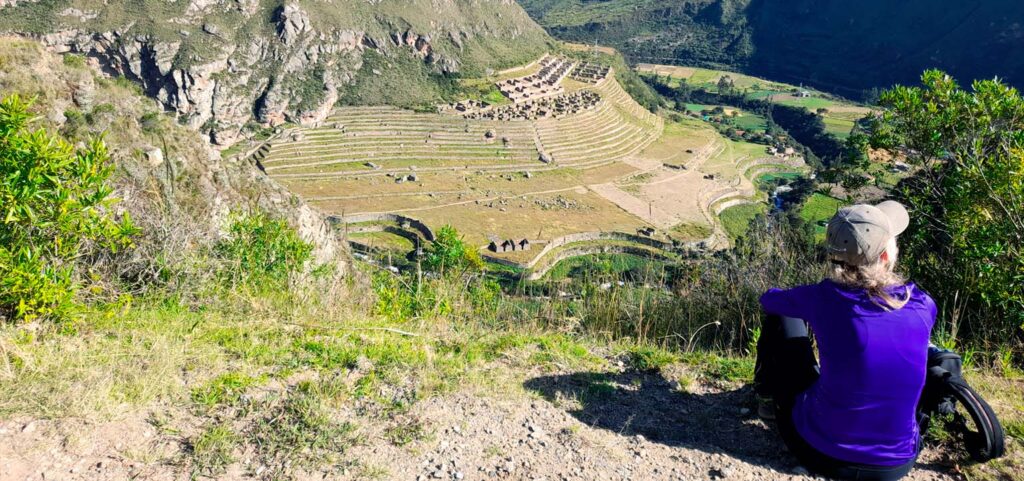
The archaeological site of Llactapata, a little more than three kilometers from the start, offers a view of the valley and the first Inca structures that many hikers pass without stopping because they are still managing the rhythm of the first day. That is a photographic mistake. The terraces of Llactapata with the valley in the background and the hillside vegetation in the foreground create a type of image that does not appear again with the same geometry anywhere else on the route.
Day 2: Dead Woman’s Pass and the views from the highest point
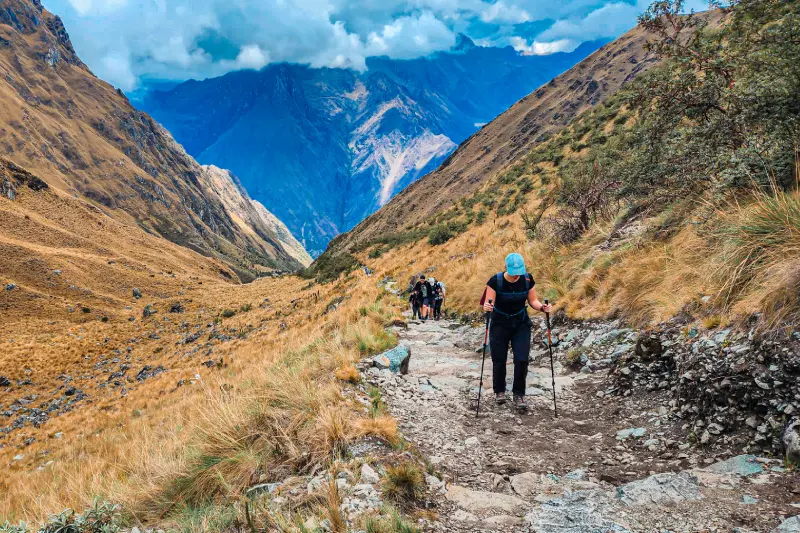
Warmiwañusca Pass, Dead Woman’s Pass, at 4,215 meters, is the highest point on the Classic Inca Trail and one of the most photographed, although not always for the right reasons. The most common photo there is the traveler standing next to the sign that marks the altitude, which works as proof of a personal achievement. That image has its value, but Dead Woman’s Pass offers something more interesting if you stop for a few minutes before beginning the descent.
On clear days, the view from the summit toward the surrounding snowcapped peaks and toward the valley that opens up on the descent to Pacaymayo is so broad that it is rarely captured well, because the cold and the exhaustion make people want to take a quick photo and keep going downhill. Taking five minutes to explore the available angles from the top, looking for a foreground element of rock or vegetation to give scale to the landscape, and waiting for the fog to move if it is present can produce images from the second day that become the most memorable of the entire trek.
The descent from Dead Woman’s Pass toward Pacaymayo also has its own photographic spots. The Inca stone stairways zigzagging down the hillside, photographed from above with a hiker in the middle of the descent as a scale element, create a composition that communicates the magnitude of the terrain better than any pure landscape shot.
The archaeological site of Runkurakay: Inca geometry on the mountain
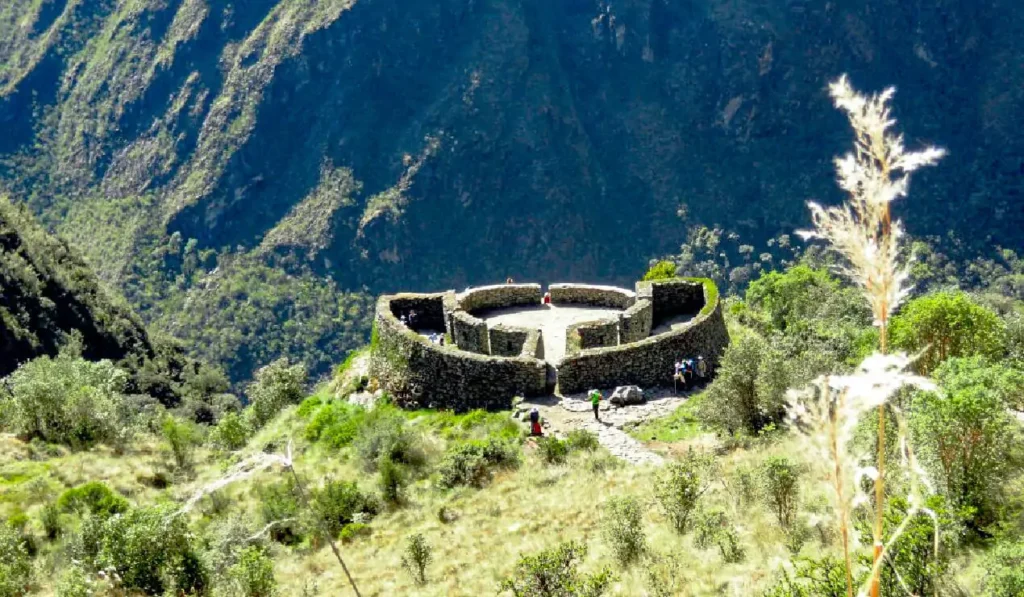
Runkurakay is the second major archaeological site on the route, located on the climb to the second mountain pass during the third day. Its circular architecture, unusual in Inca construction which predominantly uses right angles, makes it one of the most visually distinctive photographic points on the entire trail.
The best photo of Runkurakay is not from inside the site but from the uphill trail approaching from below, with the circular structures in the mid-background and the stone path in the foreground. That diagonal perspective, which visitors naturally have as they approach along the ascent route, works with any camera and in virtually any lighting condition. If there is low fog partially wrapping the structures, even better: it creates an atmosphere that no clear sky can reproduce.
Sayacmarca: the site that is worth seeking out
Sayacmarca is perhaps the least well-known archaeological site on the route and the one that most surprises those who stop to explore it. Its name means “inaccessible town” in Quechua, and the reason becomes clear as soon as you see it from the trail: the structures are built on a rocky promontory that drops vertically into the valley on three sides, with access along the only available flank.
The aerial photograph of Sayacmarca, possible only with a drone, and drones are not allowed on the Inca Trail, is the most widely reproduced. But from the ground the site offers equally striking images. The best perspective is gained from the approach trail, looking toward the structures with the empty valley behind them: a frame that clearly communicates why the Incas chose that exact place to build.
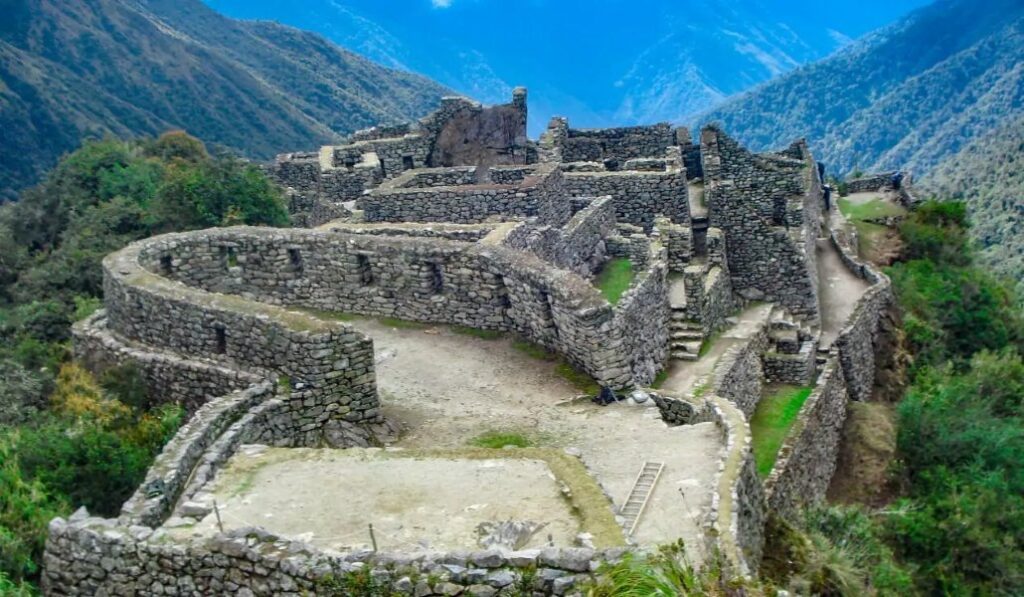
Phuyupatamarca: the site with the best sunrise on the route
Phuyupatamarca means “town above the clouds,” and the name is not a metaphor: on most mornings on the Inca Trail, this third-day archaeological site literally wakes up wrapped in clouds moving across the terraces and enclosures slowly enough to give you time to compose the image calmly.
If the group spends the night at the campsite near Phuyupatamarca, getting up early enough to be at the site before 6:00 in the morning is one of the most rewarding photographic decisions on the entire trek. The sunrise light on Inca stone with fog moving among the structures and the valley still in shadow behind is the kind of image that cannot be created in post-processing: it either happens or it does not, and being there at the right time is the only way to capture it.
The ceremonial water fountains of Phuyupatamarca, still functioning after five centuries, also offer a different photographic point from the landscape. The detail of water falling over Inca stone with moss and ferns around it creates small-scale images that contrast beautifully with the site’s panoramas and tell a different story about the place.
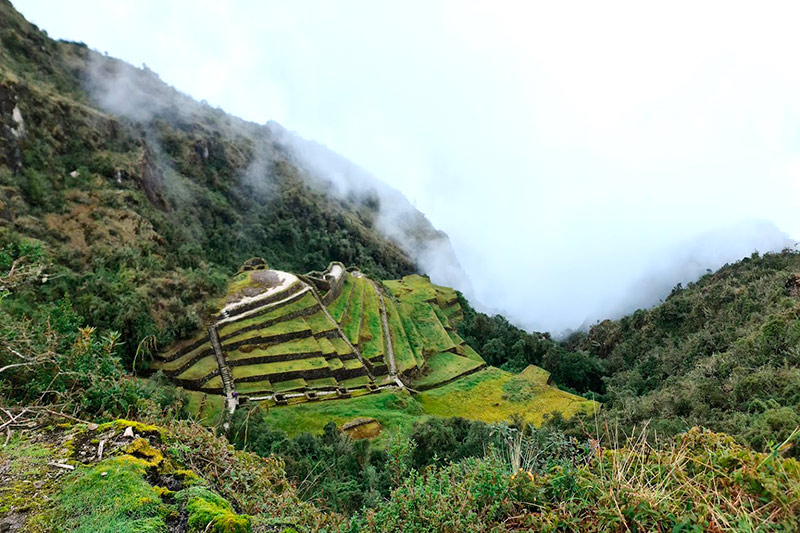
Wiñay Wayna: terraces, fountains, and the best afternoon light
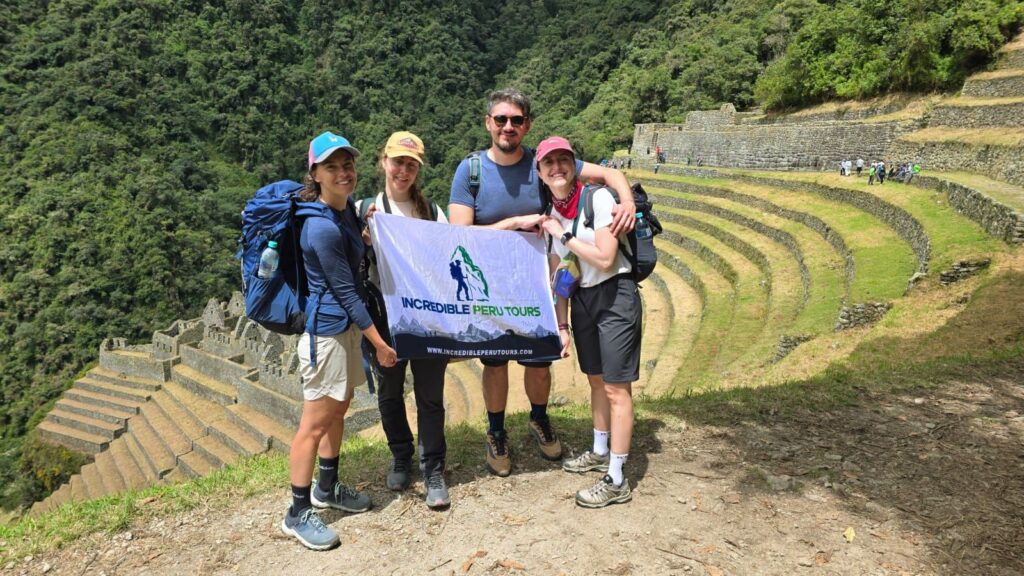
Wiñay Wayna is the archaeological site closest to Machu Picchu on the route and the best preserved of all those visited during the four days. Its cascading agricultural terraces, with residential and ceremonial structures at the top and water fountains in the center, create one of the most photographed scenes on the entire Inca Trail.
The most reproduced photo of Wiñay Wayna is taken from the site’s upper viewpoint, looking down with the terraces in perspective and the valley behind. It is a familiar image, but one that changes completely depending on the time of day and the sky conditions. The afternoon, when the sun comes in from the west and lights the terraces with warm, low light, produces the most photogenic versions. Early morning, with fog between the structures, produces the most atmospheric ones.
The detail of wild orchids growing on the walls and edges of the terraces, especially abundant in the wet season, offers a photographic counterpoint to the wide landscape. A flower close-up with Inca architecture blurred in the background is a type of image that communicates something about the site that the panoramic shot does not capture.
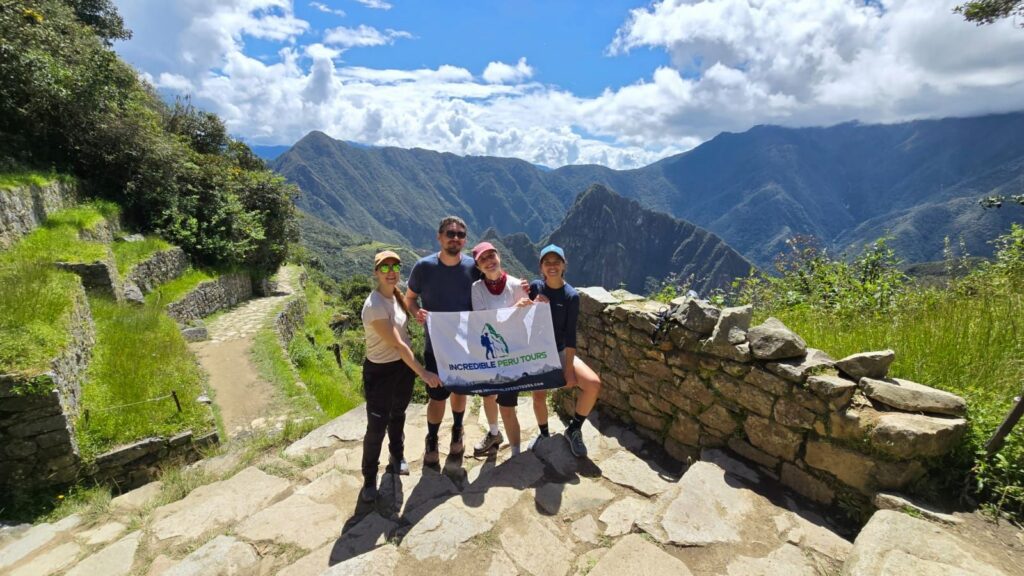
The Sun Gate (Inti Punku): the most anticipated frame
Reaching Inti Punku before sunrise and waiting for sunlight to enter through the stone gateway and illuminate Machu Picchu in the background is the most sought-after photographic moment of the entire trek. It is also the one most dependent on the weather and the hardest to guarantee.
On clear days, the first light entering through the Sun Gate creates an extraordinary lighting effect over the citadel. The stone takes on a golden tone, the shadows of the terraces stretch out, and the contrast with the still dark blue dawn sky gives the image a depth that midday light cannot reproduce. For that image, arriving at Inti Punku before 6:00 in the morning is essential.
On foggy days, common in the wet season and in the transition months, the Sun Gate offers something different but equally photogenic. Machu Picchu appears and disappears among the clouds in cycles lasting only a few minutes, and capturing the exact moment when the citadel partially emerges from the mist requires patience but produces images that no clear-day photograph can equal in terms of atmosphere.
The classic frame from Inti Punku, with the gateway arch as a frame and Machu Picchu in the background, works best with a person in the foreground to give scale to the structure. Without that human reference element, the arch and the citadel behind it can lose the sense of magnitude that the eye sees in the moment but that the camera lens tends to compress.
Machu Picchu from within: the spots that few photos show
The iconic photo of Machu Picchu, the citadel from the upper viewpoint with Huayna Picchu in the background, is the most reproduced and also the most crowded during the busiest hours. Arriving at the site through Inti Punku in the early morning has the advantage that this viewpoint is still relatively empty and the light is the best of the day.
But inside the site there are places that the most popular photographs do not show, and they offer equally powerful compositions. The interior of the Temple of the Sun, with its trapezoidal window and the light entering diagonally over the granite stone, is an intimate-scale frame that contrasts with the exterior panorama. The area of the lower terraces, photographed from below looking upward with the terraces in perspective and the sky as the background, communicates the vertical scale of the construction in a way that photos from the main viewpoint do not achieve. The rooms of the residential sector, with their trapezoidal niches and perfectly fitted stone lintels, offer architectural details that turn detail photography into something very different from landscape photography.
Practical tips for taking better photos on the Inca Trail
- Charge your batteries fully the night before each day. Below-freezing temperatures at the highest camps significantly reduce the battery life of cameras and phones. Keeping your camera and phone inside your sleeping bag overnight helps keep the batteries warm and preserves the charge for the next day.
- A waterproof camera cover is not optional. Morning dew, sections through wet vegetation, and occasional rain can damage equipment without the photographer noticing until it is too late. If you do not have a dedicated cover, a sturdy zip-top plastic bag works in an emergency.
- A modern smartphone is enough for 90% of the images. The sensors on high-end phones from recent years produce excellent results in the lighting conditions of the Inca Trail, including sunrise at Inti Punku. There is no need to carry a heavy camera system if the goal is to document the journey and capture high-quality moments without adding extra weight to your backpack.
- Waking up early always produces better photos than starting late. The light in the first hours of the morning, low, side-lit, and warm, is the most favorable for architecture and landscape photography on every day of the route. Midday photos with direct overhead sun are the flattest and the least interesting of all the images taken on the Inca Trail.
- Ask permission before photographing members of the support team. The porters and the cook are not scenic elements of the trek. They are people at work. Asking permission before photographing them, using their name if you know it, and showing them the photo afterward are small gestures of respect that cost nothing and mean a lot.
Do you want to hike the Inca Trail with the time and pace needed to enjoy every photographic spot without the pressure of the group? At Incredible Peru Tours, we operate private service with the flexibility of stops that a photography-focused trip requires.


