
Among the routes that reach Machu Picchu on foot, the Inca Trail and the Lares Trek are perhaps the two most popular choices for travelers looking for something more than taking the bus up from Aguas Calientes. Both cross extraordinary landscapes in the Cusco region, both end at the Inca citadel, and both have a well-earned reputation among those who have done them. But they are routes with completely different identities, designed for different traveler profiles, and offering on-the-ground experiences that are hardly alike at all.
Choosing between the two without enough information means risking paying for an experience that was not exactly what you were looking for. This guide gives you the concrete elements you need to make that decision clearly, without favoring one option over the other.
What each route is about: a straightforward description
The Classic Inca Trail is the section of the ancient road system of the Empire that connects kilometer 82 of the railway line to Machu Picchu through three mountain passes and several archaeological sites from the imperial period. It covers approximately 43 kilometers over four days, along a pre-Hispanic stone trail that, in many sections, is the original road used by the Incas. It reaches the citadel through the Sun Gate, the historic entrance once used by messengers and pilgrims of the Tahuantinsuyo.
The Lares Trek is an alternative route that takes its name from the district of Lares, in the province of Calca, known for its hot springs and its Quechua-speaking highland communities. The standard itinerary lasts four days and covers between 30 and 40 kilometers, depending on the variation chosen, crossing grazing valleys, high-altitude lakes, and Andean villages where daily life unfolds in a way very similar to how it did several centuries ago. It does not follow the route of the pre-Hispanic trail, and it reaches Machu Picchu by train from Ollantaytambo rather than on foot through the Sun Gate.
The landscape: where the real difference lies
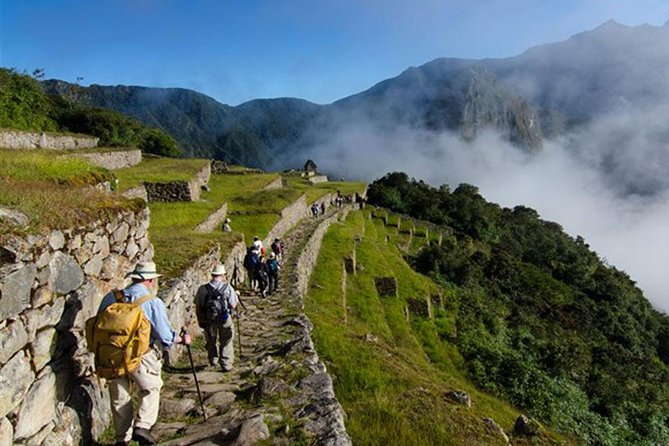
The Inca Trail weaves together the natural landscape and archaeological heritage in a way that no other route in the region can replicate. Along the way, hikers pass sites such as Llactapata, Runkuraqay, Sayacmarca, Phuyupatamarca, and Wiñay Wayna, groups of Inca architecture in different states of preservation located directly on the trail. That continuity between the path you walk and the civilization that built it is what defines the Classic Inca Trail experience and what makes it irreplaceable from a historical and cultural point of view.
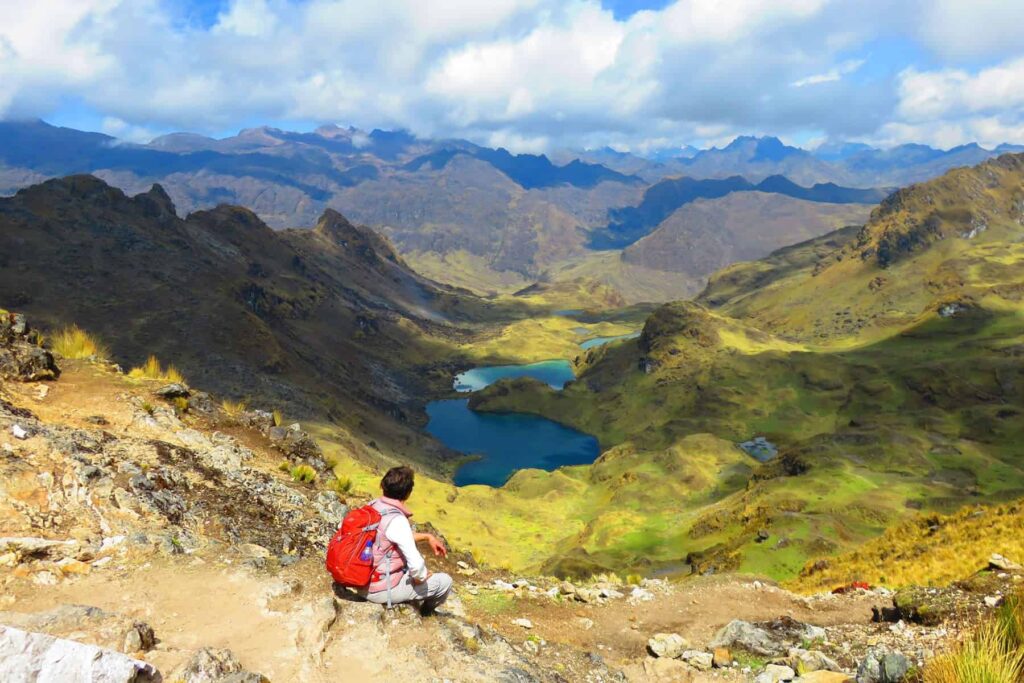
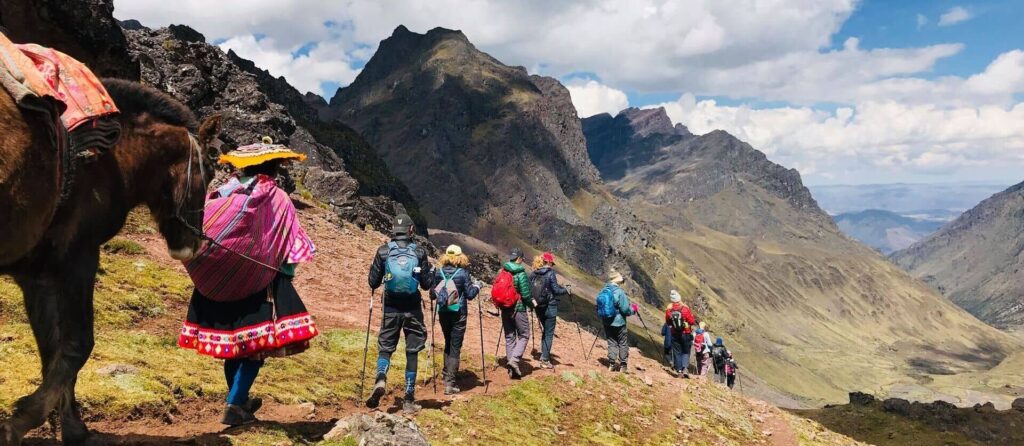
The Lares Trek has a completely different kind of beauty. The route crosses high mountain valleys with turquoise lakes, herds of alpacas and llamas grazing on the slopes, snowcapped peaks appearing on the horizon on clear days, and a sense of solitude on the trail that the Inca Trail cannot offer during high season. There are no Inca ruins along the route, but there is something that many travelers value just as much: direct contact with Andean communities living along the way and welcoming visitors in a context of genuine cultural exchange that the main tourist circuit rarely makes possible.
On the Lares Trek, it is common to come across women tending herds on the hillsides, pass through local fairs in the villages along the route, and see Andean textiles made with ancestral techniques in the hands of people who produce them for their own use, not to sell them in Cusco’s handicraft market. That ethnographic dimension is the distinctive hallmark of the Lares Trek and the main reason why many travelers who have already visited Machu Picchu choose it for a second trip to the region.
Actual difficulty: which one demands more and why
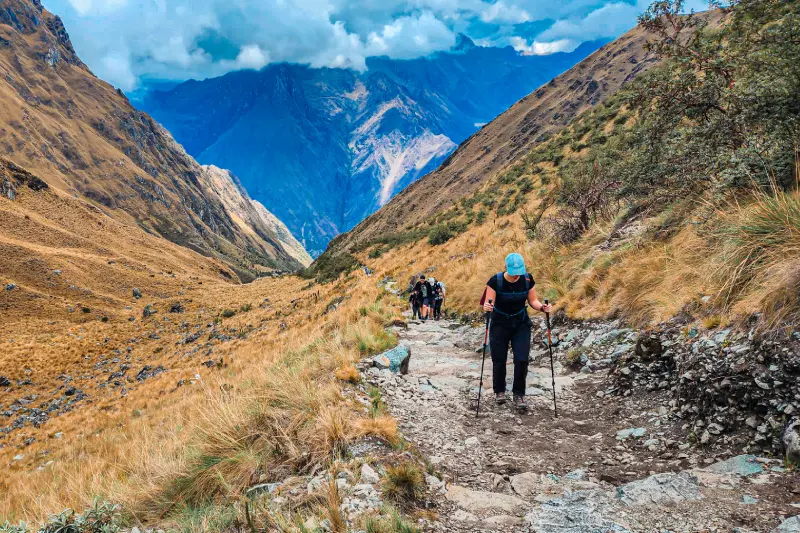
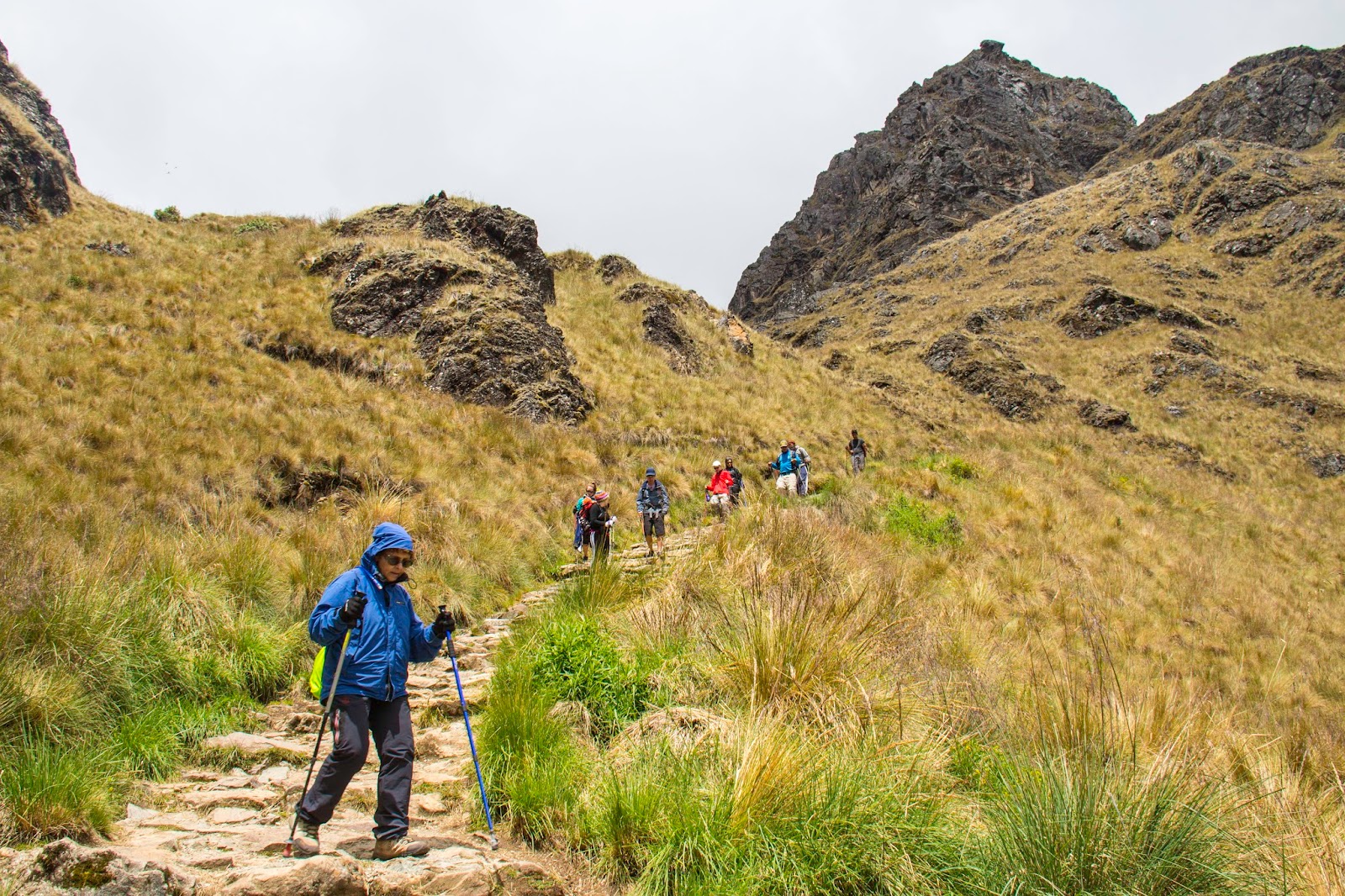
The Classic Inca Trail is classified as a moderate to challenging trek, with the second day being the most demanding because of the ascent to Dead Woman’s Pass at 4,215 meters. The Inca stone trail is more technical than the Lares route, with steep stairways and downhill stretches that require attention and footwear with good traction. The maximum altitude and the accumulated elevation gain are the factors that most determine the true level of difficulty for most people.
The Lares Trek reaches a similar or even higher maximum altitude on some variations, with mountain passes that can exceed 4,400 meters. However, the terrain is generally gentler than that of the Inca Trail: dirt and grass paths instead of stone stairways, with long but more gradual climbs on the main ascents. For someone with knee problems, Lares may feel more manageable than the Classic Inca Trail precisely because descents on dirt are less aggressive on the joints than stone stairways.
In both cases, previous acclimatization in Cusco is the factor that most affects the quality of the experience on the trail. Spending two or three nights in the city before starting either trek is the basic recommendation that should not be ignored, regardless of each participant’s physical condition.
Permits and availability: a difference that can be decisive
The Inca Trail has a maximum quota of 500 people per day, including guides, porters, and cooks. Permits are processed exclusively through authorized agencies and are tied to each participant’s passport number. During high season, from May to August, permits for the most requested months sell out four or five months in advance. Anyone who does not book early enough simply will not find availability.
The Lares Trek does not have that regulated quota system and does not require a special permit from the Ministry of Culture for the mountain route itself. The only mandatory advance arrangement is the Machu Picchu entrance ticket, which is purchased separately. This means the Lares Trek can be organized with much less lead time, even just a few days in advance if demand allows. For travelers with tight dates or those who could not get a permit for the Classic Inca Trail, that availability is a concrete and practical advantage.
The cultural factor: where the richer human experience is found
The Inca Trail is mainly an experience of archaeology and nature. Human contact happens mostly with the support team, with other groups on the trail, and with park rangers at the checkpoints. Local communities are visible in the first kilometers near kilometer 82, but the route itself takes place in a predominantly natural and archaeological setting, not a community-based one.
The Lares Trek is exactly the opposite in that respect. The route crosses living communities, not ruins. The villages of Lares, Quiswarani, Huacahuasi, and others that appear depending on the variation chosen are places where people live, work, and maintain traditions that mass tourism has not yet transformed in the same way as in the Sacred Valley or Aguas Calientes. For the traveler who values authentic human contact as much as, or more than, mountain scenery, Lares offers something the Inca Trail cannot.
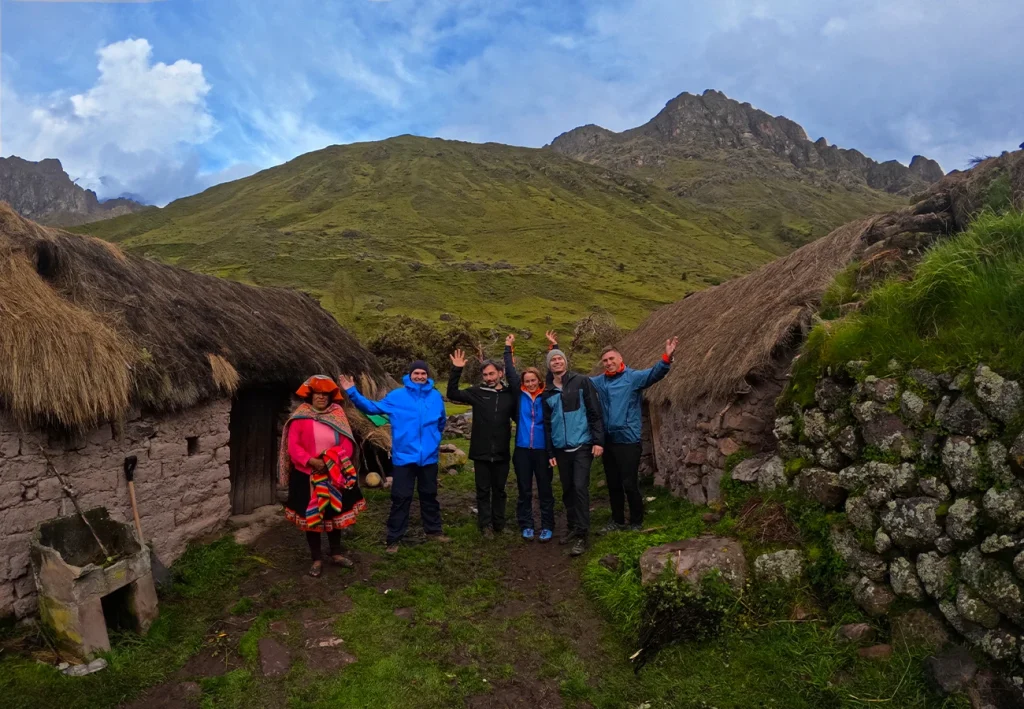
Some Lares Trek operators include visits to community weaving workshops, exchanges with local artisans, and the possibility of staying in community-run lodging instead of a standard campsite. These route variations have a dimension of responsible tourism and direct impact on local economies that is worth considering if that is the kind of trip you are looking for.
Arriving at Machu Picchu: a difference that matters
This is perhaps the most important point in the comparison, and the one that is most important to understand clearly before choosing. The Inca Trail reaches Machu Picchu through the Sun Gate, the historic entrance of the Empire, after four days of walking the pre-Hispanic trail. That arrival is what gives the Classic Inca Trail a dimension that no other route to the citadel can reproduce.
The Lares Trek does not reach Machu Picchu on foot. At the end of the fourth day, the group descends to Ollantaytambo or another point with rail access, takes the train to Aguas Calientes, and goes up to the citadel by bus the following day. The visit to the archaeological site is just as complete and just as impressive, but the access is the same as that of any tourist arriving without having walked a single kilometer in the mountains.
For those who see crossing the Sun Gate after days on the trail as an essential part of what they are looking for, Lares is not an equivalent alternative to the Classic Inca Trail: it is a different experience that ends at the same destination, but in a different way. For those whose destination is Machu Picchu and for whom the route is more the setting for the adventure than the core of the experience, that difference may be secondary.
Cost: which one is more affordable and why
The Inca Trail is generally more expensive than the Lares Trek, mainly because of the cost of the official permit charged per person by the Ministry of Culture, which has no equivalent on the Lares route. Added to that base cost is the price of the operating service, which on the Classic Inca Trail includes certified guides with specific training in Inca archaeology, a requirement that does not apply in the same way on the Lares Trek.
The Lares Trek is more affordable per person because there is no additional official permit and because service regulations are less strict than on the Inca Trail. This allows some operators to offer the trek at very low prices, but with the same warning that applies to any trek in the region: a price significantly below the market average almost always means that someone in the chain is working or providing service under conditions below a reasonable standard.
Which one to choose: clear criteria for each traveler profile
Choose the Inca Trail if the historical dimension of the route is central to you, if this is your first time arriving at Machu Picchu and you want to do it in the most meaningful way possible, if you have the time and advance planning needed to secure a permit, and if arriving through the Sun Gate at sunrise is an essential part of what you want from the experience. It is the right route for someone who wants to understand Machu Picchu from within the context that created it.
Choose the Lares Trek if contact with living Andean communities matters to you as much as mountain scenery, if you have already visited Machu Picchu and are looking for a second experience in the region from a different angle, if you could not get a permit for the Classic Inca Trail, or if you value the availability and flexibility of a route without regulated quotas. It is the right route for someone who wants the Andes of the present as much as the Andes of the past.
If you have enough time and the budget allows it, doing both on the same trip is not an unreasonable idea. Many travelers familiar with the region spend a week on the Lares Trek for its community and cultural component, and then return on another trip specifically for the Inca Trail. The two routes complement each other rather than compete, because they answer different kinds of curiosity about the same territory.
Comparison table: summary of the key points
| Aspect | Inca Trail | Lares Trek |
|---|---|---|
| Distance | 43 km in 4 days | Between 30 and 40 km in 4 days (depending on the variation) |
| Maximum altitude | 4,215 m (Dead Woman’s Pass) | Between 4,200 and 4,450 m (depending on the route) |
| Main terrain | Inca stone trail with stairways | Dirt and grass trail |
| Archaeological sites along the route | Several sites directly on the trail | None on the mountain route |
| Communities along the route | Limited interaction | Direct contact with active Andean villages |
| Permits | Limited quota with mandatory advance booking | No regulated quota |
| Availability | Low in high season | High year-round |
| Arrival at Machu Picchu | On foot through the Sun Gate | By train and bus from Aguas Calientes |
| Cost | Higher because of the official permit | Generally more affordable |
| Annual closure | Closed in February | Open year-round |
Do you have questions about which of these two routes best fits your group, your travel dates, and what you are looking for from the experience? At Incredible Peru Tours, we operate both the Inca Trail and the Lares Trek with specialized guides and the same attention to detail on both routes.


