
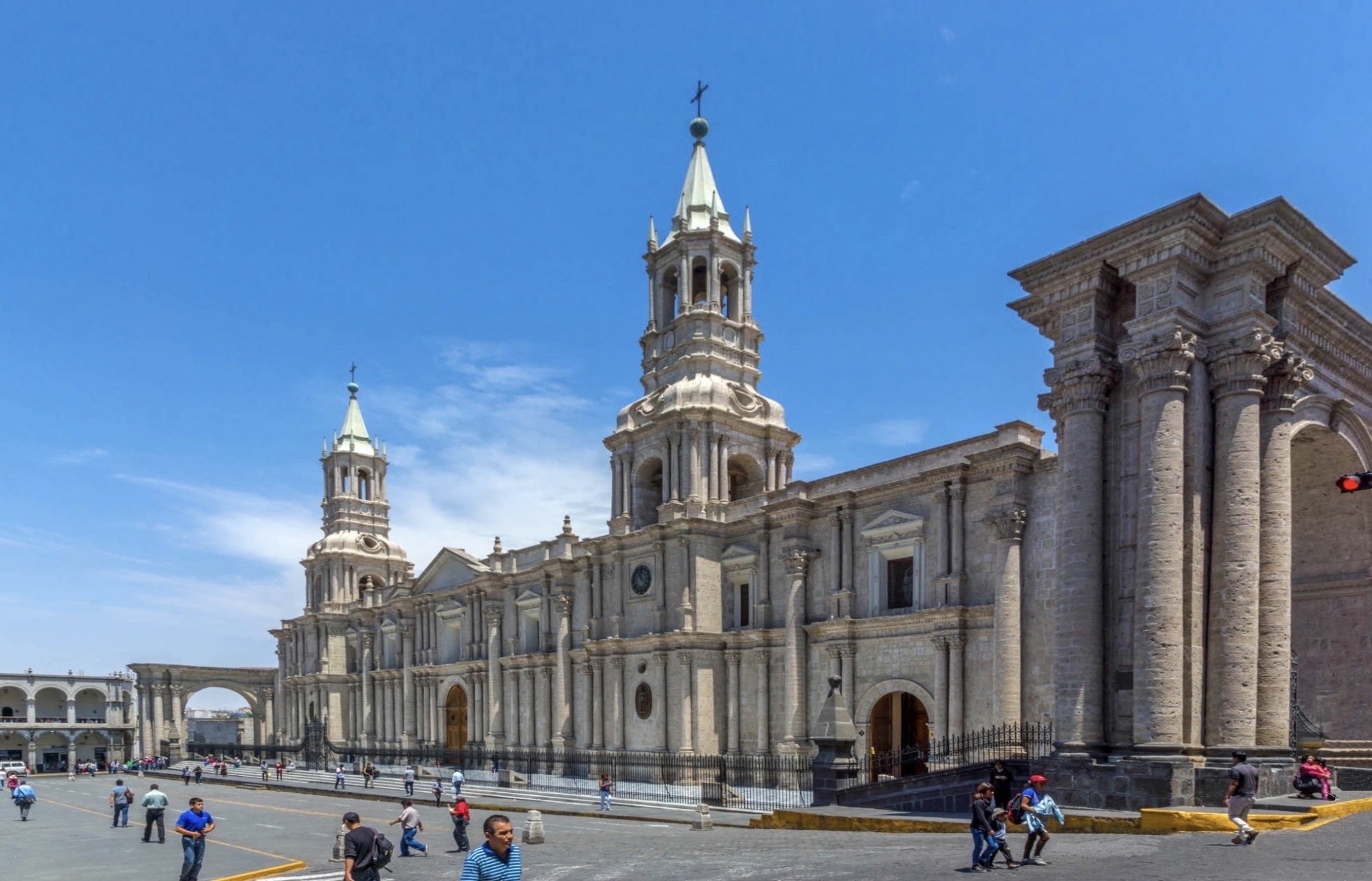
Arequipa’s Plaza de Armas is the natural starting point for exploring the city. From here, you can see the white volcanic stone cathedral, the arched galleries surrounding the square, and, on clear days, Misti Volcano rising behind the towers. In this guide, we explain what to see, share a little of its history, and show you how to make the most of your visit at any time of day.
A Square Built from Volcanic Stone
Arequipa was founded in 1540, and the square was laid out as the center of the new city. What makes it different from other squares in Peru is the building material: almost everything surrounding it is made of sillar, a light-colored, lightweight volcanic stone extracted from nearby quarries. This is why Arequipa is known as the White City.
Earthquakes have shaped its history, forcing several buildings to be rebuilt more than once. Even so, the square retains its colonial layout and forms part of Arequipa’s Historic Center, which was designated a UNESCO World Heritage Site in 2000.
What to See at Arequipa’s Plaza de Armas
The Cathedral Basilica
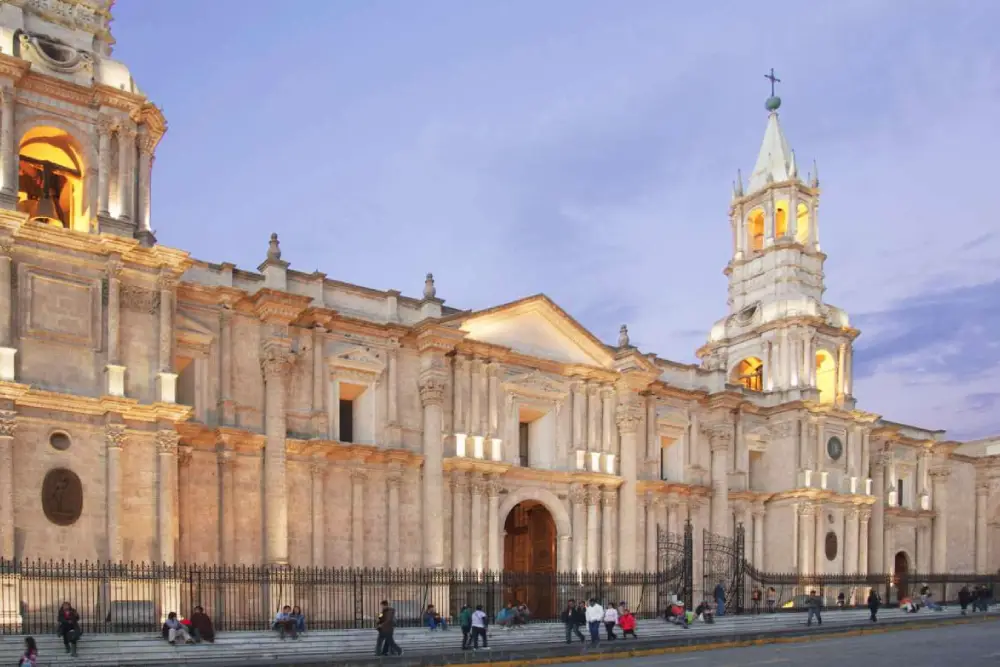
The cathedral occupies the entire northern side of the square, an unusual feature for colonial cathedrals, which are typically located on a corner. Its columned facade and two towers are the most photographed landmarks in the city. The cathedral was rebuilt after a fire in the 19th century and restored again following the 2001 earthquake, which caused one of its towers to collapse.
Inside, highlights include the Belgian-made organ, one of the largest in South America, and a carved wooden pulpit brought from France. The cathedral museum offers guided tours that include access to the rooftop, where you can enjoy sweeping views of the square and surrounding volcanoes.
The Arcades
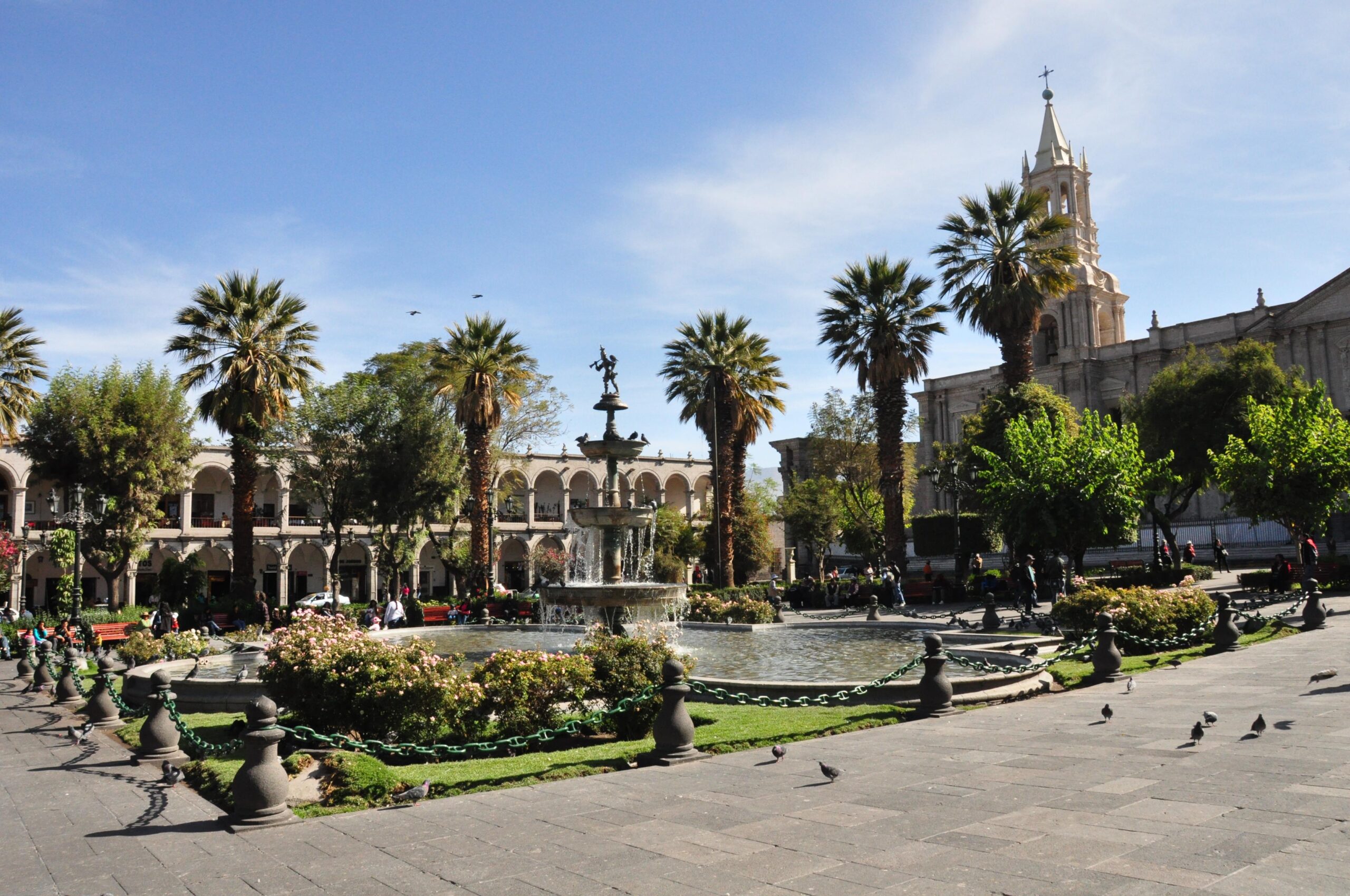
The other three sides of the square are lined with two-story galleries featuring arches made of sillar stone. On the ground floor, you will find shops, cafes, and travel agencies. On the second floor, restaurant balconies offer direct views of the cathedral. Walking beneath the arcades is a good way to escape the midday sun, which is intense in Arequipa for most of the year.
The Fountain and Tuturutu
At the center of the square stands a bronze fountain topped by a small figure of a soldier holding a trumpet. Locals call him Tuturutu, and he is one of the city’s most beloved figures. The fountain is surrounded by gardens, palm trees, and benches where you can sit for a while and watch the activity around the square.
The Church of La Compañía
Just a few steps from the southeastern corner stands the Church of La Compañía, built by the Jesuits. Its intricately carved sillar stone facade combines European motifs with local elements such as flowers, birds, and faces. Do not miss the adjoining cloisters, now home to handicraft shops and stores selling alpaca textiles.
The Square by Day and Night
In the morning, the light is soft and the sky is usually clear, making it the best time to photograph the cathedral with Misti Volcano in the background. Around midday, the square fills with families, students, and vendors, while the arcades become the coolest place to walk.
At sunset, the white stone takes on golden tones, and after dark, the lighting on the cathedral and arcades completely transforms the atmosphere. It is an ideal time to have dinner on one of the second-floor balconies. Keep in mind that temperatures drop considerably at night, so bring a jacket.
What to Visit Near the Plaza de Armas
From the square, you can explore much of the historic center on foot. Two blocks to the north is the Santa Catalina Monastery, a small city within the city, with streets, courtyards, and rooms painted red and blue. Allow at least two hours to explore it.
- Andean Sanctuaries Museum: One block from the square, this museum houses Juanita, the mummy discovered on Ampato Volcano.
- San Lázaro Neighborhood: The oldest part of the city, with narrow alleyways and houses built from sillar stone.
- Yanahuara Viewpoint: About 15 minutes away by taxi, featuring sillar stone arches and unobstructed views of Misti Volcano.
Where to Eat Near the Square
Arequipa has one of the most renowned regional cuisines in Peru. Around the square, you will find restaurants serving rocoto relleno (stuffed spicy peppers), chupe de camarones (shrimp chowder), and adobo arequipeño (Arequipa-style marinated pork stew). If you want to eat like a local, look for a traditional picantería, usually open around lunchtime. For dessert, try queso helado, a traditional frozen dessert sold from carts near the square and Santa Catalina Monastery.
Tips for Your Visit
- Protect yourself from the sun: Arequipa is located at 2,335 meters (7,661 feet) above sea level, and UV radiation is strong. Wear sunscreen, a hat, and sunglasses.
- Take advantage of the moderate altitude: If you plan to travel to Cusco or Puno afterward, spending a few days here can help you acclimatize.
- Check the cathedral’s visiting hours: Museum and rooftop visits follow fixed schedules and are not available during Mass.
- Use reputable taxi services: If you travel outside the city center at night, arrange a taxi through your hotel or a ride-hailing app.
After exploring the city, many travelers head out toward the valley. A tour to Colca Canyon takes you to one of the deepest canyons in the world, with villages surrounded by agricultural terraces and the opportunity to see condors in flight.
Frequently Asked Questions About Arequipa’s Plaza de Armas
How Much Time Do I Need to Explore the Square?
One hour is enough to walk around the square and its arcades. If you also take a guided tour of the cathedral and visit the Church of La Compañía, allow half a day.
Is There an Admission Fee to Visit the Cathedral?
Entry to attend Mass is free. The museum and rooftop access require a paid ticket and are available through guided tours.
Can You See Misti Volcano from the Square?
Yes, on clear days, you can see it behind the cathedral. The best views are from the second-floor balconies of the arcades or the cathedral rooftop.
Is It Safe to Walk Around the Square at Night?
The square and main streets in the city center remain busy and patrolled until late in the evening. As in any city, keep an eye on your belongings and avoid poorly lit streets.
What Is the Best Time of Year to Visit Arequipa?
From April to November, the skies are usually clear. From December to March, there may be some afternoon rain, but the city is still enjoyable and there are fewer visitors.


