
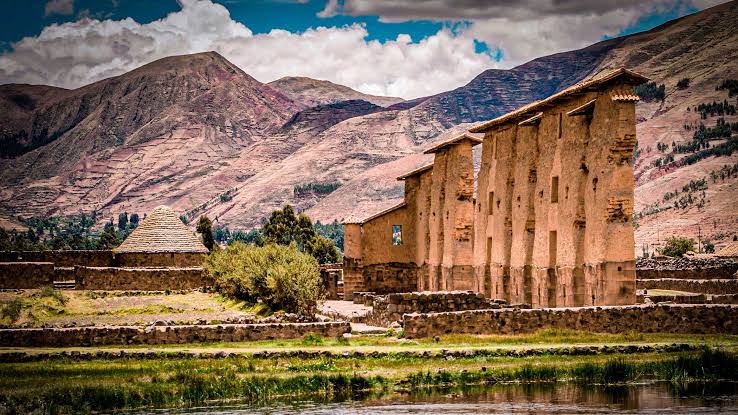
The route between Puno and Cusco covers about 242 miles (390 kilometers). A direct bus takes around seven hours. The Route of the Sun follows the same highway but turns the transfer into a full day with four guided stops: the Pukará Lithic Museum, La Raya Pass, the Inca site of Raqchi, and the church of Andahuaylillas. The bus leaves Puno at around 7:00 a.m. and arrives in Cusco between 5:00 and 5:30 p.m.
It is one of the most popular options among international travelers who need to travel from Lake Titicaca to Cusco and do not want to spend the entire day simply sitting on a bus.
Route of the Sun Schedule from Puno to Cusco
Hotel pickup in central Puno usually takes place between 6:15 and 6:40 a.m. The tourist bus leaves from a private terminal at around 7:00 a.m. Times may vary slightly depending on traffic and the size of the group.
Pukará Lithic Museum: around 9:30 a.m., 30 minutes at the site.
La Raya Pass: around 11:10 a.m., 8 to 10 minutes for photos.
Sicuani: buffet lunch from 12:30 to 1:15 p.m.
Raqchi, Temple of Wiracocha: around 1:30 p.m., 40 minutes.
Church of Andahuaylillas: mid-afternoon, 25 to 40 minutes.
Cusco: arrival at a private terminal between 5:00 and 5:30 p.m., followed by transfer to your hotel.
The same route operates from Cusco to Puno with the stops in reverse order. Andahuaylillas comes first, and Pukará is the final cultural stop.
Pukará Lithic Museum
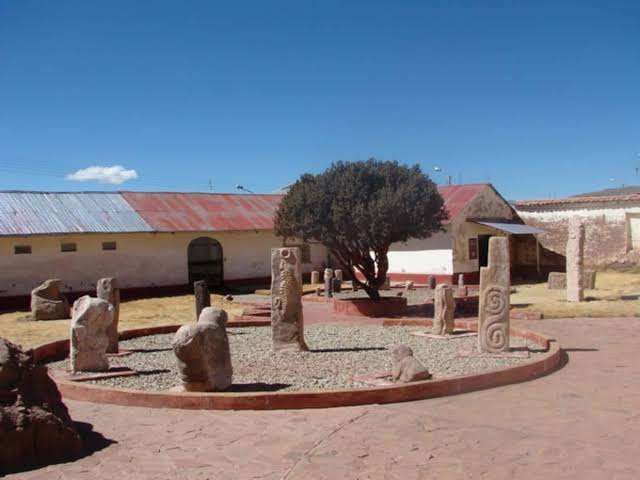
Pukará is about two hours from Puno, at an elevation of more than 11,500 feet (3,500 meters). You do not tour the entire town. The visit focuses on the museum, which displays stone sculptures and ceramics from the Pukará culture, a civilization that inhabited the Altiplano long before the Incas, roughly between 1600 B.C. and A.D. 400.
The piece most guides point out is the Ñakaj, known as the “decapitator.” The stop is short and indoors, which is useful when the morning is cold. The town is also known for the small ceramic Pukará bulls, a traditional craft that can later be seen on rooftops throughout Peru.
Admission is often not included in the bus ticket. Budget about 15 soles and carry cash. You may be asked to show your passport or another form of identification at the ticket office.
La Raya Pass, the Highest Point of the Day
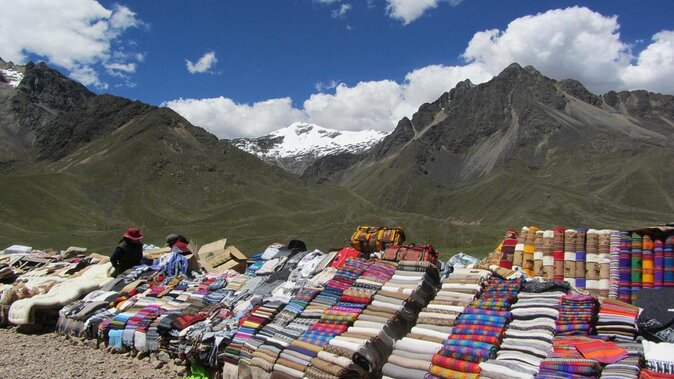
After Pukará, the highway climbs to La Raya, the mountain pass between the regions of Puno and Cusco. The elevation is approximately 14,200 to 14,560 feet (4,330 to 4,438 meters). From here, you can see the snowcapped Chimboya mountain and, almost always, llamas or alpacas alongside the road.
The stop is brief. Put on your jacket before getting off the bus. The wind can be biting, and the air is thinner than in Puno. There is no long hike. You will find a viewpoint, small textile stalls, and the watershed divide: one side feeds the Vilcanota basin toward Cusco, while the other drains toward the Lake Titicaca Altiplano.
If you visited Uros and Taquile the day before, this is the section where you may notice the altitude again. Walk slowly, and return to the bus if you develop a strong headache.
Lunch Stop in Sicuani
Sicuani is not a sightseeing stop. It is the town where the bus stops for lunch. A buffet lunch is included with most tourist bus services. You will usually find Peruvian stews, potatoes, rice, and often trout. It may be better to start with a small portion if your stomach is still adjusting to the altitude.
The break lasts about 45 minutes. After Sicuani, you are already in the Cusco region.
Raqchi and the Temple of Wiracocha
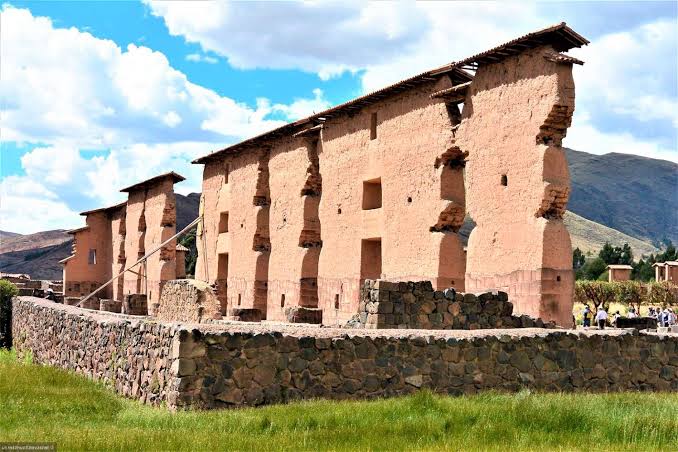
Raqchi is located in the district of San Pedro, in Canchis Province. Its main structure is the Temple of Wiracocha, a long stone-and-adobe wall that once supported an enormous roof. Around it are rows of circular storage buildings known as colcas, where the Inca state stored food and other goods.
The guided visit lasts about 40 minutes. There is not much walking, but you will be exposed to sun and wind. The site helps explain how the Inca Empire administered Collasuyo, not just how it built temples. Admission is around 20 soles if it is not included in your ticket. The Cusco Tourist Ticket does not include Raqchi.
Andahuaylillas and the Church of San Pedro
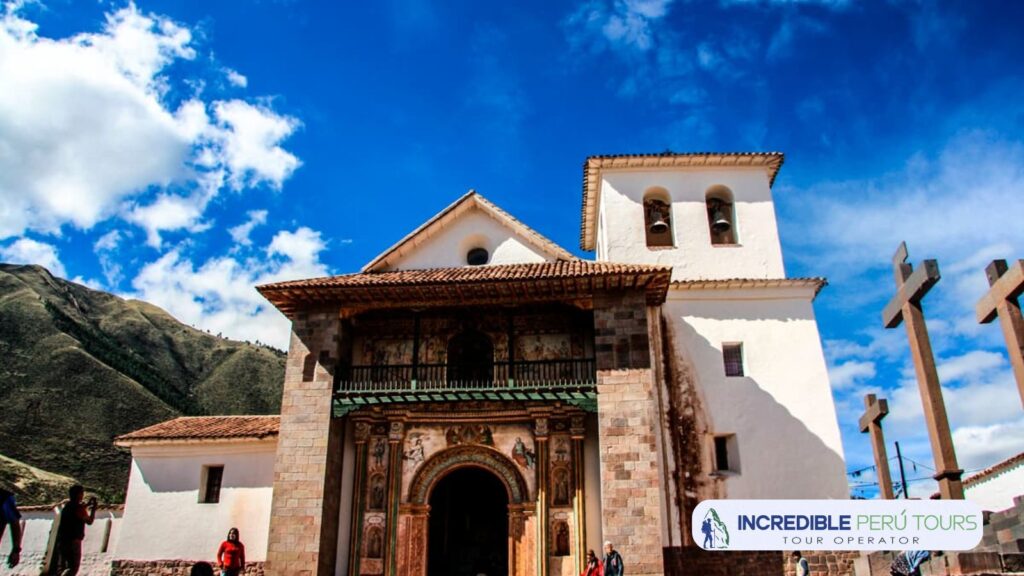
The final cultural stop is the Church of San Pedro Apóstol in Andahuaylillas, at an elevation of about 10,170 feet (3,100 meters). It is known as the “Sistine Chapel of the Andes” because of its murals, decorated ceiling, and gold leaf. Inside are paintings from the Cusco School of Art and a baptismal font carved from a single piece of stone.
Photography is generally not allowed inside. The visit lasts about half an hour. Admission usually costs between 15 and 18 soles. From there, Cusco is about 25 miles (40 kilometers) away, a little over an hour if afternoon traffic is light.
What the Route of the Sun Bus Includes
A typical service includes pickup from a hotel in central Puno, a heated bus with a restroom, a Spanish- and English-speaking guide, hot drinks on board, a buffet lunch in Sicuani, and the four scheduled stops. The bus also carries oxygen in case a passenger feels unwell at La Raya.
Read your voucher carefully. Many tickets do not include admission to Pukará, Raqchi, and Andahuaylillas. Budget about 50 soles per person for these entrance fees. Tips and dinner upon arrival are also generally not included.
Tips for International Travelers
Carry Peruvian soles in cash. Credit cards are not always accepted at smaller sites.
Keep your passport handy. Some ticket offices may ask to see it.
Do not schedule Machu Picchu or a long Cusco city tour for the same afternoon. The day starts around 6:00 a.m., and you will likely arrive tired.
Cusco is lower than Puno, at about 11,150 feet (3,400 meters), but you may still notice the change in elevation.
Do not take photos inside the church in Andahuaylillas. Bring a warm layer for La Raya even if you leave Puno on a sunny morning.
If you are traveling with a large suitcase, confirm it when booking. It will be stored in the luggage compartment under the bus.
Route of the Sun or Direct Bus
The direct bus arrives earlier and costs less. It makes sense if you have already visited these places or simply want to get to your hotel. The Route of the Sun is a better option if this is your only travel day between Lake Titicaca and Cusco and you want to see more than just the highway.
Frequently Asked Questions
How long does the Route of the Sun from Puno to Cusco take?
About 10 hours with sightseeing stops. Without the visits, the same route takes around 7 hours.
Are entrance fees included?
It depends on the operator. Ask whether admission to Pukará, Raqchi, and Andahuaylillas is included before paying.
Is there an English-speaking guide?
The tourist bus generally has a guide who speaks both Spanish and English. If you need another language, request it when booking.
Can I do this on the same day as Uros and Taquile?
It is not recommended. Both are long days, and La Raya rises above 14,100 feet (4,300 meters).
Is this route suitable if I have altitude sickness?
If your first night in Puno was difficult, consider taking the direct bus or waiting an extra day. The stop at La Raya is short, but it is the highest point of the trip.
How We Arrange It at Incredible Peru Tours
We coordinate your seat, hotel pickup, and transfer to your hotel in Cusco. If you are arriving from Lake Titicaca the day before, we let you know that La Raya is the highest section of the route and that it is better to have already spent the night in Puno. If you travel in the opposite direction, from Cusco to Puno, the same route leaves Lake Titicaca for the following day, which is generally the more logical order for adjusting to the altitude.


