
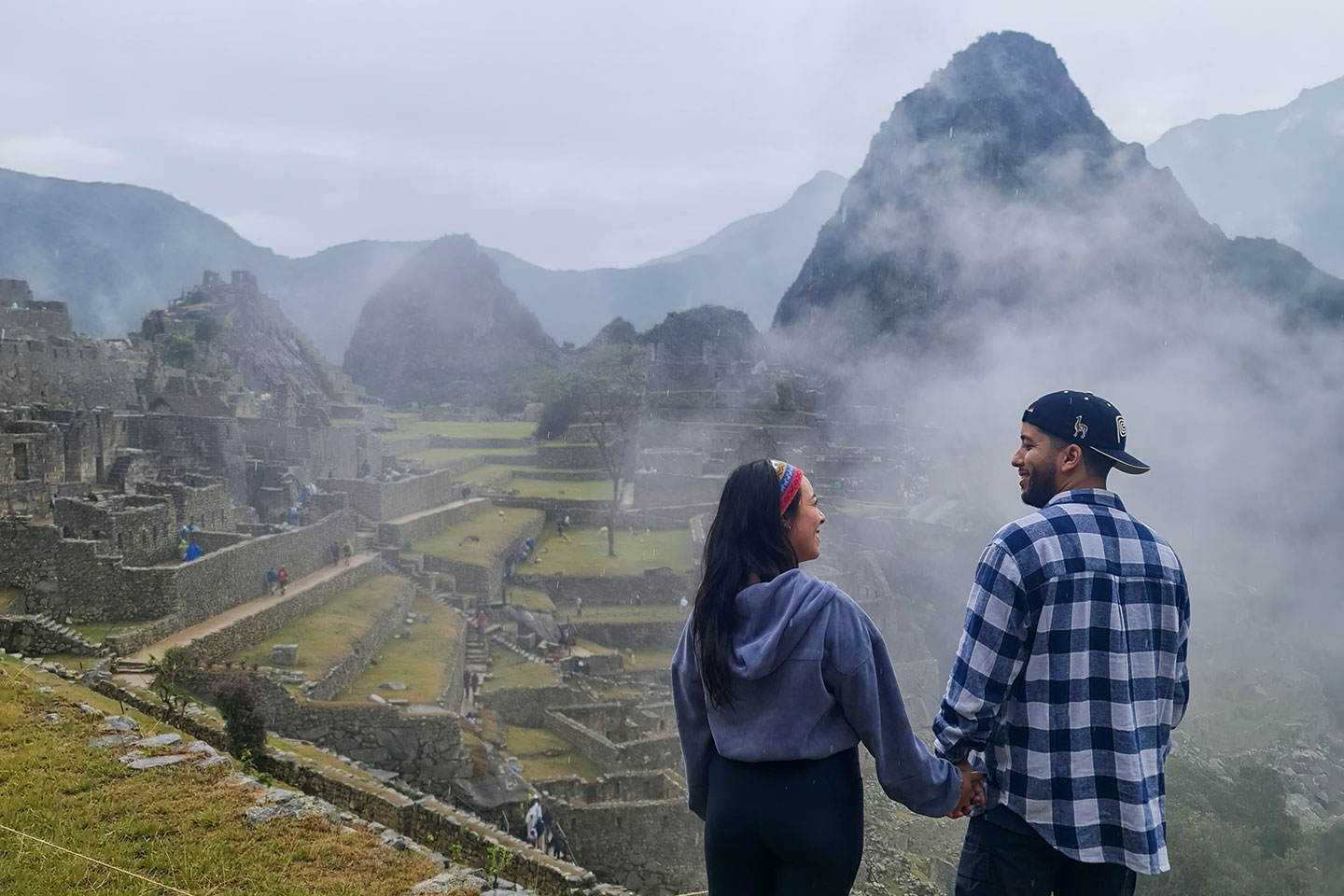
A trip as a couple through southern Peru is better when you shorten the list. The common mistake is trying to fit Cusco, the Sacred Valley, Puno, Colca, and Arequipa into ten days, only to end up sleeping on a bus every other night. Traveling as a couple gives you an advantage that groups do not have: you can decide to stay an extra day somewhere you are enjoying. This guide covers the destinations in southern Peru that work best for couples, how much time to spend in each one, which experiences are worth booking in advance, and the best time to go.
How to choose destinations when traveling as a couple
Stay in one place or keep moving: the first decision
Before looking at maps, decide what kind of trip you both want.
If you want to relax together, the Sacred Valley covers almost everything you need. It sits at a lower elevation than Cusco, has excellent countryside accommodations, and you can take day trips from there without having to change hotels.
If you want to keep moving and see different landscapes, the longer route toward Puno and Arequipa makes sense, but you need fifteen days to keep it from becoming a succession of transfers.
What does not work is trying to do both in ten days.
How many days to spend in each place
These are practical lengths of stay, not theoretical minimums.
Sacred Valley. Three nights. Two already feels short, while with four you may start repeating excursions.
Machu Picchu. Two days if you stay overnight in Aguas Calientes, or one if you arrive early from Ollantaytambo.
Cusco. Two nights. That gives you enough time for the historic center, San Blas, and a visit to Sacsayhuamán.
Humantay Lake. One full day from Cusco.
Lake Titicaca. Two nights, including one on an island if you want the full experience.
Colca Canyon. Two days with one night in Chivay or Yanque.
Arequipa. Two nights.
Doing all of this adds up to sixteen days. If you have ten, choose the Sacred Valley, Machu Picchu, Cusco, and Humantay, and save the farther south for another trip.
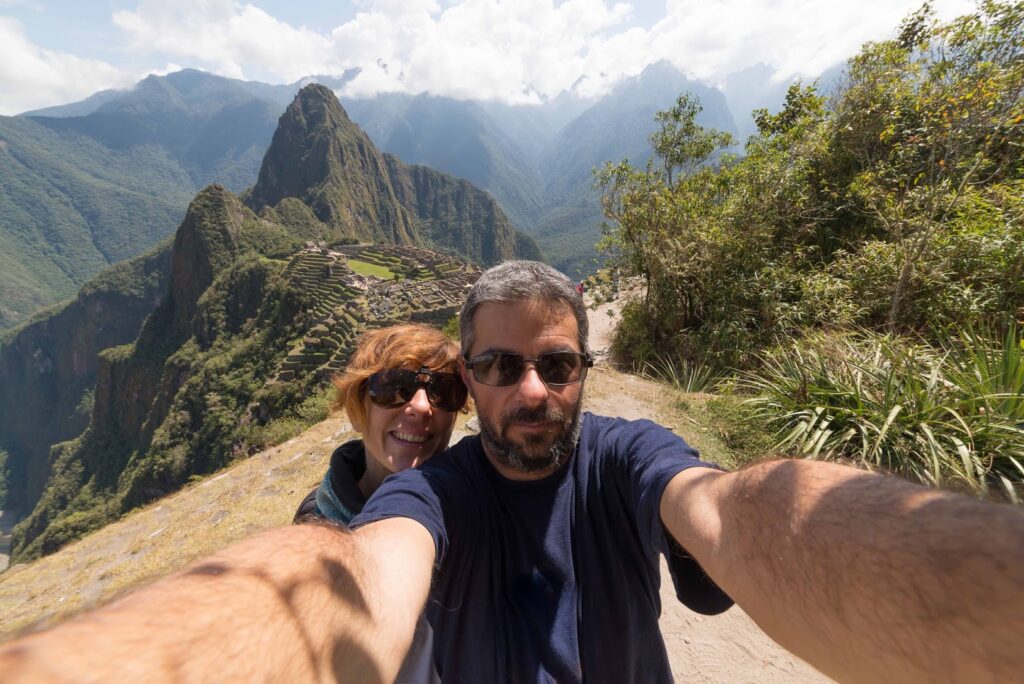
Sacred Valley: slow days among villages and terraces
Urubamba sits at 2,871 m (9,419 ft) above sea level and Ollantaytambo at 2,792 m (9,160 ft), more than 500 meters below Cusco. You sleep better, eat better, and your body adjusts more quickly. That is why it makes sense to head directly here on the day you arrive instead of staying in the city.
The valley has something Cusco has largely lost: hours of the day when almost no one is around. Between 3 and 6 p.m., the tour groups have already left and the towns return to their own pace.
Ollantaytambo at sunset
The archaeological site receives most of its visitors between 9 a.m. and 1 p.m., following the schedule of day tours from Cusco. If you enter after 3 p.m., you can climb the terraces with far fewer people around and watch the late-afternoon light fall across the valley.
The town itself is just as worthwhile as the archaeological site. The streets of the Inca sector still preserve their original water channels and can be explored in about twenty minutes. Have dinner there instead of heading straight back to Urubamba.
Maras and Moray without the large groups
Moray opens at 7 a.m., and tour buses begin arriving around 9. That first hour and a half offers a completely different experience: you can see the circular terraces in full without lines at the viewpoint.
The Maras salt mines work the other way around. They fill up early with visitors coming from Cusco and begin to empty after 2 p.m., when the light also falls more favorably across the salt pools.
If you hire private transportation for half a day, you can visit Moray early, have lunch in the town of Maras, and head down to the salt mines after most visitors have left.
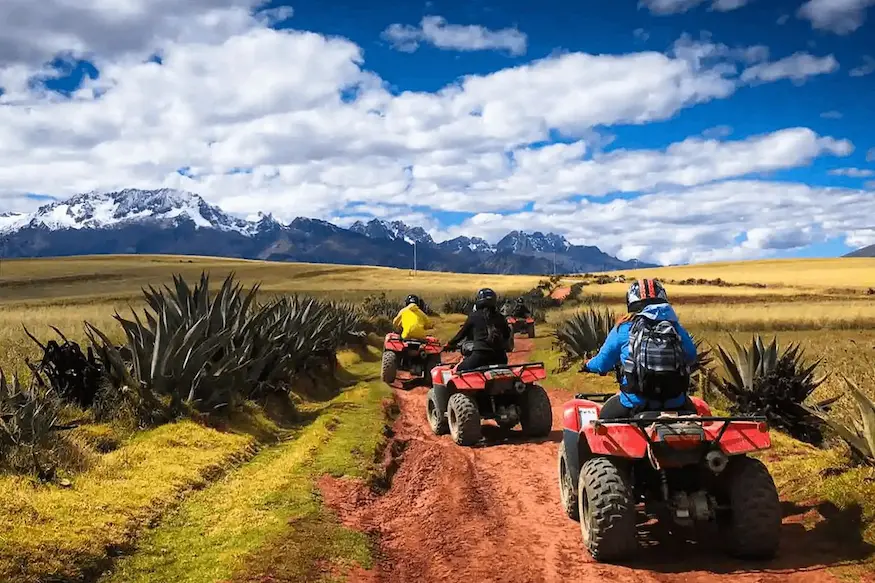
Machu Picchu for two: how to experience it without the crowds
The difference between a good and a bad day at Machu Picchu is not determined by the weather, but by your entry time.
Less crowded entry times
Entry is organized by time slots and circuits, each with a fixed route that cannot be changed once you enter. The 6 and 7 a.m. slots attract travelers hoping to photograph the mist lifting over the site. Around noon and in the early afternoon, there tend to be fewer people, better visibility, and more stable temperatures.
Before purchasing your tickets, check the available circuits and entry times because they do not all include the same areas, and the circuit you choose determines what you will be able to see.
Book several months in advance if you are traveling between May and September. Morning slots sell out first.
Staying overnight in Aguas Calientes or returning the same day
Taking the train there, the bus up, visiting Machu Picchu, taking the bus down, and then catching the train back all in one day is possible, but it leaves very little room for delays. You may end up watching the clock throughout your visit.
Spending one night in Aguas Calientes changes the experience. You can head up early the next morning without rushing, come back down for lunch, and take an afternoon train at a relaxed pace. The town itself is not the main attraction, but hearing the river throughout the night is reason enough to stay.
Humantay Lake and Salkantay: nature within reach of Cusco
If you want a day in the mountains without committing to a multi-day trek, this is the area to consider.
Humantay as a day trip
The lake sits at 4,200 m (13,780 ft) above sea level, and the hike from Soraypampa takes between an hour and a half and two hours of steady uphill walking. You do not need hiking experience, but you should have at least two days of prior acclimatization at altitude.
The day trip to Humantay Lake leaves Cusco before dawn and returns in the afternoon. If you would rather avoid a 4 a.m. departure, you can spend the previous night in Soraypampa and hike up in the early morning light with almost no one else along the shore.
Wear layers that are easy to remove. You start in the cold, warm up while hiking, and reach the top where it can be windy.
Staying overnight along the Salkantay route
The Salkantay route has accommodations that completely change the experience compared with traditional camping. Some domes along the Salkantay route face the mountains and have transparent roofs, allowing you to see the clear night sky from bed. It is one of the few experiences in southern Peru that feels completely different from everything else on the itinerary.
It works both for travelers completing the full trek to Machu Picchu and for couples who simply want to spend two nights there and return.
Waqrapukara: the destination almost no one suggests
Waqrapukara is about four hours from Cusco and receives only a fraction of the visitors who go to the Sacred Valley. It is an Inca fortress set on a rocky ridge, with two formations that give the site its name, and the access hike takes between an hour and a half and two hours depending on the starting point.
What makes it different for a couple is the lack of crowds. During the shoulder season, you may spend the entire morning at the top without crossing paths with another group. There are no services at the site, so bring everything you need from Cusco.
If you are interested, check how to get to Waqrapukara from Cusco before deciding, because the route varies depending on the access village and some options require more hiking than others.
Lake Titicaca: islands, cold nights, and silence
Puno sits at 3,827 m (12,556 ft) above sea level, higher than Cusco, and nighttime temperatures are cold throughout the year.
The standard one-day visit to the floating islands and Taquile has become very crowded. A better option for couples is to spend one night on Amantaní Island or the Llachón Peninsula with local families who host travelers. The afternoon on the island, after the day-trip boats leave, is the part most visitors never see.
Bring genuinely warm clothing. Homes on the islands do not have heating.
Colca Canyon: hot springs, viewpoints, and clear skies
Colca is visited from Arequipa and needs two days. If you try to do it in one, you will spend more time on the road than outside the vehicle.
Chivay sits at 3,635 m (11,926 ft) above sea level and has hot springs that are ideal at the end of the first day. The Cruz del Cóndor viewpoint, another hour and a half away, sees the most condor activity between about 8 and 10 a.m.
The road there crosses the Patapampa viewpoint at 4,910 m (16,109 ft) above sea level. The stop lasts only about fifteen minutes, but you can feel the altitude. If you are coming directly from Lima without prior acclimatization, visit Cusco first or spend at least two nights in Arequipa.
Arequipa: sillar stone, courtyards, and long meals
Arequipa sits at 2,335 m (7,661 ft) above sea level, making it a place where your body can recover after spending time at higher elevations.
Santa Catalina Monastery occupies an entire city block and takes a good two hours to explore. Go in the late afternoon, when the light falls across the painted walls and there are far fewer visitors.
The city is also the best place in southern Peru for a leisurely meal. Traditional picanterías serve lunch rather than dinner, so plan your day around that.
Experiences for two that are worth booking in advance
Private outdoor dinners
Several hotels and operators in the Sacred Valley arrange private dinners on terraces, in gardens, or among agricultural terraces, featuring local cuisine without other diners around. Book at least two or three days in advance, and several weeks ahead during peak season.
Confirm whether transportation is included in the price. Many of these locations are outside the towns.
Textile and pottery workshops in Chinchero
Chinchero is home to associations of weavers who work with natural dyes and traditional looms. Textile workshops in Chinchero let you spend two or three hours learning the entire process instead of watching a fifteen-minute demonstration.
What to expect from a real workshop
In a real workshop, you actually make something with your hands. You wash the wool with saqta root, see how cochineal changes color with lemon or ash, and sit down at the loom even if you only weave a couple of inches. You leave with something you made yourself, even if it is small.
How to recognize a demonstration designed for tourists
The short version lasts twenty minutes, ends in a shop, and involves a group of thirty people. There is nothing wrong with it as a stop on a tour, but it is not a workshop.
The clearest sign is the duration: if the entire activity lasts less than an hour, it is a demonstration. The second sign is whether you were asked to book in advance. Workshops with limited capacity require reservations; demonstrations generally do not.
Distinctive places to stay in southern Peru
Countryside hotels in the Sacred Valley
Between Urubamba and Ollantaytambo, you will find former hacienda homes converted into hotels, with their own gardens and a limited number of rooms. They cost more than an equivalent hotel in Cusco, but this is where you will be spending your afternoons.
Ask for a room away from the road. The valley is peaceful, but the main road runs close to several properties.
Domes and lodges along the Salkantay route
In addition to domes, the route has mountain lodges with private rooms and private bathrooms. They offer a way to experience the high mountains without sleeping in a tent or sleeping bag.
Book well in advance between June and August because the number of available rooms is limited.
Best time to travel to Peru as a couple
If your priority is avoiding crowds, the best months are April, May, September, and October. You get relatively stable dry-season weather without the visitor numbers of June through August.
June, July, and August offer the clearest skies and the coldest nights of the year, but they also bring the longest lines at Machu Picchu and the highest prices.
From November through March, rain is common, especially in the afternoon. In return, the landscape is green, there are fewer visitors, and accommodation prices are lower. If you do not mind adjusting plans as you go, it is the quietest season for traveling as a couple. February is the rainiest month, and the Inca Trail closes completely for maintenance.
How much a 10-day trip for couples costs
For a mid-range trip, ten days in southern Peru costs around $1,200 to $1,900 per person for land arrangements, excluding international flights.
The biggest expenses are the train to Machu Picchu, admission to the site, and private transfers. Countryside accommodations in the Sacred Valley can push that range considerably higher if you choose upscale properties.
Add travel insurance to that budget. Several activities on this list take you above 4,000 m (13,123 ft), and not every policy covers high-altitude travel, so it is worth checking what travel insurance for Peru should cover before purchasing the first policy you find.
Frequently asked questions
Is the rainy season a good time to travel if we want fewer crowds?
Yes, as long as you are willing to adjust your plans. Rain falls mainly in the afternoon, so morning activities can usually go ahead. In return, you get less crowded sites, green landscapes, and lower rates. Avoid February if Machu Picchu or the Inca Trail is a central part of your trip.
Can I plan a marriage proposal at Machu Picchu?
Yes, but there are limitations. Setups, signs, drones, and anything that interferes with the route are not allowed, and the circuits are one-way, with limited opportunities to stop for an extended period. What does work is coordinating with your guide to choose a point along the circuit with a good view and less foot traffic. Many couples prefer a viewpoint in the Sacred Valley or Humantay Lake, where there is much more flexibility.
Which destination in southern Peru is best for a short honeymoon?
For less than a week, combine the Sacred Valley with Machu Picchu. You can stay at one hotel, keep transfers to a minimum, and travel to Machu Picchu from Ollantaytambo without having to pass through Cusco that day. Puno and Colca involve too much time on the road for a short trip.
Is a private tour or shared group tour better for couples?
It depends on the day. For Moray, Maras, and Ollantaytambo, a private tour is worthwhile because you can choose your schedule and avoid the large groups. For Humantay or Colca, a shared group tour works well and costs considerably less because the schedule is determined by the hike rather than the operator.
How many days do we need for southern Peru?
Ten days is enough for the Sacred Valley, Machu Picchu, Cusco, and one mountain excursion. To add Puno, Colca, and Arequipa, you need fifteen days. With fewer than eight days, it is better to focus on the Sacred Valley rather than attempting a long route.


