
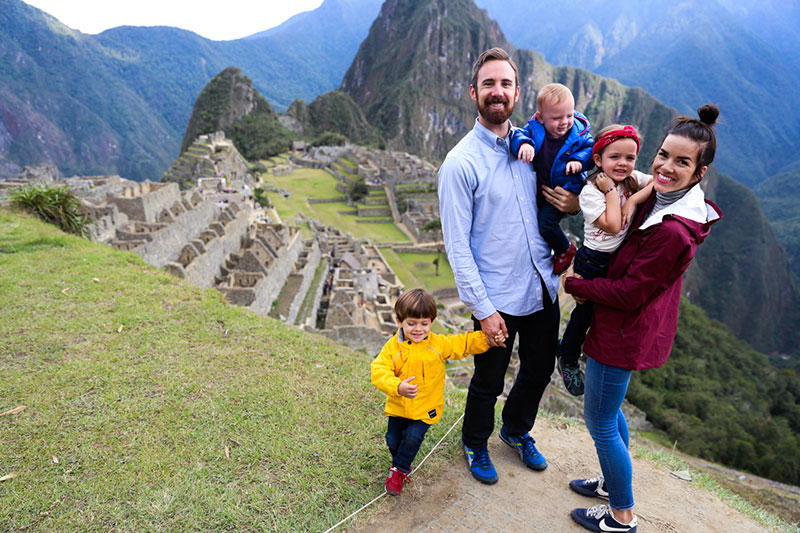
A family trip to Peru is planned backwards. Instead of squeezing as many places as possible into the days you have, you first figure out how much your family can handle in a day, and then decide what fits. That’s the difference between coming home with great memories and coming home exhausted. Here’s the complete framework: how many hours of activity each age group can handle, real distances between destinations in southern Peru, how to manage the altitude, and two ready-made itineraries you can use as is.
What Changes When You Travel to Peru with Kids
Three things change compared to an adults-only trip.
The first is altitude. Cusco sits at 3,399 m (11,152 ft), and a child’s body reacts the same way an adult’s does, just with fewer words to explain it. A child who gets cranky, won’t eat, or falls asleep mid-morning is telling you something.
The second is getting around. Distances in southern Peru are measured in hours of mountain driving, not miles. A 120-km (75-mile) drive can take three hours because of curves and elevation changes.
The third is the schedule. Standard tours leave between 5 and 7 a.m. to make the most of daylight and avoid traffic. With young kids, that schedule becomes unsustainable by the third day in a row.
An itinerary that works accepts these three conditions from the start instead of fighting them.
The Real Pace of a Family Travel Day
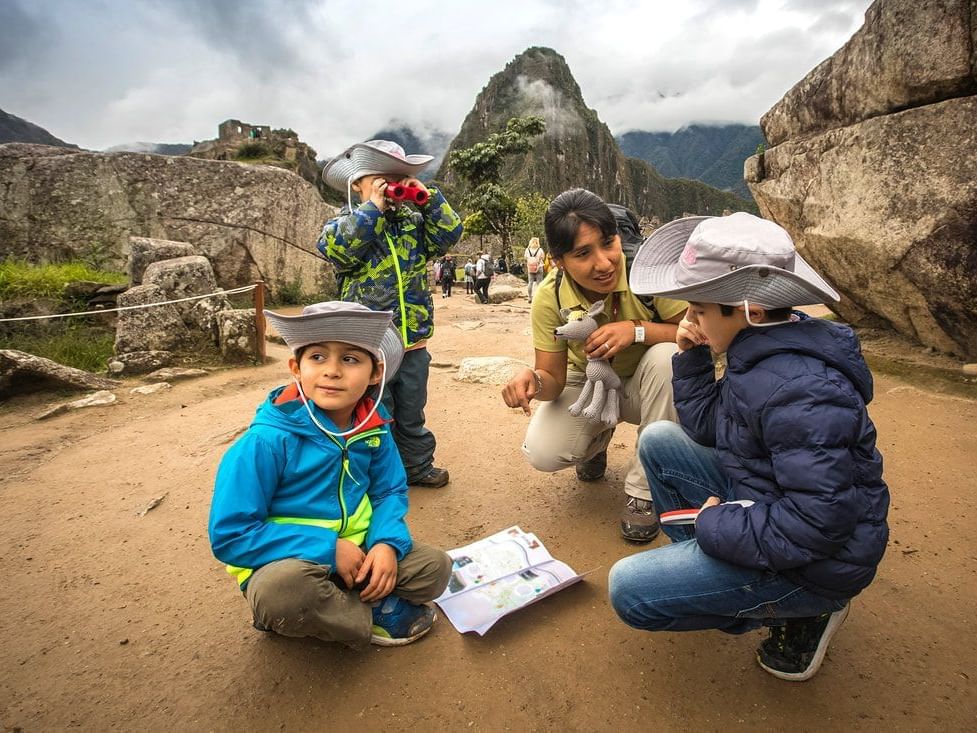
How Many Hours of Activity Each Age Can Handle
These numbers come from what we see on the ground with real families.
Under 4. Three to four hours away from the hotel, with a morning outing and a free afternoon. Archaeological sites with steep stairs and uneven ground aren’t much fun at this age.
Ages 5 to 8. Five to six hours, as long as there’s something they can touch, climb, or eat. A full day of ruins with no breaks ends badly for everyone.
Ages 9 to 12. Nearly a full day, seven to eight hours, with a sit-down meal in between. They can walk longer stretches and follow a guide’s explanations.
Teens. The same pace as an adult, except they need time to themselves and an internet connection. Give them a free afternoon every three days and the trip gets better.
How to Break Up Long Drives
No road transfer should run more than three hours straight with kids under 8. When the route requires it, the solution is to break it up with a stop that’s worth it on its own.
From Cusco to Ollantaytambo, stop in Chinchero or at the Maras salt mines. From Arequipa to Chivay, pull over at the Salinas y Aguada Blanca National Reserve to see vicuñas. From Cusco to Puno, the tourist bus with four stops is far better than the direct bus, even though it takes two hours longer.
Avoid overnight buses with young kids. Saving on a night at a hotel isn’t worth losing the next day.
Where to Fit In Meals and Naps
Lunch in Peru is served between 1 and 3 p.m., and many small-town restaurants close their kitchens at 4. If your day includes a long walk, schedule it before noon and make lunch the end of the morning.
For kids who still nap, heading back to the hotel between 1 and 3 isn’t wasted time. It’s what lets everyone head out again at 4 in a good mood.
Request an early breakfast a day ahead when you have a train or flight. Most hotels will pack a to-go box at no extra charge.
Real Distances Between Destinations in Southern Peru
| Route | Transportation | Approximate Time |
|---|---|---|
| Lima to Cusco | Flight | 1 hr 20 min |
| Cusco to Chinchero | Car | 45 min |
| Cusco to Urubamba | Car | 1 hr 15 min |
| Cusco to Ollantaytambo | Car | 1 hr 45 min |
| Ollantaytambo to Aguas Calientes | Train | 1 hr 30 min |
| Aguas Calientes to Machu Picchu | Bus | 30 min |
| Lima to Arequipa | Flight | 1 hr 30 min |
| Arequipa to Chivay | Car | 3 hr 30 min to 4 hr |
| Cusco to Puno | Tourist bus | 9 to 10 hr |
Lima to Cusco
You fly. There are departures first thing in the morning, but with kids a mid-morning flight works better: you don’t have to leave the hotel at 4 a.m., and you land in Cusco with the afternoon free to rest.
Leave plenty of buffer for your return flight. Cusco’s airport shuts down because of fog fairly often between December and March. If you have an international flight, don’t take it the same day.
Cusco to the Sacred Valley
This is the key leg of a family trip, and almost nobody uses it well. Urubamba sits at 2,871 m (9,419 ft) and Ollantaytambo at 2,792 m (9,160 ft), more than 500 m (1,600 ft) lower than Cusco. Everyone sleeps better, eats better, and kids adjust faster.
If your flight lands in the morning, heading straight down to the Sacred Valley that same day is the best decision you can make. Save Cusco city for the end of the trip, once everyone is acclimatized. Before finalizing your itinerary, it’s worth looking at how the cities in southern Peru connect so you don’t backtrack.
Sacred Valley to Machu Picchu
The train leaves from Ollantaytambo and takes an hour and a half to reach Aguas Calientes. It’s a comfortable ride with panoramic windows, and kids usually love it.
Book months in advance between May and September. Morning departures sell out first, and they’re the ones that let you visit the site the same day. Check the available entry time slots ahead of time, because each circuit has a fixed entry time that can’t be changed at the gate.
Buses leave Aguas Calientes every few minutes, but the line forms early. If your entry time is 8 a.m., get to the bus stop by 7.
With kids under 8, spend a night in Aguas Calientes instead of doing a same-day round trip. Train, bus, walking, bus, and train again all in one day is too much.
Arequipa and Colca with Young Kids
Arequipa sits at 2,335 m (7,661 ft) and doesn’t usually cause problems. Colca is a different story: Chivay is at 3,635 m (11,926 ft), and the Patapampa viewpoint, which you cross along the way, reaches 4,910 m (16,109 ft).
That high pass doesn’t last long, but it’s real. If you’re traveling with kids under 6 and have to choose between Colca and the Sacred Valley on a short trip, the Valley is a much better fit for families.
How Kids Experience Altitude
Signs to Watch For
A child will rarely tell you they have an altitude headache. What you’ll see instead is loss of appetite, sleepiness at odd times, irritability, complaints of a tummy ache, or crying for no clear reason.
These symptoms usually show up 6 to 24 hours after arrival and ease with rest and hydration.
What isn’t normal: repeated vomiting, trouble breathing at rest, drowsiness that won’t lift, or a bluish tint to the lips and nails. Those need immediate medical attention.
The First 48 Hours in Cusco
Don’t plan anything for day one. Arrival, hotel, a light meal, and rest. On day two, a short outing close to where you’re staying.
Drink more water than seems necessary, because the dry highland air dehydrates you without making you feel thirsty. Light, frequent meals work better than three big ones, and it’s best to hold off on fried food until after day two.
Coca tea helps some people and not others. It’s not a treatment, just a hot drink that can make you feel better. If your child doesn’t want it, don’t push.
What to Pack in Your Day Bag
A reusable water bottle, snacks your kids already eat at home, children’s acetaminophen or ibuprofen, oral rehydration salts, high-SPF sunscreen, a hat, and a light jacket. UV radiation at altitude is intense even under cloud cover.
If your child has a pre-existing condition, also bring written notes from your pediatrician. Any clinic in Cusco will appreciate it.
When to See a Doctor
Talk to your doctor before the trip if your child has asthma, a heart condition, anemia, or any respiratory condition. It’s not an automatic reason to cancel, but a pre-trip evaluation changes how you plan your itinerary. It’s also something to sort out while preparing your body before heading up to Cusco, along with the rest of your pre-trip tasks.
Once you’re in the country, hotels in Cusco and the Sacred Valley have agreements with local clinics, and many offer oxygen at the front desk. Ask about this when you book, not when you need it.
7-Day Itinerary with Kids Under 8
Day 1. Arrive in Lima. Overnight in Miraflores. A short sunset stroll along the Malecón and an early dinner.
Day 2. Mid-morning flight to Cusco and transfer straight to Urubamba, in the Sacred Valley. Afternoon resting at the hotel. No activities.
Day 3. Morning at Moray and the Maras salt mines. Back to Urubamba for lunch. Free afternoon.
Day 4. Ollantaytambo in the morning, exploring the town and the archaeological site. Afternoon train to Aguas Calientes. Overnight there.
Day 5. Machu Picchu with an early entry time. Lunch in Aguas Calientes and afternoon train back to Ollantaytambo. Transfer to Cusco.
Day 6. Cusco city at a slow pace: San Blas, the main square, and San Pedro Market. Free afternoon.
Day 7. Flight to Lima, with your international connection the following day.
10-Day Itinerary with Older Kids and Teens
Day 1. Arrive in Lima. Barranco in the afternoon.
Day 2. Lima: historic downtown in the morning, free afternoon.
Day 3. Flight to Cusco and down to the Sacred Valley. Rest.
Day 4. Chinchero, Moray, and Maras. Optional weaving workshop in the afternoon.
Day 5. Active day in the Valley: biking, easy rafting, or a hike to Huchuy Qosqo depending on fitness level.
Day 6. Ollantaytambo and train to Aguas Calientes.
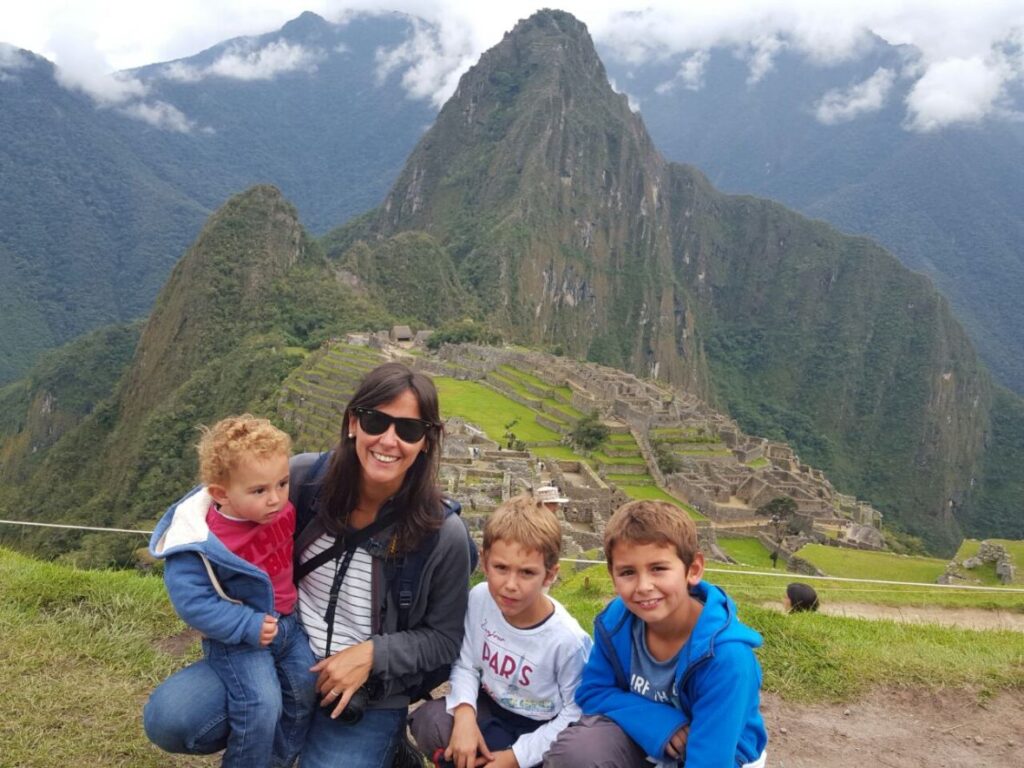
Day 7. Machu Picchu, with a climb up Huayna Picchu or Machu Picchu Mountain if permits are available. Return to Cusco.
Day 8. Cusco: Sacsayhuamán, San Blas, and San Pedro Market.
Day 9. Full-day excursion of your choice, such as Humantay Lake or Waqrapukara, depending on how well the group has acclimatized.
Day 10. Flight to Lima.
Family Lodging, Food, and Budget
Family Rooms and Cribs
In Cusco and the Sacred Valley, triple rooms are common, but quad rooms less so. For a family of four or five, the usual option is to book two connecting rooms.
Free cribs are common at mid-range and upscale hotels, but you need to request one when you book; it isn’t guaranteed at check-in.
Where Kids Eat Well
The menú del día, or set lunch, at local restaurants is inexpensive and always includes a soup, a main course, and a hot herbal tea. It’s the safest option for kids because the food is freshly made.
Lomo saltado, arroz con pollo, and quinoa soup are almost always a hit. Save ceviche for restaurants with high turnover, and avoid it on your first day at altitude.
Always drink bottled water, and use it even to wash fruit if you’re in a rural area.
Tickets and Rates for Kids
Machu Picchu offers a reduced rate for minors, and you’ll need to show ID at the entrance. Children under 3 usually get in free.
The Cusco Tourist Ticket (Boleto Turístico) has a student rate for minors with ID. Young children get in free.
On the train, children under 3 ride on a parent’s lap, without their own seat and free of charge on most services. From age 3 and up, they pay for a seat at the child rate.
How Much to Budget
A 7-day mid-range family trip runs between $900 and $1,400 per person in-country, not including international flights. The train to Machu Picchu and entrance fees are the biggest expenses. Add the cost of travel insurance that covers high-altitude activities, which isn’t optional for this destination.
Best Time of Year to Visit with Kids
April to October is the dry season in the highlands. Days are clear and nights are cold, especially in June and July.
From November to March it rains, mostly in the afternoon. It doesn’t stop you from traveling, but it requires flexibility and rain gear. The Inca Trail closes for all of February for maintenance.
If you can choose, April, May, September, and October offer good weather and smaller crowds than July and August.
Common Mistakes When Planning a Family Trip to Peru
- Spending the first night in Cusco instead of heading down to the Sacred Valley.
- Scheduling Machu Picchu on day two of the trip, with no time to acclimatize.
- Booking tours with 5 a.m. departures three days in a row.
- Waiting to book the train to Machu Picchu until you arrive, during peak season.
- Trying to fit both Colca and the Sacred Valley into a one-week trip.
- Booking your international flight on the same day as your flight out of Cusco.
Frequently Asked Questions
What Is the Minimum Age to Visit Machu Picchu?
There’s no minimum age. Babies in carriers can go in without any problem. What does matter is the circuit you choose, since some have more stairs than others. The Huayna Picchu and Machu Picchu Mountain climbs have their own minimum ages and aren’t recommended for young children.
Do Kids Need to Pay for the Cusco Tourist Ticket?
Minors with ID get the student rate, and the youngest children get in free. Bring a passport or ID for each child, because they ask for it at the entrances.
What Should I Do If My Child Gets Carsick on the Road to the Sacred Valley?
Seat them up front if possible, with the window open and eyes on the road instead of a phone. A children’s anti-nausea medication prescribed by your doctor before the trip solves most cases. For the Cusco to Ollantaytambo leg, there’s also the option of taking the train from Poroy during certain seasons.
How Many Days Do I Need for a Trip to Peru with Kids?
Seven days is a reasonable minimum for Lima, the Sacred Valley, Machu Picchu, and Cusco without rushing. With ten days, you can add an active day and an extra excursion. Anything less than seven forces you to cut back on acclimatization, which is exactly what you shouldn’t cut.
Is a Private Family Tour Worth It?
With kids under 8, yes. A private service lets you choose your departure time, stop whenever someone needs to, and cut a visit short without affecting anyone else. On a shared group tour, the guide sets the pace, and it doesn’t always match your family’s.


