
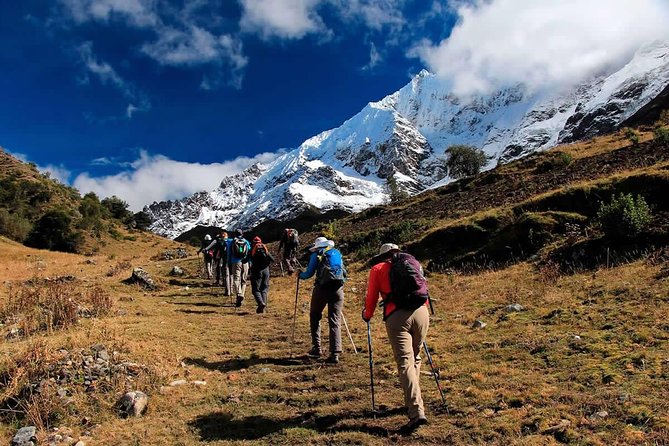
Salkantay Trek domes have become, in recent years, one of the most sought-after tourism products in the Cusco region for a very specific type of traveler: those who want to experience one of the most impressive treks in South America without giving up a good night’s sleep. The combination of high mountains, glaciers, and a real bed under a transparent dome with the Salkantay snow-capped peak in the background is a product that does not exist on any other route in the region with the same level of scenic impact.
However, the dome offering on the Salkantay Trek is broad and uneven. There are complexes with top-level facilities and others that use the term “dome” to describe structures that provide a very different experience from what travelers expect when choosing this option. This guide gives you clear information on prices, locations, and what to realistically expect from each type of complex so you can make an informed decision before paying.
Where the domes are located along the Salkantay route
Dome complexes along the Salkantay Trek are distributed at the most scenic points of the route, which coincide with the usual campsites for multi-day versions. There is no single reference complex, but rather a series of facilities at different points along the trail, each with its own characteristics and service level.
The highest point with the most dramatic views of the snow-capped mountain is the Soraypampa area, at 3,900 meters above sea level. Domes installed in this sector offer direct views of the north face of Salkantay and Humantay Lake, which is less than an hour’s hike away. It is the coldest point on the route at night and the one that most depends on proper thermal insulation in the domes to ensure a comfortable experience.
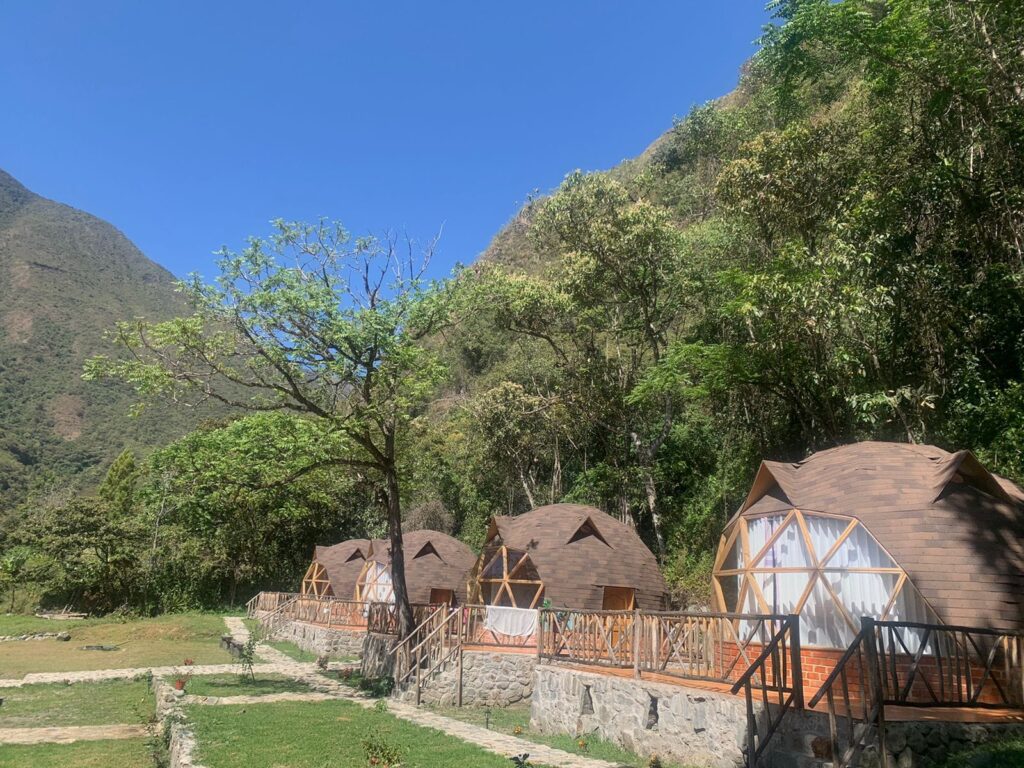
The second relevant group of domes is located in the intermediate valleys during the descent, between 2,500 and 3,200 meters in altitude, in the transition zone between high-altitude plains and subtropical vegetation. These complexes have warmer nighttime temperatures, a humid forest environment, and in some cases additional amenities such as jacuzzis or outdoor relaxation areas. The view of the snow-capped peak is no longer as direct as in Soraypampa, but the natural setting offers its own beauty of forest and canyon landscapes.
Some operators have also set up glamping options in the Santa Teresa area, near the Cocalmayo hot springs, at around 1,600 meters altitude with a subtropical climate that makes high-mountain gear unnecessary. These domes are the most comfortable in terms of temperature but are also the farthest removed from the high-mountain experience that defines the identity of the Salkantay Trek.
Types of domes available and differences in level
Not all Salkantay domes offer the same experience, and that difference goes beyond price. There are essentially three categories based on equipment and service level.
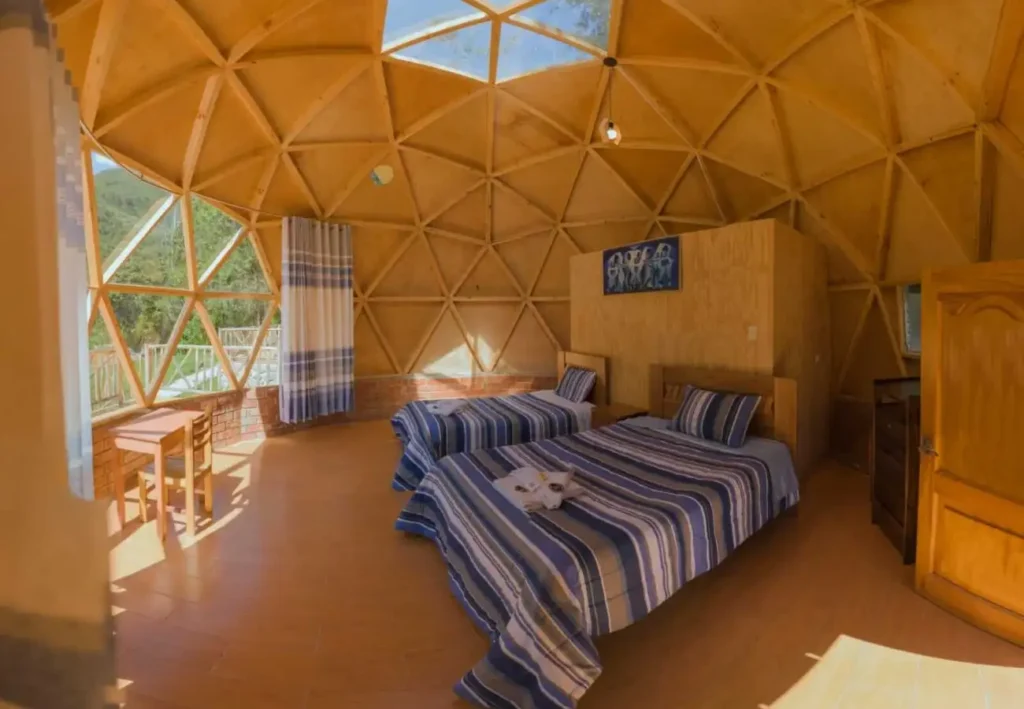
Basic-level domes are dome-shaped structures with a double bed or twin beds, bedding suitable for local temperatures, shared bathrooms with hot showers, and a covered dining area with meal service. They are the most accessible option within glamping and offer a real upgrade over standard camping, mainly in bed comfort and interior temperature. The transparent panel for sky views may be partial or full depending on the design.
Mid-level domes add to the basic setup with private or semi-private bathrooms, higher-quality bedding, more refined interior finishes, adjustable interior lighting, and in some cases a small outdoor terrace with a chair or hammock. The structure is usually larger and includes a greater proportion of transparent panels. The food service is more elaborate, and some complexes offer buffet-style breakfast or multi-course dinners.
High-end domes, found in some complexes in the Soraypampa area and the intermediate valleys, include amenities that in another geographic context would belong to a boutique hotel: outdoor hot tubs or jacuzzis, fireplaces or built-in heating, room service, à la carte dining, and in some cases dedicated staff for each dome. The structures are larger, built with higher-quality materials, and feature a higher proportion of transparent panels that make the night sky an integral part of the interior design.
Price ranges: what to expect in each category
Prices for domes on the Salkantay Trek vary depending on the complex category, the time of year, the number of nights included in the package, and whether pricing is per dome or per person. As a general reference for full five-day trekking packages that include dome accommodation:
Basic-level dome packages typically range between $450 and $650 per person during standard season. This range includes complexes that provide the glamping structure with essential services but without the additional amenities of higher categories. They represent the entry point to glamping on the Salkantay and a real upgrade over standard camping at a per-person price that, in high season, is not much higher than some well-equipped camping packages.
Mid-level dome packages range between $650 and $900 per person, with more variation depending on season and operator. This range includes most of the high-quality glamping options on the Salkantay and the most highly rated complexes on review platforms due to their balance of price and experience.
High-end dome packages start at $900 per person and can exceed $1,500 for the most exclusive options with full services included. This range corresponds to complexes with jacuzzis, heating, and personalized service, aimed at travelers seeking a luxury high-mountain experience as a central part of their trip to Peru.
These ranges are indicative and may vary depending on the agency, time of year, and specific booking conditions. High season, from June to August, usually results in prices 15 to 25 percent higher than low season, especially in the most in-demand complexes.

What the price includes and what may not be included
Before comparing prices between different operators, it is important to verify exactly what each package includes, as differences in this aspect can make an option that appears cheaper end up being more expensive once additional costs are added.
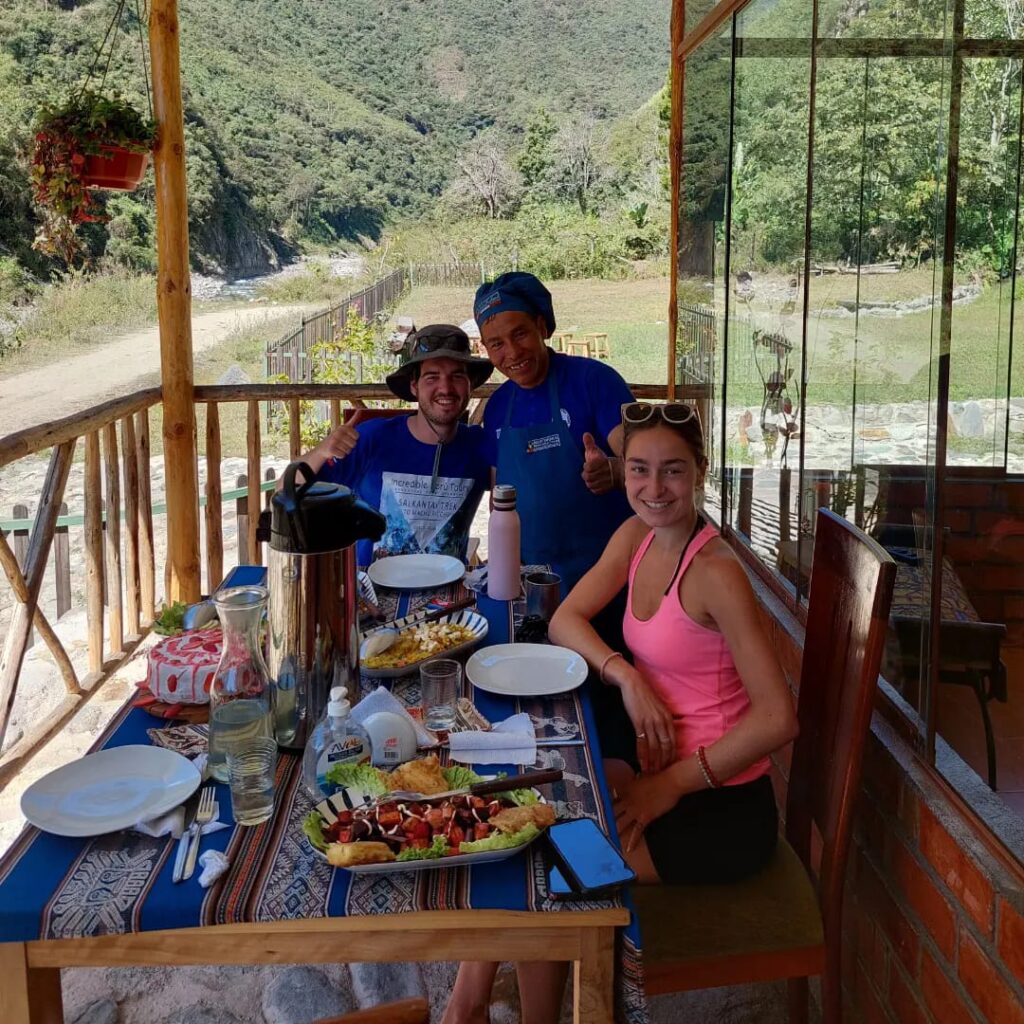
What is usually included in all Salkantay dome packages: transportation from Cusco to Soraypampa and return from Aguas Calientes, the guide for all five days, porters or muleteers, all meals during the trek, access to the domes at the agreed overnight points, and the Machu Picchu entrance ticket for the final day.
What may or may not be included depending on the operator: entrance to Humantay Lake, which in some complexes has an additional fee as it is not part of the standard itinerary; a visit to the Cocalmayo hot springs on the third day; the return train from Aguas Calientes, which in some packages is quoted separately; a personal sleeping bag if the complex does not provide one suitable for the temperatures at Soraypampa; and additional beverages in the dining area beyond water and the infusions included with meals.
Asking point by point what is included before confirming your reservation avoids surprises that cannot be solved on-site and that can disproportionately affect your overall experience compared to the cost of the missing item.
The real experience: what travelers say
Feedback from travelers who have done the Salkantay Trek with dome accommodation shows a fairly consistent pattern in what they highlight most. The first recurring point is sunrise at Soraypampa: waking up in a dome with Salkantay gradually lighting up through the transparent panel is frequently described as the most unexpectedly impactful moment of the entire trip, even above crossing the pass itself.
The second most mentioned aspect is the thermal contrast: going from several degrees below freezing outside at dawn on the second day to the warmth inside the dome for breakfast is a transition that standard campers do not experience in the same way. That indoor temperature difference makes the early departure for crossing the pass physically and psychologically easier.
The third recurring element, especially among those who choose high-end domes, is sleep quality. Sleeping well at 3,900 meters is difficult even with a proper sleeping bag, because altitude noticeably affects sleep cycles during the first nights. A real bed with a mattress, pillow, and quality bedding significantly improves that experience and translates into a different energy level on the second day.
Who the dome option makes the most sense for
Salkantay domes are not the right option for everyone, and understanding who they are for helps you make the decision without being influenced only by marketing photos.
They make sense for couples looking for a travel experience with a romantic component, for travelers who value the setting as much as the trek itself, and for those whose budget allows access to the level that matches their expectations. For groups of friends traveling together who want to share a glamping experience in a setting that has no equivalent in their home countries. For people over 50 who want to do the Salkantay Trek but need better sleep quality and controlled nighttime temperatures. And for any traveler who knows they sleep poorly in the cold and wants that factor not to affect their performance and enjoyment of the trek.
They do not make sense for those who value full immersion in the natural trekking environment, for whom standard camping is an essential part of the experience they seek, or for those whose budget does not justify the price difference compared to well-equipped camping. For these profiles, standard camping with a good agency provides a completely satisfying experience without the additional cost of glamping.
Do you want to book the Salkantay Trek with domes and need guidance on which level of complex best matches what you are looking for? At Incredible Peru Tours, we offer Salkantay glamping packages across the different available categories and help you choose the one that best fits your profile and budget before confirming any reservation.


