
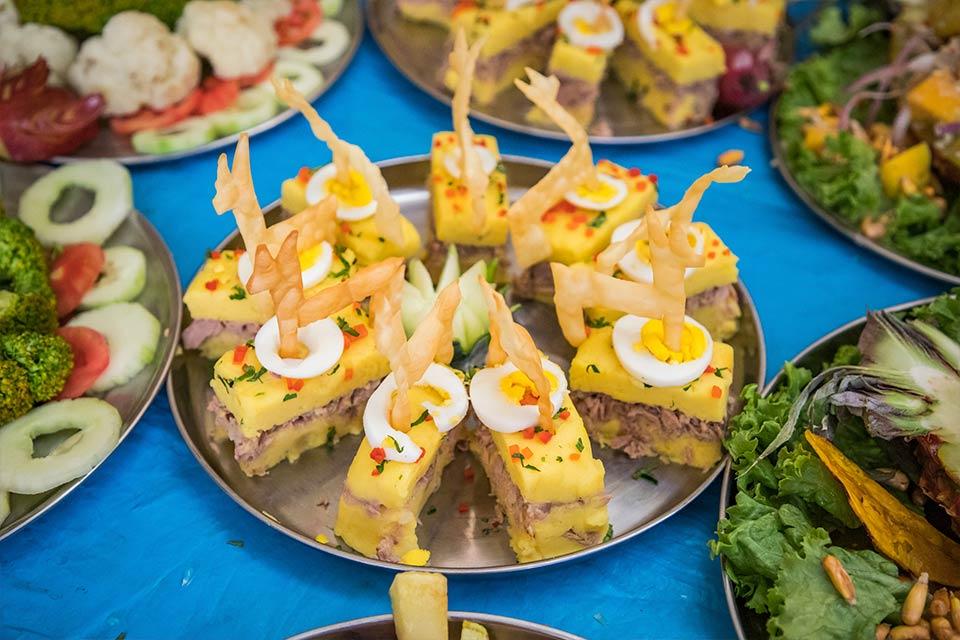
One of the questions we receive most often at Incredible Peru Tours before confirming a Salkantay Trek reservation is about the food. What do you eat during the five days? Is the quality good? What if I am vegetarian or have dietary restrictions? These are completely reasonable questions for a route where there are no restaurants to rely on if the camp food is disappointing, and where the body’s nutritional condition has direct consequences on physical performance each day.
This guide answers all of those questions with the practical information you need before heading out on the trail.
How the kitchen works on the Salkantay Trek
The kitchen team on the Salkantay Trek includes one cook, and on larger groups sometimes two, whose exclusive responsibility during the five days of the route is preparing all meals. The cook travels with the porters and arrives at the next point on the itinerary before the group so the food is ready when participants arrive at the end of each day.
Ingredients are carried from Cusco in boxes and bags distributed among the porters. There is no refrigerator or cooling source: foods that require preservation are selected and organized using logistical criteria that experienced cooks on the route know well. The kitchen equipment includes portable gas stoves, complete utensils, and on higher-level packages, a separate kitchen tent that allows meals to be prepared even under heavy rain.
At Incredible Peru Tours, we select our cooks for their knowledge of Andean cuisine and their specific experience with high-mountain logistics. The difference between a cook who knows the route and one who does not is noticeable in the quality of every meal, because adapting preparation to altitude, weather, and the available resources at each point on the route is a skill learned over time, not in courses.
Breakfast: fuel for the toughest day
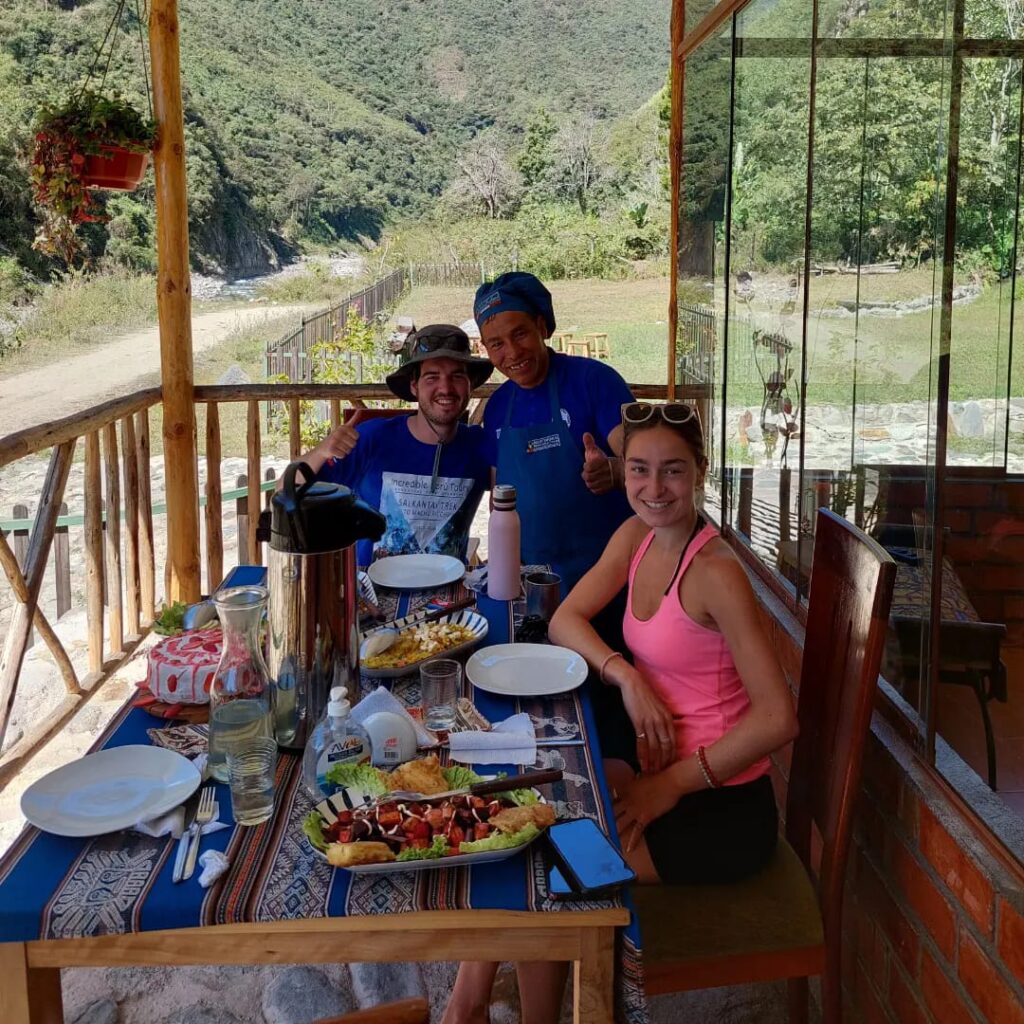
Breakfast on the Salkantay Trek is served early, between 5:00 and 6:30 in the morning depending on the day. On the second day, when the departure toward the Salkantay Pass begins before sunrise, breakfast may be moved up to 4:30 so the body has time to process the fuel before the climb.
The usual structure includes a hot drink to begin with: tea, coffee, Andean herbal infusions, or coca tea. This is followed by a light soup or broth that acts as the first source of calories and hydration. The main breakfast dish includes eggs prepared in different ways, accompanied by bread, pancakes, or toast with jam and butter. On colder days, some operators add cooked oatmeal or quinoa as a higher-calorie alternative.
The breakfast on the second day, the one before crossing the Salkantay Pass, is the most important of the five. Eating well at that moment, even if the appetite at 4:30 in the morning is not always there, is part of the performance strategy for the most demanding section of the route.
Lunch: the meal that surprises everyone
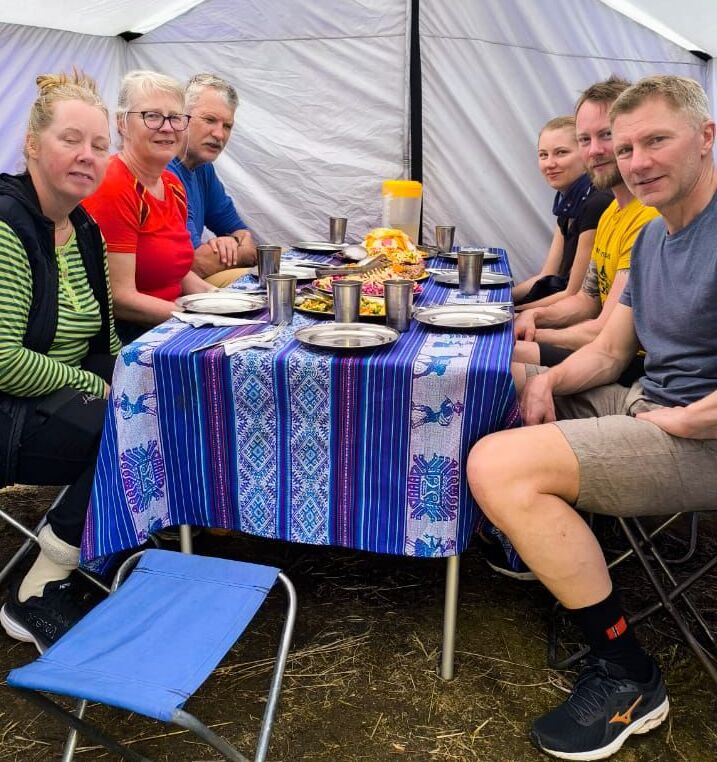
Lunch on the Salkantay Trek is the moment that most surprises people who arrive without clear expectations about the quality of mountain food. The kitchen team moves ahead of the group to the designated lunch point, sets up folding tables and chairs, and has the meal prepared when participants arrive. Seeing a table with a tablecloth, plates, and cutlery in the middle of a high-mountain trail creates an impression that at Incredible Peru Tours we have seen repeated in virtually every group we operate.
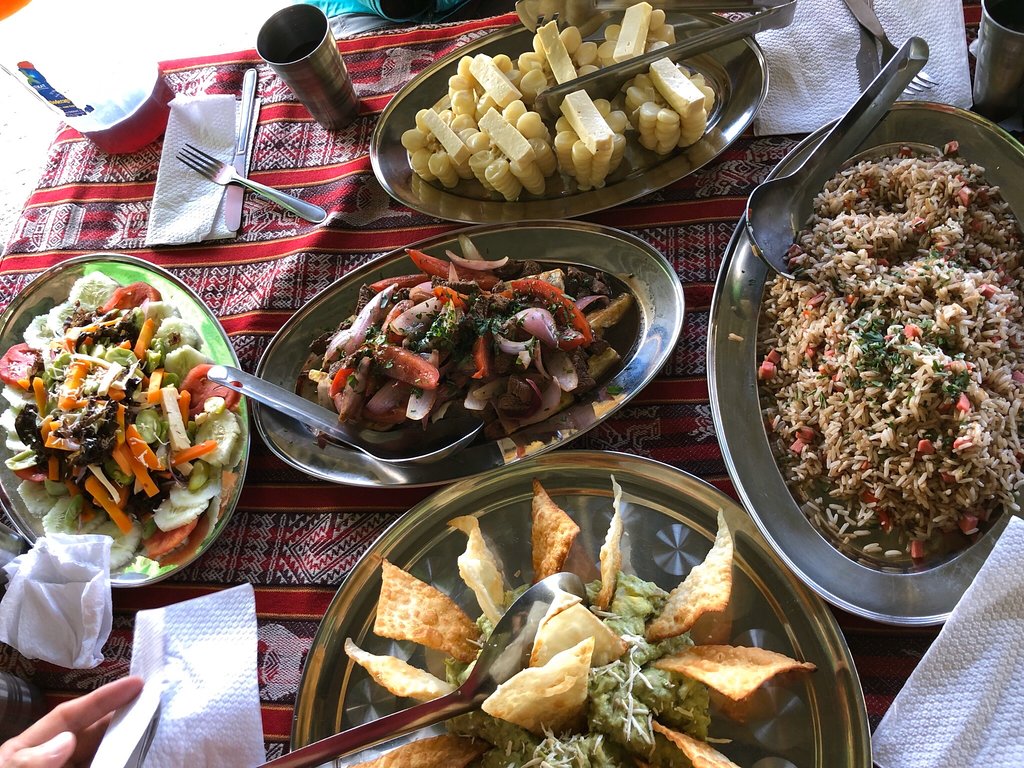
Lunch is usually the most elaborate meal of the day. It begins with a hot soup or cream, followed by a main dish that includes rice, pasta, or potatoes as a base with chicken, trout, or another protein, and ends with fruit or dessert. It is a complete meal that, in the context of the morning’s effort, feels more necessary and more appreciated than any lunch in a conventional restaurant could be.

Dinner: the social moment of the campsite
Dinner on the Salkantay Trek has a dimension that goes beyond nutrition. After hours of hiking, when the group gathers in the dining area prepared by the kitchen team with headlamps on and the mountain night surrounding them, a kind of connection develops that everyday noise rarely allows. Hot food in that setting carries a weight it does not have in any restaurant.
The dinner menu is the most varied of the day. It starts with a light appetizer, continues with a hearty soup made with quinoa, noodles, or vegetables, followed by a main dish with protein and side dishes, and ends with dessert and hot infusions. The cook plans different menus for each night to avoid repetition, and in the packages we operate at Incredible Peru Tours, we include dishes from Andean gastronomy that many participants experience for the first time at camp: quinoa in different preparations, native potatoes, Urubamba trout, and purple corn.
Peruvian dishes served along the route
The cuisine on the Salkantay Trek is not international camping food. It has a recognizable Peruvian identity that for many international travelers is their first real introduction to local gastronomy, much closer and more authentic than what tourist restaurants in Cusco or Aguas Calientes offer.
Quinoa soup is the most common dinner during the first days: the quintessential Andean grain, rich in protein and relatively easy to digest at high altitude. Grilled trout or trout cooked in garlic sauce appears as the main protein in several lunches, prepared with fish sourced from the streams and rivers of the region. Native potatoes in their many varieties, served with huancaína sauce or simply steamed, are the most frequent side dish. And mazamorra morada, that purple corn dessert with fruits and spices served warm, often appears during dinners on the second and third days as a sweet and nutritious ending to the day.
Snacks between meals: a small detail with real impact
On the second day of the Salkantay Trek, with the ascent to the pass and the later descent to the Chaullay campsite, energy expenditure clearly exceeds what breakfast and lunch alone can cover. Snacks between meals are not a luxury: they are a performance tool that operators experienced on the route include systematically.
Popcorn, cookies, peanuts, chocolate, dried fruit, or energy bars are the most common formats. They are distributed at rest points along the trail or carried in a small accessible bag inside the daypack. At Incredible Peru Tours, we include them in all Salkantay packages because we have confirmed that the difference in mood and available energy from midday on the second day onward is noticeable and direct.
Dietary restrictions and special diets
The Salkantay Trek is perfectly compatible with vegetarian, vegan, gluten-free, and other common dietary restrictions. The condition is communicating them to the agency with enough advance notice before departure, not the day before or the same day at the starting point.
Salkantay cooks work with ingredients carried from Cusco. Once on the trail, there is no possibility of obtaining additional products or replacing ingredients that were not brought from the start. If the restriction was not communicated in advance, the cook will do the best possible with what is available, but the result may be far below what proper planning could have achieved.
At Incredible Peru Tours, we request information about dietary restrictions at the time of booking, confirm it one week before departure, and verify it again with the cook the day before the trek begins. That triple verification may seem excessive, but during five days without the possibility of correction, it is exactly the level of attention the situation deserves.
Hydration: just as important as food
Water during the Salkantay Trek is provided by the agency at campsites through purified containers. During meals, hot beverages are always available. During hiking hours, each participant carries their own water bottle in their daypack and can refill it at points the guide identifies as safe along the route.
At high altitude, the body loses fluids faster than at sea level because accelerated breathing from physical effort expels more water vapor with each cycle. Drinking before you feel thirsty, taking a sip every twenty or thirty minutes during hiking hours, is the difference between arriving at camp with energy available and arriving with a fatigue level that does not correspond to the visible effort of the day.
What food quality says about the agency
In the world of multi-day trekking, food quality is one of the most reliable indicators of how an agency operates in every other aspect of service. An operator who takes care of the food also takes care of camping equipment, porter conditions, and guide training. One who cuts corners on the menu to lower the package price is probably also cutting corners on elements that are equally invisible from home but become obvious on the trail.
That connection between food and the overall quality of service is something we at Incredible Peru Tours take seriously from the design of every Salkantay Trek package. The cook is not a secondary logistical element: they are part of the trekking experience, and their work at the end of each day is what makes it possible for the body to have what it needs for the next day.
Do you have questions about the Salkantay Trek menu or how we manage dietary restrictions for your group? Contact Incredible Peru Tours, and we will provide details about our menus and the way we coordinate with the kitchen team so every participant eats well throughout the five days of the trek.


