
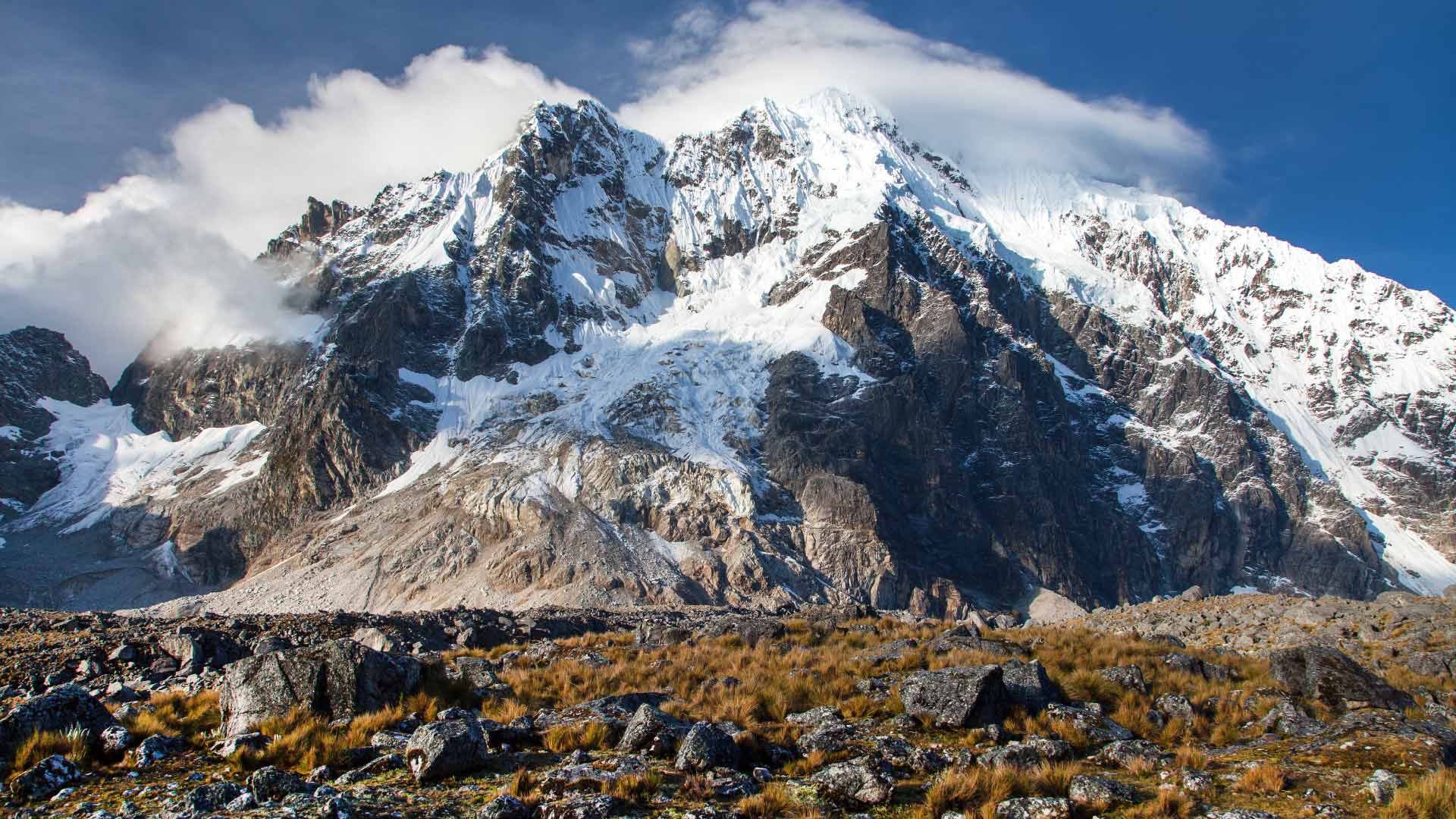
The Salkantay Pass is the defining moment of the trek that bears its name. It is not just the highest point of the route at 4,630 meters: it is where the landscape changes scale, where the body works in a way that few experiences replicate, and where most people who have crossed it place the most intense moment of the five days. But what really happens at that pass, hour by hour from the moment the alarm goes off until the group reaches the campsite on the other side, is rarely described with the precision it deserves. This guide does exactly that.
The night before: what to prepare
The crossing of the Salkantay Pass takes place on the second day of the trek, and what happens the night before at the Soraypampa campsite largely determines how the day unfolds. Preparing your daypack, your sunrise clothing, and ensuring your headlamp is fully charged are three things worth taking care of before getting into your sleeping bag.
The temperature in Soraypampa at night can drop several degrees below freezing at any time of the year. Participants who sleep with the next day’s clothes inside their sleeping bag to keep them warm do something that seems unusual until they try it. The difference between putting on slightly warm clothes and putting on freezing cold clothes from your backpack in the dark is small in absolute terms and very significant in terms of comfort and mood at the start of the toughest day of the trek.
Dinner on the first night in Soraypampa is also more important than it seems at the time. Your body will need fuel for several hours of ascent with limited recovery between the early breakfast and reaching the pass. Eating well the night before is part of the strategy for day two.
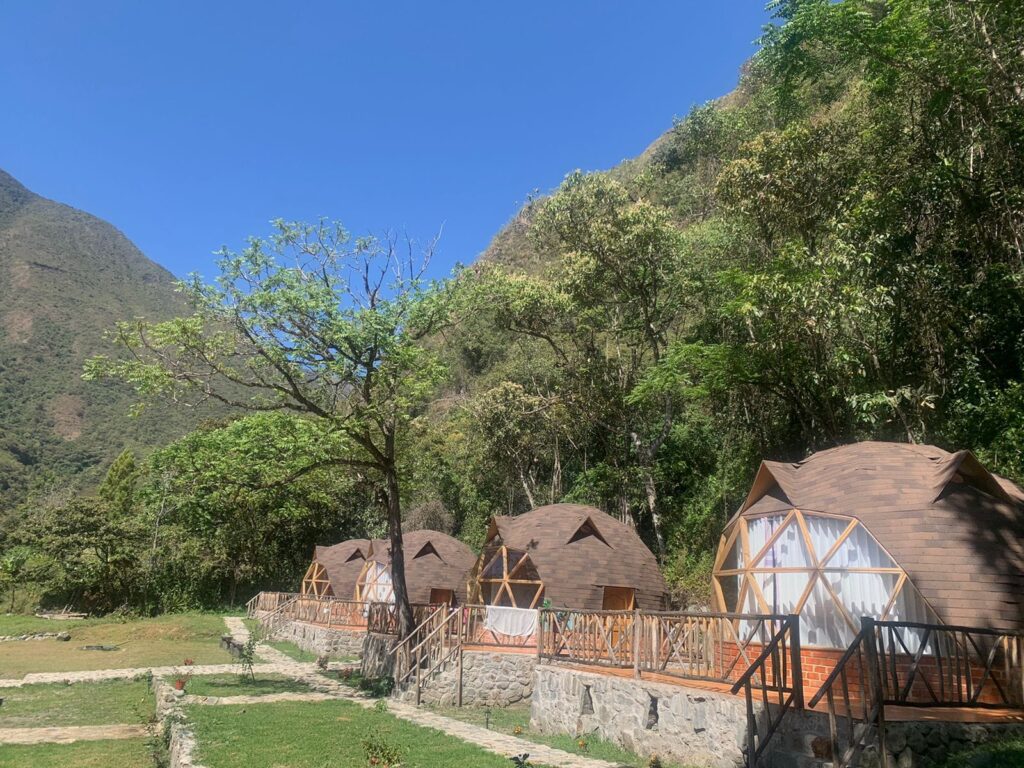
Optionally, travelers can also stay overnight in the Salkantay domes by IPT (Incredible Peru Tours), a comfortable and unique alternative to rest in a special natural environment before continuing the experience.
Wake-up time: between 4:00 and 5:00 a.m.
Departure from Soraypampa campsite to cross the pass usually takes place between 4:30 and 5:30 in the morning, depending on the operator and time of year. In months with more sunlight, departure may be slightly later because sunrise comes earlier. In colder months, the early start also aims to cross the pass before the wind intensifies as the glacier warms up mid-morning.
Breakfast is served before departure, usually starting at 4:00 a.m. At that time, the dining tent or kitchen area is lit by headlamps and creates a cozy contrast with the darkness and cold outside. Most participants eat more than their early appetite calls for, because the guide and cook explained the night before that this breakfast is the fuel for the next four to five hours.
The first kilometers: darkness, headlamps, and the Salkantay silhouette
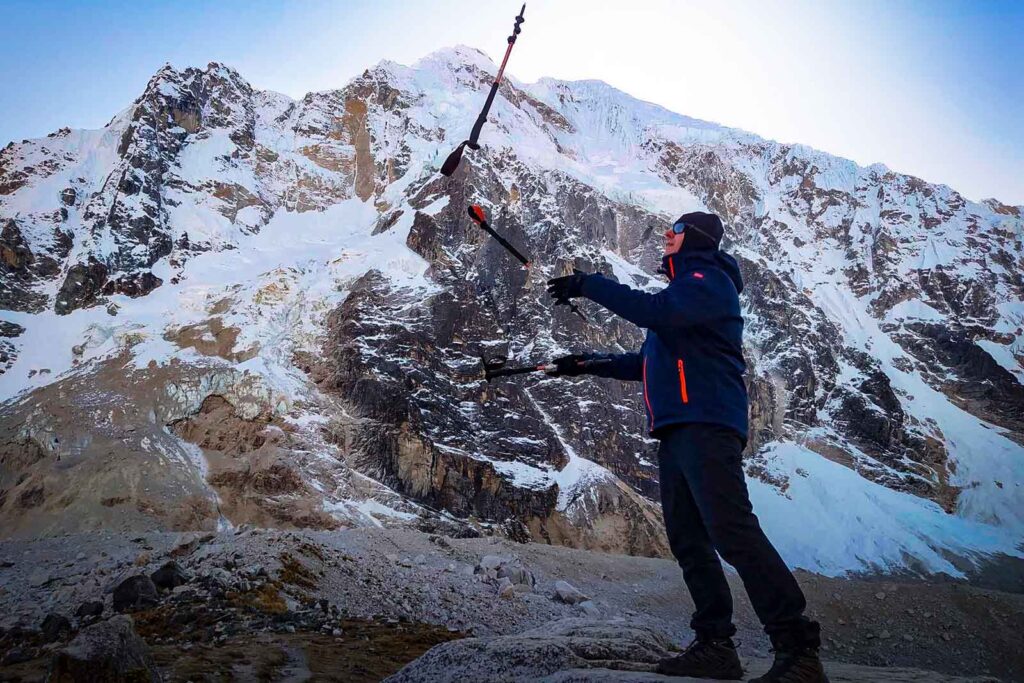
The hike toward the pass begins with headlamps on. The trail leaves the campsite across grassland terrain and ascends the side of the glacial cirque in zigzags, with a slope that is moderate at first and gradually becomes steeper as altitude is gained.
In the darkness before sunrise, the Salkantay mountain is not seen but sensed: a darker mass against the sky that occupies the entire northern horizon and visually grows as the trail approaches. The stars at that moment, with complete absence of light pollution and the clean, dry atmosphere of high altitude, have a density that most participants have never seen at sea level. Many Salkantay groups describe these first dark kilometers as one of the most quietly beautiful moments of the five days.
The pace in this section should be consciously slower than the terrain might suggest. Altitude already exceeds 4,000 meters before reaching the steepest section, and the body is working with less oxygen than it is used to. The guide sets the pace from the beginning, and the recommendation is to follow it without trying to overtake or match the faster hikers.
Sunrise over the glacier: the sequence of colors
Between 4,000 and 4,400 meters of altitude, depending on the group’s pace and exact departure time, sunrise over the Salkantay glacier occurs. It is one of the most visually intense moments of the trek and the one that varies the most depending on sky conditions.
On clear days, the process is as follows: the horizon begins to lighten with a bluish gray that gradually shifts to pink and orange. When the first rays of sunlight hit the summit, the snow lights up with a warm orange tone that lasts only a few minutes before full daylight turns it white. The glacier at that moment, seen from less than a kilometer away along the ascent trail, creates an image that no photo filter improves because reality already has the saturation that any later editing would try to artificially add.
On days with low clouds, the process is different but no less impressive. The mist surrounding the pass moves with the wind and creates intermittent windows of visibility: the glacier appears for thirty seconds and disappears for three minutes, the trail becomes visible and disappears depending on cloud density, and the hiker moves through an environment that seems to change dimension at every section. For those with the right mindset, this version of the ascent is just as valuable photographically as clear skies, although it requires more patience and tolerance for visual uncertainty.
The final ascent: the last 500 meters before the pass
The last 500 meters of ascent before reaching Salkantay Pass are the most demanding of the entire day and the ones that most differentiate those who are well acclimatized from those who are not. The terrain becomes more irregular, with rock blocks and, in some sections, glacial moraine that requires more frequent use of trekking poles. The slope is steep, and each step requires more conscious and controlled breathing than in previous sections.
At this stage, group dynamics typically change as each person finds their own rhythm and the distance between faster and slower hikers increases. The guide usually stays with the slower participants to ensure no one is left unsupported at the highest altitude section. Those who arrive first at the top wait for the rest before beginning the descent, and that moment when the whole group gathers at the pass carries its own emotional weight.
Mild altitude sickness symptoms are common at this point for most people: moderate headache, more labored breathing, and fatigue that does not match the distance walked. These are normal responses of the body at that altitude and do not necessarily indicate a problem. However, any more severe symptoms such as dizziness, persistent nausea, disorientation, or chest pressure should be immediately reported to the guide.
At the summit: what you see and what you feel
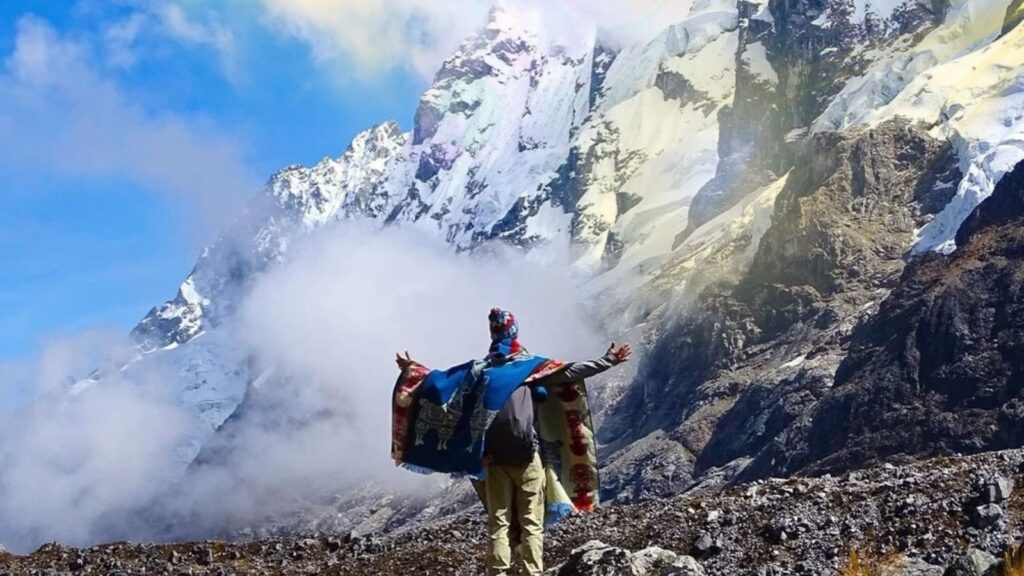
Reaching Salkantay Pass at 4,630 meters is an experience that each person processes differently. Some arrive visibly euphoric, others arrive in silence looking for a place to sit, some take out their camera before catching their breath, and others simply stand still for several minutes taking in the landscape.
At the pass, the northern glacier of Salkantay is less than one kilometer away in a straight line. The ice and rock wall forming the mountain’s north face dominates the entire northern view. To the south, the valley that the trail will descend opens up deeply, with the landscape clearly changing from dark green vegetation to open sky on clear days. In all directions, weather permitting, there are snow-covered mountain ranges stretching to the horizon.
Wind at the pass can be very strong, and the perceived temperature drops several degrees below the actual temperature. Staying more than ten or fifteen minutes without movement causes the body to cool quickly. The waterproof jacket and gloves in your backpack are needed as soon as you stop moving, not ten minutes later.
The descent: the other side of day two
The descent from Salkantay Pass to Chaullay campsite is the part of day two that most people underestimate if they only prepared for the ascent. The total elevation loss exceeds 1,500 meters over several hours of continuous descent, with terrain varying from rocky glacial zones to moist dirt trails in the lower valleys.
In the first sections of descent, glacial moraine terrain requires constant attention to foot placement. There is no technical risk, but it is a type of walking on uneven surfaces that requires active use of trekking poles at all times. As the trail descends and vegetation begins to appear, the terrain softens, but the slope can still be steep in some sections.
The knees are the main point of attention on this descent. People without prior experience in long mountain descents often begin to feel joint impact after the second hour, especially if they have not used trekking poles from the start. Taking short, controlled steps, placing the heel firmly before the forefoot, significantly reduces impact compared to taking long, hurried strides.
Chaullay campsite, where the second day ends, is usually reached between 2:00 and 4:00 in the afternoon. The temperature difference between the pass and this campsite, at around 2,800 meters of altitude, can exceed fifteen degrees within the same day. The warmth of the transition valleys after hours of cold at the pass creates a contrast that the body receives with relief and that the dinner prepared by the cooking team makes especially enjoyable.
What participants remember about the pass years later
When people who have done the Salkantay Trek are asked what moment they remember most from the entire journey, most mention Salkantay Pass. Not always the summit itself: sometimes it is the start in darkness with headlamps, sometimes the sunrise over the glacier halfway up, and sometimes the first view of the southern valley from the top with a landscape completely different from the northern side.
What these memories have in common is their intensity: in just a few hours of hiking, the second day of the Salkantay Trek accumulates more physical, visual, and emotional experiences than most full days of travel in any other destination. That intensity is what makes Salkantay Pass not just a point on a map, but a lasting reference.
Do you want to cross Salkantay Pass with the right preparation and guides who know every section of the route? At Incredible Peru Tours, we operate the Salkantay Trek with full field equipment, specialized guides, and logistics handled so you can focus all your energy on experiencing the pass.


