

Ollantaytambo is a town of Inca origin and an archaeological complex in the Sacred Valley of the Incas, at about 2,792 m.a.s.l. and roughly 72 km northwest of Cusco. It stands out for preserving an Inca street layout that’s still inhabited, for its terraces and temples built into a mountainside, and for being one of the main train stations serving Machu Picchu. On a visit you can tour the archaeological site, walk stone streets lined with water channels, see the qolqas of Pinkuylluna, and spend the night before continuing on to Aguas Calientes.
Why visit Ollantaytambo?
Ollantaytambo is one of the most complete destinations in the Sacred Valley because it brings together archaeology, local life, scenery, and transportation connections in a single place. Unlike other archaeological centers in the area, here the town itself is part of the visit: its narrow streets, irrigation channels, and walls preserve an urban organization dating back to the Inca period.
The archaeological complex lets you take in massive terraces, ceremonial enclosures, fountains, and defensive sectors. From the upper areas you can also see the valley, the town, and the nearby mountains. On top of that, Ollantaytambo simplifies logistics for travelers heading to Machu Picchu, since numerous daily trains to Aguas Calientes depart from its station.
History and importance of Ollantaytambo
Ollantaytambo was a highly significant Inca center during the reign of Pachacutec, probably from the 15th century onward. Archaeological evidence shows it served agricultural, administrative, religious, and military functions. Its location made it possible to control access through the Patacancha River valley and connect different sectors of the Sacred Valley.
The terraces turned steep hillsides into productive land and helped manage water and soil. The enclosures, plazas, channels, and storehouses reflect complex planning. Some popular stories link the place to figures and tales passed down over centuries, but it’s worth separating those traditional interpretations from the available archaeological evidence.
Ollantaytambo, the living Inca town
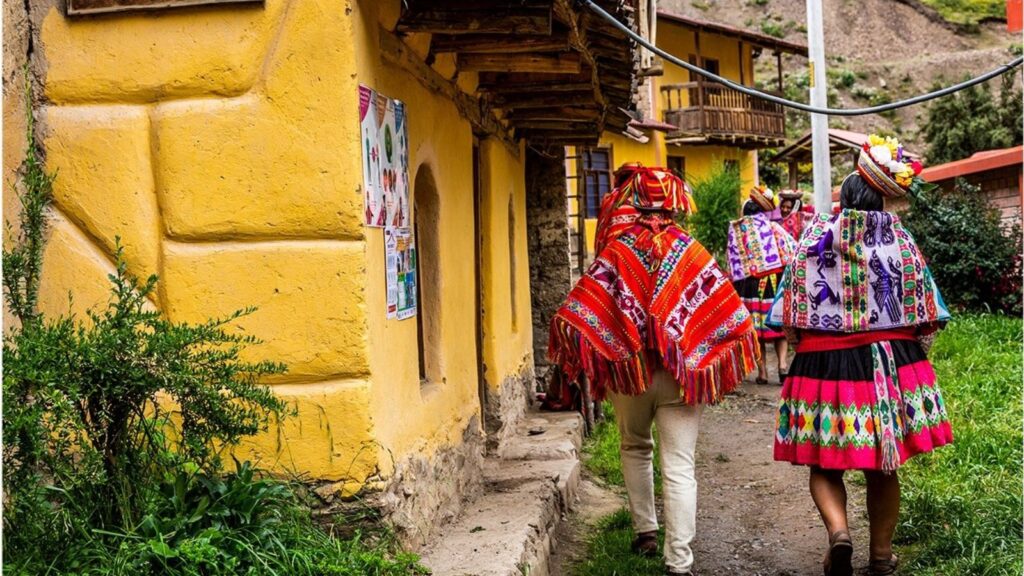
Ollantaytambo is often called a living Inca town because its historic urban design remains part of daily life. Many homes today stand on Inca foundations, while several streets keep their stone walls, narrow entrances, and a block layout that retains features of the ancient settlement.
The water channels running through town still serve a practical purpose. Walking the sectors near the square lets you see how residents, businesses, lodgings, and tourist services share a space that doesn’t function purely as a museum. So walk through it respectfully, without entering private courtyards or homes.
The battle of Ollantaytambo
In 1537, Ollantaytambo was the site of a clash between the forces of Manco Inca and Spanish troops led by Hernando Pizarro. The Inca army used its knowledge of the terrain, the terraces, and the channels to defend access to the town and slow the invaders’ advance.
The chronicles indicate that Manco Inca won a temporary victory here. Even so, Spanish military pressure continued and the Inca leader later withdrew toward Vilcabamba. The story of the battle helps explain why Ollantaytambo’s location and structures also served a defensive purpose.
What to see at the Ollantaytambo archaeological site
The Ollantaytambo archaeological site is toured mainly along the hillside overlooking the town. The circuit takes in terraces, stairways, stone enclosures, fountains, ceremonial sectors, and spaces tied to the administration of the settlement. The visit involves walking uphill, so set aside time to pause at the panoramic points.
The main entrance is near the square and the bridge over the Patacancha River. Most visitors walk the terraces first and continue on to the Temple of the Sun. A guide can add context about the function of each sector, though you can also tour the complex on your own.
Inca terraces and stairways
The terraces cover much of the mountain and showcase the Inca handling of slopes, drainage, and agricultural production. Some served a productive function, while others helped organize and protect access to the upper sectors. Their stone walls are shaped to the contours of the land.
The route includes tall stairways that are uneven in certain stretches. The altitude can make the climb feel more demanding, even for travelers used to walking. Move slowly, take short breaks, bring water, and don’t rush the ascent if you’ve just arrived from Cusco.

Temple of the Sun and Wall of the Six Monoliths
The Temple of the Sun is one of the best-known sectors of the complex. It sits in an elevated zone and is associated with ceremonial activities, though not all of its elements survived intact. Its position helps you grasp the scale of the architectural project developed on this hillside.
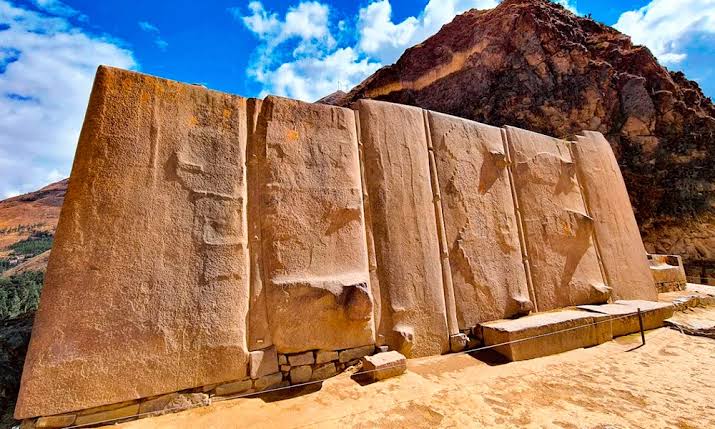
This sector holds the Wall of the Six Monoliths, made up of large blocks fitted together with precision. The stones show fine workmanship and are joined with smaller pieces. There are various proposals about how the blocks were transported, what they were for, and what the ensemble meant, but not all of them can be considered settled.
Temple of the Ten Niches
The Temple of the Ten Niches takes its name from the trapezoidal niches visible in one of its walls. This type of opening is characteristic of Inca architecture and shows up in spaces tied to ceremonial, administrative, or religious activities.
The niches may have held ritual objects or served a symbolic purpose within the enclosure. During your visit, it’s worth studying the shape of the stones, the fit between blocks, and the difference between the finer walls and the more utilitarian sectors of the complex.
Baño de la Ñusta and ceremonial fountains
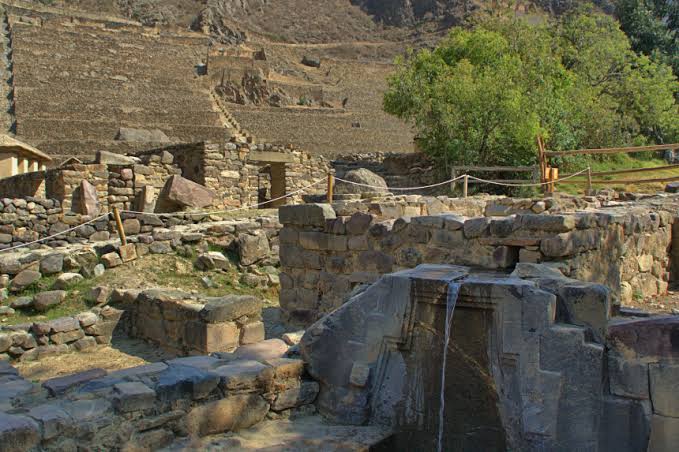
Water was a central element in Ollantaytambo’s planning. Throughout the complex you’ll see carved channels, fountains, and enclosures tied to water management. These systems distributed the resource by gravity and reflect technical knowledge applied to farming, water supply, and possible ceremonial practices.
The name Baño de la Ñusta is used today for a worked stone fountain with channels and small waterfalls. The name comes from traditional interpretations and shouldn’t be taken as definitive proof of who used the place. What can be verified is the quality of the hydraulic system and how it’s integrated with the enclosure.
Manyaraki enclosure
Manyaraki is a sector made up of walls, entryways, plazas, and spaces that help you understand the internal organization of the archaeological site. Its structures show a mix of circulation areas, enclosed rooms, and open zones that likely had distinct uses.
As you walk through it, look at the trapezoidal doorways, the height of the walls, and the way the paths connect different levels of the mountain. Not every sector has extensive signage, so a guided explanation can help you identify the visible elements without getting in the way of other visitors.
Best viewpoints at the archaeological site
The best spots for looking out over the town are on the middle and upper terraces, especially on the climb toward the Temple of the Sun. From there you can see the street layout, the Patacancha and Urubamba rivers, the nearby mountains, and the Pinkuylluna structures across from the complex.
To take photos without blocking the paths, stop at wide landings or beside walls where you won’t obstruct the stairways. Avoid sitting on archaeological structures, crossing protective ropes, or using tripods in narrow passages. Morning light generally favors the views toward the town.
What to see in the town of Ollantaytambo
The town of Ollantaytambo deserves a walk of its own, apart from the archaeological complex. Its streets, channels, homes, and squares let you see how an ancient urban plan still runs through everyday life. You can walk it before visiting the ruins, after the archaeological circuit, or over an afternoon if you’re staying the night.
The heaviest concentration of restaurants, lodgings, ATMs, shops, and transportation agencies is around the Plaza de Armas and the nearby streets. Even so, walking a few blocks away is enough to find quieter areas with wooden doors, stone walls, and channels still crossing the town.
Plaza de Armas of Ollantaytambo
The Plaza de Armas is the main reference point for getting your bearings in Ollantaytambo. From here you can walk to the entrance of the archaeological site, to the Inca streets, and, with a bit more time, to the train station. It’s also a practical place to take a break before or after your walks.
The surrounding area has restaurants, cafés, bakeries, souvenir shops, currency exchanges, and small services for travelers. Prices tend to run higher than in less touristy towns, especially around train times. It’s worth asking the cost before ordering and carrying some cash for small purchases.
Inca streets and water channels
Ollantaytambo’s Inca streets preserve narrow cobbled stretches, stone walls, and channels carrying running water. The best-known sectors are behind and around the square, though the appeal lies precisely in walking without hurrying and noticing the details of the structures.
The channels are still used to carry water through town. During the rainy season they can run higher, so keep an eye on children and avoid resting luggage on their edges. Remember that many of these buildings are homes, not spaces open to the public.
Qolqas of Pinkuylluna
The qolqas of Pinkuylluna are ancient storehouses built into the mountain across from the main archaeological site. Qolqas were used to store agricultural products and other resources, taking advantage of the ventilation and the elevated position. The climb gives you a wide view of the town and Ollantaytambo’s terraces.
The trail starts near the northern edge of town and the climb usually takes 30 to 45 minutes, depending on your pace and acclimatization. It’s a steep path with loose stones in places and plenty of sun exposure. Wear shoes with good grip, check whether access is open, and don’t climb during storms or in low light.
Market and local life
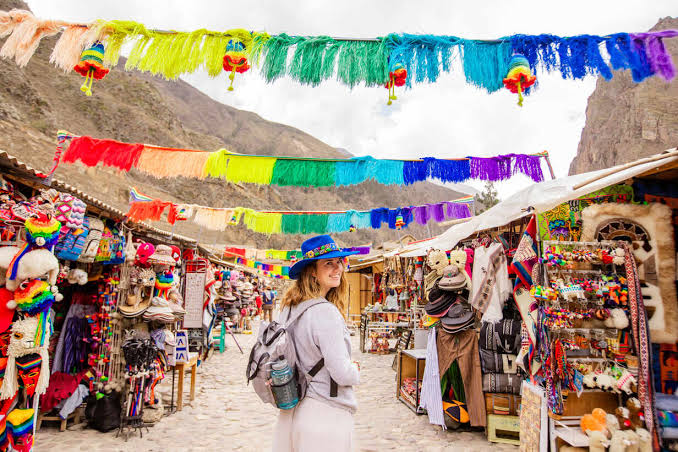
Ollantaytambo’s market and small shops let you take in part of the town’s daily activity. They sell fruit, basic goods, drinks, textiles, crafts, and traveler supplies. It’s a good place to buy water, snacks, or simple food before a hike.
There are also stalls geared toward visitors, especially in higher-demand seasons. If you’re buying crafts, ask about the origin of the materials and compare prices at your own pace. The town isn’t just a stop on the way to Machu Picchu: many families live, work, and study here year-round.
Admission, prices, and hours at Ollantaytambo
To enter the Ollantaytambo archaeological complex you normally need the Cusco Tourist Ticket, managed by COSITUC. A standalone admission for this site isn’t usually sold. Prices, hours, points of sale, and conditions can change, so confirm them directly with COSITUC or at an official point before you travel.
The price information below reflects reference rates verified for 2024 and 2025 in the information published by the Cusco Tourist Ticket system. Bring your passport or ID, since the ticket is personal and may be requested at the entrance.
Which ticket do you need to visit Ollantaytambo?
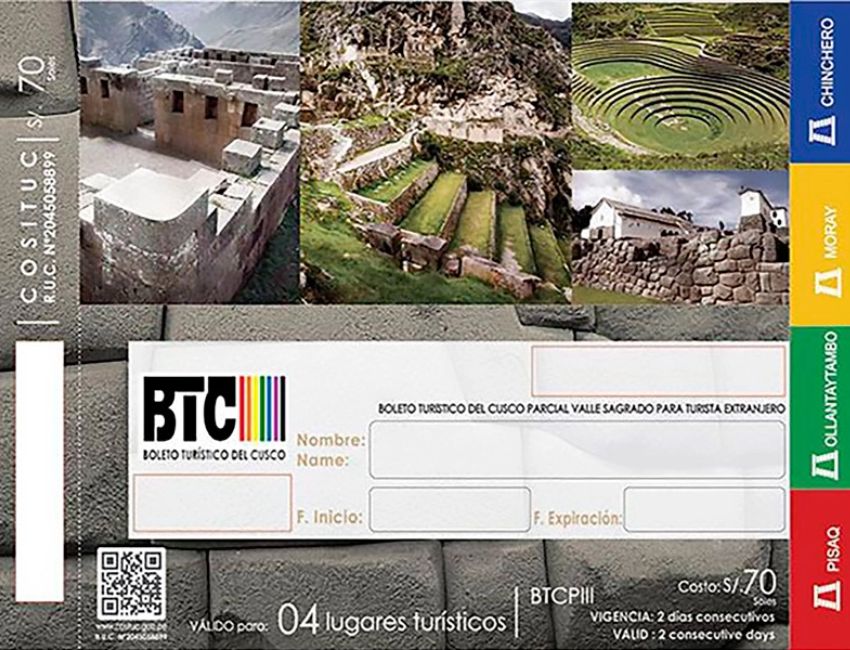
The Partial Tourist Ticket for the Sacred Valley covers Ollantaytambo, Pisac, Chinchero, and Moray. It’s typically valid for two consecutive days from first use, making it a good fit if your route centers on these places and you don’t plan to enter museums or sites near Cusco.
The Full Tourist Ticket covers the Sacred Valley circuit attractions plus other sites such as Sacsayhuaman, Qenqo, Puca Pucara, Tambomachay, Tipon, Pikillacta, and selected municipal museums. It’s typically valid for ten days. Check the current list, since the makeup of the circuits can change.
Admission price and where to buy it
As a reference, the Partial Tourist Ticket for the Sacred Valley usually costs around USD 19 for foreign visitors and USD 11 for national visitors or students with valid accreditation, roughly 70 and 40 soles. The Full Tourist Ticket usually costs about USD 35 for foreign visitors and USD 19 for nationals or students, roughly 130 and 70 soles.
Rates should be verified before purchase, since they can be updated. The ticket can be bought at official COSITUC offices in Cusco and, depending on operational availability, at the ticket booths of some included sites, such as Ollantaytambo. Carry cash in soles as a practical measure and keep your receipt throughout the validity period.
Archaeological site hours
The Ollantaytambo archaeological site generally opens daily from roughly 7:00 a.m. to 5:30 p.m. Last admission may fall before closing time to allow for an orderly exit from the complex. If you want to finish the route without rushing, arrive by mid-afternoon at the latest.
Confirm the current hours through official sources before your visit. Conservation work, heavy rain, local holidays, or safety measures can cause occasional changes. Don’t schedule your entry to the complex too close to your train departure for Machu Picchu.
How to get to Ollantaytambo from Cusco
From Cusco you can reach Ollantaytambo by shared van, taxi, or private transportation, and on a Sacred Valley tour. The drive normally takes 1 hour and 30 minutes to 2 hours, depending on your departure point, traffic, stops, and the route taken.
The shared van is the cheapest option, while a private service offers more comfort and lets you bring luggage without squeezing into tight spaces. Tours are useful if you want to visit several places in the same day, though their schedules tend to be less flexible.
How to get there by shared van
Shared vans to Ollantaytambo generally leave from the Pavitos street area in Cusco, near the Grau bridge. Ask for vehicles going directly to Ollantaytambo and confirm whether they’ll stop in Urubamba. The trip normally costs USD 3 to USD 5 per person, around 10 to 18 soles, depending on the season and type of vehicle.
Estimated time is 1 hour and 45 minutes to 2 hours. Vehicles generally arrive in sectors near the center of Ollantaytambo, from which you can walk to the square or take a mototaxi if you have luggage. Leave early if you have a train booked, since shared vans don’t run on strict schedules.
How to get there by taxi or private transportation
A taxi or private transfer from Cusco to Ollantaytambo usually takes 1 hour and 30 minutes to 2 hours. It’s a convenient option for families, groups, travelers with large suitcases, or anyone who wants to stop at viewpoints, Chinchero, Maras, Moray, or Urubamba along the way.
The cost depends on the type of vehicle, the number of passengers, the itinerary, and whether it’s a direct transfer or one with stops. Before setting off, agree on the total price in dollars or soles, the waiting limit, the drop-off point, and whether the driver can carry all your luggage. A private vehicle tends to work out better when the cost is split among several people.
How to visit Ollantaytambo on a tour
Organized Sacred Valley tours usually combine Ollantaytambo with Pisac, Chinchero, Moray, Maras, or Urubamba. They’re a practical option if you have one day and prefer to have transportation and commentary along the way, though keep in mind that free time at each stop may be limited.
If you’re looking for an organized route covering the valley’s main highlights, the Classic Sacred Valley Tour 1 Day coordinates the transfers and the order of visits. If you’re catching a train the same day, confirm in advance that the tour schedule works with your departure from Ollantaytambo.
Ollantaytambo and the train to Machu Picchu
Ollantaytambo is one of the main departure points for trains to Machu Picchu Pueblo, also called Aguas Calientes. PeruRail and Inca Rail operate services from here with different categories, schedules, and fares. For many travelers, sleeping in Ollantaytambo cuts down the road transfer from Cusco before catching the train.
Train tickets should be booked in advance, especially between May and September, on holidays, and around Christmas or New Year. Availability depends on demand and the type of service. Check that the name on the ticket matches your passport exactly.
How to get to the train station
The Ollantaytambo train station is in the lower part of town, about 10 to 15 minutes on foot from the Plaza de Armas, depending on your lodging and walking pace. The route is straightforward, though there can be a lot of mototaxi, traveler, and luggage traffic around departure times.
Show up at least 30 minutes before the departure listed on your ticket, or with more buffer if you need to pick up luggage, find your car, or are traveling in high season. Keep your passport and your digital or printed ticket handy. Don’t count on arriving at the last minute, since the train generally doesn’t wait for late passengers.
Is it worth sleeping in Ollantaytambo before Machu Picchu?
Yes, spending a night in Ollantaytambo is usually worth it if your train to Machu Picchu leaves early. You avoid leaving Cusco before dawn, reduce the risk of road delays, and can walk to the station from your lodging. You’ll also have more time to explore the town outside the busiest hours.
The main drawback is that you’ll need to book an extra night and move your luggage. Many travelers leave their large suitcase at their Cusco hotel and bring a backpack for one or two nights. This option is especially practical if you’re visiting the Sacred Valley before continuing on to Machu Picchu.
How much time to spend in Ollantaytambo
To see the archaeological site you need 1 hour and 30 minutes to 2 hours and 30 minutes. If you also want to walk the town, sit down for an unhurried meal, and climb Pinkuylluna, the better call is a full day or a night in Ollantaytambo.
A short visit works if you have a tight itinerary or a train later on, but it requires organizing your timing well. It’s not a good idea to try to cover the complex, Pinkuylluna, and catch a train in a few hours if you’re not yet acclimatized or you’re carrying luggage.
Time needed to tour the archaeological site
Touring the archaeological site usually takes 1 hour and 30 minutes to 2 hours at a moderate pace. Allow more time if you want to take photos, read the panels, rest on the stairways, or visit with a guide.
Travelers with reduced mobility, those with small children, or anyone newly arrived at altitude may need more time and might not complete all the upper sectors. Start early to walk in cooler temperatures and keep the visit from competing with your transportation schedule.
Visiting Ollantaytambo in half a day
With half a day you can tour the main archaeological site, walk the Plaza de Armas, and explore some of the nearby Inca streets. Plan on around two hours for the ruins and an additional hour for the town, not counting transfers, meals, or shopping.
On a short visit, you’ll normally have to leave Pinkuylluna for another occasion or limit your time in restaurants and shops. If you have a train to catch, visit the archaeological complex first, return to your lodging for your luggage, and head to the station with enough buffer.
Visiting Ollantaytambo in a full day
A full day lets you enter the archaeological site early, walk the town at an easy pace, and have an unhurried lunch. Afterward you can explore the streets near the square, see the market, and climb Pinkuylluna if the weather, the hour, and your fitness allow.
This option is better for travelers who want to understand the place beyond its rail connection. It also makes it easier to adjust your plan if it rains, if you need to rest, or if you want to hire a local guide. If you sleep in town, you can split these activities between the afternoon you arrive and the following morning.
Best time of year and time of day to visit Ollantaytambo
The dry season, generally from May to September, brings more clear-sky days and a lower chance of rain during hikes. It also coincides with the heaviest visitor traffic, so trains, lodgings, and services can sell out further in advance.
The rainy season, from November to March, brings greener landscapes and lower demand on some dates, but trails can be slippery and rain tends to concentrate in the afternoon. April and October are generally transition months with variable conditions. Visiting the archaeological site early helps you avoid large groups and the strongest midday sun.
Itinerary for visiting Ollantaytambo
The order of your visit depends on your arrival time, your booked train, and how acclimatized you are. These routes favor walkable stretches and leave room for breaks, photos, and shifting weather. Adjust the timing if you’re traveling with children, older adults, or luggage.
Before you start, check the complex’s opening hours and the status of the Pinkuylluna trail. If you have a train to Machu Picchu, treat the station as a fixed point in your itinerary and build everything else around that departure.
Half-day itinerary
Start early at the Ollantaytambo archaeological site and set aside 1 hour and 30 minutes to 2 hours for the terraces, the Temple of the Sun, and the main sectors. Come down carefully, especially if the stairways are wet, and save time to get back to the town center.
Then walk the Plaza de Armas and the Inca streets behind it. You can grab a coffee or a light bite before continuing to the train station or heading back to Cusco. This plan doesn’t include Pinkuylluna, since the climb takes extra time and energy.
Full-day itinerary
Visit the archaeological complex in the morning, when it’s cooler and groups tend to be thinner. Then walk the square, the Inca streets, and the market, and have lunch in town. Leave enough buffer to rest, especially if you came from Cusco the same day.
In the afternoon, climb Pinkuylluna only if the trail is dry, there’s enough daylight, and you feel good at altitude. The hike can take 1 hour and 30 minutes to 2 hours counting the climb, the descent, and photos. End the day in town, or get to the station with time to spare if you’re spending the night in Aguas Calientes.
Tips for visiting Ollantaytambo
Try to spend at least one night in Cusco or the Sacred Valley before taking on demanding hikes. Ollantaytambo sits lower than Cusco, but the stairways at the complex can feel intense if you’ve just arrived from a city at sea level.
Bring layered clothing, a waterproof jacket in the rainy season, sunscreen, a hat, and a reusable water bottle. The sun can be strong even on cool days. Wear sneakers or boots with grippy soles, especially if you plan to climb Pinkuylluna or tour the site after rain.
Carry cash in soles for shared vans, mototaxis, small purchases, and some services. Don’t bring large luggage to the archaeological site, since the stairways and narrow paths make it hard to get around. Respect the signage, don’t climb on walls or remove stones, and don’t leave trash in town or on the trails.
Frequently asked questions about Ollantaytambo
These are some common questions that come up when planning a visit to Ollantaytambo. The answers work as practical guidance, but it’s worth confirming train schedules, access, and tickets close to your travel date.
Can you visit Ollantaytambo without a guide?
Yes, you can visit Ollantaytambo on your own as long as you have the corresponding Tourist Ticket. The circuit has defined paths and lets you see the main sectors without booking a guided visit.
A guide helps you interpret the enclosures, the terraces, the water systems, and the historical context. It can be a good option if it’s your first visit to the Sacred Valley or if you want a better grasp of details the signage doesn’t cover.
Is the climb to the Temple of the Sun difficult?
The climb to the Temple of the Sun involves numerous steps and can feel demanding because of the altitude. It doesn’t require technical gear, but it does take moderate effort, especially if you aren’t acclimatized.
Move slowly, take short breaks, and stay hydrated. If you feel a severe headache, dizziness, or shortness of breath that doesn’t improve with rest, head down and don’t push the hike.
Can you visit Ollantaytambo and Machu Picchu on the same day?
It’s possible on certain itineraries, but it usually isn’t advisable if you want to see both places at an easy pace. You’d have to coordinate your entry to Ollantaytambo, the transfer to the station, the train, the bus to Machu Picchu, and your entry time to the citadel.
The common approach is to give Ollantaytambo the afternoon before or a full morning, sleep in town or in Aguas Calientes, and visit Machu Picchu the next day. That way you reduce the risk of missing connections and make better use of each place.
Where can you store luggage in Ollantaytambo?
Many lodgings hold luggage for guests before check-in or after check-out. There may also be private storage services near the station or at local businesses, though availability and terms vary.
Ask about the price, hours, liability for damage, and how your luggage will be tagged before leaving it. For the train to Machu Picchu, travel with only a backpack or small bag that meets your rail operator’s conditions.
Can you combine Ollantaytambo with Pisac, Maras, and Moray?
Yes, you can combine Ollantaytambo with Pisac, Maras, and Moray in a long day using private transportation or a tour with a tight itinerary. That said, your time at each stop will be limited and you probably won’t be able to walk Pinkuylluna or explore the town at an easy pace.
For a more balanced visit, split the route across two days: one for Pisac, Maras, and Moray, and another for Ollantaytambo. This approach is especially recommended if you plan to take the train to Machu Picchu from Ollantaytambo.


