
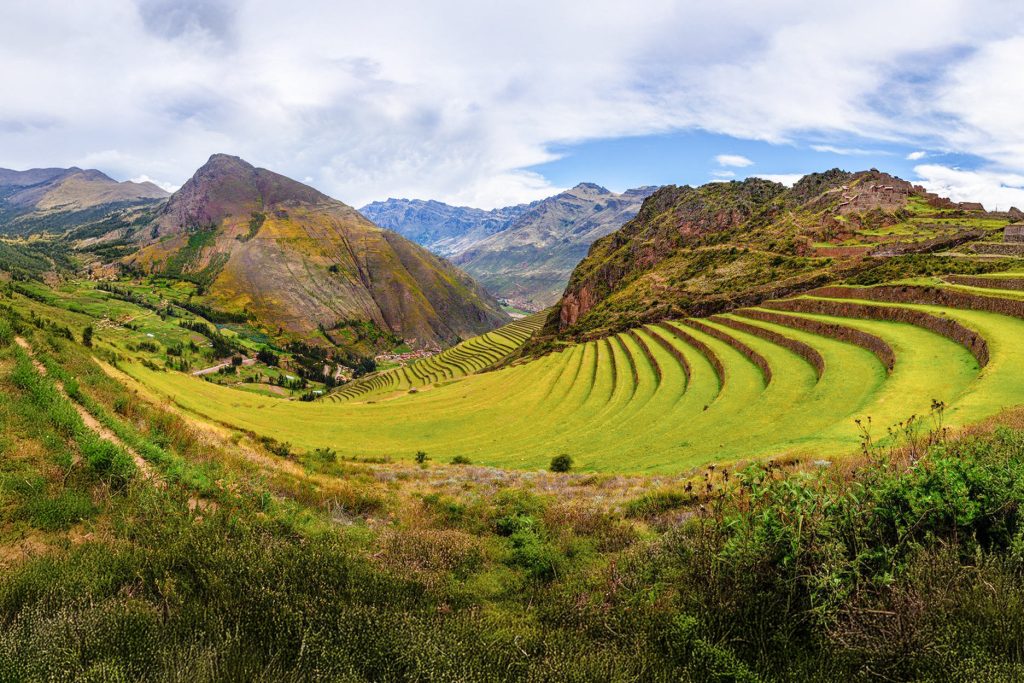
Pisac is an Inca town and archaeological complex in the Sacred Valley of the Incas, about 33 km from Cusco and roughly 2,970 m.a.s.l. It’s a top stop for its agricultural terraces, stone enclosures, views over the valley, and one of the best-known artisan markets in the area. From Cusco, it’s about an hour by road; to see the ruins, the market, and the town without rushing, a full day works best, though a half-day visit can work if you plan it well.
Why visit Pisac in the Sacred Valley?
Pisac brings three different experiences together in one destination: a sprawling archaeological park, a lively town with restaurants and cafés, and a market selling textiles, ceramics, jewelry, and local products. That makes it a fit for travelers looking for history as well as for those who want to see the Sacred Valley without spending all day on the road.
The archaeological complex sits on a mountainside above the town. From there you can see the terraces dropping toward the valley and the course of the Vilcanota River. The visit helps you understand how the Incas made use of sloping ground for farming, territorial control, and ceremonial activities.
Compared with other Sacred Valley sites, Pisac lets you pair an archaeological visit with free time in town. The thing to keep in mind is that the ruins require additional transportation or a demanding hike from the urban area, so it’s worth calculating your timing before leaving Cusco.
What to see in Pisac: the essentials
Pisac’s attractions are split between the upper area, where the archaeological park is, and the town in the valley. To make the most of your visit, start with the ruins early, follow with lunch in town, and save the market for the end.
If you only have a few hours, prioritize the archaeological park and the main square. If your trip falls on the busiest market days, it’s worth setting aside more time to browse the stalls and compare products before buying.
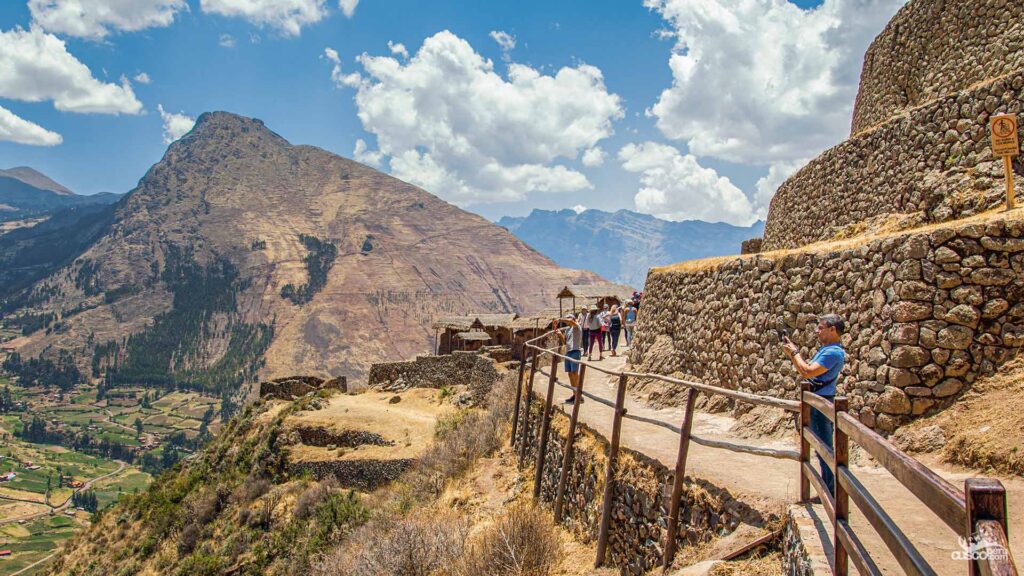
Pisac Archaeological Park
Pisac Archaeological Park is one of the largest Inca sites in the Sacred Valley. It’s made up of terraces, residential sectors, ceremonial areas, water channels, pre-Hispanic cemeteries, and paths connecting different points on the mountain.
The visit isn’t a single enclosure. The route crosses several sectors and involves elevation changes, stairways, and uneven trails. Wearing shoes with good grip and setting aside two to three hours lets you see the main highlights without rushing.
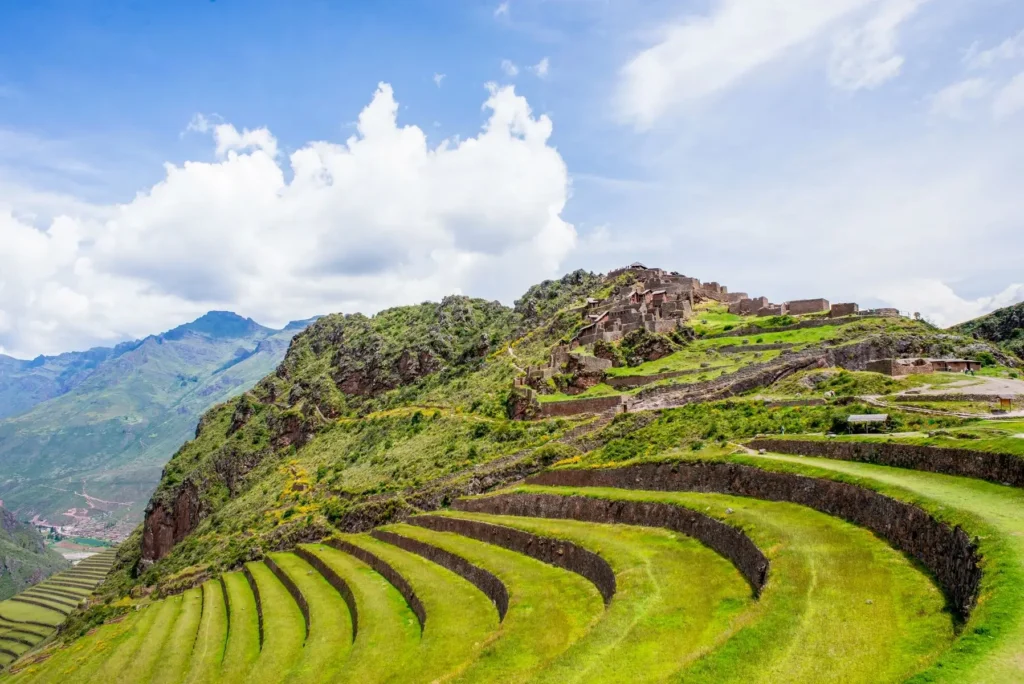
Agricultural terraces and viewpoints
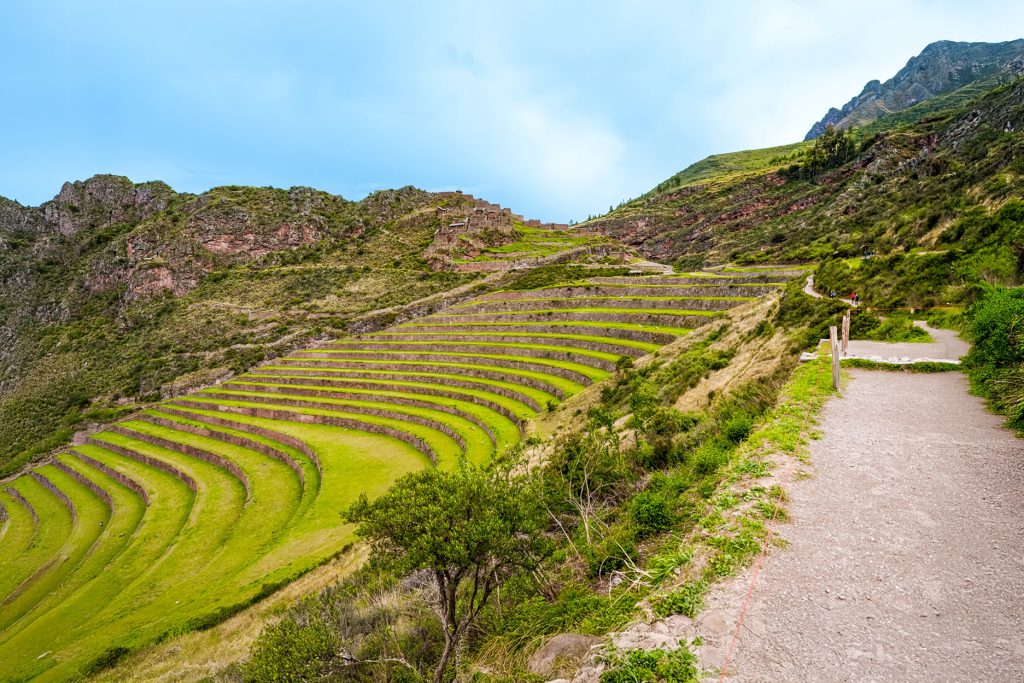
Pisac’s terraces cover broad hillsides and showcase the Inca farming system on steeply sloping ground. Their retaining walls stabilized the soil, managed water, and created growing surfaces at different levels.
From the viewpoints you get an open view of the Sacred Valley, the Vilcanota River, and the nearby communities. Early morning generally offers better light and fewer visitors, while midday brings stronger sun exposure.
Inca temples and structures
The upper zones of the complex hold ceremonial enclosures and stonework cut with greater precision than in the farming sectors. The Temple of the Sun is one of the most visited spaces thanks to the finish of its walls and its position within the site.
You’ll also find residential enclosures, fountains, channels, and trapezoidal doorways. A local guide can help you read these spaces with more context, though you can also tour the park on your own by following the marked paths and respecting the restricted areas.
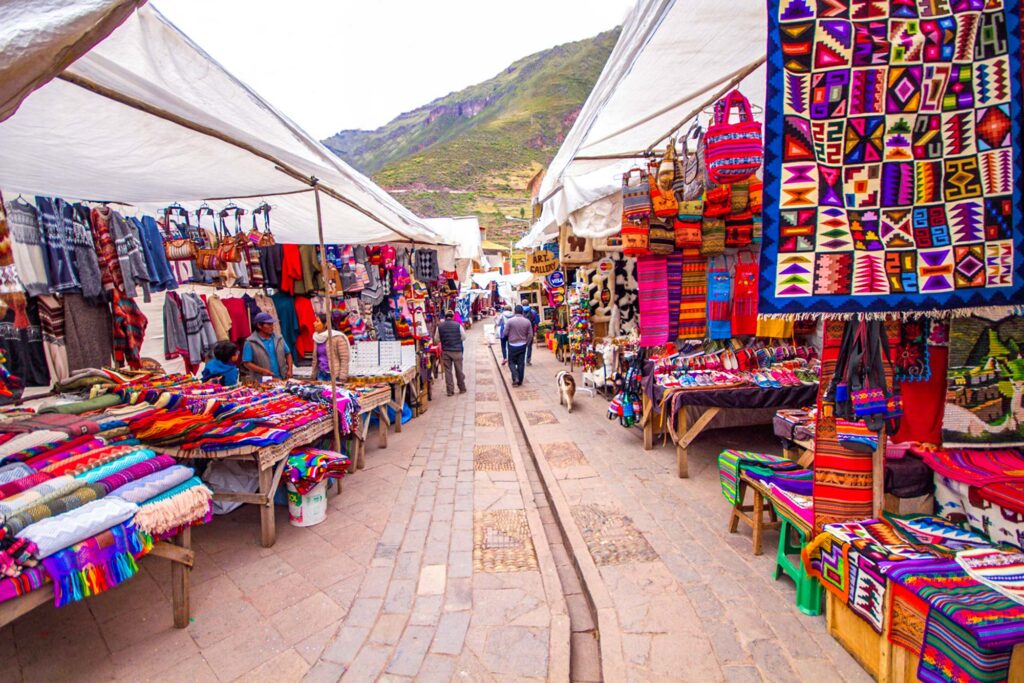
Pisac market
The Pisac market gathers stalls selling alpaca and wool textiles, knitted garments, ceramics, musical instruments, silver jewelry, paintings, souvenirs, and farm products. The selection is wide, so it’s worth checking quality, materials, and finishes before deciding on a purchase.
The market usually operates every day on a smaller scale, while Tuesdays, Thursdays, and Sundays tend to draw more vendors and visitors. Hours and stall layout can shift with the season, holidays, or local rules, so it’s a good idea to confirm once you arrive.
To buy crafts, it helps to carry cash in soles, though some businesses accept cards or digital payments. Negotiating is common at many stalls, but do it respectfully and without assuming every item shares the same origin or level of craftsmanship.
Main square and town of Pisac
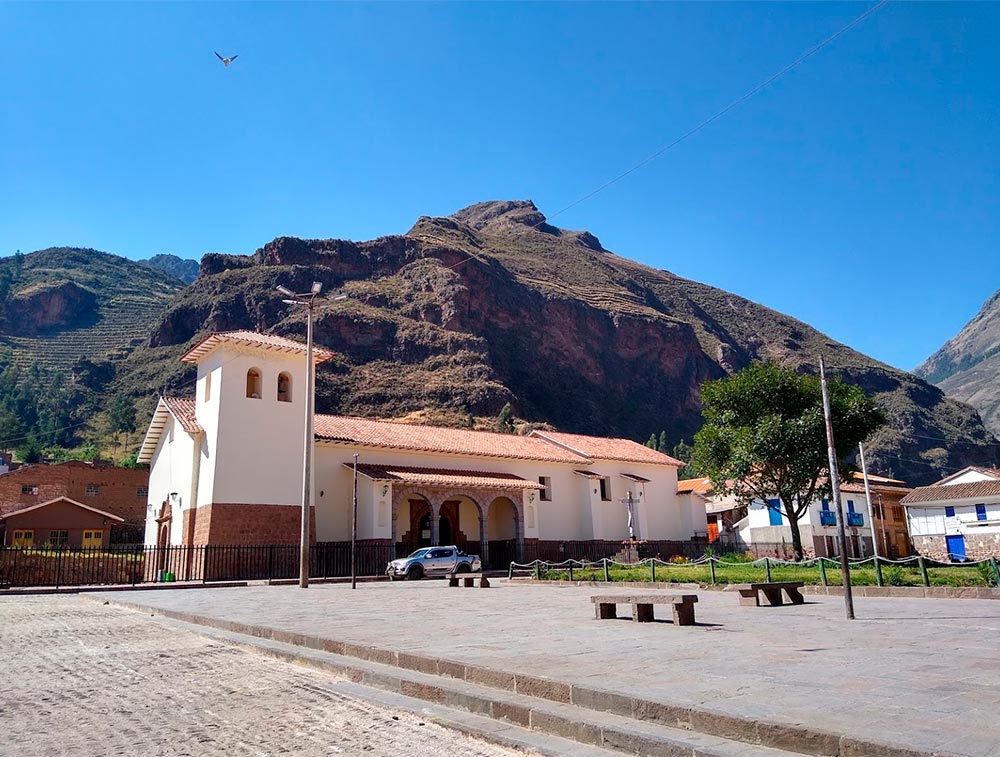
The town of Pisac is organized around its main square, where you’ll find craft stalls, restaurants, cafés, and small shops. It’s a practical spot to rest after visiting the ruins, have lunch, or catch a ride back to Cusco.
The nearby streets keep a calmer pace than the city of Cusco, though market days ramp up the activity considerably. There are Peruvian food options, vegetarian spots, and cafés geared toward travelers who decide to spend more time in town.
Beyond shopping, walking through the center lets you take in everyday local life. If you’re looking for lower prices on food or basic goods, it’s usually better to head a few blocks away from the tourist stalls on the square.
How to get to Pisac from Cusco
From Cusco you can reach Pisac by shared van, taxi, private transportation, or an organized tour. The shared van is the cheapest option, while a taxi or private vehicle gives you more freedom to leave early, drive straight up to the archaeological park, or continue on to other points in the Sacred Valley.
Travel time usually runs from 45 minutes to 1 hour and 15 minutes, depending on traffic in Cusco, the route, and any stops. Tours are a good option if you want to combine several destinations in a single day without coordinating each transfer yourself.
How to get from Cusco to Pisac by shared van
Shared vans to Pisac generally leave from the area around Puputi street and near the Coliseo Cerrado in Cusco, heading toward the Pisac highway. The trip normally takes 50 minutes to 1 hour and 15 minutes, depending on traffic and how many stops the vehicle makes.
As a reference, the fare usually runs USD 1.50 to USD 3 per person, roughly 5 to 10 soles. Rates change by company, time of day, and season, so ask the price before getting in. Ask to be dropped off at the square or at the Pisac bridge, near the town center and the market.
This option suits travelers on a tight budget without rigid schedules. It’s not the most comfortable if you’re carrying large luggage or want to reach the upper entrance to the ruins first, since from town you’ll still need another taxi or a hike.
How to get to Pisac by taxi or private transportation
A taxi or private transfer from Cusco to Pisac generally takes 45 minutes to 1 hour. The cost varies depending on whether the service is one way, includes waiting time, drives up to the archaeological park, or continues on to other Sacred Valley destinations.
For a simple transfer into town, a reasonable reference is USD 22 to USD 35 per vehicle, roughly 80 to 130 soles. Before setting off, agree on the price, the exact destination, and whether the driver will wait during your visit. Prices can climb in high season or if the vehicle has to pick you up in outlying parts of Cusco.
This option works well for families, small groups, travelers with limited mobility, or anyone who wants to enter the park early. It also makes it easier to combine Pisac with Urubamba, Ollantaytambo, or Chinchero without depending on public transportation schedules.
How to visit Pisac on an organized tour
Organized tours usually combine Pisac with other Sacred Valley sites and normally include transportation and a guide. They’re practical if you only have one day available, though free time at the market or in each archaeological sector may be limited by the group itinerary.
If you want to visit several destinations without arranging shared vans, taxis, and tickets on your own, a Sacred Valley Tour lets you handle the logistics in a single day. Before booking, check which sites are included, whether the tourist ticket is covered, and how much time is allotted to each stop.
Standard tours generally leave Cusco early and return in the late afternoon. If you’d rather take your time in Pisac, a private service usually gives you more room to walk through the ruins and browse the market without following a group’s pace.
How to get from the town to the Pisac ruins
The town of Pisac and the main entrance to the archaeological park are in different areas. The urban center sits at the bottom of the valley, while the most-used access to the ruins is high up the mountain, several kilometers away by road.
For that reason, taking a shared van from Cusco doesn’t put you at the entrance to the complex. From town you can go up by taxi, hike a trail with considerable elevation gain, or take a vehicle to the upper area and cover part of the archaeological route on foot going down.
Going up to the ruins by taxi
You can catch taxis near the main square, the market, or the streets close to the Pisac bridge. The ride to the park’s upper entrance usually takes 20 to 30 minutes, depending on road conditions and your exact starting point.
As a reference, the trip usually costs USD 8 to USD 14 per vehicle, roughly 30 to 50 soles. Confirm whether the price is per vehicle or per passenger, and agree on whether the driver will drop you at the upper entrance or wait for the return.
Going up by taxi saves energy and lets you tour the ruins mostly downhill. It’s the most convenient option for travelers short on time, people still acclimatizing to the altitude, or anyone who wants to avoid a long climb in the sun.
Hiking up
The hike from town to the ruins takes roughly 1 hour and 30 minutes to 2 hours and 30 minutes, depending on your pace, acclimatization, and which sector you want to reach. The trail has significant elevation gain and can feel demanding at this altitude.
It’s recommended for travelers used to mountain walking, in good physical shape, and with enough time. Leave early, bring water, sun protection, and a charged phone. Don’t start the climb if you have strong symptoms of altitude sickness or if heavy rain is forecast.
The payoff is that the route lets you watch the shift from the town to the terraces to the upper sectors of the complex. Even so, it isn’t the best choice for a quick visit or for anyone arriving in Cusco the same day without acclimatizing.
Driving up and walking down
Driving up to the upper entrance and walking down is one of the most practical ways to tour Pisac. It saves your energy for exploring the archaeological sectors and lets you descend toward town along roads and trails with open views of the valley.
The descent can take anywhere from 1 hour and 30 minutes to 3 hours, depending on the route, your stops, and your fitness. Not every trail ends right at the square, so it’s worth asking the site staff or a guide which route is safest that day.
Wear trekking shoes or sneakers with firm soles. In the rainy season, some stretches can be slippery and walking down calls for extra caution.
How much time to spend in Pisac
To cover the essentials of Pisac, plan on four to five hours from the moment you arrive in town or at the archaeological park. To tour the ruins at an easy pace, browse the market, have lunch, and walk through the center, a full day from Cusco is the better option.
The time you need depends on how you reach the ruins. If you go up by taxi and do a partial route, half a day can be enough. If you plan to hike up from town or explore the park in detail, you’ll need more hours.
Visiting Pisac in half a day
A visit of roughly four or five hours lets you see the main sectors of the archaeological park, take photos from the viewpoints, and browse the market or the square briefly. To make it work, leave Cusco early and take a taxi up to the ruins.
This option suits you if you have another plan for the afternoon or want to combine Pisac with a transfer to Urubamba. The main limitation is that you’ll have less time to walk between the sectors of the complex, sit down for an unhurried meal, or compare crafts.
Visiting Pisac in a full day
A full day lets you leave Cusco in the morning, tour the ruins without rushing, head down to town, have lunch, and browse the market before heading back. It also leaves room for a partial hike, a stop at a café, or waiting until the square thins out.
This pace is recommended for independent travelers who want to see Pisac as more than a quick stop. If you choose this option, avoid scheduling a fixed-time activity in Cusco for the late afternoon, since return traffic can vary.
Is it worth spending a night in Pisac?
Spending a night in Pisac is worth it for travelers who want a slower pace, plan to walk the park first thing, or intend to continue through the Sacred Valley the next day. The town has lodging in a range of categories, from simple guesthouses to small hotels and retreats in the surrounding area.
Sleeping there lets you browse the market without time pressure and skip a second trip from Cusco. It can also help if you want to acclimatize gradually before hiking, though Cusco sits at a higher altitude and remains the main connection point for many itineraries.
On the downside, nighttime transportation and services are more limited than in Cusco. If you need early connections to Machu Picchu or flights out of Cusco, check schedules and transfers well in advance.
Admission, prices, and hours at Pisac
To enter Pisac Archaeological Park you need the Cusco Tourist Ticket, not a standalone admission for the site. Prices, circuits, student conditions, and hours can change, so confirm them before your visit through official COSITUC channels or authorized points of sale.
The rates below are common references for foreign visitors. Bring your passport or ID, since the ticket is personal and may be requested at the entrance to each included attraction.
Which ticket do you need to visit Pisac?
To visit Pisac you can use the Partial Tourist Ticket for Circuit III or the Full Tourist Ticket. The partial one usually covers Pisac, Ollantaytambo, Chinchero, and Moray, while the full ticket covers those plus other cultural attractions in Cusco, such as museums and archaeological sites near the city.
As a reference, the Partial Ticket for foreign visitors usually costs around USD 19, roughly 70 soles, and is typically valid for two days. The Full Ticket for foreign visitors usually costs about USD 35, roughly 130 soles, and is normally valid for ten days. Rates for national visitors are generally lower.
The partial ticket makes sense if you’ll only visit the Sacred Valley for one or two days. The full ticket is a better fit if you also plan to see Sacsayhuaman, Qenqo, Tambomachay, Cusco’s museums, and other included sites during a longer stay.
Pisac Archaeological Park hours
Pisac Archaeological Park generally opens daily from roughly 7:00 a.m. to 5:30 p.m. The last admission time, the sectors that are open, and access conditions can change due to maintenance, rain, conservation measures, or local events.
It’s best to arrive before 9:00 a.m., especially in the dry season and on the busiest market days. Confirm the current hours before leaving Cusco, since arriving late cuts down the time available to tour the complex and get back to town in daylight.
Best time of year and time of day to visit Pisac
The dry season, generally from April to October, tends to bring more stable days and less muddy trails. It’s a good time to walk the archaeological park, but it also coincides with higher demand for transportation, tours, and lodging in Cusco and the Sacred Valley.
The rainy season, roughly from November to March, brings greener landscapes and can mean fewer visitors at certain moments. In exchange, afternoon rain is common, trails can be slippery, and clouds can limit the views from the lookouts.
The best time of day to visit Pisac is early, ideally right when the park opens. That way you dodge some of the organized groups, walk in milder temperatures, and have more time to head down to town. If the market is your priority, keep in mind that morning and midday tend to be busiest, especially on Tuesdays, Thursdays, and Sundays.
Recommended one-day itinerary for Pisac
A practical itinerary starts with leaving Cusco between 7:00 a.m. and 8:00 a.m. By taxi or private transportation, you can drive straight up to the park’s upper entrance; by shared van, factor in the extra time to reach town and catch a taxi to the ruins.
Spend the morning, two to three hours, at Pisac Archaeological Park. Walk the terraces, the ceremonial sectors, and the viewpoints without trying to cover every trail if your time is limited. Bring a light snack, but don’t leave trash inside the complex.
At midday, head down to town for lunch near the main square. After lunch, set aside one to two hours to walk the market, visit craft shops, and grab a coffee before returning to Cusco.
Try to start heading back between 3:30 p.m. and 5:00 p.m. if you’re traveling independently. That leaves a buffer for transportation delays and keeps you from getting into Cusco late, especially during the rainy season or on busy dates.
Tips for visiting Pisac
Before visiting Pisac, try to spend at least one night in Cusco or the Sacred Valley to acclimatize. Although the town sits lower than Cusco, the ruins are high up and the physical effort can feel greater than expected.
Wear layered clothing, since the temperature shifts through the day. Bring a light waterproof jacket, a hat, sunglasses, and sunscreen. In the rainy season, add a rain layer and protect your phone or camera.
Your footwear should have good soles, especially if you’ll be walking the park’s trails. Bring a reusable water bottle and a snack, and don’t count on stalls inside the complex, since services are easier to find in town.
Carry cash in soles for shared vans, taxis, small purchases, and tips if you hire a guide. Keep your Tourist Ticket with you all day, and don’t climb on walls, terraces, or any areas marked as restricted. Damage to these structures directly affects the preservation of the site.
Frequently asked questions about Pisac
These answers cover common questions that come up when planning a visit to Pisac from Cusco. Times and rates can vary with traffic, weather, season, and transportation availability.
How long is the trip from Cusco to Pisac?
The trip from Cusco to Pisac normally takes 45 minutes to 1 hour by taxi or private transportation. By shared van, plan on 50 minutes to 1 hour and 15 minutes because of the stops and city traffic.
During peak hours, on market days, or in high season, the trip can take longer. If you have a booking afterward, leave extra buffer.
Can you visit Pisac in half a day?
Yes, you can visit Pisac in half a day if you prioritize the ruins and a quick loop through town or the market. The most efficient approach is to leave Cusco early and take a taxi up to the park’s upper entrance.
Go with a full day if you want to hike up from town, tour several archaeological sectors, have an unhurried lunch, and shop for crafts without rushing.
Is the Pisac market open every day?
The market has daily activity on the square and nearby streets, though the number of stalls can be smaller on some days. Tuesdays, Thursdays, and Sundays are traditionally the busiest trading days.
Hours can change with holidays, the season, or local decisions. If the market is a priority for your trip, ask at your lodging or directly in Pisac before arranging your transfer.
Can you visit Pisac and Ollantaytambo on the same day?
Yes, you can visit Pisac and Ollantaytambo on the same day, especially with private transportation or a tour that follows a Sacred Valley route. That said, your time at each site will be limited if you also want to fit in the market, Moray, Chinchero, or a long meal.
It’s a good option if you’ll be sleeping in Ollantaytambo afterward to catch the train to Machu Picchu the next day. If you want to explore Pisac thoroughly, it’s better not to add too many stops.
Can you visit Pisac on your own?
Yes, you can visit Pisac on your own. You can take a shared van from Cusco, go up to the ruins by taxi, buy the authorized Tourist Ticket, and head back to town to see the market and the square.
The key is leaving early, carrying cash, and planning transportation between the town and the archaeological park. For a long hike or less-traveled routes, it’s worth asking for up-to-date information on trail conditions.
Is Pisac worth visiting?
Pisac is worth visiting for travelers who want to combine Inca heritage, Sacred Valley scenery, and free time in a town with an artisan market. It’s especially fitting if you’re after a more flexible visit than a quick group tour and you’re interested in walking among terraces and archaeological enclosures.
Give it half a day if your itinerary is tight and prioritize the archaeological park. If you have more time, set aside a full day to tour the ruins, have lunch in town, and browse the market. The terraces, the viewpoints, and the ceremonial sectors are the spots you shouldn’t leave off your route.


