
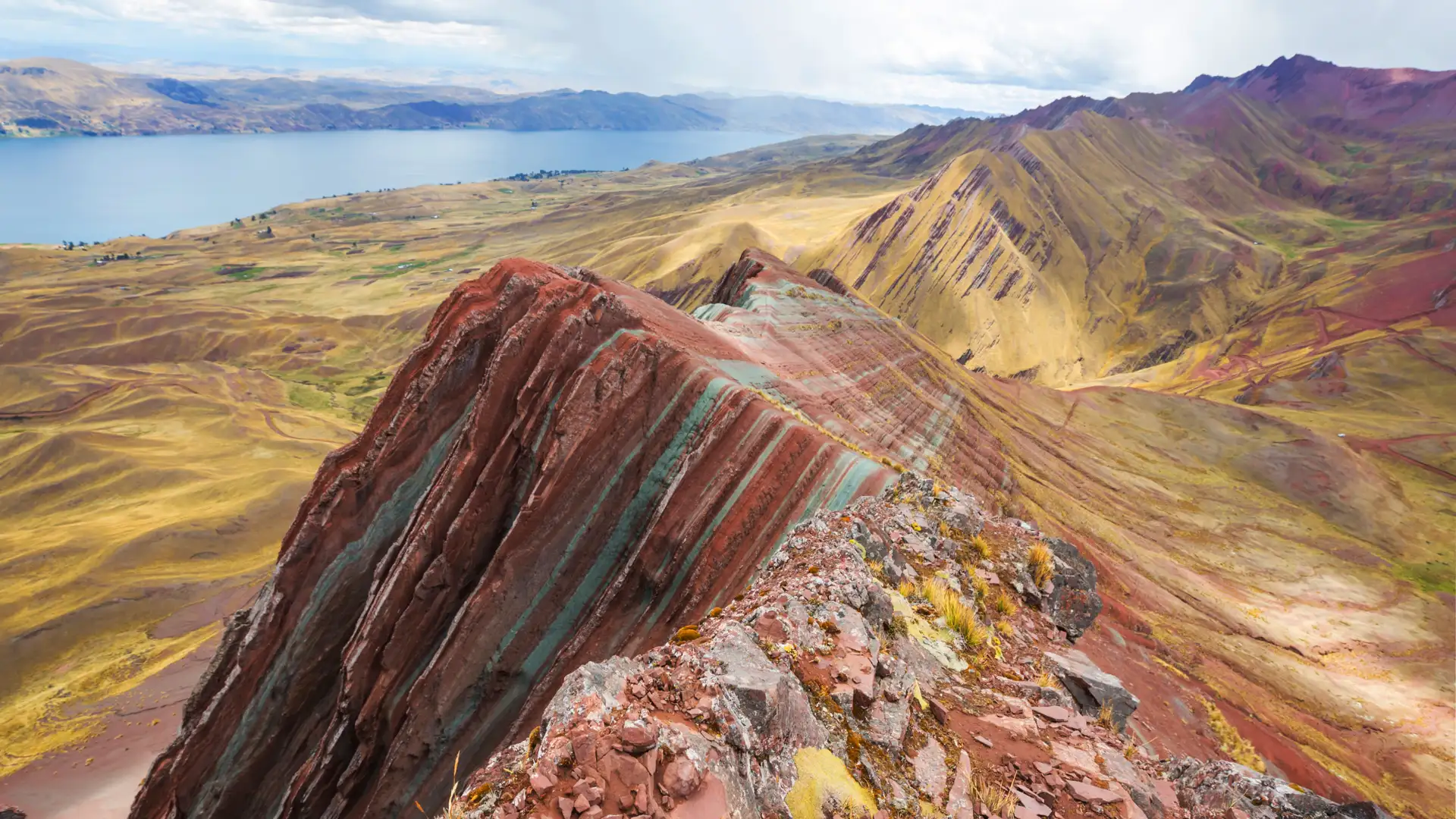
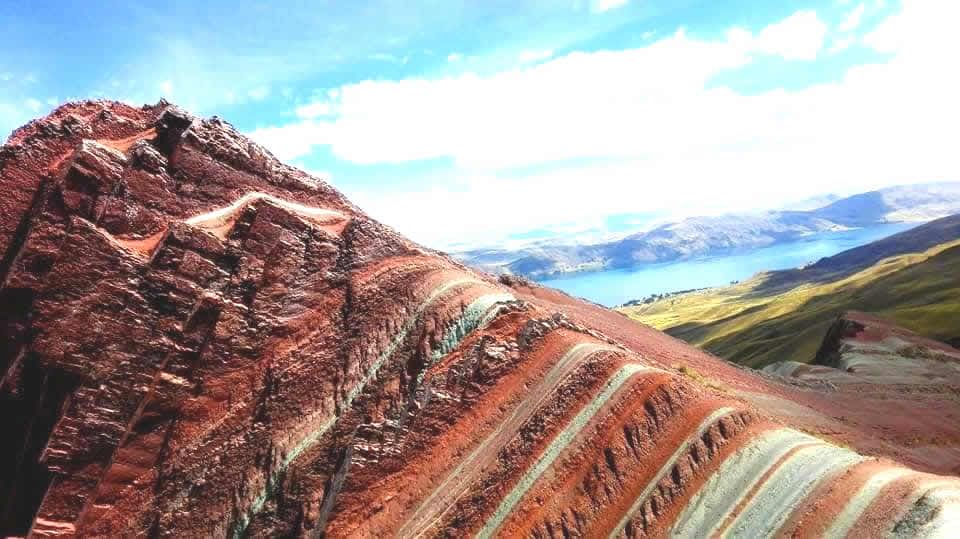
Pallay Punchu is a mountain with sharp peaks and red, purple, ocher, and green stripes, located in the district of Layo, Canas Province, south of Cusco. Its name comes from Quechua: pallay refers to the patterns woven into textiles, while punchu means poncho. When you see the mountain from the front, it is easy to understand why: its ridges look like the folds of a woven garment.
It is a destination that is only beginning to receive visitors, so the trail is still quiet and there are few tourist services in the area. In this guide, we explain which route to take, what the climb to the viewpoint is like, what you can see along the way, and how to prepare for the trip.
Where Is Pallay Punchu and Which Route Should You Take from Cusco?
Pallay Punchu is about 190 km from Cusco, and the drive takes between 4 and 4.5 hours. All routes first follow the highway toward Sicuani; from there, there are two main access routes:
| Access Route | Route | Characteristics |
|---|---|---|
| Via Layo | Cusco, Sicuani, Langui, Layo | The most commonly used route. It passes alongside Langui Layo Lagoon and has the shortest hiking section. |
| Via Occobamba | Cusco, Sicuani, Marangani, Occobamba | A longer route with more hiking. Some tour operators use it during the high season. |
If you travel on your own, take a bus from Cusco to Sicuani, which takes about 3 hours, and then a shared van to Langui or Layo. From Layo, you will need local transportation to reach the trailhead, and transportation back is not always available in the area. For this reason, most travelers prefer a Pallay Punchu tour with round-trip transportation.
The Hike to the Viewpoint
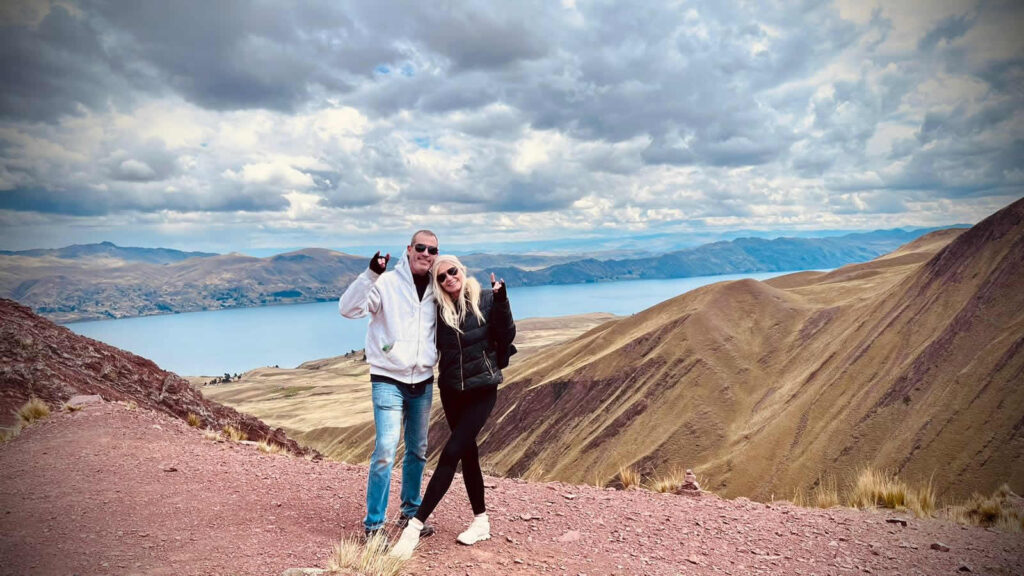
From the starting point near Layo, the climb to the viewpoint takes between 1 and 2 hours, and the highest point is close to 4,800 m.a.s.l. The trail is not very long, but some sections are steep and covered with dirt and loose rocks.
The hike can be divided into three sections:
- Initial flat section: a gentle stretch through grasslands where alpacas and llamas often graze. It is a good place to settle into your pace.
- Climb to the ridge: the most demanding part of the hike. Walk slowly and use trekking poles if you have them, especially when the ground is wet.
- Peak viewpoint: from here, you can see the colorful ridges lined up against the landscape, with snowcapped mountains in the background on clear days.
The descent is faster, but the loose rocks mean you need to walk carefully. Allow about 3 to 4 hours in total for the ascent, photos, and descent. The difficulty is moderate to challenging, mainly because of the steep slopes and altitude rather than the distance.
Langui Layo Lagoon Along the Way
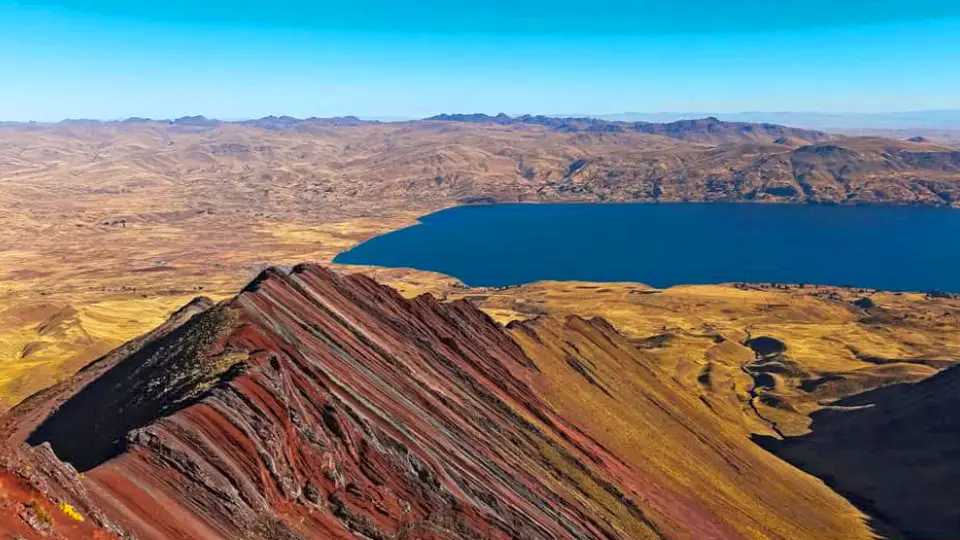
If you enter through Layo, the road runs alongside Langui Layo Lagoon, one of the largest lakes in the Cusco region. Many tours make a short stop along the shore either on the way there or on the return trip.
At the lagoon, you can see birds such as wild ducks and coots, as well as local communities whose livelihoods depend on fishing and livestock farming. It is a good place to stretch your legs after several hours on the road and take photos in the morning light.
How to Prepare for the Altitude and Weather
Pallay Punchu rises above 4,700 m.a.s.l., and the trail includes steep sections, so you should spend at least two or three days in Cusco before visiting. If you have already completed another high-altitude hike during your trip, even better.
Before you go, keep the following tips in mind:
- Leave early: visibility is usually better in the morning, while winds tend to become stronger in the afternoon.
- Dress in layers: bring a jacket, windbreaker, hat, and gloves for the early morning, as well as lighter clothing for hiking in the sun.
- Wear shoes with good traction: loose rocks are the main hazard during the descent.
- Bring water and food: there are no stores along the trail, and services in Layo are limited.
- Protect yourself from the sun: bring sunscreen, sunglasses, and lip balm, even on cloudy days.
- Carry cash in Peruvian soles: you may need it for the community entrance fee and other expenses along the way.
Between November and March, rainfall can make the trail slippery, and clouds may obscure the peaks. If you travel during these months, consider leaving a free day in your itinerary in case you need to reschedule the excursion.
Common Questions Before Visiting Pallay Punchu
Are Pallay Punchu and Pallay Poncho the same place?
Yes. They are the same mountain; the name is commonly written both ways, and punchu is the Quechua word for poncho.
Is there an entrance fee?
Yes. The local community charges an entrance fee in Peruvian soles when you arrive. The amount may change, so bring cash. If you travel with a tour, check whether the entrance fee is already included.
Is there cell phone service along the route?
Cell phone service is unreliable in the higher areas. Let someone know your plans before leaving, and do not rely on your phone for navigation.
How long does the full-day trip from Cusco take?
The entire excursion takes between 12 and 14 hours. Tours usually leave Cusco between 3:00 and 4:00 a.m., since the drive there alone takes about 4 hours, and return to Cusco in the late afternoon or evening.
Can I visit Pallay Punchu and another Rainbow Mountain on the same day?
It is not recommended because of the distance and the cumulative effects of the altitude. If you want to visit more than one, check our comparison of Vinicunca, Palcoyo, and Pallay Punchu and schedule them on different days.


