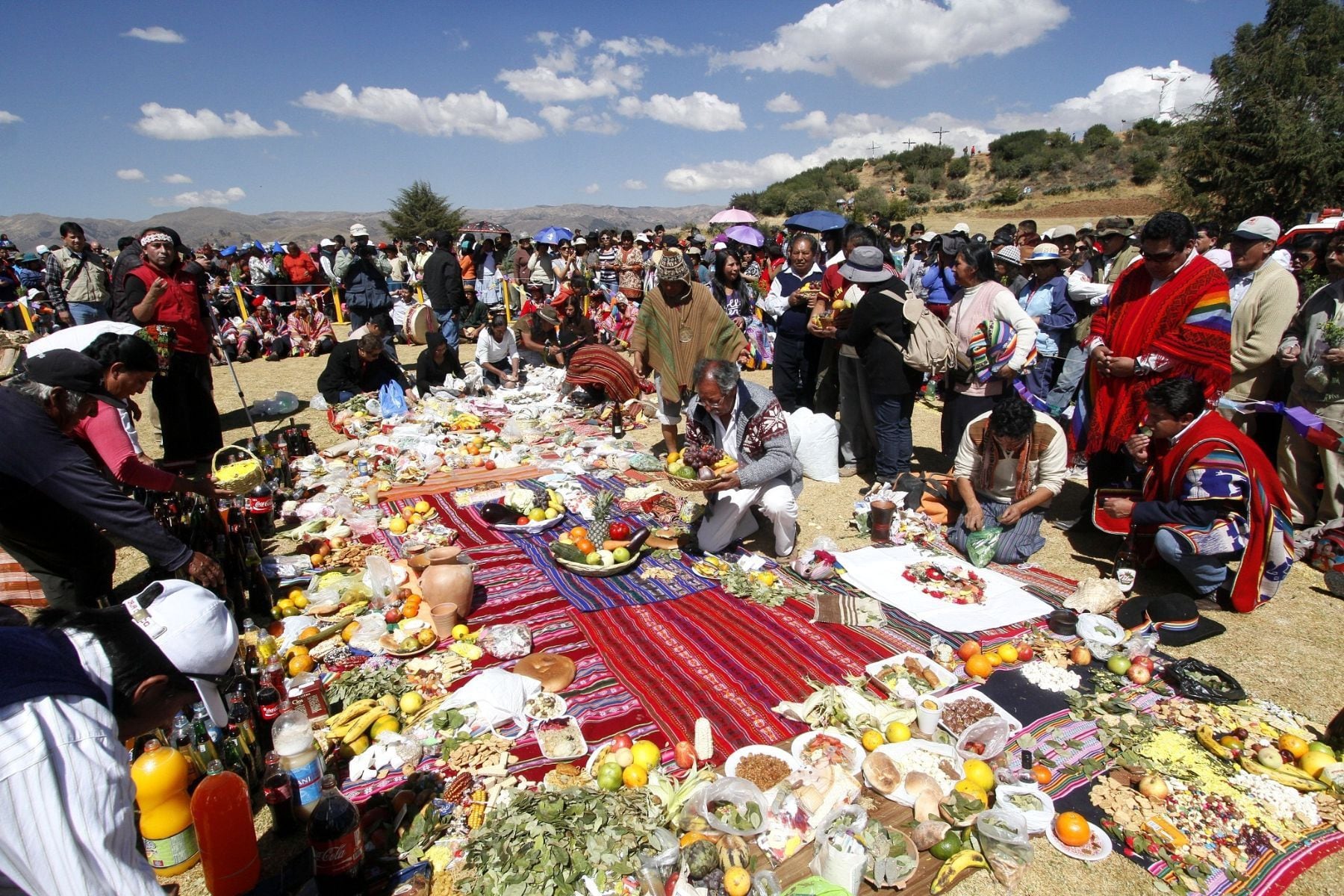
If you arrive in Cusco in early August, you will notice something different in the atmosphere. Markets sell carefully selected coca leaves, colorful candies, and small sugar figurines. In homes, courtyards, and fields, families prepare offerings for Pachamama, Mother Earth. August 1 marks the beginning of a month dedicated to giving thanks and asking permission before a new planting season begins.
In this guide, we explain what Pachamama means to the people of Cusco, how the payment to the earth ritual is performed, what an offering includes, and where you can experience this ritual during your trip, including the large public ceremony at Sacsayhuamán.
What is Pachamama in Cusco culture?
In Quechua, pacha means earth, time, or world, and mama means mother. Pachamama is the earth understood as a living being that provides food, cares for animals, and sustains family life. She is not seen as a resource, but as a mother with whom people maintain a relationship of reciprocity: she gives, and people give back.
Origins of Mother Earth worship in Inca times
Respect for Pachamama predates the Incas, but during the Tahuantinsuyo it became a central part of agricultural life. Alongside her, people worshiped the apus, the protective mountains, and other forces of nature. With the arrival of the Spanish, many of these practices blended with the Catholic calendar, which is why today it is common to see a cross or religious image near an offering to the earth.
Pachamama today in rural communities
In the rural communities of Cusco, Pachamama remains present in everyday life. Before drinking chicha, many people pour a few drops onto the ground as a greeting. Before planting, building a house, or beginning a long journey, they ask her permission. August is when this relationship becomes most visible, because nearly every family makes an offering during this month.
Why is the Pachamama ritual held on August 1?
August 1 marks the beginning of Pachamama month, although offerings are made throughout August. The date is not random: it coincides with the end of the harshest part of the dry season and with preparations for planting the fields.
August, the month when the earth “opens its mouth”
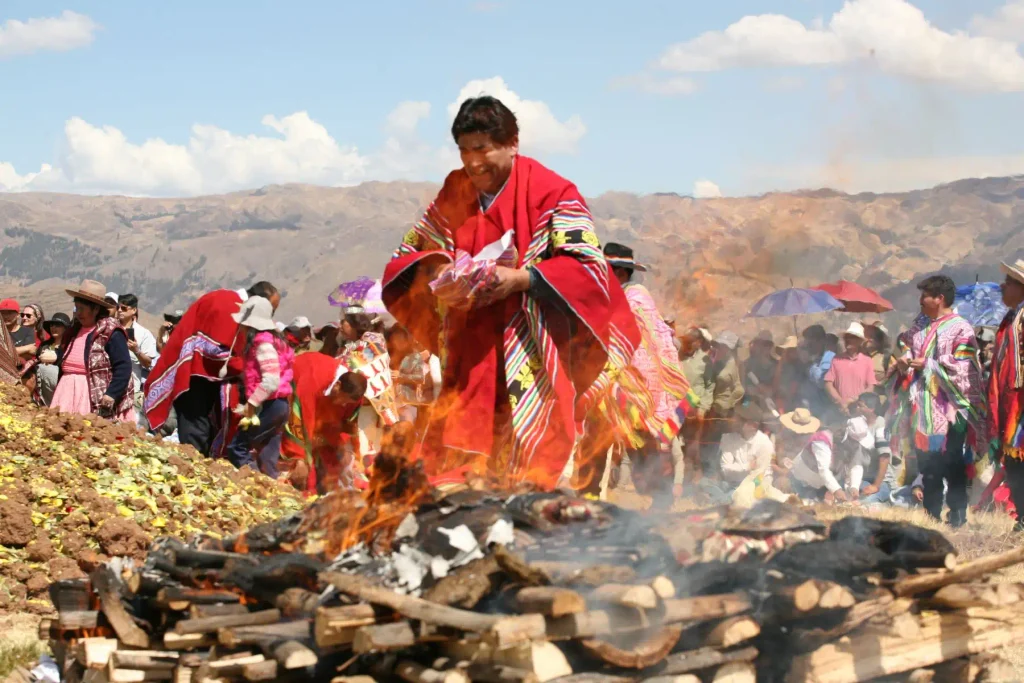
In Cusco, people say that in August the earth is hungry and thirsty and opens its mouth to receive food. That is why offerings are buried or burned so Pachamama can receive them. It is also considered a delicate month: people believe it is easier to become ill or have bad luck, and the offering is made to ask for protection.
Connection with the agricultural calendar
After the May and June harvests, the earth rests. In August, the soil is turned and prepared for planting in September and October. Making a payment to the earth at this time is a way of giving thanks for the previous harvest and asking that the next one be good for the family and the animals.
How the payment to the earth ritual is performed step by step
The payment to the earth, also called a despacho, is the main ceremony of the month. It can be performed on farmland, in a home’s courtyard, at a business, or in a sacred place. Each family or community has its own variations, but the general structure is similar.
The role of the paqo
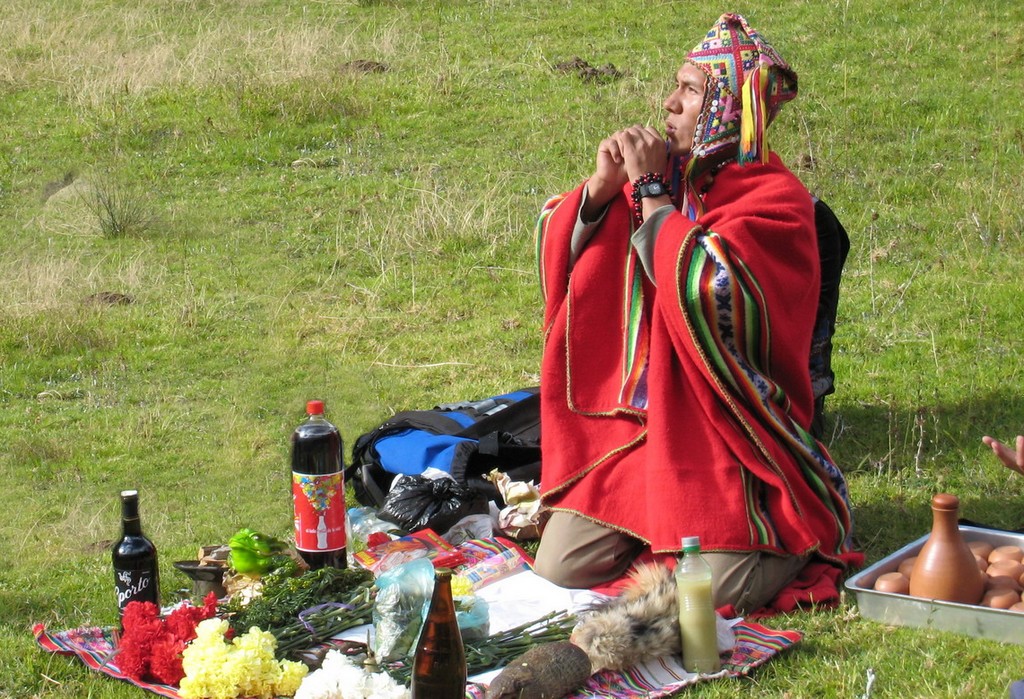
The ceremony is led by a paqo, a traditional wise person or priest who knows the prayers, the order of the elements, and how to communicate with Pachamama and the apus. In some families, the oldest person in the household takes on this role. The paqo is also the person who interprets whether the offering was well received, for example by observing how the fire burns.
Steps of the ritual
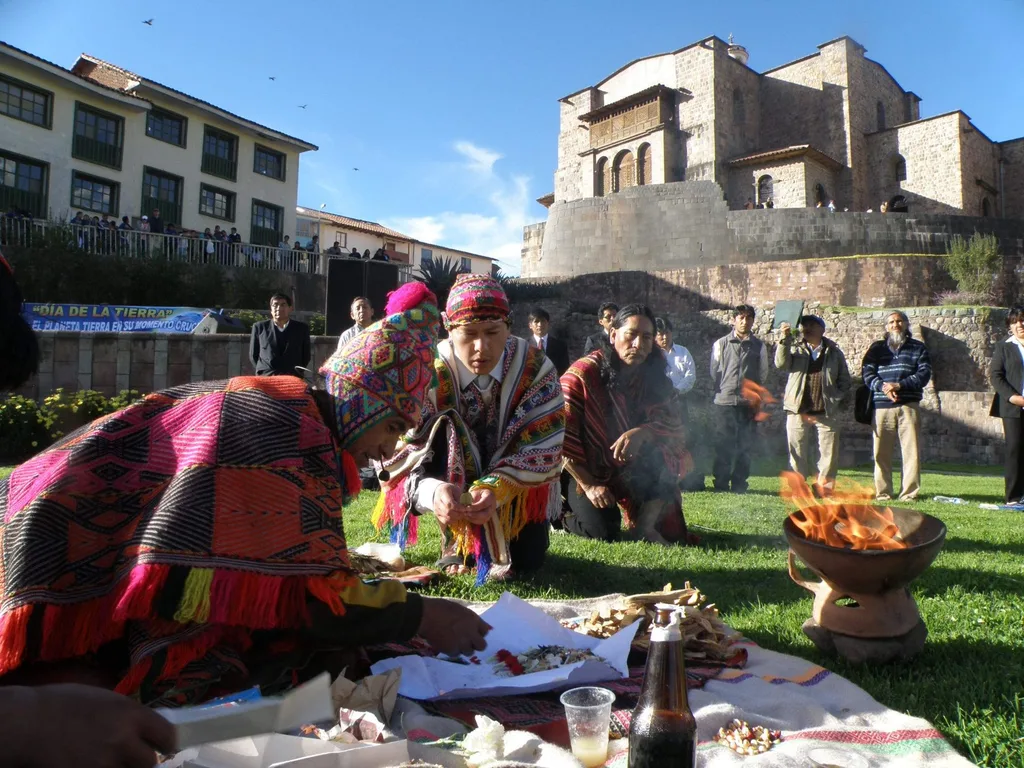
- A woven cloth or blanket is spread on the ground, and a sheet of paper is placed on top where the offering is arranged.
- The paqo prepares the k’intus, groups of three good-quality coca leaves, which participants hold while making their wishes.
- Each participant blows over their k’intu and hands it over to be included in the despacho.
- The remaining elements of the offering are added one by one, always accompanied by prayers in Quechua.
- The package is carefully closed and offered to Pachamama, either by burying it or burning it.
- While the offering is consumed, participants share chicha or wine, always pouring a little onto the ground before drinking.
Offerings to Pachamama: what a despacho contains
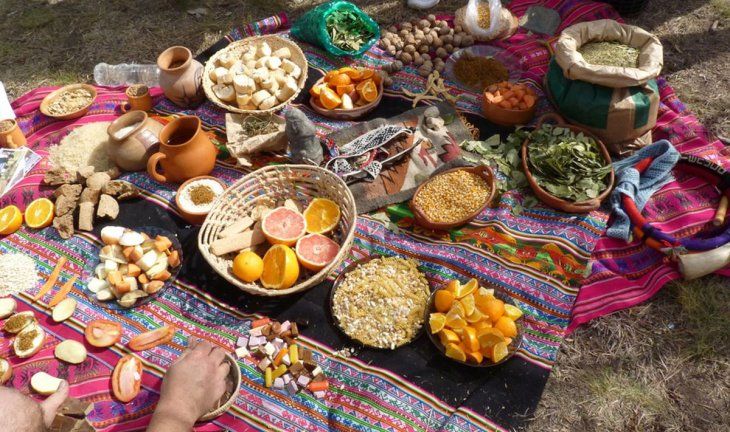
A despacho brings together elements that represent what the earth provides and what the family hopes to receive. In Cusco markets such as San Pedro, you can find stalls selling ready-made offering packages during August. These are some of the most common elements:
- Coca leaves: they are the main element and serve as a means of communication with Pachamama and the apus.
- Chicha de jora and wine: they are used to “give the earth a drink.”
- Seeds and grains: corn, quinoa, and other products that represent a request for an abundant harvest.
- Candies and sugar figurines: they represent specific wishes such as a home, health, money, or a journey.
- Untu or llama fat: symbolizes energy and nourishment.
- Huayruros: red and black seeds associated with good luck and protection.
- Flowers, carnations, cotton, and incense: they complete the offering and give it a pleasant aroma for Pachamama.
The contents vary depending on the purpose. A despacho for farmland is not the same as one for a business or a family asking for good health. That is why the paqo usually asks beforehand what the participants wish to request.
Other August traditions in Cusco: caña con ruda and more
In addition to the payment to the earth, the beginning of August brings traditions that you will see in the city and nearby towns.
Caña con ruda and what it is used for
Caña con ruda is a sugarcane liquor infused with rue leaves. The tradition is to drink a small amount on an empty stomach on August 1 to protect against the cold, illness, and bad luck during the month. Many families prepare it at home several days in advance, while others buy it at markets and stores in the city center.
Greetings to the earth in daily life
During August, it is more common to see small gestures such as pouring the first drops of a drink onto the ground or leaving coca leaves at an apacheta, the piles of stones built along mountain trails. If you go hiking during this time of year, your guide will likely make a brief offering before setting out.
Where to experience a Pachamama ritual when visiting Cusco
Most payments to the earth are family ceremonies, but on August 1 there are also public offerings that visitors can attend. The largest takes place at Sacsayhuamán.
The large offering at Sacsayhuamán
Sacsayhuamán Archaeological Park is the main public setting for August 1 in Cusco. In recent years, the Cusco Regional Government has organized the Hatun Willka Haywarikuy, the name in Cusco Quechua given to the large Pachamama offering held on this date. In 2026, its fourth edition was held in the Matelco sector starting at 9:00 a.m., with free buses departing from Túpac Amaru Square.
Another ceremony has also been held in the same park for more than two decades, organized by the Centro de Estudios Cusqueños Ayni and the Academia Mayor de la Lengua Quechua. First, the offerings brought by each participant are blessed, and then they are placed in a large hole dug into the earth. You can attend with your own despacho or simply observe respectfully. We recommend arriving early and confirming the exact time and location a few days beforehand, as they may change from year to year.
Is there a ceremony at Qorikancha?
Qorikancha also receives an offering to Pachamama, but in June, not August. With this ceremony, local authorities open Cusco’s Jubilee Month on the temple esplanade, and the ceremony is led by paqos from the Q’ero Nation and Ocongate. If you travel in June, it is a good opportunity to see a payment to the earth in the heart of the city before Inti Raymi.
Ceremonies in the Sacred Valley and nearby communities
Several communities in the Sacred Valley of the Incas welcome visitors throughout August and organize ceremonies led by a local paqo. It is a good option if you want a more intimate ritual and would like to combine it with a visit to Pisac, Ollantaytambo, or Chinchero. We recommend doing this through an agency that works directly with the community, so the benefits reach local families.
Tips for participating respectfully in a ceremony
- Ask permission before taking photos or videos, and respect the answer if you are told no.
- Follow the paqo’s instructions on when to speak, when to blow over the k’intu, and where to stand.
- If you are offered chicha or coca, accept at least a small amount; refusing may be seen as disrespectful.
- Do not touch or move any elements of the offering unless you are instructed to do so.
- Bring warm clothing: many ceremonies take place early in the morning or at dusk, when temperatures can be very cold.
- At Sacsayhuamán, arrive early and use public transportation or the free buses, because thousands of people attend.
Tours in Cusco for August
August is part of the dry season, with sunny days and clear skies, making it a good month to explore Cusco and its surroundings. You can take advantage of your visit to hike the Inca Trail to Machu Picchu, trek to Rainbow Mountain, or explore the Sacred Valley on a full-day tour. If you are interested in the region’s living culture, ask us about experiences that include a payment to the earth ceremony with a local community.
Frequently asked questions about Pachamama in Cusco
Can tourists participate in a payment to the earth ceremony?
Yes. The public ceremony at Sacsayhuamán is open to everyone, and many communities and agencies organize offerings for visitors during August. You only need to participate respectfully and follow the paqo’s instructions.
Where is the public August 1 ceremony held in Cusco?
At Sacsayhuamán Archaeological Park. In 2026, the main offering was held in the Matelco sector starting at 9:00 a.m.
Is August 1 a public holiday in Cusco?
No. Pachamama Day is not an official public holiday, so banks, stores, and tourist attractions operate normally.
How long does an offering ceremony last?
A simple family ceremony lasts between 45 minutes and an hour and a half. The public offerings at Sacsayhuamán usually take up much of the morning.
What is the weather like in Cusco in August?
It is the dry season. During the day, temperatures can rise above 20 °C, but at night and before sunrise they can drop to around 0 °C. Bring layers, sunscreen, and a warm jacket.
Can the offering be made in another month?
Yes. August is the main month, but the payment to the earth is also performed when beginning construction, before a journey, or on important dates. One example is the June offering at Qorikancha, which marks the beginning of Cusco’s Jubilee Month.


