
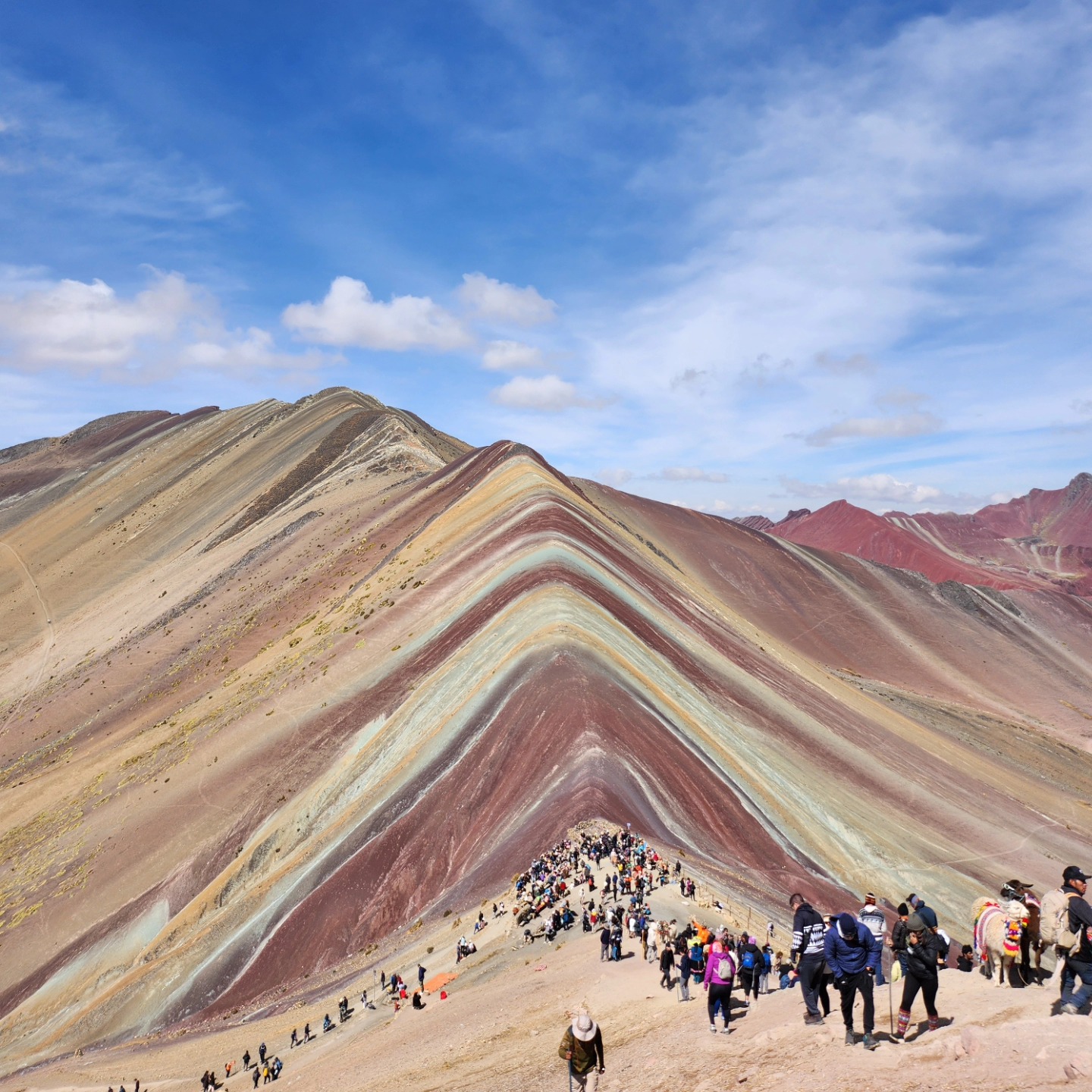
If you’re torn between Vinicunca, Palcoyo, or Pallay Punchu, the choice comes down to your fitness, the time you have, and the scenery you want to see. Vinicunca is the best-known option and the one sought out by travelers who want to visit the most famous rainbow mountain near Cusco. Palcoyo tends to be preferred by those looking for a generally shorter hike. Pallay Punchu offers a different setting, with sharp peaks and typically fewer visitors.
All three routes take place at high altitude, so none should be thought of as a city walk or an effort-free outing. Before deciding, weigh your acclimatization days in Cusco, the expected weather, the condition of the road access, and your previous experience on high-altitude trails.
Differences between Vinicunca, Palcoyo, and Pallay Punchu
Vinicunca, Palcoyo, and Pallay Punchu are all in rural areas of the Cusco region, but their routes, landscapes, and physical demands aren’t the same. Vinicunca lies toward the Cusipata area and is known for its main mountain with mineral bands. Palcoyo lets you see several colorful ridges along with a stone forest. Pallay Punchu is in a more remote area, near the province of Canas, and features a sharper mountain silhouette.
Broadly speaking, Vinicunca draws more visitors; Palcoyo normally involves a shorter hike; and Pallay Punchu can require more care on steep ground. Travel and hiking times vary with the departure point, the route chosen, and daily conditions.
| Destination | Type of scenery | Typical hike | General difficulty | Visitor volume |
|---|---|---|---|---|
| Vinicunca | One main mountain with colored bands | Short in distance, demanding due to altitude | Moderate to demanding | High |
| Palcoyo | Several colorful mountains and a stone forest | Generally shorter and more gradual | Moderate | Medium |
| Pallay Punchu | Sharp peaks with colored bands | Variable, with possible steep sections | Moderate to demanding | Low to medium |
This comparison is a general guide. How difficult a route feels varies a lot between travelers, especially above 4,000 m (13,123 ft), where the pace tends to slow even on stretches of just a few kilometers.
Vinicunca, or Rainbow Mountain
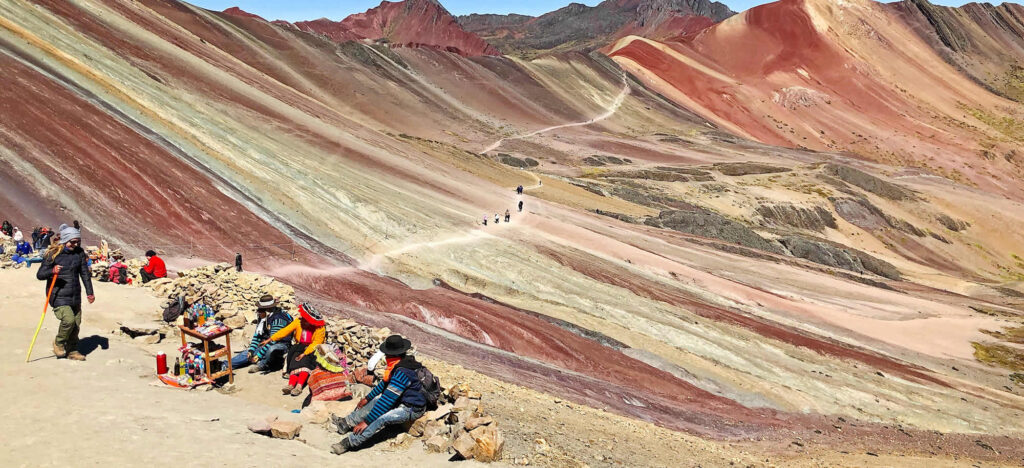
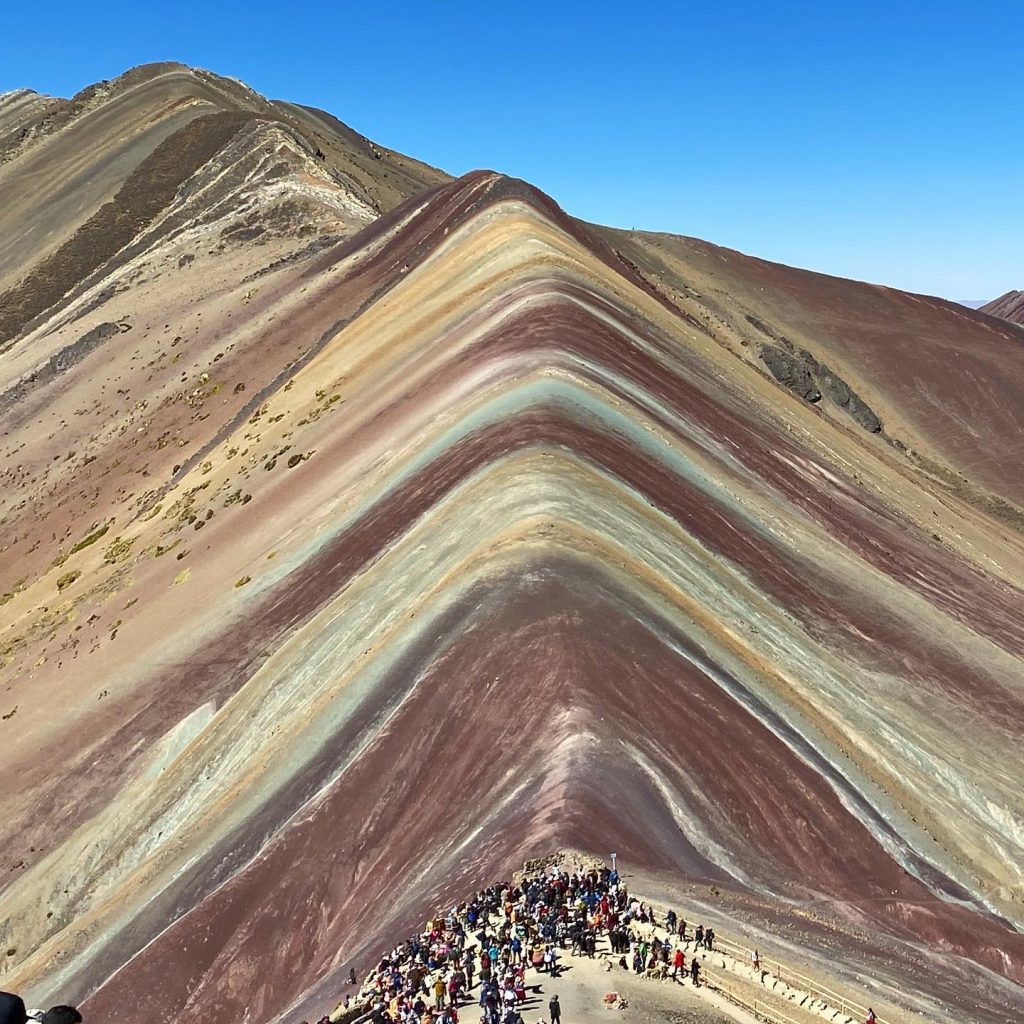
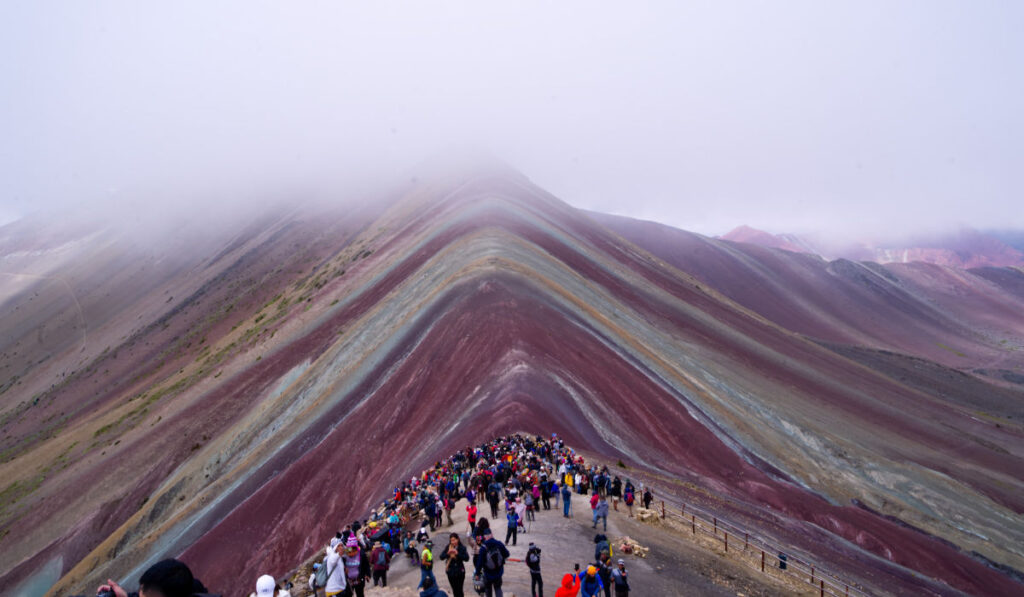
Vinicunca, also called Rainbow Mountain, is the best-known colored mountain near Cusco. Its most sought-after view shows a broad slope with bands of reddish, ochre, yellow, and greenish tones, visible from the main viewpoint when the weather allows good visibility.
Its popularity makes it a fitting choice for travelers who want to see the spot most widely shared in photos and one-day circuits from Cusco. On the downside, it tends to receive large groups, especially in the dry season and during the middle of the morning.
Palcoyo and its colored mountains
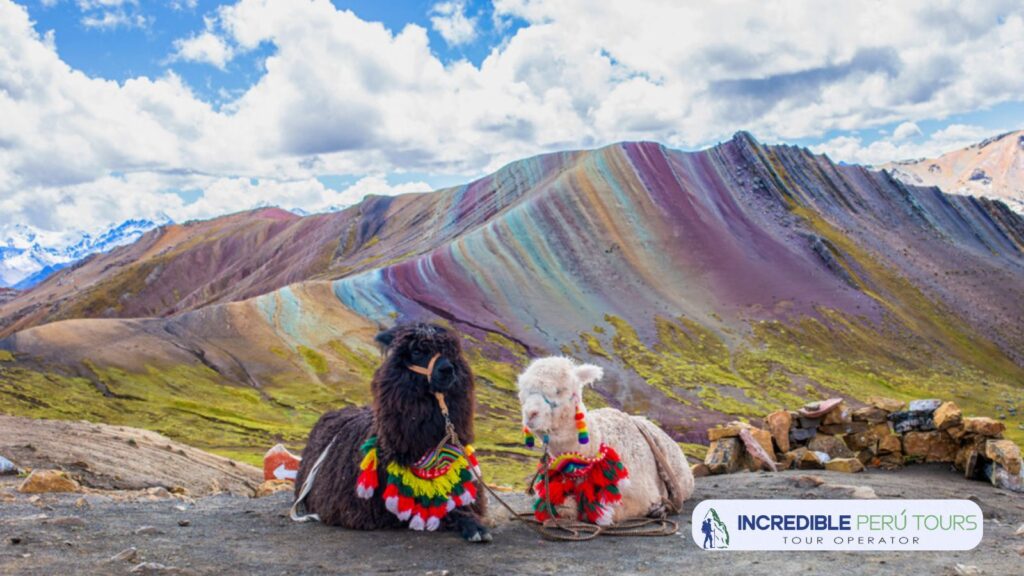
Palcoyo lets you take in several colorful formations spread across a wide landscape, rather than focusing the visit on a single main mountain. The route can also include a stone forest, made up of tall rocks eroded by the high-altitude climate.
Many travelers consider Palcoyo a less demanding alternative to Vinicunca, since vehicle access can get closer to the viewpoint. Even so, the route runs at considerable elevation, and cold, wind, or a lack of acclimatization can add to the effort.
Pallay Punchu and its mountain scenery
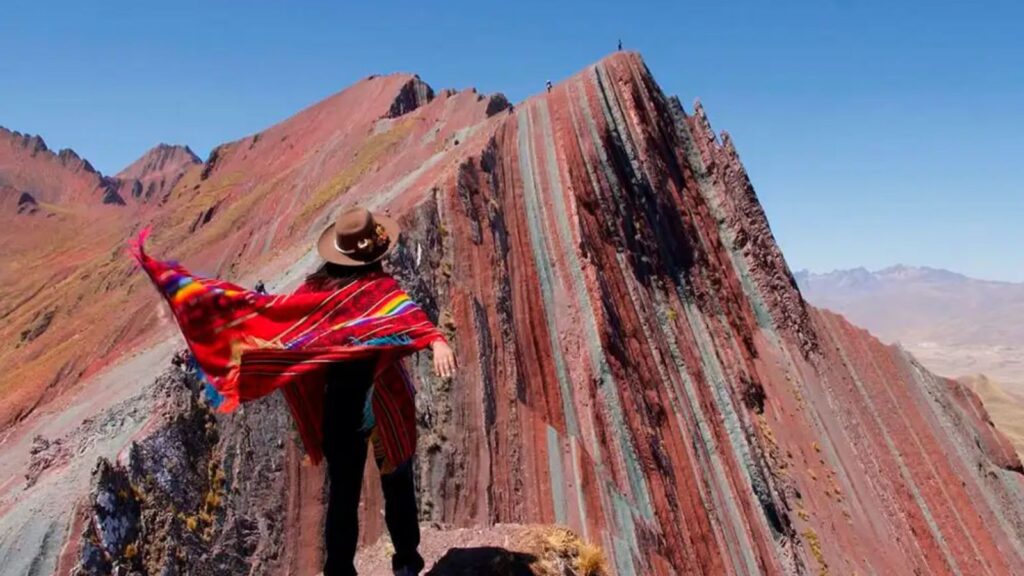
Pallay Punchu stands out for its pointed formations and color bands that follow the mountain’s irregular shape. From certain angles, its natural lines call to mind the folds and patterns of a traditional textile from the southern highlands.
Its location and lower tourist profile make it a less visited alternative than Vinicunca. The route can be demanding because of the altitude, the slopes, and the variable condition of the trail, which makes it a good fit for travelers willing to walk at a calmer pace and adapt to a less standardized route.
Comparing the hikes
The hikes to these three mountains differ by more than just walking time. Altitude, elevation gain, ground surface, wind, and each person’s pace matter more than a distance printed on an itinerary. A short stretch can feel intense if you tackle it without acclimatizing.
Vinicunca usually involves a steady climb toward a high viewpoint. Palcoyo tends to offer a more gradual approach with less time on foot. Pallay Punchu can combine short sections with steeper grades. Times depend on the access point, personal pace, and weather conditions.
| Aspect | Vinicunca | Palcoyo | Pallay Punchu |
|---|---|---|---|
| Approximate hiking time | Short in distance, but slow because of the altitude | The shortest of the three | Variable depending on available access |
| Reference maximum altitude | Around 5,000 m (16,404 ft) | Above 4,800 m (15,748 ft) | Similar to Palcoyo, depending on the section |
| Type of climb | Steady toward a high viewpoint | Gradual approach | Short stretches with steep grades |
| Elevation gain | Pronounced and sustained | Moderate and gradual | Irregular, with short demanding climbs |
| Ground surface | Maintained path with dirt sections | Wide, stable trail | Dirt and rock, slippery when wet |
| Physical demand | High, especially without acclimatization | Medium, suitable for more travelers | Medium to high depending on the open section |
| Vehicle access | Up to the trailhead | Close to the viewpoints | Depends on road conditions |
| Main recommendation | Slow pace, hydration, and breaks | Set aside time for the viewpoints | Confirm in advance which section is open |
Which one is least difficult
Comparing Vinicunca, Palcoyo, and Pallay Punchu, Palcoyo is usually considered the least physically demanding option thanks to its typically shorter hike and more gradual elevation gain. That said, all three destinations sit at high altitude and can cause fatigue, headaches, or shortness of breath without proper acclimatization.
Actual difficulty should be judged on four factors: altitude, distance, grade, and trail conditions. Someone with good endurance may find a route manageable, while another traveler with little altitude experience may need more time even on the most accessible one.
Best option for an easier hike
Palcoyo is usually the better choice for travelers looking for a less demanding hike. Transportation can drop visitors relatively close to the panoramic points, and the main route tends to have less intense elevation gain than the other options.
Even so, it isn’t free of challenges. Morning cold, wind gusts, and the altitude can affect any traveler. It’s a good idea to make the visit after spending at least a few days in Cusco and to avoid unnecessary exertion before the excursion.
Best option for experienced travelers
Pallay Punchu can suit people used to high-altitude hikes, uneven terrain, and steeper routes. Its less direct access and the chance of dirt or rock sections make advance planning more important.
Experienced travelers should take the same precautions as on any high-altitude route. Being in good shape doesn’t remove the risk of altitude sickness. If strong symptoms appear, such as a severe headache, nausea, or dizziness, it’s better to stop and descend with the group’s support.
Difficulty of Vinicunca
The distance to Vinicunca can look manageable on an itinerary, but the altitude raises the physical effort considerably. The trail usually includes a sustained climb, and many visitors feel each stretch takes more energy as they get closer to the viewpoint.
Vinicunca can be a good option for travelers with prior preparation and acclimatization days in Cusco. Don’t visit on your first day after arriving, and don’t treat it as a quick hike. Bringing water, light snacks, and clothing for temperature swings helps you handle the route better.
Which one has the best scenery
There’s no single answer about which has the best scenery, because each mountain presents a different formation. Vinicunca focuses attention on one main colored mountain. Palcoyo offers a wider view, with several colorful slopes and rock formations. Pallay Punchu stands out for its pronounced ridges.
To choose, think about the kind of photography and scenery you prefer. If you want the most recognizable image of the rainbow mountain, Vinicunca is the usual reference. If you’d rather have varied settings on a short hike, Palcoyo may fit better. If you’re drawn to sharper relief and an area with fewer groups, Pallay Punchu can be a good alternative.
Scenery at Vinicunca
Vinicunca features one main mountain with bands of different tones, visible from an elevated viewpoint. The landscape usually takes in open slopes, nearby mountains, and a broad valley view when clouds aren’t covering the area.
How the colors appear changes with the hour, the light, and the moisture in the ground. After rain or in fog, the tones can look less defined. So don’t expect the landscape to look exactly like edited photos or shots taken in exceptional conditions.
Scenery at Palcoyo
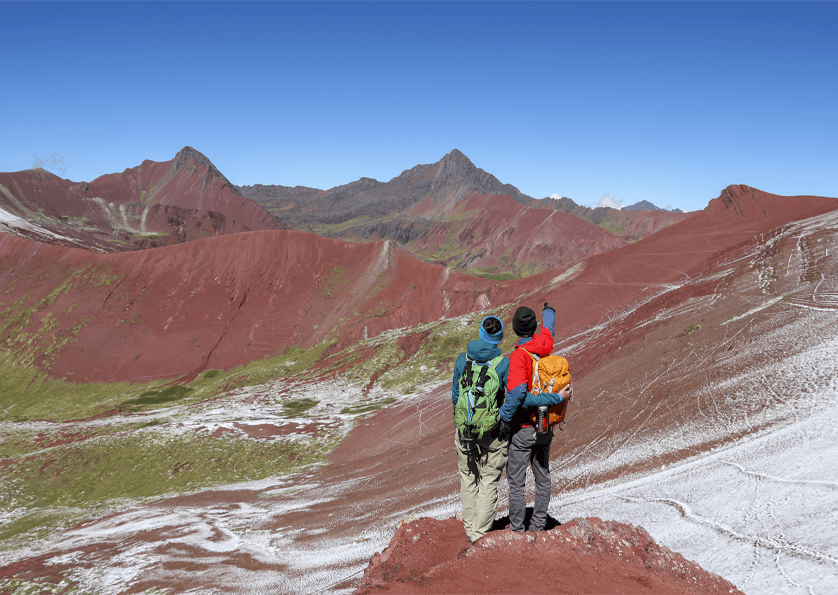
At Palcoyo you can see several colored mountains in one area, along with sweeping Cusco highland landscapes and rock formations. That variety lets you spread the visit across different panoramic points instead of concentrating on a single photo from one viewpoint.
The stone forest adds another draw for anyone who enjoys short walks and photographing rock features. Wind tends to be strong in open sections, so secure hats, scarves, and light items before walking toward more exposed areas.
Scenery at Pallay Punchu
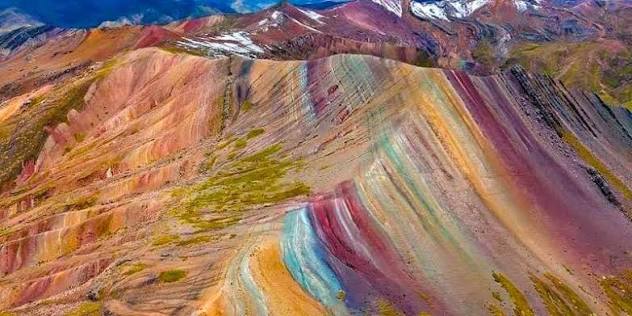
Pallay Punchu is notable for its steep peaks and natural bands running across the slopes. The irregular shape of the terrain creates different perspectives depending on where you stand, with color lines separated by the mountain’s ridges and folds.
Its scenery can be especially appealing for anyone after compositions with depth, slopes, and less uniform geological shapes. Visibility still depends on the weather, so leave early and check the forecast before setting out on a long route from Cusco.
Which one gets the fewest visitors
| Aspect | Vinicunca | Palcoyo | Pallay Punchu |
|---|---|---|---|
| Visitor volume | High, the most visited of the three | Medium, growing over the past few years | Low, the least crowded alternative |
| Main reason | International exposure and daily tour departures | Growing popularity as an alternative to Vinicunca | Less tourist recognition and a longer distance |
| Busiest hours | Between mid-morning and early afternoon | When the full-day circuits arrive | No clear peak, since departures are infrequent |
| Departure frequency | Daily, with a wide range of agencies | Regular, with fewer operators | Limited, few scheduled tours |
| Upside of the crowd level | Easy to find services and organized departures | Groups spread out if you arrive early | A calmer hike with fewer groups |
| Downside | Waiting, less room for photos, and a pace set by the groups | Several vans arriving at once on high-demand dates | Requires planning transportation, food, and safety |
| Services available on the route | Plentiful | Moderate | Scarce, don’t count on shops or reliable signal |
| Tip for avoiding crowds | Leave as early as possible | Arrive before the full-day circuits | Confirm access and logistics in advance |
Which to choose based on traveler type
The best rainbow mountain for your trip doesn’t come down only to which one looks most familiar online. Choose based on your level of preparation, the days you have in Cusco, your interest in photography, and the kind of hike you want.
A realistic decision lowers the chance of canceling due to altitude sickness or rushing through an excursion. If your itinerary includes several active days, it’s better to place these routes after you’ve rested and visited lower-elevation areas.
For a first visit to Cusco
Vinicunca is a good pick for anyone on a first visit to Cusco who wants to see the most famous and representative rainbow mountain in the tour circuits. It’s easy to fit into a travel program if you already have a few acclimatization days behind you.
The main drawback is the number of visitors and the effort the altitude demands. If you choose Vinicunca, don’t schedule another demanding physical activity for that afternoon. It also helps to carry cash for small expenses that may come up on the road or at the access points.
For families and travelers with lower fitness levels
Palcoyo is generally a more accessible option for families, active older adults, and travelers with lower fitness levels. Its hike tends to be shorter, and the scenery lets you enjoy several viewpoints without a long climb.
Take that recommendation with care, because Palcoyo also sits at high altitude. Young children and people with heart conditions, respiratory issues, or a history of altitude sickness should check with a health professional beforehand and assess whether the excursion is right for them.
For those seeking adventure and fewer tourists
Pallay Punchu can be a fitting alternative for travelers who prefer less visited places and routes that ask for more preparation. Its slopes, longer access, and smaller crowds make the outing feel different from the more common circuits.
Before you go, confirm how the transfer works, how many hours on the road the excursion involves, and which services will be available. If you need to arrange private transportation, a route adapted to your itinerary, or verification of access conditions, the Incredible Peru Tours team can help with that logistics.
For photography enthusiasts
Vinicunca offers a direct view of the main mountain and a panoramic viewpoint many travelers recognize. Palcoyo lets you photograph several colored slopes, open landscapes, and the stone forest. Pallay Punchu delivers compositions with defined peaks, diagonal lines, and more abrupt relief.
For better photos, aim for a morning with a stable forecast and arrive with enough time to wait out changes in light. Bring batteries protected from the cold and a rain cover, and don’t count on drones, since restrictions and flight conditions can vary by location and local authority.
Best time to visit these mountains
The dry season usually offers better conditions for hiking and taking in the scenery at Vinicunca, Palcoyo, and Pallay Punchu. In Cusco, this period generally runs from about April to October, with more stable days and less frequent rain, though mornings can be very cold.
Mountain weather shifts quickly even in dry months. You can get strong wind, clouds, hail, or drizzle within a single day. Checking the forecast the night before and the morning of departure is a useful step, but it doesn’t replace bringing clothing for changing conditions.
Visiting during the dry season
During the dry season there’s usually less rain and a better chance of firm trails. Mornings are cold, especially before leaving Cusco, but clear skies can improve visibility of the color bands and the open landscapes.
It’s also the period with the most visitors. Booking ahead, leaving early, and bringing sun protection are all advisable. At high altitude, radiation can be intense even when temperatures stay low.
Visiting during the rainy season
In the rainy season you may run into mud, clouds, fog, and reduced visibility, especially after heavy rainfall. Access roads can take longer and some sections of trail may be slippery.
Traveling in these months doesn’t rule out the visit, but it calls for flexibility. Bring a waterproof jacket, a backpack cover, footwear with good traction, and extra time in your itinerary. If heavy rain is forecast or access poses risks, put safety first.
Tips before choosing your destination
Before deciding between Vinicunca, Palcoyo, or Pallay Punchu, look at the total length of the excursion, not just the hiking time. Many departures involve several hours on the road from Cusco, a very early start, and a return in the afternoon or evening.
It’s also worth confirming what’s included: transportation, meals, guide, entrance fees, trekking poles, and assistance along the route. Costs can vary with the service, the season, and the type of transportation, so check the current details before booking.
- Assess your fitness
- Acclimatize before the excursion
- Check the condition of the route
- Bring suitable clothing and footwear
Frequently asked questions
These answers will help you choose among the three rainbow mountains based on the hike, the scenery, and the usual number of visitors. Conditions can change with weather, season, and the state of the access roads.
Which is better, Vinicunca or Palcoyo?
Vinicunca is better for travelers who want to see the best-known rainbow mountain near Cusco and don’t mind sharing the route with more groups. Palcoyo is usually preferable if you’re after a generally shorter hike, several colored mountains, and a less crowded setting.
The decision depends on your acclimatization and how much effort you want to put in. Both sit at high altitude, so plan the visit after spending a few days in Cusco.
Which is harder, Vinicunca or Pallay Punchu?
Vinicunca can feel demanding because of the elevation and the climb to the viewpoint. Pallay Punchu can be tougher for some people due to the slopes, the terrain, and access logistics that can vary.
There’s no single answer for every traveler. Difficulty changes with the starting point, the weather, the trail’s condition, and your experience walking at elevation.
Which has the fewest tourists?
Pallay Punchu and Palcoyo usually get fewer visitors than Vinicunca. Pallay Punchu typically sees lower numbers because of its location and the smaller number of regular departures from Cusco.
The number of people varies with the date, holidays, and the season. To lower the chance of running into large groups, leave early and avoid peak demand periods.
Can you visit all three mountains?
Yes, you can see Vinicunca, Palcoyo, and Pallay Punchu on separate days if you have enough time. Trying to visit more than one in a single day isn’t advisable given the distances, the altitude, and the accumulated effort.
Leave rest days between the more demanding routes and make sure you’re well acclimatized. Planning across several days lets you adjust the order of the visits based on the weather and how your body responds to the elevation.
Which is the best option for beginners?
Palcoyo is usually considered the most accessible alternative for beginners because of its generally shorter and less steep hike. Even so, it takes preparation, since it happens at high altitude and can bring cold, wind, or uneven terrain.
For a first high-altitude hike, go slowly, wear the right clothing, and don’t schedule the visit right after arriving in Cusco. If you don’t feel well along the way, tell the guide or the group and avoid forcing the climb.


