
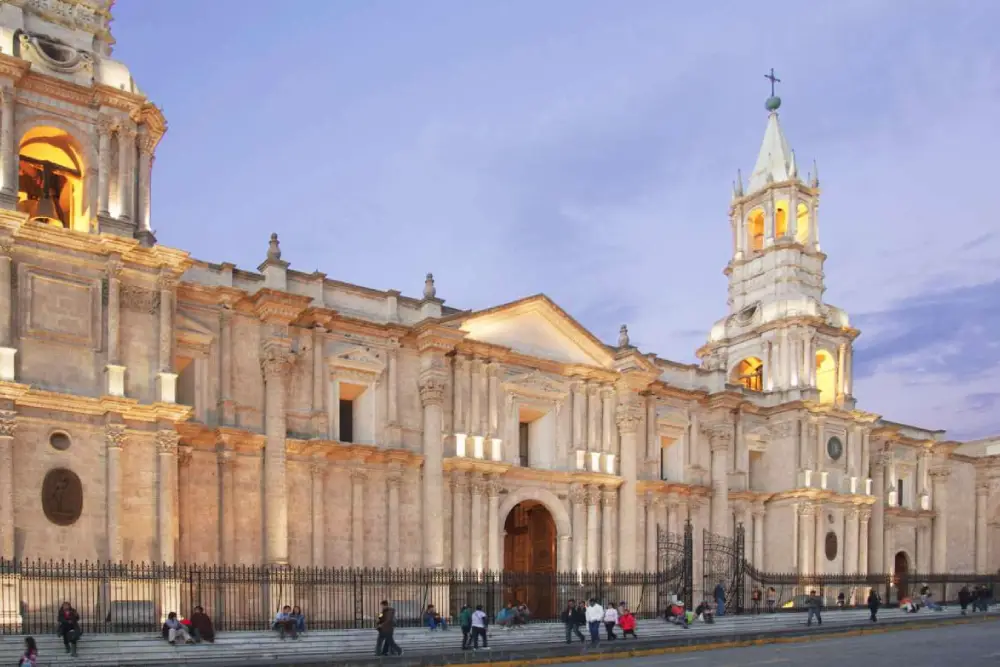
Arequipa Cathedral stretches across an entire side of the Plaza de Armas and is one of the first sights you will notice when you reach the historic center. Its white volcanic stone facade, with Misti Volcano rising behind it on clear days, is one of the most recognizable views in southern Peru.
Behind that facade are nearly five centuries of history shaped by fires, earthquakes, and reconstruction. In this guide, you will learn about the cathedral’s origins, what to see inside the church and its museum, and when you can visit.
History of Arequipa Cathedral
The first main church was built shortly after the Spanish founded the city in 1540. Construction of the building that became the cathedral was completed in 1656, but much of what you see today is the result of later rebuilding efforts.
The Events That Shaped the Cathedral
| Year | What Happened |
|---|---|
| 1540 | The city was founded and its first church was built on the main square |
| 1656 | Construction of the colonial cathedral was completed |
| 1844 | A fire destroyed much of the church, making reconstruction necessary |
| 1854 | The Belgian organ and English tower clock arrived from Europe |
| 1868 | A powerful earthquake damaged the towers, part of the facade, and several altars |
A Cathedral Rebuilt in Neoclassical Style
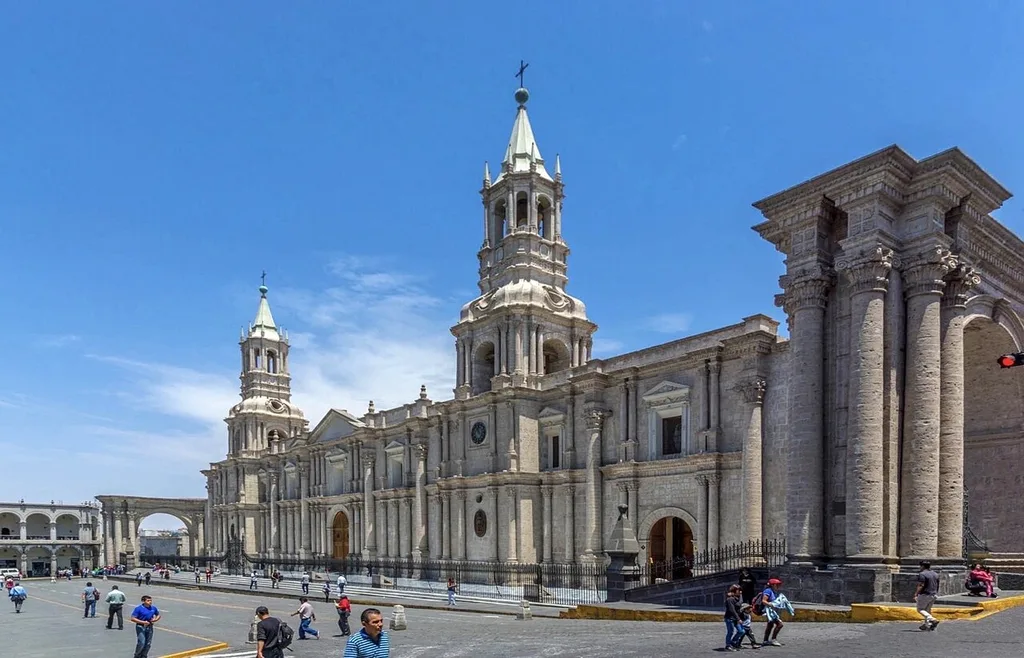
After the fire of 1844, Arequipa architect Lucas Poblete oversaw the reconstruction, giving the cathedral the neoclassical style that distinguishes it today. Instead of the elaborate decoration found in many other colonial churches in Peru, you will see columns, clean lines, and an understated facade.
Sillar, the Stone of the City
The entire cathedral is built from sillar, a lightweight white volcanic stone quarried nearby. This material is what gives Arequipa its nickname, the White City.
What to See Inside the Cathedral and Its Museum
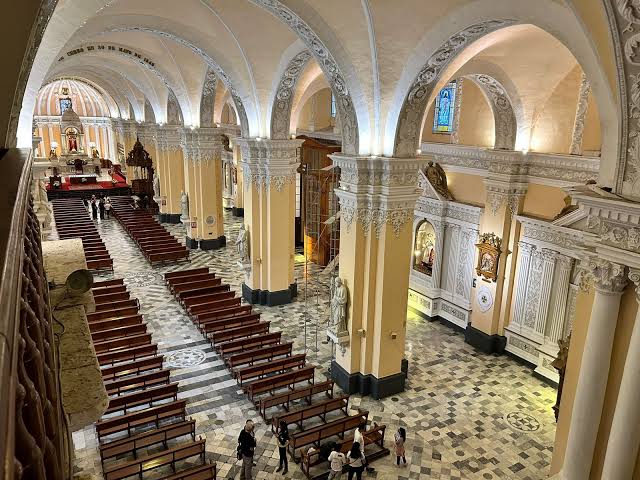
The cathedral is spacious and filled with natural light, with three naves and several pieces brought from Europe during its reconstruction in the 19th century. Here are the highlights you should not miss.
The Pulpit and Its Devil Figure
The pulpit was carved from oak by the French craftsman Buisine Rigot in Lille. At its base is a figure of the devil in the form of a serpent, defeated by the religious images surrounding it. This is one of the details visitors find most fascinating, so look for the figure when you get closer.
The Loret Organ
This Belgian organ, built by François Bernard Loret, stands 39 feet (12 meters) tall and has 1,206 pipes. It is considered one of the largest organs in South America and is still played on special occasions.
The Main Altar
The main altar is made of Carrara marble imported from Italy. Its light color complements the volcanic stone walls and adds to the cathedral’s spacious atmosphere.
The Museum, Bell Tower, and Rooftop
The cathedral museum displays precious metalwork, liturgical garments, paintings, and sculptures. The guided tour also takes you to the bell tower and the cathedral rooftop.
The View From Above
From the rooftop, you will enjoy one of the best panoramic views of the historic center, with the Plaza de Armas below and the Misti, Chachani, and Pichu Pichu volcanoes on the horizon. If the sky is clear, have your camera ready.
Opening Hours, Admission, and Visitor Information
The cathedral is open for Mass and prayer in the morning and evening, while the museum operates Monday through Saturday from 10:00 a.m. to 4:15 p.m. A guided visit is the best way to take your time admiring the pulpit, climb the bell tower, and explore the museum.
| Information | Details |
|---|---|
| Location | Plaza de Armas, Arequipa Historic Center |
| Museum entrance | Through the side entrance on Santa Catalina Street |
| Cathedral, Monday through Saturday | 7:00 to 10:00 a.m. and 5:00 to 7:00 p.m. |
| Cathedral, Sundays | Open for much of the day, with Mass services |
| Museum | Monday through Saturday, 10:00 a.m. to 4:15 p.m.; closed Sundays |
| Guided tour duration | Approximately 45 minutes |
| City elevation | 7,661 feet (2,335 meters) above sea level |
How Much Does a Visit Cost?
Admission to the cathedral during worship hours is free. The tour of the museum, bell tower, and rooftop requires a paid ticket, with discounted rates for college students and schoolchildren. Confirm the current price at the ticket office, as rates may change.
Respect Mass Times
Tourist visits are not permitted during religious services. If you want to take photos of the interior, avoid these times and remain quiet inside the cathedral.
How to Make the Most of Your Visit
The cathedral is right in the city center, so you can easily walk there from most hotels in the historic district. These tips will help you get the most out of your visit.
Practical Tips
- Visit in the morning. The volcanoes are often easier to see before noon, making it an ideal time to enjoy the rooftop views.
- Come back at sunset. The illuminated facade and lively square create a completely different experience.
- Dress appropriately. This is an active place of worship, so avoid very short or revealing clothing.
- Wear sunscreen. The sun in Arequipa can be intense, especially on the rooftop.
Include It in Your City Tour
An Arequipa city tour often includes the Plaza de Armas, the cathedral, Santa Catalina Monastery, and the viewpoints of Yanahuara and Carmen Alto. It is a great way to connect the cathedral’s history with the rest of the historic center.
A Relaxed Day Before Heading to Colca Canyon
Arequipa sits at a lower elevation than Cusco or Puno, making it a good place to acclimate. Spend a day exploring the city before continuing on a Colca Canyon tour, where you will travel to higher elevations.
Where to Take Photos From the Square
The arcaded buildings surrounding the Plaza de Armas have balconies and cafes on their second floors. From there, you can photograph the entire cathedral facade without the crowds in the square filling the foreground.
Frequently Asked Questions
Is Admission to Arequipa Cathedral Free?
Yes, admission is free during worship hours. There is a charge to visit the museum, bell tower, and rooftop.
How Much Time Do I Need to Visit?
Allow approximately 45 minutes for the guided museum tour and a little extra time if you want to explore the cathedral at a relaxed pace.
Can You Go Up to the Cathedral Rooftop?
Yes. Rooftop access is part of the guided museum tour, which also includes the bell tower.
What Is the Devil Figure in Arequipa Cathedral?
It is a carving at the base of the pulpit depicting the devil as a serpent, defeated by the religious figures surrounding it.
Why Is the Cathedral White?
Because it is built from sillar, a white volcanic stone typical of Arequipa that is widely used throughout the historic center.


