
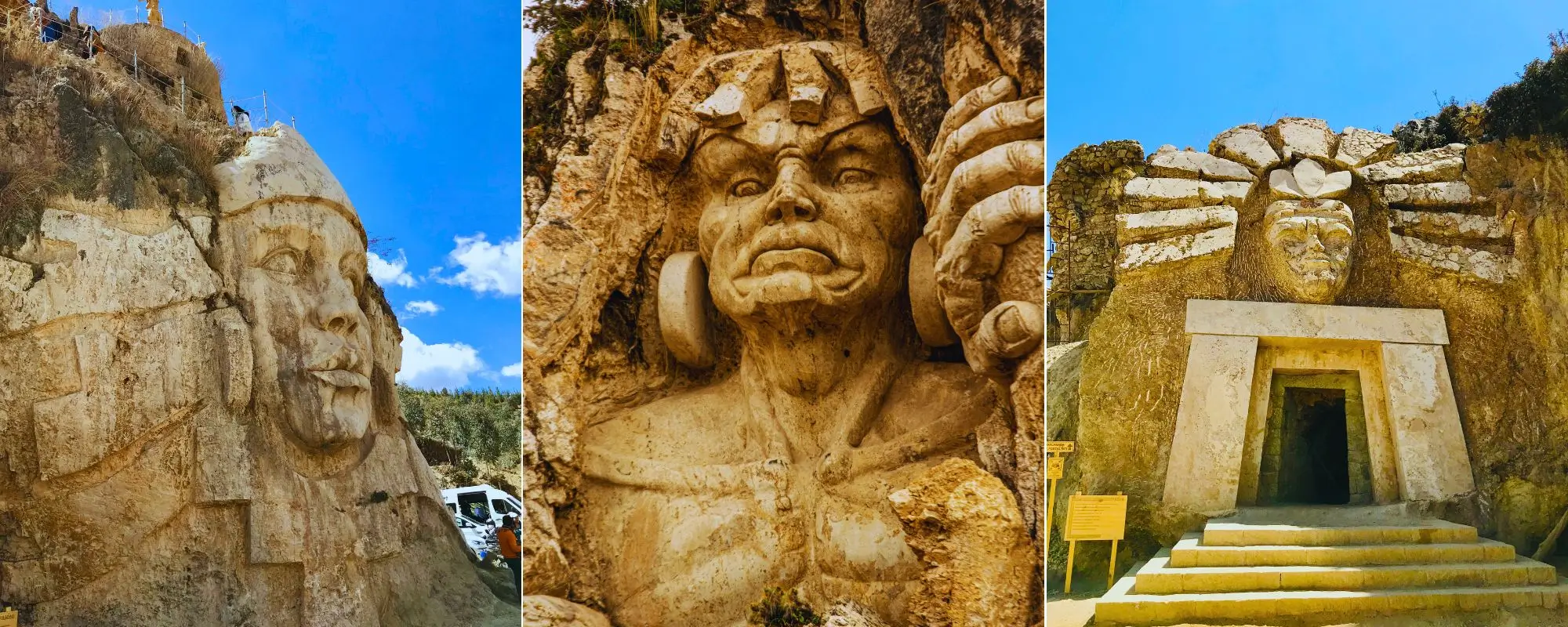
Less than an hour from downtown Cusco, there’s a hillside where Pachamama gazes out from the rock, a stone puma watches over the valley, and a giant doorway seems to open into another world. This is the Morada de los Dioses (Abode of the Gods), known in Quechua as Apukunaq Tianan. In just a few years, it has become one of the region’s most photographed attractions.
This isn’t an Inca archaeological site. It’s an open-air contemporary art space carved into stone by a sculptor from Cusco and inspired by Inca beliefs. That makes it different from anything else you’ll see on your trip, and easy to fit into your schedule: half a day is enough.
In this guide, we’ll explain what you’ll find, how to get there from Cusco, how much admission costs, and how to make the most of your visit.
Morada de los Dioses at a Glance
| Fact | Details |
|---|---|
| Quechua name | Apukunaq Tianan (“Abode of the Gods”) |
| Location | Sencca area, Poroy district, near the Tica Tica arch |
| Distance from Cusco | About 8 to 10 km (5 to 6 miles) |
| Travel time | 20 minutes by taxi; about 45 minutes by bus or tour |
| Elevation | Approximately 3,450 m (11,319 ft) above sea level |
| Artist | Michel de Titán Monteagudo Mejía, a sculptor from Cusco |
| Height of the sculptures | Between 4 and 10 meters (13 to 33 feet) |
| Admission | S/ 20 to S/ 30 per person |
| Recommended visit time | 1 to 2 hours on-site |
Modern Art with Inca Roots: What to Know Before You Go
Think of Morada de los Dioses as an open-air gallery. Here, the hillside itself is the museum, and the artworks were carved directly into the existing rock. Nothing was brought in from elsewhere.
Behind the project is Michel de Titán Monteagudo Mejía, a Cusco-born sculptor. He began carving around 2017, and the work is still ongoing. New figures appear from time to time, so if you return in a few years, you’re likely to find something different.
Why Carve Inca Gods Today?
The Incas were master stoneworkers, but the craft gradually declined over the centuries. This project aims to keep the technique alive and let visitors see, on a monumental scale, the figures the Incas revered: the earth, the mountains, the sun, and sacred animals.
The project also has a community side. Local families helped build it, taking turns working together. This is a longstanding Cusco tradition still practiced when planting crops or building homes.
Don’t Mistake This Place for Ancient Ruins
It’s the most common misconception. These sculptures are modern, not hundreds of years old. What you’ll see is a contemporary artist’s interpretation of Inca culture. If you’d also like to explore original Inca structures, there are several along the route between Cusco and the Sacred Valley.
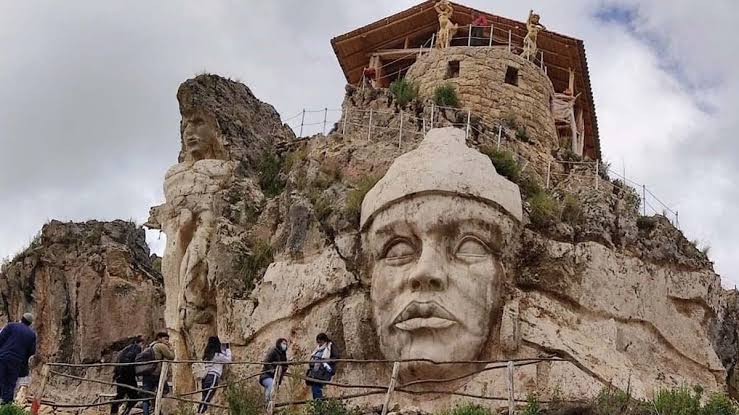
A 5-Stop Tour of Morada de los Dioses
You can explore the entire circuit on foot in about an hour without rushing. We suggest this order so that each figure connects naturally to the next.
Stop 1: The Face of Mother Earth
As soon as you enter, an enormous face greets you from the hillside. This is Pachamama, Mother Earth, who provides food for everyone. For people in Cusco, she isn’t just a figure from the past: every August, many families still offer her coca leaves, chicha, and sweets to give thanks for the harvest.
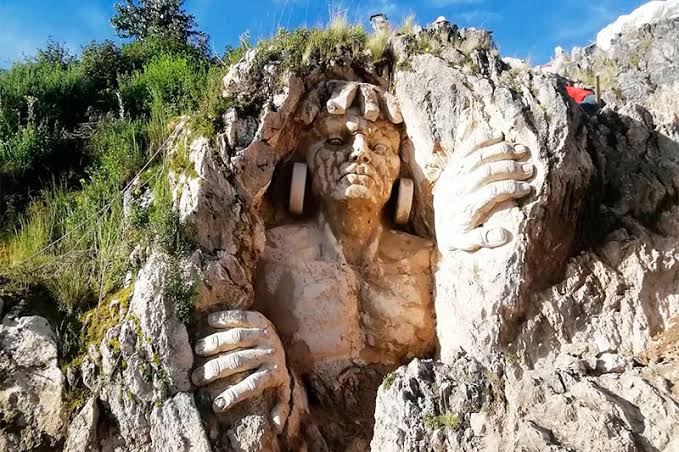
Stop 2: The Puma
A few steps farther on, you’ll encounter the feline the Incas used as a symbol of strength and the world of the living. Stand at its feet and look up: that’s when you really appreciate the sculpture’s size.
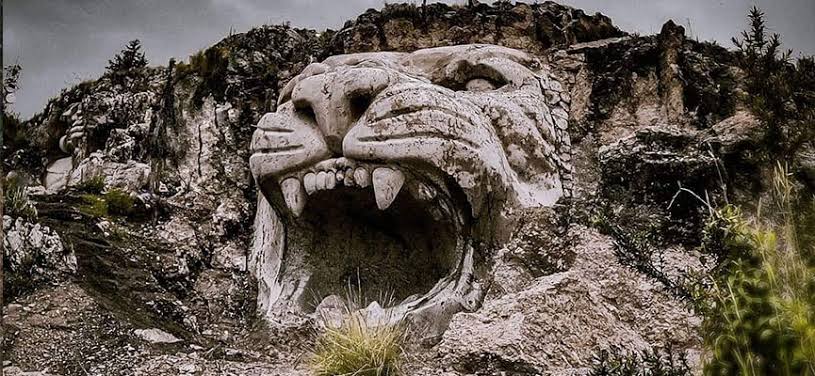
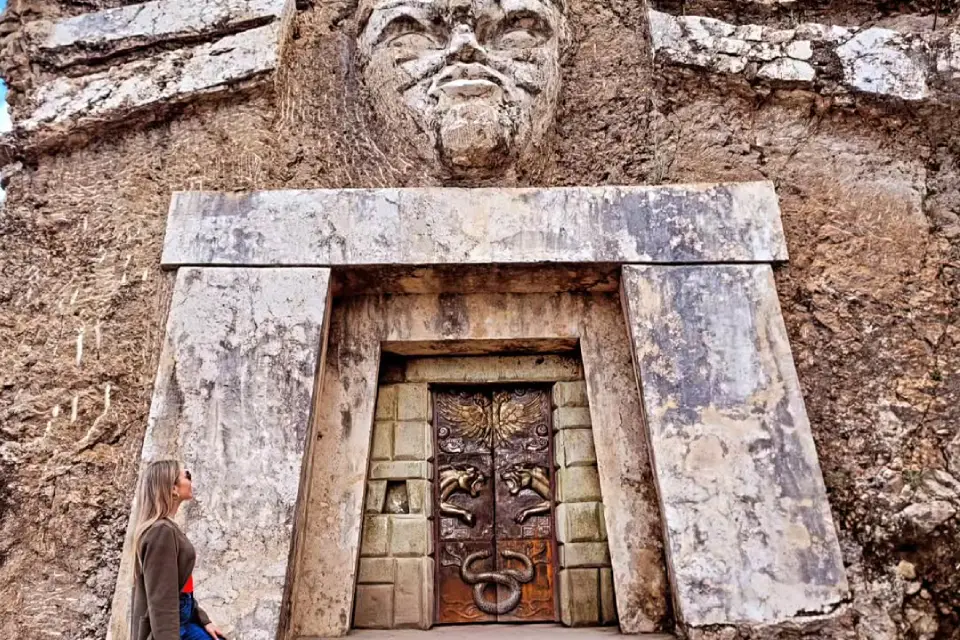
Stop 3: The Sun Gate
This gateway stands nearly 3 meters (10 feet) tall, with a sun carved at its center. Inside the sun is an Inca face with three coca leaves above its head. Move from side to side as you look at it: the relief was designed to create a sense of depth.
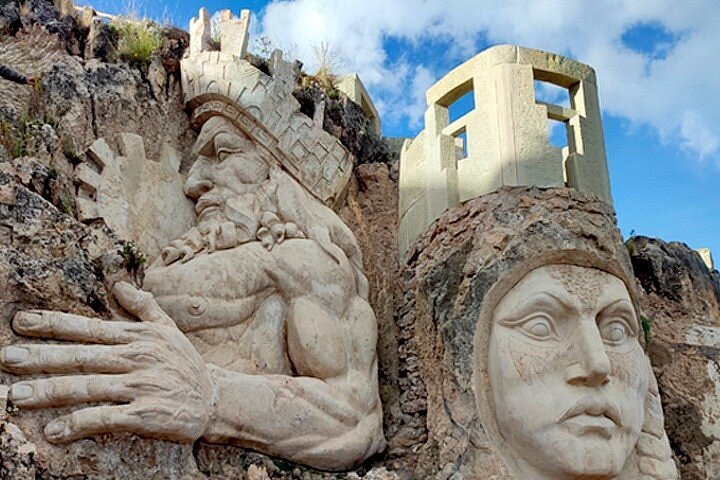
Stop 4: Guardians of the Mountains
Here you’ll find figures representing an apu, a mountain spirit that protects a community, and Wiracocha, the god who, according to Inca belief, shaped the world. If you’re visiting with a guide, this is the perfect time to ask how the Incas understood the sky, the earth, and the world below.
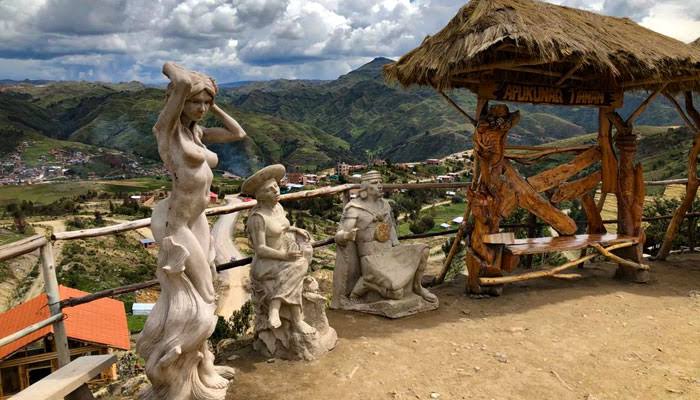
Stop 5: The View of Cusco
The walk ends at a higher viewpoint, with the city below and mountains all around. Stay a few minutes, take a moment to catch your breath, and snap a panoramic photo. On clear days, morning light usually works best for pictures.
How to Get There from Cusco Based on Your Time and Budget
The question isn’t just how to get there, but what kind of experience you want. Choose based on what matters most to you.
| If you’re looking for… | Best option | Total outing time |
|---|---|---|
| Thrills and scenery | ATV tour | 2 to 3 hours |
| An explanation of each sculpture | Guided minibus tour | About 3 hours |
| A quick trip for a small group | Round-trip taxi | 20 minutes each way |
| The lowest cost | Bus and shared van | 45 to 60 minutes each way |
With a Tour: The Hassle-Free Option
You’ll be picked up at your hotel, taken to the site, guided through the sculptures, and brought back. There’s no need to negotiate with taxi drivers or figure out when the last vehicle leaves. With a guide, the sculptures come to life because each has a story you won’t find written on a sign.
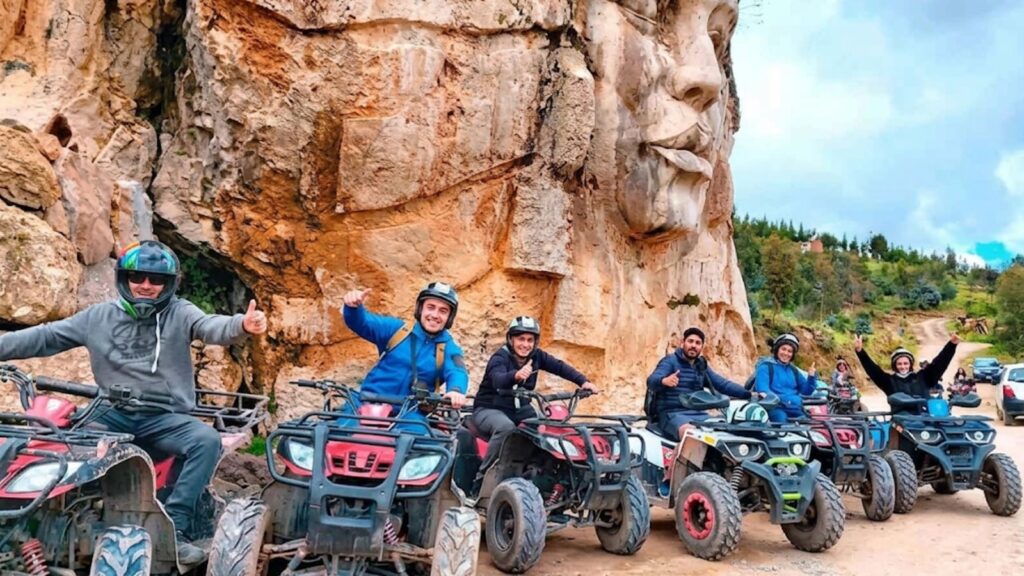
By ATV: Getting There Is Part of the Adventure
The starting point is in Tica Tica, on the outskirts of the city. Before setting off, you’ll learn how to operate the vehicle and receive a helmet and gloves. The ATVs are automatic, so you don’t need previous riding experience.
On Your Own Using Public Transportation
This is the cheapest option, though it takes a little patience:
- Catch an Expreso Santiago bus at the Puente Rosario stop, a few blocks from the Plaza de Armas. The fare is about S/ 1.
- Stay on until the last stop, about 30 minutes away.
- For the final stretch, you have three options: a shared van for about S/ 2, a taxi for about S/ 10, or a walk of approximately 40 minutes.
By Bicycle, Only After You’ve Acclimatized
A taxi can drop you off at the Tica Tica arch, where you can continue by bike. Local residents can easily point you in the right direction. Remember that you’ll be above 3,400 m (11,155 ft): if you’ve just arrived in Cusco, save this option for the last few days of your stay.
Admission Prices and the Best Time to Visit
Budget S/ 20 to S/ 30 per person for admission. Children up to age 5 enter free. Since this is a privately operated project, you pay at the on-site ticket booth, and admission is not included in the Cusco Tourist Ticket (Boleto Turístico).
A practical tip: bring S/ 10 or S/ 20 bills. Cell service on the hillside can be unreliable, and card or mobile payments may not always be possible.
Morada de los Dioses is a daytime attraction. ATV tours begin early in the morning, and the last departures are usually in the midafternoon. If you’re visiting independently, plan to return before dark: temperatures drop quickly, and finding transportation becomes harder.
Morada de los Dioses Tours: What to Combine with Your Visit
Morada de los Dioses won’t take up your entire day, so it’s worth pairing it with another nearby experience. Here are the most practical combinations.
Morada de los Dioses by ATV
This is the most exciting way to get there. You’ll ride along rural roads, pass through local communities, and reach the sculptures with the landscape as your backdrop. If that sounds like your kind of trip, check out our Morada de los Dioses ATV tour, which includes hotel pickup, safety equipment, and a guide.
Morada de los Dioses and Piuray Lagoon
Piuray Lagoon lies on the road toward Chinchero and supplies water to Cusco. Many ATV tours include it, with the complete outing taking around 3 hours.
Morada de los Dioses and the Sacred Valley
If you have a full day, you can see the sculptures early and continue to Maras and Moray or the towns of the valley. To make the most of your day, take a look at our Sacred Valley tour from Cusco.
| Combination | Approx. duration | Best for |
|---|---|---|
| Morada de los Dioses only | 2 to 3 hours | Travelers with a free morning |
| Morada + Piuray Lagoon | 3 hours | Travelers seeking nature and adventure |
| Morada + Maras and Moray | 5 to 6 hours | Travelers who want to make the most of a full day |
When to Visit and How to Prepare
Any month is a good time to see the sculptures. What changes is the kind of experience you’ll have.
| Months | Weather | What to expect |
|---|---|---|
| April to October | Dry, sunny days and cold nights | Blue skies and clear panoramic photos |
| November to March | Rain, mostly in the afternoons | Green hills and fewer visitors |
What to Pack for a Half-Day Visit
| What to bring | Why you’ll need it |
|---|---|
| Sunscreen and a hat | The high-altitude sun can burn your skin even when the air feels cool |
| Light jacket | Temperatures can change in minutes |
| Rain jacket | Essential during the rainy season |
| Water bottle | Staying hydrated helps you cope with the altitude |
| Cash in Peruvian soles | For admission and small purchases |
| Shoes with good traction | Some paths have dirt and loose stones |
Five Tips to Make the Most of Your Visit
- Plan your visit for your second or third day in Cusco, once you’ve had time to adjust to the altitude.
- Go early for a quieter visit and better light.
- Photos look better when someone stands next to a sculpture to show its scale.
- Protect the artwork: don’t climb on the sculptures, even if you see others doing so.
- If you choose an ATV tour, wear clothes you don’t mind getting dusty.
Frequently Asked Questions About Morada de los Dioses
What Does Apukunaq Tianan Mean?
It’s Quechua for “the place where the apus live,” referring to mountain spirits. In Spanish, the site is known as Morada de los Dioses, or Abode of the Gods.
Are the Sculptures from Inca Times?
No. They’re modern works by a sculptor from Cusco who drew inspiration from Inca beliefs. That’s why you won’t find them in archaeology books.
How Much Does Admission Cost?
Admission costs between S/ 20 and S/ 30 per person. Children ages 5 and under enter free.
Is the Cusco Tourist Ticket Valid Here?
No. This attraction has its own admission ticket, which you buy when you arrive.
How Much Time Should I Allow in My Itinerary?
A morning or afternoon is enough. You’ll spend between one and two hours at the site itself.
Can I Visit Without Booking a Tour?
Yes. It’s easy to reach by taxi or public transportation. The advantage of a tour is that transportation is taken care of and you’ll learn what each figure represents.
Is It a Good Place to Visit with Children?
Yes. The walking circuit is short, and children are often impressed by the size of the sculptures. If you’re considering an ATV tour, ask about the minimum age requirement first.
Is the Site Wheelchair Accessible?
Access is difficult. The ground is unpaved, with rocks and some slopes.


