
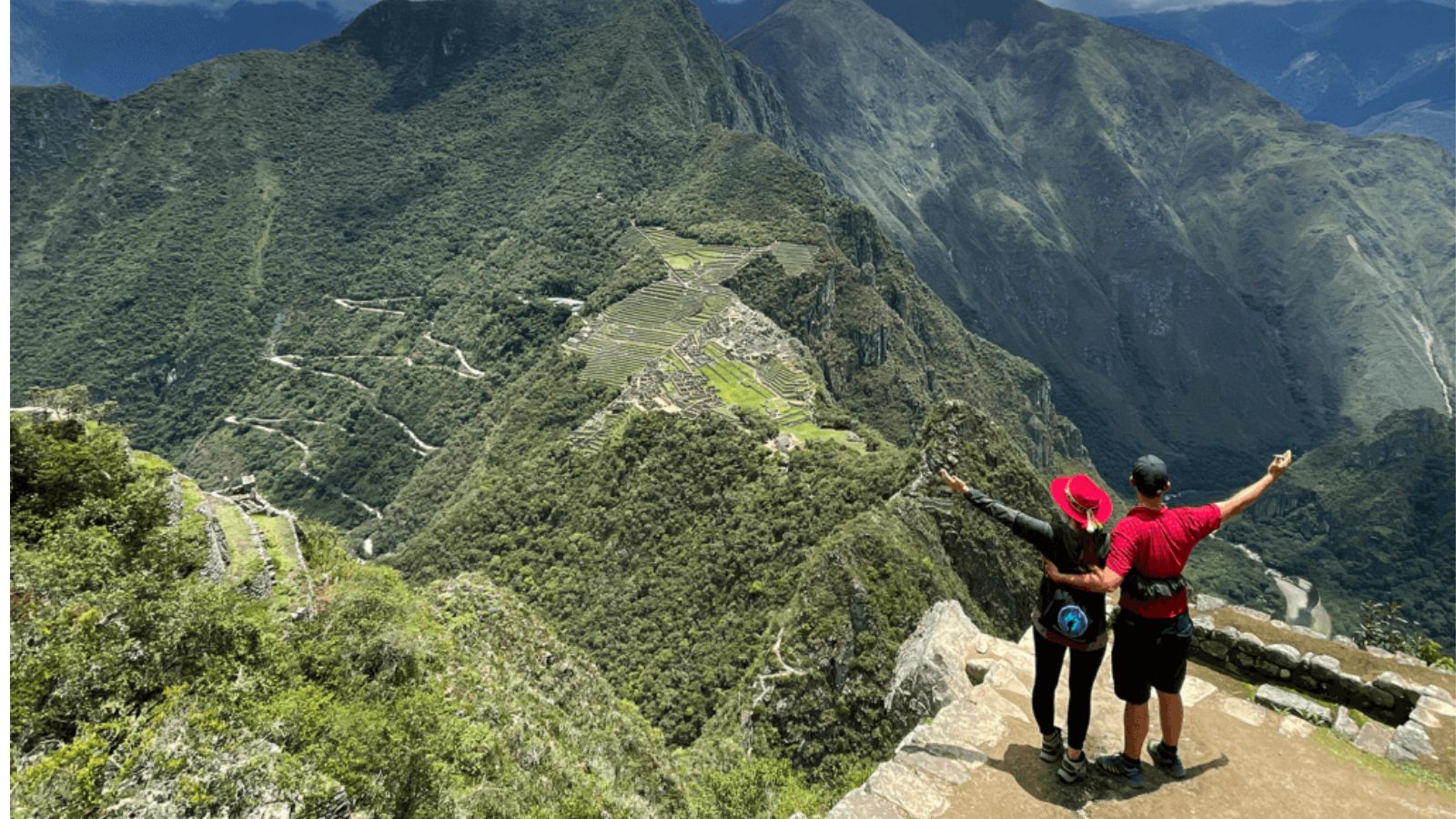
Huayna Picchu is the mountain that rises behind the ancient citadel in almost every classic photo of Machu Picchu. Hiking to its summit gives you a view of the sanctuary from above, with the Urubamba River winding through the canyon below. Getting there involves a short but very steep climb up stone steps carved by the Incas.
Reaching the summit takes planning. You need a specific entrance ticket, a designated entry time, and several transportation connections from Cusco. This guide explains how to get there step by step, what to expect on the trail, and how to prepare for a smooth visit in 2027.
Huayna Picchu: The Mountain Behind the Classic Machu Picchu Photo
Huayna Picchu rises to 8,835 feet (2,693 meters) above sea level, about 853 feet (260 meters) above the citadel. Its Quechua name is commonly translated as “young mountain,” in contrast to Machu Picchu, or “old mountain.”
A Trail Built by the Incas
The trail you will follow is not a modern construction. The Incas carved this route into the mountainside and built structures and terraces near the summit, showing that the mountain played an important role in the complex.
What Awaits You at the Top
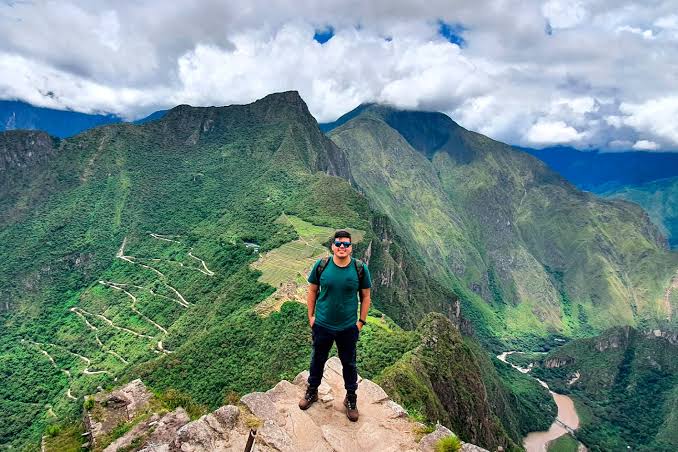
From the summit, you can see the entire citadel, including its terraces and plazas, laid out like a miniature model. You will also enjoy sweeping views of the Urubamba River, the winding road used by the shuttle buses, and the mountains surrounding the sanctuary.
The Temple of the Moon Is Not on This Route
On the mountainside is the Great Cavern, also known as the Temple of the Moon. Visiting it requires a separate ticket for Route 3C because it is not included in the summit hike.
How to Get From Cusco to the Trailhead
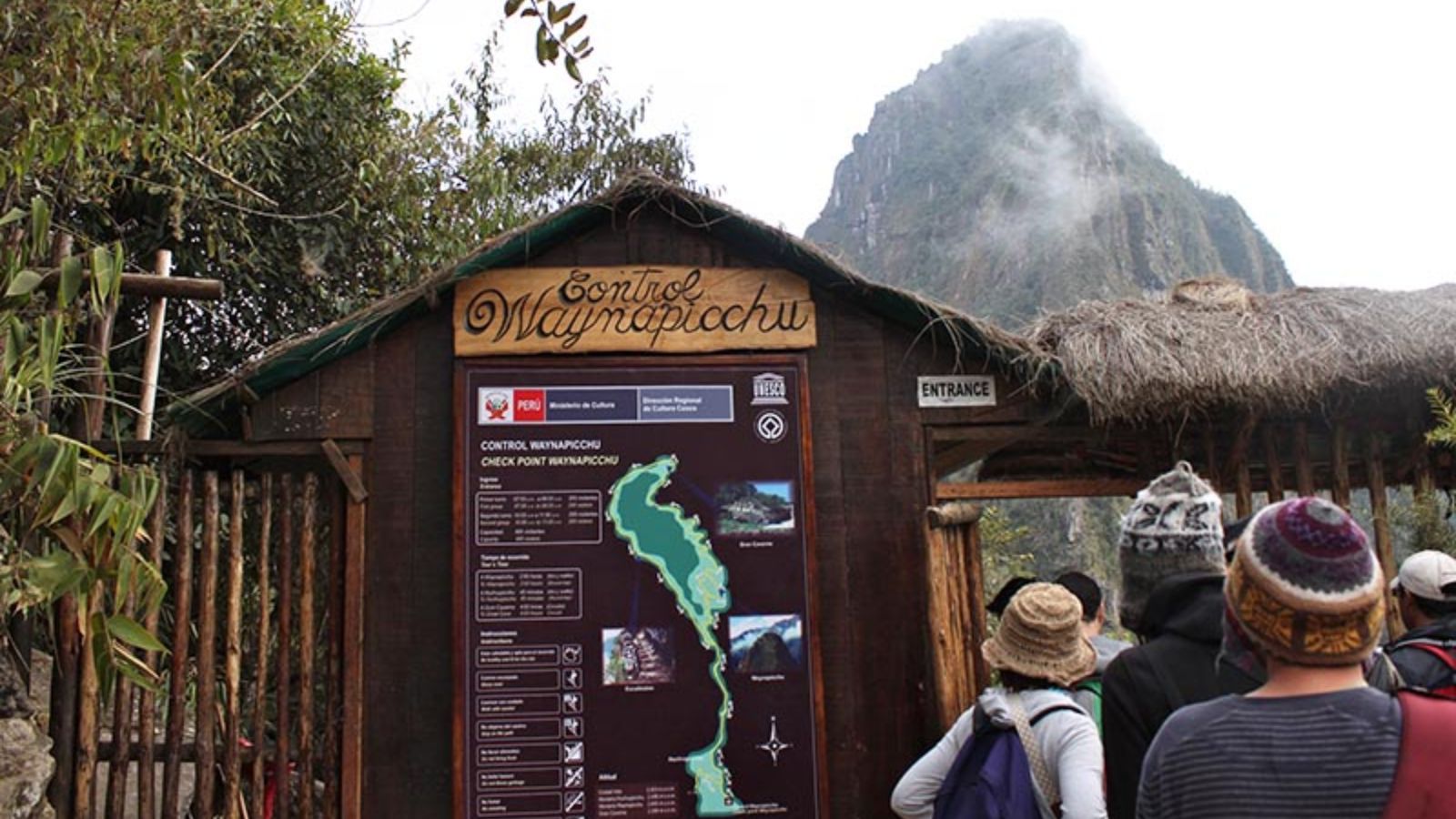
There is no direct road connecting Cusco to Machu Picchu. The journey involves traveling by road and train to Aguas Calientes, taking a shuttle bus up to the citadel, and walking inside the archaeological site to the Huayna Picchu checkpoint.
Step by Step Directions
- Cusco to Ollantaytambo. Travel by bus or car through the Sacred Valley, approximately 1.5 to 2 hours.
- Ollantaytambo to Aguas Calientes. Take a scenic train ride of approximately 1.5 hours along the Urubamba River.
- Aguas Calientes to the citadel. Take the shuttle bus, which takes about 25 to 30 minutes along a winding road, or hike up the steps for approximately 1.5 hours.
- Machu Picchu entrance and mountain checkpoint. Enter at the time printed on your ticket, follow part of Circuit 3, and reach the Huayna Picchu checkpoint, where your trail entry is registered.
Approximate Travel Times
| Route | Transportation | Approximate Time |
|---|---|---|
| Cusco to Ollantaytambo | Bus or car | 1.5 to 2 hours |
| Ollantaytambo to Aguas Calientes | Train | 1.5 hours |
| Aguas Calientes to the citadel | Shuttle bus | 25 to 30 minutes |
| Aguas Calientes to the citadel | On foot | 1.5 hours |
| Entrance to Huayna Picchu checkpoint | On foot via Circuit 3 | Depends on your pace and the route within the site |
Why Staying Overnight in Aguas Calientes Is a Good Idea
Huayna Picchu entry times are in the morning. If you leave Cusco on the same day, your schedule will be tight, and even a small train delay could cause you to miss your hike. A 2 day Machu Picchu tour lets you spend the night in town and start the first entry group feeling rested.
Hiking to the Summit: Duration, Difficulty, and Entry Times
The climb to Huayna Picchu takes approximately 1 to 1.5 hours. The full experience, including the descent, usually takes 2.5 to 3 hours. It is a short trail, but it requires good physical fitness.
Key Trail Information
| Information | Details |
|---|---|
| Summit elevation | 8,835 feet (2,693 meters) above sea level |
| Distance | Approximately 1.2 miles (2 km) round trip |
| Ascent | 1 to 1.5 hours |
| Full experience | 2.5 to 3 hours |
| Trail conditions | Narrow, steep Inca stone steps |
| Difficulty | Moderate to challenging |
What the Trail Is Like
Much of the trail consists of tall, narrow stone steps. In certain sections, you may need to use your hands or hold onto safety cables anchored into the rock. Near the summit, there are narrow passages between boulders and exposed areas with steep drops on one side.
The Two Entry Groups
| Group | Citadel Entry | Mountain Entry | Best For |
|---|---|---|---|
| First | 7:00 a.m. | 8:00 to 9:00 a.m. | Travelers staying in Aguas Calientes who want fewer crowds and cooler temperatures |
| Second | 10:00 a.m. | 11:00 a.m. to noon | Travelers arriving from Cusco the same day or those who prefer a later start |
Who Should Consider Another Hike
If you have a fear of heights, knee problems, or a heart condition, consider an alternative with gentler slopes. Machu Picchu Mountain and Huchuy Picchu also offer elevated views of the sanctuary.
The Route 3A Ticket for Huayna Picchu in 2027
To climb Huayna Picchu, you need the Circuit 3 ticket for Route 3A, Waynapicchu Mountain. This is the only ticket that allows access to the summit trail. The route has approximately 350 spaces per day, divided between the two entry groups.
Reference Ticket Prices
| Visitor Category | Price |
|---|---|
| International adult | S/ 200 |
| International student | S/ 125 |
| International visitor under 18 | S/ 118 |
| Peruvian or Andean Community adult | S/ 112 |
| Peruvian or Andean Community student or minor | S/ 80 |
These are the rates in effect for 2026. Peru’s Ministry of Culture may adjust them for 2027, so check the final price when booking.
When to Book
Route 3A is often among the first to sell out, especially from June through October. If you already know your travel dates for 2027, try to book several months in advance, then arrange your train tickets around your assigned entry time.
Age Requirements
The most commonly cited minimum age is 12, although some tour agencies state 18. If you are traveling with teenagers, confirm the official age requirement before making a reservation.
If You Arrive at Machu Picchu on Foot
If you are taking the Salkantay Trek to Machu Picchu, you can coordinate with your tour operator to arrange a Route 3A entrance ticket. This lets you finish your trek with the spectacular view from the Huayna Picchu summit.
Safety Tips and Recommendations for Enjoying the Views
The key to enjoying Huayna Picchu is arriving acclimated, wearing shoes with good traction, and taking your time. These tips will help you get ready.
Before Your Hiking Day
- Acclimate in Cusco. Spend at least two days in Cusco or the Sacred Valley before your hike.
- Double check your train schedule. Allow plenty of time to reach the entrance because late arrivals may not be admitted to the mountain.
- Bring your original passport. You will need it at the citadel entrance and the mountain checkpoint.
What to Pack
| Item | Why You Need It |
|---|---|
| Hiking shoes with good traction | The stone steps can be wet and slippery |
| Water in a reusable bottle | The climb is demanding and there are no places to buy water on the trail |
| Rain poncho | The weather changes quickly, especially from November through March |
| Sunscreen and a hat | Sun exposure can be intense near the summit |
| Small backpack | You will need to keep your hands free in narrow passages |
During the Climb
Climb at your own pace and let faster hikers pass. Use the safety cables on steep sections, and avoid stopping near exposed edges to take pictures. If you feel dizzy, rest in a safe location before continuing.
How to Get the Best Photo
Visitors in the first group often see the citadel covered in mist that gradually clears as the sun rises. If you are hoping for an unobstructed view, take your time at the summit and watch for breaks in the clouds.
Frequently Asked Questions
Is Hiking Huayna Picchu Dangerous?
The trail is challenging, but you can reduce the risks by moving carefully, using the safety cables on steep sections, and following staff instructions. It is not recommended for people with a fear of heights.
Can I Climb Huayna Picchu With a Ticket for Another Circuit?
No. Only the Route 3A ticket grants access to the Huayna Picchu mountain trail.
Which Is Harder, Huayna Picchu or Machu Picchu Mountain?
Huayna Picchu is shorter but steeper, with narrower passages. Machu Picchu Mountain is longer, with a more consistent incline.
What Is the Best Time of Year to Climb?
From May through September, there is generally less rainfall, and the stone steps tend to be drier. Tickets also sell out faster during this season, so book early.
Can I Hike Huayna Picchu on a Day Trip From Cusco?
It is possible with the second entry group, but the schedule is very tight. Staying overnight in Aguas Calientes gives you more flexibility and a less stressful experience.


