
Machu Picchu has no age limit for visitors. What it does have is uneven terrain, stone steps of varying heights, an altitude of 7,972 feet (2,430 meters) that affects the body in ways that are not always anticipated from home, and a route that depending on the circuit chosen can require between one and four hours of continuous walking on Inca stonework. For older adults, these variables are not obstacles but factors worth knowing and planning for before you arrive, so the visit can be what it deserves to be: one of the most extraordinary experiences on the continent, enjoyed with the peace of mind the place deserves.
This guide is designed for those traveling with older parents, grandparents, or elderly family members, as well as for older adults planning their own trip who want honest, concrete information about what to expect.
Altitude: the most important factor for older adults
Machu Picchu sits at 7,972 feet (2,430 meters) above sea level, making it a moderate-altitude destination that most older adults can visit without issues given the right preparation. However, most visitors arrive at Machu Picchu after spending several days in Cusco at 11,150 feet (3,400 meters), or after trekking at even higher elevations. That prior exposure to greater altitude means that the citadel, despite being lower than Cusco, is visited by a body that has already been working for days under lower-oxygen conditions.
For older adults with no prior experience at altitudes above 6,500 feet (2,000 meters), the first few days in Cusco may produce more pronounced acclimatization symptoms than in younger visitors: greater-than-usual fatigue, mild headaches, loss of appetite, and in some cases difficulty sleeping during the first nights. These symptoms are not warning signs in themselves, but they do indicate that the body is working to adapt and that this process needs time.
The most important recommendation for older adults planning a trip to Machu Picchu is to set aside three to four nights for acclimatization in Cusco before visiting the site, keeping activities moderate and avoiding overexertion during those first days. A visit to the Sacred Valley during that period, which sits at a lower altitude than Cusco, supports gradual adaptation in a way that simply resting at the hotel does not.
Before the trip, a consultation with your primary care physician is a step that at Incredible Peru Tours we especially recommend for older adults with a history of high blood pressure, cardiovascular disease, diabetes, or any respiratory condition. Your doctor can assess whether the altitude of Cusco and Machu Picchu is appropriate for your specific health profile and whether your regular medications need any adjustment for the travel period.
The terrain at Machu Picchu: what to expect and what to avoid
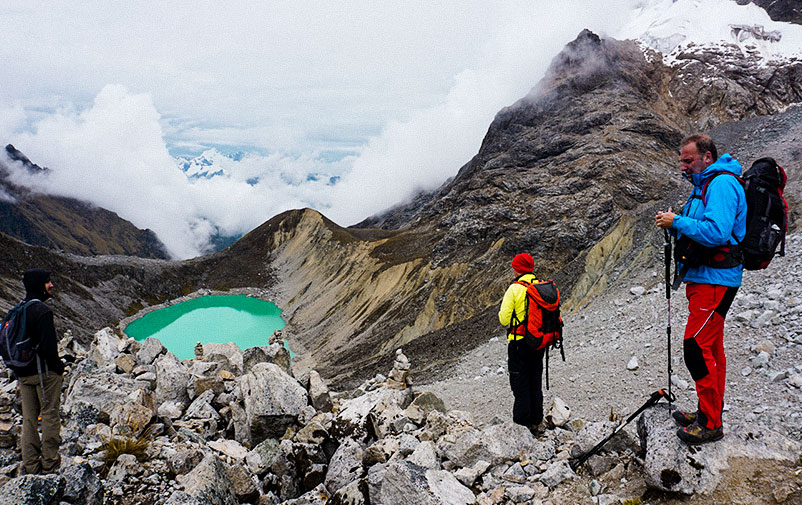
The terrain is the factor that varies most between circuits and most determines the physical demands of the visit for older adults. The archaeological site is built on a mountain summit with significant elevation changes between different sectors, and the available circuits have varying difficulty levels that are worth understanding before choosing your ticket.
Circuit 1 is the most accessible in terms of terrain and physical effort. It covers the main sectors of the urban area without including the ascent to the upper viewpoint and can be completed in an hour and a half to two hours at a relaxed pace. For older adults with limited mobility or who prefer to minimize physical exertion without missing the most representative elements of the site, Circuit 1 is the most suitable option.
Circuit 2 adds the ascent to the upper viewpoint, which requires climbing several sets of Inca stone steps to reach the most photographed vantage point at the site. That ascent takes between 15 and 25 minutes and can be done at a very slow pace with frequent stops. For older adults with strong legs and no specific medical contraindications, Circuit 2 is entirely achievable if the pace is managed correctly.
Circuits that include access to Inti Punku, the hanging bridge, or the Huayna Picchu or Machu Picchu mountains are not suitable for most older adults because they involve additional hikes of one to three hours with steep elevation gain and in some sections very steep stone staircases. For those who are in genuinely good physical condition regardless of age, those options may be viable, but the assessment should be made honestly based on your actual current fitness level, not the one you had ten years ago.
Footwear: getting it right before you arrive
Footwear is the single piece of gear that makes the biggest difference in comfort and safety at Machu Picchu for older adults. The wet or moss-covered Inca stonework can be slippery, especially on staircase sections and along terrace edges where the surface has been polished smooth by millions of visitor footsteps.
Sneakers or athletic shoes with good rubber grip are the most practical option for most older adults. High-cut trekking boots add ankle support that can be especially helpful for those with less joint stability. Smooth-soled shoes, dress shoes, or any footwear without grip are not appropriate for the site’s terrain regardless of the visitor’s age.
Trekking poles inside the site
Trekking poles with protective rubber tips are permitted inside the Machu Picchu archaeological site. For older adults with reduced walking stability, a tendency toward vertigo on sections with visible drop-offs on the side, or a history of falls, poles are a genuine safety tool that significantly reduces the risk of an accident on the more uneven sections of the terrain.
If you do not own poles, they can be rented in Cusco or Aguas Calientes at minimal cost. Metal-tipped poles are not permitted inside the site — only those with rubber tips or protective ferrules — so verify that detail before reaching the access checkpoint.
Pacing the visit: how to manage your time inside the site
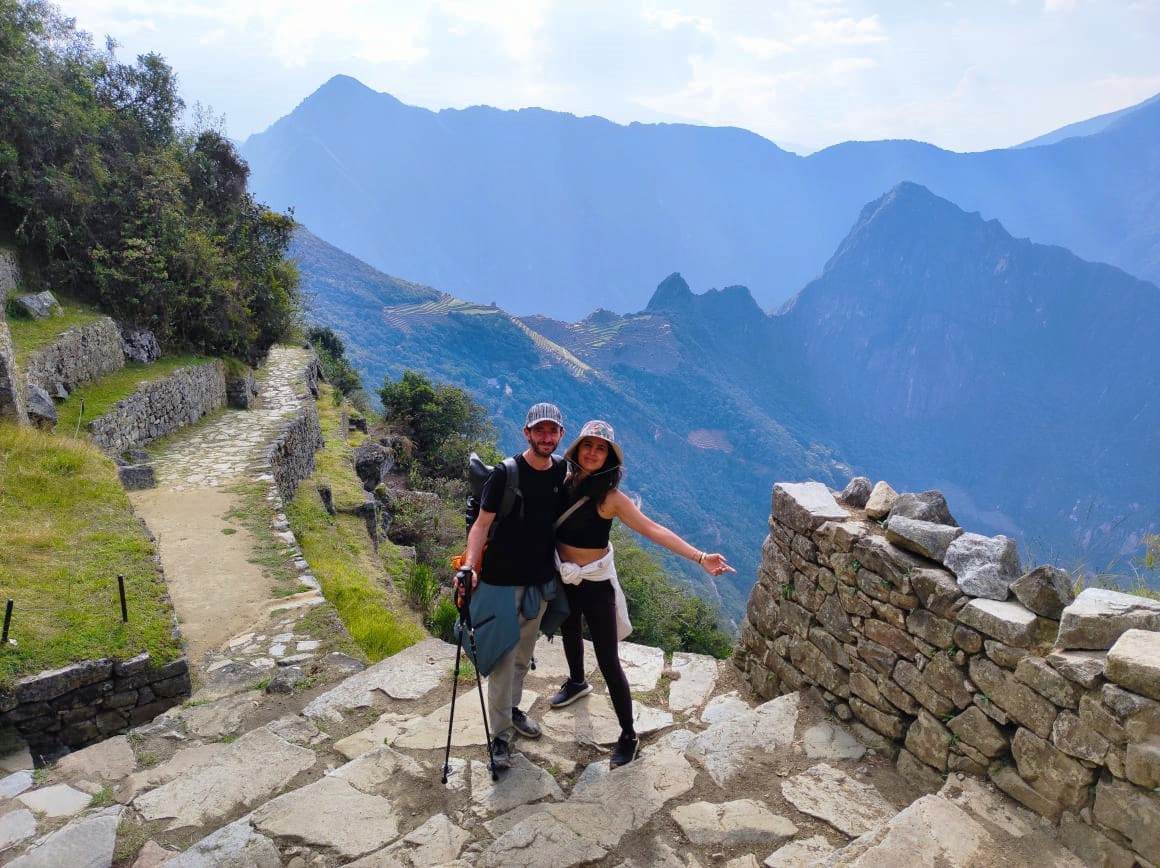
The most common mistake on visits to Machu Picchu with older adults is trying to cover the entire circuit at a pace the body cannot comfortably sustain. The site is not meant to be rushed — it is meant to be walked. For older adults, that principle is especially relevant because uneven terrain and altitude make the cumulative effort in the second hour of the visit considerably greater than in the first.
Planning regular stops at benches or designated rest areas inside the site allows for a far more enjoyable experience than trying to complete the circuit without pausing. The views from rest areas within the site are every bit as extraordinary as those from the highest viewpoints, and sitting for five minutes in front of the Main Plaza or along the edge of the agricultural terraces creates moments of quiet contemplation that a rushed pace simply does not allow.
Carrying enough water for the entire visit is essential. Older adults face a higher risk of dehydration under conditions of altitude and physical activity than younger visitors, and dehydration noticeably amplifies fatigue and altitude acclimatization symptoms. One liter of water per person for a two-to-three-hour visit is the minimum recommended amount.
The bus from Aguas Calientes: how it works and what to expect
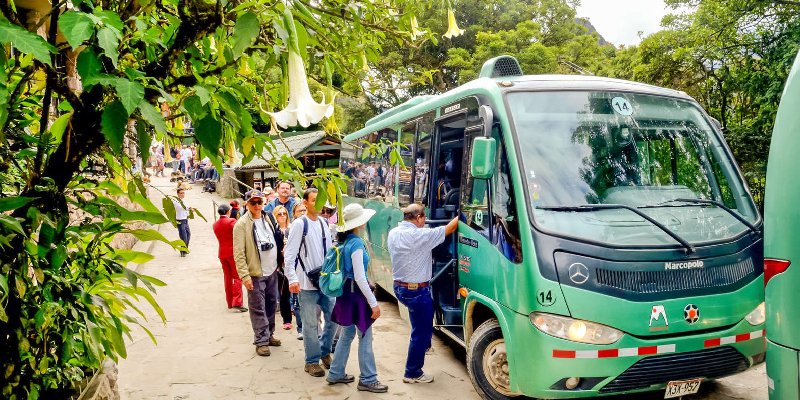
Access to Machu Picchu from Aguas Calientes is by bus along a winding switchback road that takes approximately 25 minutes to climb from the town to the site entrance. The bus departs from the stop located in front of the river in the center of Aguas Calientes and runs frequently enough that the wait rarely exceeds 15 to 20 minutes, except during the first morning departures when the line can be longer.
For older adults who have difficulty standing for extended periods, the bus line during peak hours can be uncomfortable. Arriving at the stop early enough for the first departures of the day, or choosing a site entry time that does not coincide with the busiest hours, reduces that wait.
The alternative to the bus is the uphill walking path, which takes between 40 and 60 minutes at a good pace. For older adults in good physical condition who prefer to arrive at the site with their body already warmed up and without depending on bus schedules, this option is perfectly viable. For those with mobility limitations or who prefer to conserve energy for the visit itself, the bus is the right choice.
Specific medical recommendations for older adults
Beyond the pre-trip consultation with your primary care physician, there are several specific recommendations that have practical relevance in the context of traveling to Machu Picchu as an older adult.
Bring enough of your regular medications to cover the entire trip plus a buffer of several additional days in case of unexpected delays on the return. Medications should be kept in your carry-on luggage, not in checked baggage, so they are accessible at all times during travel.
Carry a written record of your regular medications, dosages, and relevant medical conditions in a physical document in your daypack. In the event of a medical emergency in an area with language barriers, that document gives local medical personnel the information they need to respond appropriately.
Acetaminophen or ibuprofen for altitude headaches and an anti-diarrheal for dietary changes are the most commonly used medications during the first week in Cusco for older adults, and having them on hand avoids the need to search for a pharmacy at an uncomfortable moment.
What Machu Picchu offers those who arrive with patience and without rushing
Machu Picchu is not a place best experienced at a run. It is a place best experienced standing still. Older adults who arrive expecting to cover every corner of the circuit in the shortest possible time are competing with a pace the site does not require. Those who arrive willing to stop, look, let the scale of the place settle in gradually, and resist the urge to compress into two hours something that deserves more time, leave with an entirely different experience.
The advantage of visiting Machu Picchu with decades of life experience is precisely that: the capacity to be fully present in an extraordinary place without the urgency to process everything quickly and move on to the next item on the itinerary. That does not require any special physical condition. It requires having arrived well, having rested properly, and having enough time not to rush.
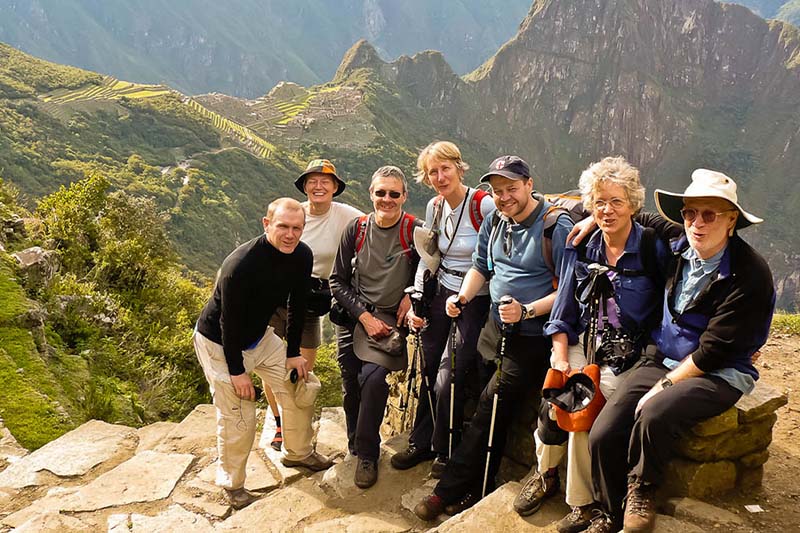
Are you planning a trip to Machu Picchu with older family members and looking for guidance on the most suitable itinerary, the most accessible circuits, and the logistics that make the visit easier for that profile? At Incredible Peru Tours we coordinate Machu Picchu visits for mixed-profile groups and tailor every detail of the itinerary to each group’s specific needs. Send us your group’s composition and we will put together the most appropriate proposal for you.


