
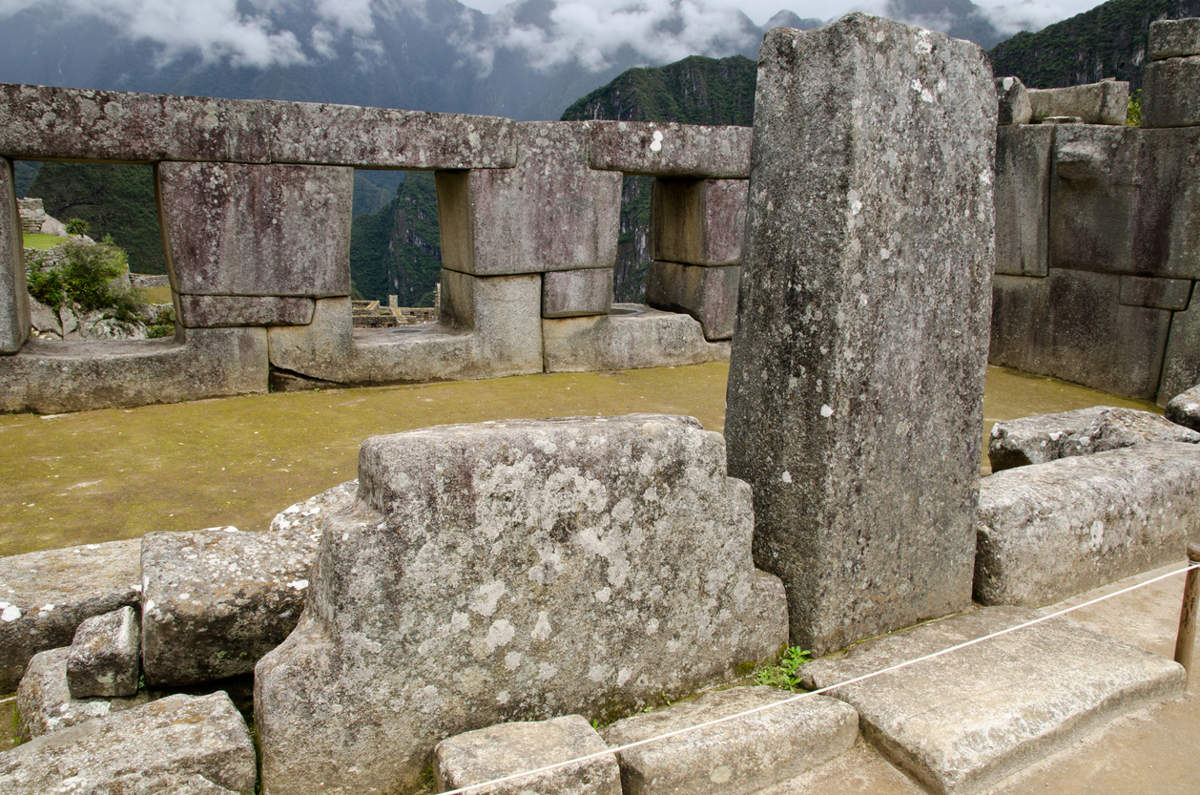
The Temple of the Three Windows is one of the most recognizable enclosures in the urban sector of Machu Picchu and also one of the most debated among archaeologists who have tried to decipher its original function. Three large trapezoidal windows opened in the eastern wall of the enclosure, together with an interior plaza and a central stone of unknown function, create a space that has very few equivalents in Inca architecture in terms of design and the scale of its openings. This guide explains what we know for certain, what is still debated, and how to reach it within the site.
The Physical Description: What You Actually See
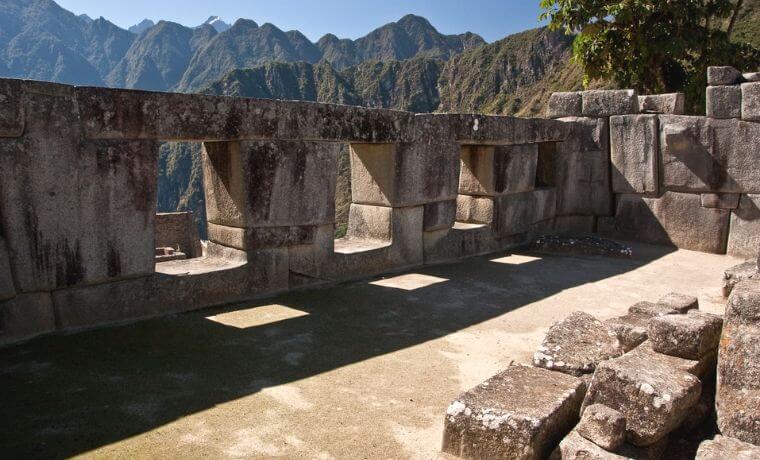
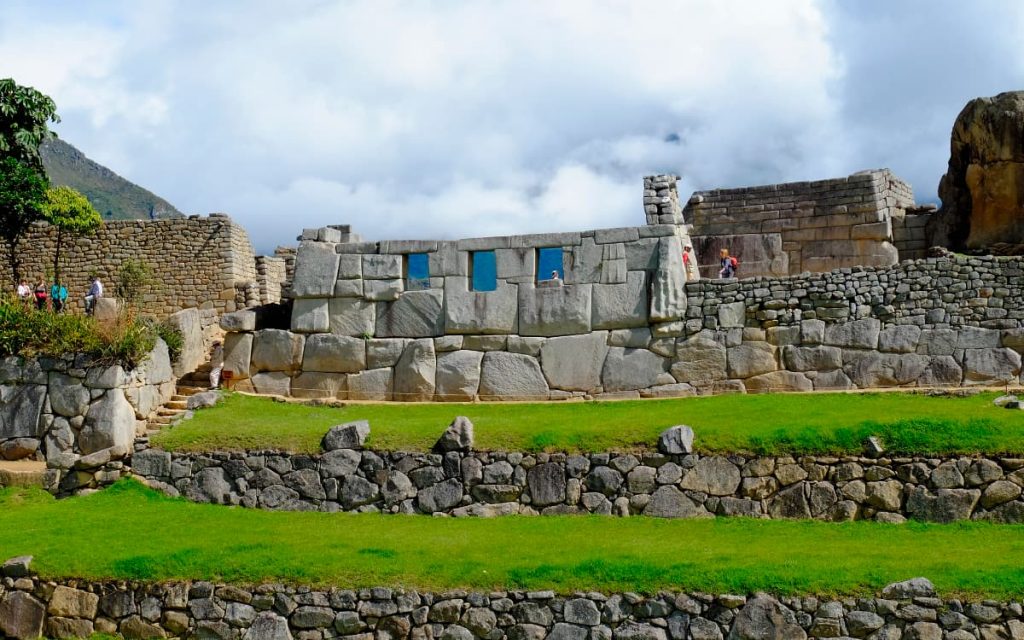
The Temple of the Three Windows is a rectangular enclosure with three large trapezoidal windows opened in its eastern wall, which faces the Sacred Plaza. The windows are considerably larger than those of any other enclosure at the archaeological site, with heights between five and six and a half feet and proportional widths that make them visually dominant within the wall.
The trapezoidal shape of the windows, wider at the base than at the top, is the characteristic form of openings in Inca architecture and has a structural purpose: trapezoidal geometry distributes the weight of the wall over the opening more effectively than a rectangular shape, allowing larger openings without compromising the stability of the structure. The Three Windows take that construction logic to its maximum dimensions within the context of the site.
Inside the enclosure, in front of the windows, there is an irregularly shaped stone that archaeologists have identified as a possible altar or ritual element whose function has not been fully established. The floor of the enclosure preserves remains of what was once the original paving, and in some parts of the side walls, smaller trapezoidal niches are visible. In Inca architecture, these niches were used to store ritual objects or to place votive figures.
The Meaning of the Three Windows: What Is Known and What Is Still Debated
The most widely accepted interpretation of the Temple of the Three Windows connects the number three and the structure of the enclosure with the mythical origin of the Inca people, according to Andean oral tradition recorded by Spanish chroniclers in the 16th century. According to that tradition, the first Incas emerged into the world from three windows or caves on the hill of Pacariqtambo, and the three windows of the temple would be an architectural representation of that origin myth.
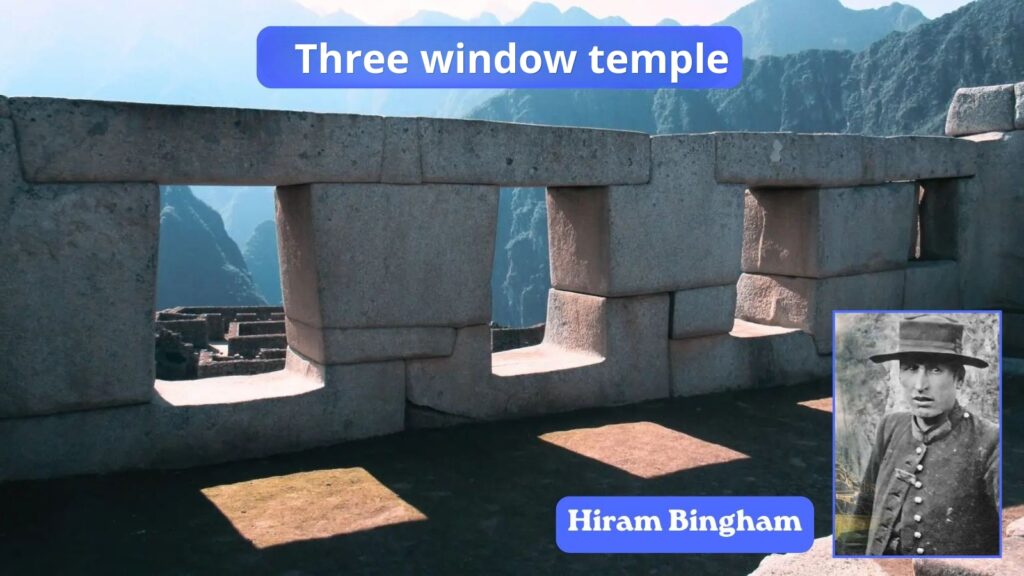
This interpretation was proposed by Hiram Bingham, the explorer who documented Machu Picchu in 1911, and it has had a long life in the literature about the site. However, not all archaeologists accept it with the same certainty. The Pacariqtambo myth has different versions in different colonial sources, and the relationship between the number of windows in the temple and that specific myth may be a later interpretation rather than an original design intention.
What does seem clear to most archaeologists who have studied the enclosure is that the scale of the windows and the quality of the stonework indicate that this was a ceremonial space of the highest category within the complex. The amount of stonework represented by the Three Windows was not invested in secondary buildings. It was the material expression of the power and ritual meaning that this space had for those who built and used it.
The Relationship with Hiram Bingham and the Name of the Enclosure
When Hiram Bingham arrived at Machu Picchu in July 1911, the first structure he documented with special attention was the Temple of the Three Windows. In his diaries and in the later articles he published about the discovery, Bingham described the windows as the strongest evidence he had found that Machu Picchu could be Tamputocco, the mythical place of origin of the Incas described in colonial chronicles.
Bingham’s hypothesis was widely circulated during the first decades of the 20th century and contributed to the site’s international fame. Although the identification of Machu Picchu with Tamputocco has been questioned and largely dismissed by later archaeologists, the connection Bingham established between the Three Windows and the Inca origin myth remains the most widely shared narrative about the enclosure among visitors and in most travel guides.
The Sacred Plaza: The Context Around the Temple
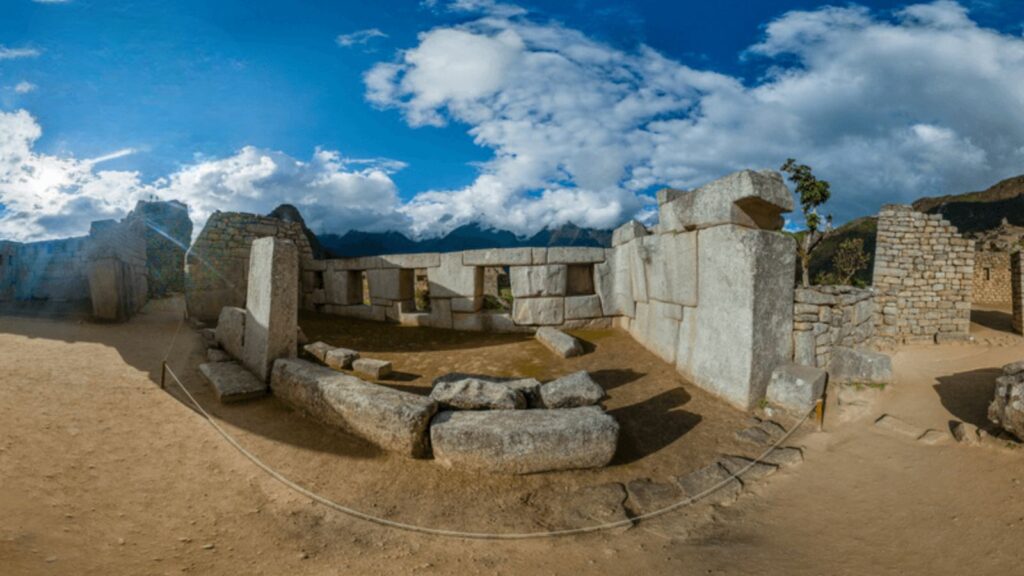
The Temple of the Three Windows is not isolated within the archaeological site. It is part of the Sacred Plaza, an open space in the northern urban sector of Machu Picchu surrounded by several of the most important ceremonial enclosures in the complex. The Temple of the Sun is located at the southern end of this area, the Temple of the Three Windows on the eastern side, and other high-quality architectural enclosures on the remaining sides.
As a functional space, the Sacred Plaza served to connect the different temples and ceremonial enclosures around it into a single ritual unit. Ceremonial events that took place inside the individual temples, which were relatively small, found in the plaza a larger space for gatherings of priests, officials, and participants in the cult.
Understanding the Temple of the Three Windows within the context of the Sacred Plaza, rather than as an isolated object, means understanding the logic of Inca ceremonial planning, which organized each sector of the site not as individual buildings, but as groups of spaces with complementary functions.
The Quality of the Stonework: What It Reveals About Who Built It
The eastern wall of the Temple of the Three Windows, the one that contains the three windows, is built with large granite blocks assembled with the precision characteristic of the finest Inca architecture. The joints between the blocks have no mortar and are cut with such precise fitting that, after five centuries of existence, they have not produced any visible separation.
The quality of the cutting and assembly of this stonework is comparable to that of the Temple of the Sun and is significantly higher than that of the residential and storage structures at the site. In Inca architecture, this difference in construction quality was not merely aesthetic but functional and hierarchical: the enclosures with the greatest ritual meaning and the highest rank within sacred space received the work of the best stonemasons and the greatest amount of time and effort. Because of the quality of its stonework, the Temple of the Three Windows belonged to the highest level of that hierarchy.
Where It Is Located Within the Site and Which Circuit Includes It
The Temple of the Three Windows is located in the northern urban sector of Machu Picchu, within the Sacred Plaza. It is reached from the site’s main entrance checkpoint by following the path toward the urban sector and continuing north through the group of temples and ceremonial enclosures in the central area.
The enclosure is included in Route 2A Classic Designed, which is the most complete circuit through the urban sector and the one that covers the ceremonial elements of the complex most extensively. It is also included in Route 3B Royalty Designed, whose focus on the ceremonial enclosures of the Inca elite specifically takes visitors through the temples of the Sacred Plaza.
For travelers visiting the Temple of the Three Windows with an interest in the archaeological debate about its function and its relationship with the Inca origin myth, combining Route 2A with a guide who understands that discussion in depth produces a qualitatively different visit from simply walking the circuit with the basic information provided by the Ministry of Culture signs.
The Visit in Practice: How to Make the Most of Your Time in the Enclosure
The Temple of the Three Windows offers two perspectives worth exploring during the visit. The first is from the interior plaza of the enclosure, looking toward the windows from inside to see how the light enters through the three openings and how the outside landscape is framed differently in each window depending on the time of day. The second is from the outer Sacred Plaza, looking toward the temple’s eastern wall to appreciate the proportion of the windows in relation to the wall as a whole and to the surrounding enclosures.
The early morning hours are the best time to photograph the enclosure from the inside, when the light enters through the windows at a side angle that highlights the texture of the stonework. At midday, the overhead light reduces contrast, and the effect of light entering through the windows loses part of its visual impact.
Do you want to visit the Temple of the Three Windows and the other enclosures of the Sacred Plaza with complete archaeological context? At Incredible Peru Tours, we coordinate the most suitable circuit tickets for your Machu Picchu visit and provide specialized guides in Andean archaeology who help everything you see at the site carry the meaning it deserves.


