
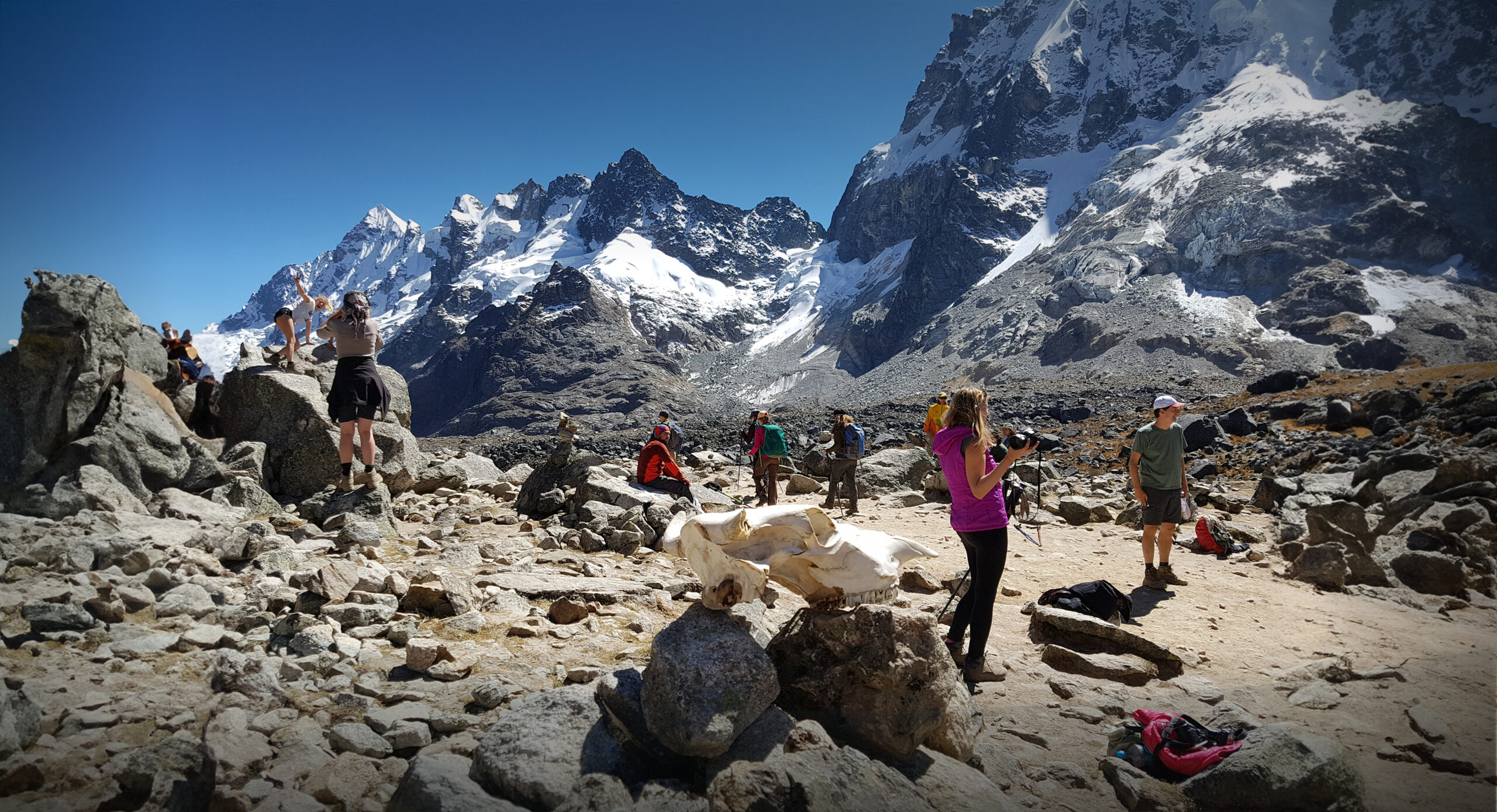
The Salkantay Pass at 4,630 meters is the highest point of the trek and also the one that raises the most anxiety-related questions before booking. What happens if your body does not respond well on the second day? Is there any way to continue the route even if you do not reach the pass? Do you lose all the money invested? Is it still possible to reach Machu Picchu? These questions are completely legitimate, and answering them before heading out on the trail is exactly what helps those who have them feel more confident when making a decision.
This guide honestly explains what options exist if the second day of the Salkantay Trek does not go as expected.
The difference between not reaching the Pass and having to abandon the route
The first thing to clarify is that not reaching the Salkantay Pass and having to abandon the entire route are two different situations with different implications. In some cases, a participant who has difficulties during the ascent to the pass can return to the Soraypampa campsite, rest, and continue the route from that point in a different way. In other cases, physical conditions require completely interrupting the trek and returning to Cusco.
The difference between the two scenarios is mainly determined by the cause of the difficulties. If the problem is severe altitude sickness, descending to a lower altitude is the only solution, and that means leaving the trail. If the problem is physical exhaustion without symptoms of altitude sickness, there may be room to rest and continue at a different pace or along an alternative route. The certified guide is the one who evaluates that difference on the ground with basic medical judgment and knowledge of the route.

The variant that avoids the Pass: it exists but is not always viable
The Salkantay Trek does not have an official route variant that completely avoids the Salkantay Pass and still reaches Machu Picchu along the same route. The pass is a structural part of the trek, not an optional addition. However, there is a logistical alternative that some operators apply in specific cases: if a participant cannot cross the Pass but can continue at a lower altitude, they can descend from Soraypampa along the dirt road to the town of Mollepata and from there transfer to the Santa Teresa area to rejoin the group at the third campsite, avoiding the high mountain section but rejoining the route in the subtropical valleys.
This option depends on several factors: that the participant is physically able to move independently, that the operator has transportation logistics available for that transfer, and that the group as a whole can reorganize to absorb that situation without compromising the overall itinerary. It is not a guaranteed solution in all packages or with all operators, but it exists and deserves to be mentioned because in some cases it allows participants not to completely lose the trekking experience.
If the problem is altitude sickness: what the guide does
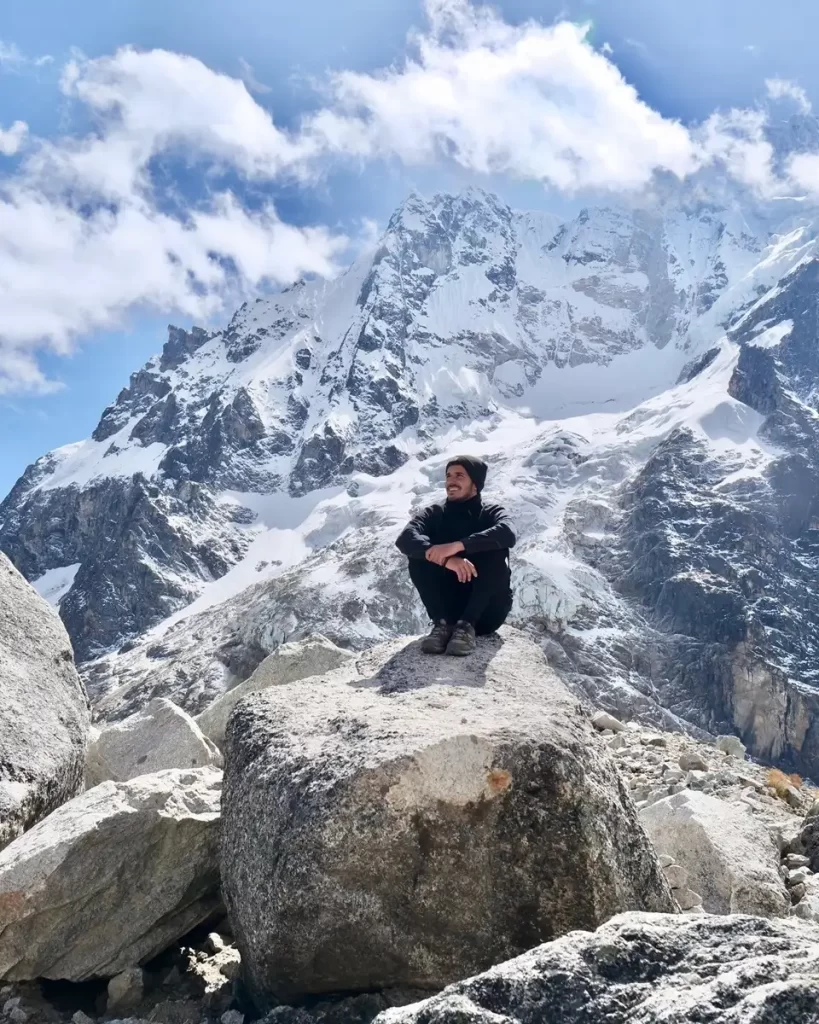
If during the ascent to the Salkantay Pass a participant develops symptoms of altitude sickness that the guide evaluates as severe, the protocol is clear and non-negotiable: immediate descent. Severe altitude sickness does not improve with willpower, medication taken along the way, or rest at the same altitude. It only improves with descent, and the faster that descent occurs, the better the prognosis.
The symptoms that trigger this protocol are those that go beyond normal fatigue and increased breathing at that altitude: disorientation, difficulty breathing at rest, persistent vomiting, loss of balance, or any neurological symptom that the guide identifies as a sign of early cerebral or pulmonary edema. At that point, the guide stops the progress and coordinates the evacuation of the affected participant via the most accessible route available from the group’s current location.
The descent from the ascent section leads back to Soraypampa, from where the participant can be transported by vehicle to Cusco to receive medical attention. The guide accompanies the participant to a safe point and then coordinates with the agency team for the transfer, while the rest of the group, if a support guide is available, can continue the route.
If the problem is physical exhaustion without altitude sickness: what margin exists
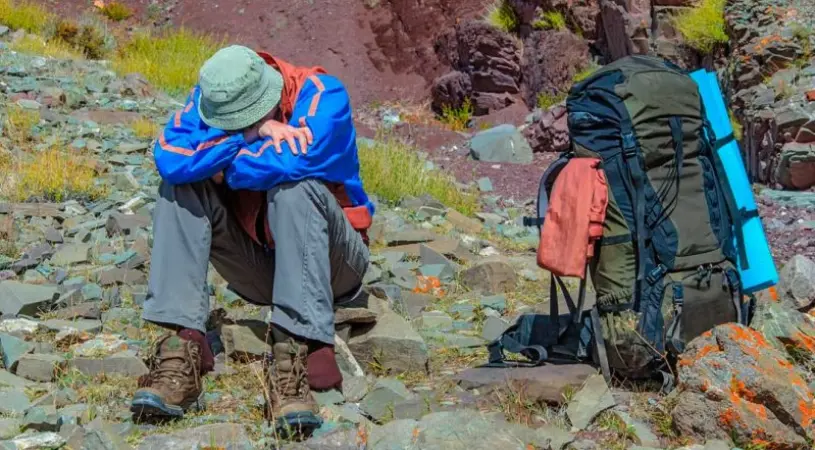
Physical exhaustion on the second day of the Salkantay Trek, without clear symptoms of severe altitude sickness, is a different situation with more available options. Many participants who feel they cannot continue during the steepest section of the ascent benefit simply from stopping, sitting down, eating something for energy, and breathing consciously for ten to fifteen minutes. An experienced guide knows these difficult points and anticipates breaks at the right moments before exhaustion reaches a level that complicates things.
In cases where the participant cannot continue the ascent even if the symptoms are not those of severe altitude sickness, the guide may suggest significantly reducing the pace and continuing the climb at a very slow speed with more frequent breaks. The time difference between crossing the Pass at a normal pace and crossing it at a very slow pace can be one or two additional hours, which affects the arrival time at camp but does not make crossing impossible.
This margin of adaptation exists because the Salkantay Pass does not have a closing schedule. What does exist is the pressure to cross it before the wind and clouds that form mid-morning reduce visibility, and the need to reach the second day’s campsite before darkness makes the descent technically more difficult. The guide manages these time limits based on knowledge of the route and judgment about what is still viable for the group.
What happens to the money invested if the trek is interrupted
The Salkantay Trek does not require an official permit from the Ministry of Culture like the Inca Trail, which means that cost does not exist, nor does its non-refundable policy. What does exist is the cost of the agency package, the Machu Picchu entrance ticket, and the return train from Aguas Calientes.
The Machu Picchu entrance ticket is the most critical component in case of abandoning the trek. If the participant who leaves the Salkantay still reaches Machu Picchu via an alternative route—train from Aguas Calientes or any other—on the date and time of the ticket, they can use it without any problem. If they cannot arrive on that date, the ticket is lost because it is non-refundable and cannot be modified once issued.
The cost of the agency package has a refund policy that varies depending on the operator and the specific contract of each booking. Most commonly, there is no refund for days already started because operational costs such as guides, porters, food, and equipment are already committed. Some operators offer partial credit for a future booking, although this is not standard practice in the market.
Travel insurance with activity interruption coverage is the only tool that can financially compensate for abandoning the Salkantay due to a documented medical cause. For that coverage to apply, the policy must explicitly include high-altitude trekking as a covered activity, trip interruption as a covered event, and a medical report issued by a healthcare professional.
Reaching Machu Picchu even if the Pass could not be completed
This is the information that brings the most relief before booking: not reaching the Salkantay Pass does not necessarily mean not reaching Machu Picchu. If the participant who leaves the route on the second day reaches Aguas Calientes via alternative transportation, which the operator can coordinate in many cases, they can take the bus up to the archaeological site on the date of their ticket if their physical condition allows it.
Visiting Machu Picchu does not require having completed the trek. The entrance ticket is valid regardless of how you arrived at the base town. Many participants who have had to interrupt the Salkantay Trek for medical reasons on the second day and have taken the necessary time to rest still reach the citadel one or two days later via conventional routes. The experience is not the one they originally planned, but they still reach Machu Picchu.
How to reduce the risk of this situation occurring
The most effective way to avoid facing this scenario is to arrive at the Salkantay Trek with the correct preparation, not to wait for the second day to reveal any shortcomings.
The three factors that most reduce the risk of not being able to cross the Pass are: prior acclimatization of at least two nights in Cusco, and three for higher-risk profiles; eight weeks of physical preparation before the trip with progressive hikes on terrain with elevation gain; and a consciously slow pace during the ascent to the Pass, which is the most common mistake among those who are well prepared but go too fast during the early stages of the second day.
With these three factors properly addressed, the probability of not being able to complete the Pass is significantly lower. It is not a guarantee, because the individual response to altitude has an unpredictable component that does not depend solely on preparation. But it is the most important difference within the control of the person planning the trek.
A final perspective on not reaching the summit
There is something worth stating before closing this guide. The Salkantay Pass is not the summit of the Salkantay mountain, which stands at 6,271 meters and is only accessible to mountaineers with technical equipment and specific experience. The Pass is the mountain crossing at 4,630 meters that the trail goes through. Not reaching that pass is an interruption of the itinerary, not a personal failure.
The human body in the high Andes responds to altitude in ways that are not always predictable from sea level. People in excellent physical condition have had to descend from Salkantay due to altitude sickness, and others with less fitness have crossed it without difficulty because their bodies responded better to that specific altitude. This variability does not carry a moral lesson. It carries a practical one: preparation reduces risk but does not eliminate it, and knowing what to do if the most difficult scenario occurs is part of planning a responsible trek.
Do you have questions about the available options if the second day of the Salkantay does not go as expected, or would you like information about the coverage of our packages in case of route interruption?


