
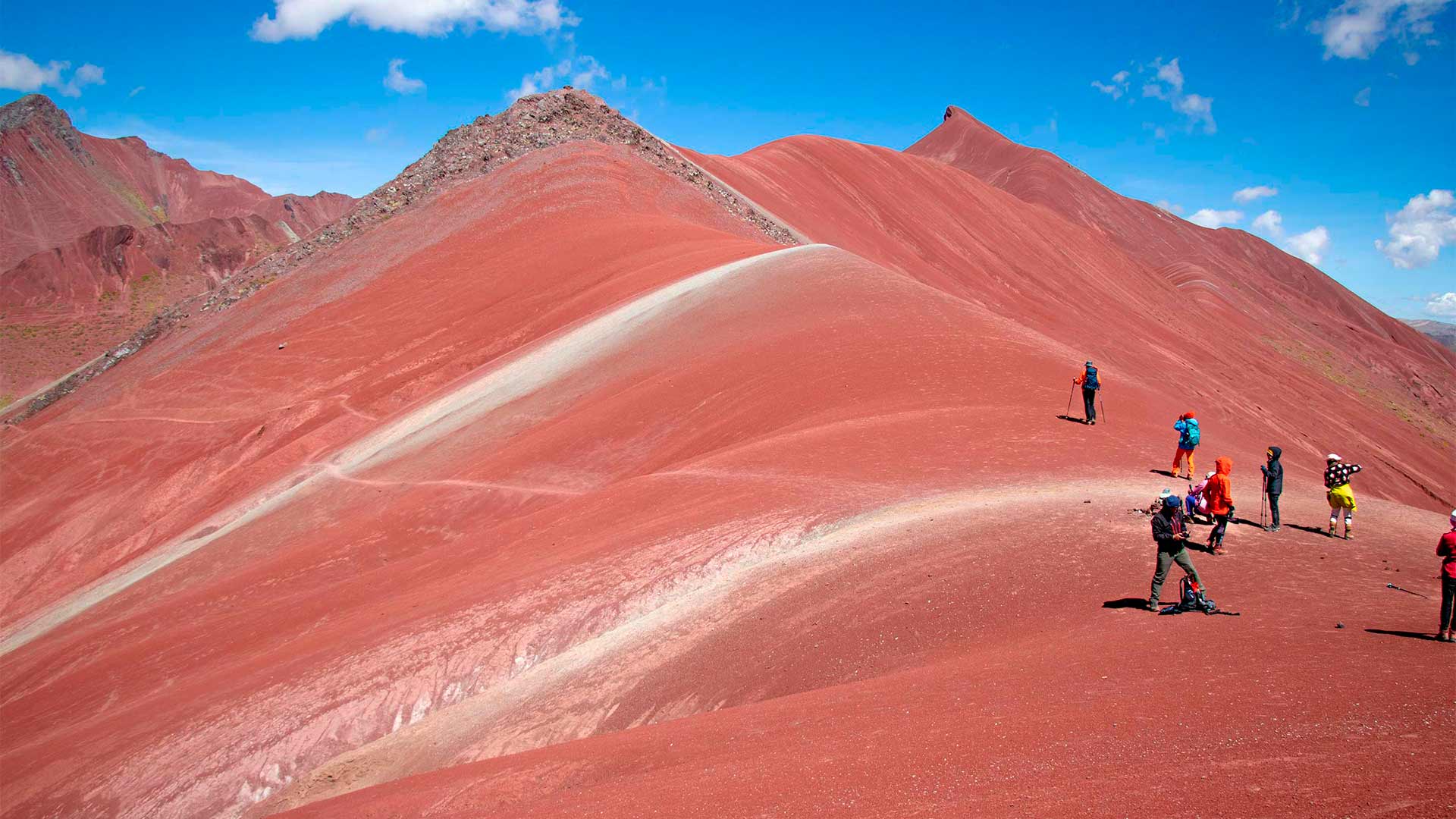
The Red Valley of Cusco is in the province of Canchis, south of the city of Cusco, near Rainbow Mountain or Vinicunca. You can get there on an organized excursion with transportation and a guide, or on your own by combining public transportation, local vehicles, and a high-altitude hike. The second option takes more coordination, especially to secure the return from the access area.
Where is the Red Valley of Cusco?
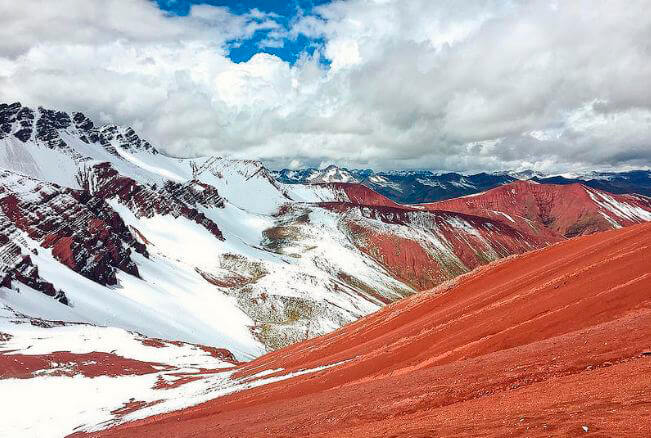
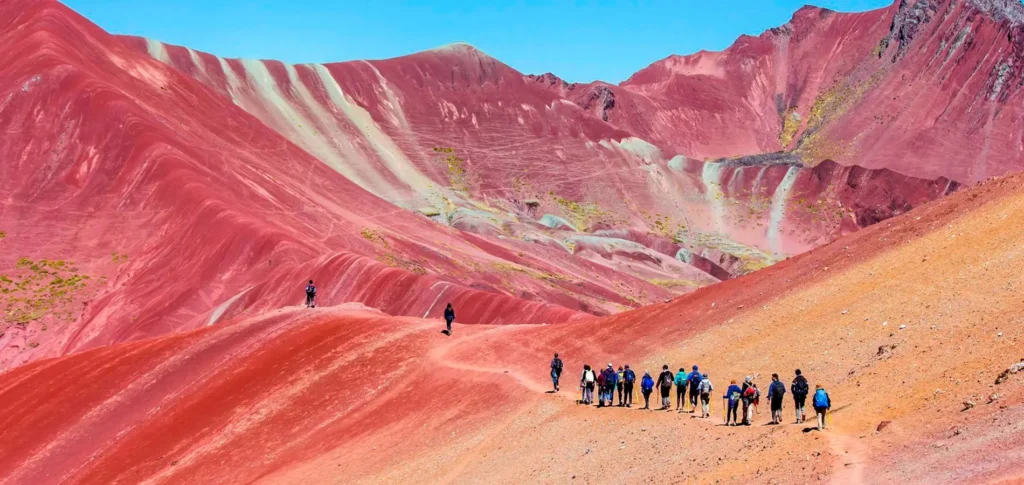
The Red Valley is in the Cusco region, in a high-mountain setting close to the Pitumarca and Cusipata routes. Its landscape is defined by slopes and formations in reddish tones, produced by the mineral composition of the soil.
This destination sits within the area near the Vilcanota mountain range, home as well to the Ausangate snowcap and Rainbow Mountain. Given how close they are, many travelers visit the Red Valley as an extension of the hike to Vinicunca.
Location and altitude of the Red Valley
The exact location of the Red Valley of Cusco can vary with the entry point chosen and the route the local communities have opened. Generally, it lies in a high area of Canchis, near the tourist access points for Rainbow Mountain and sectors connected to Pitumarca.
The route usually runs between roughly 4,800 and 5,200 m (15,748 to 17,060 ft). That elevation can raise the physical effort considerably, even when the walking distance looks short. The lack of oxygen, the cold, and the wind make the pace slower than in the city of Cusco.
Distance between Cusco and the Red Valley
From the city of Cusco, the road distance to the Red Valley access points usually falls between 100 and 140 kilometers (62 to 87 miles), depending on whether you travel via Cusipata, Pitumarca, or another entry point. The trip includes paved highways and local roads that may have unpaved stretches.
The drive usually takes three to four hours before the hike begins. This is a reference time and can change with traffic leaving Cusco, roadwork, rain, snow, road conditions, and the specific point where the walk starts.
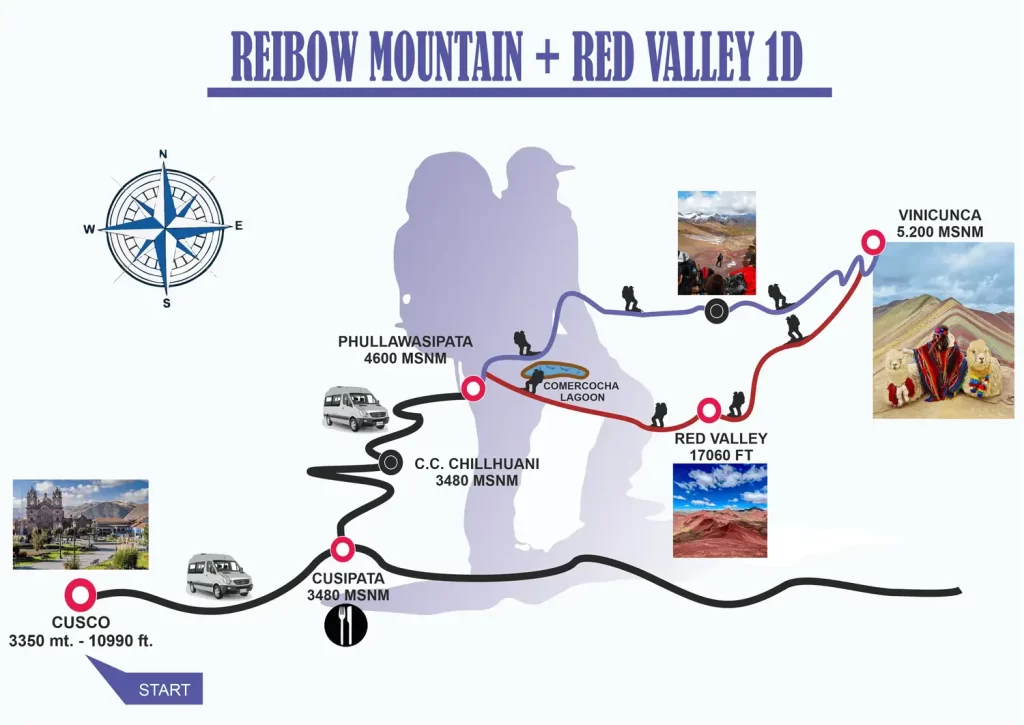
How to get to the Red Valley from Cusco
The two main ways to reach the Red Valley from Cusco are booking a one-day excursion or making the trip on your own. A tour handles the transportation and scheduling, while independent travel offers more freedom but requires planning connections and the return.
Either way, it’s best to leave early. The route crosses high areas and the weather can shift during the day, so arriving with time to spare lets you hike without rushing and head back before conditions worsen.
Getting there with an organized tour
An organized tour is usually the simplest way to visit the Red Valley, since it normally includes transportation from Cusco, scheduling, a guide, and assistance during the hike. It also saves you from hunting for local vehicles in areas where service doesn’t always run on fixed schedules.
Before booking, confirm whether the itinerary covers the detour to the Red Valley, the local entrance fees, meals, and the time set aside for the hike. You can look at this Red Valley tour from Incredible Peru Tours if you want an organized departure that combines Rainbow Mountain with the Red Valley route in a single day.
The agency can also help you confirm route availability, pickup points, the difficulty level, and the services included before you book.
Getting to the Red Valley on your own
On your own, you can leave Cusco toward Cusipata or Pitumarca, depending on which route is available and which access point you plan to use. There’s public transportation from the city to these districts, though schedules and frequency can vary, especially very early in the morning.
Once you arrive, you’ll need to hire local transportation to the trailhead or to the closest permitted point. Before leaving Cusco, arrange the return with the driver or check whether vehicles will be available late in the afternoon. One of the most common mistakes is arriving without a return plan, when there’s already little transportation left in the area.
Getting there from Rainbow Mountain
The Red Valley can be visited from Rainbow Mountain as an extension of the Vinicunca trail. After reaching the main viewpoint, some routes continue toward a detour leading to a less crowded landscape dominated by reddish tones.
This access may require an additional fee managed locally and extra hiking time. Before taking the detour, check whether it’s open, ask about the current cost, and gauge your energy for the return, since the elevation stays above 4,800 m (15,748 ft).
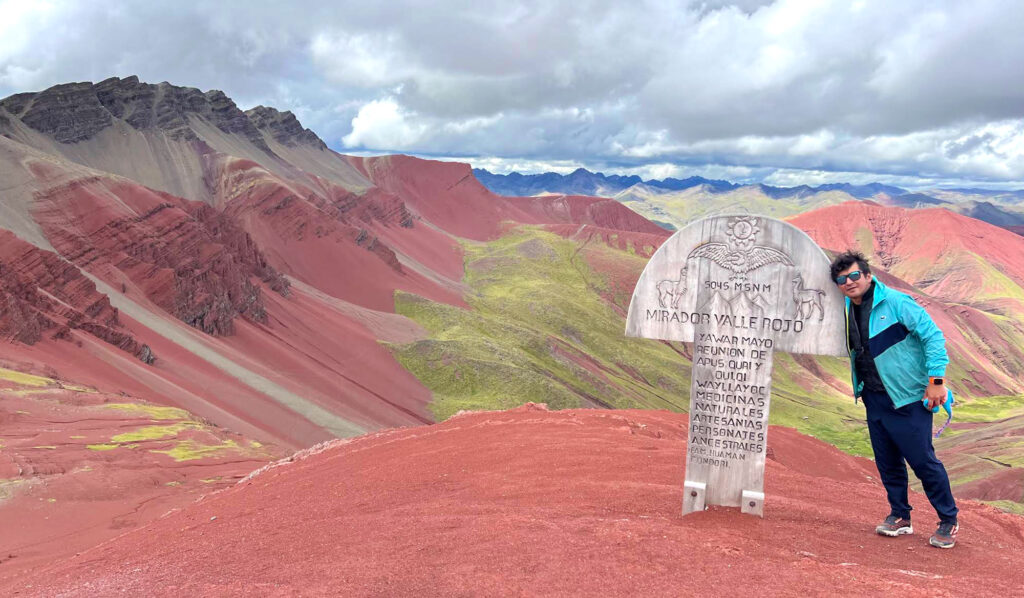
What is the hike to the Red Valley like?
The hike to the Red Valley follows open mountain trails, with slopes, stretches of loose dirt, and views toward rock formations and slopes in mineral colors. Much of the route has no shade, so the sun can feel strong even when the air temperature is low.
Distance isn’t the only factor that defines the effort. Walking at high altitude can bring on quick fatigue, shortness of breath, headaches, or nausea in people who haven’t acclimatized properly.
Distance and length of the hike
The distance and duration of the hike depend on the route chosen. Visited as an extension of Vinicunca, the detour to the Red Valley can add roughly one to three hours to the total route, counting the way out, rest stops, and the return.
On routes with alternative access points, the times can differ. The weather, the trail’s condition, the starting point, and the traveler’s pace all have a direct effect. Treat these times as a reference and don’t plan the day with too tight a margin.
Difficulty level
The main challenge of the hike is the altitude. Someone in good physical shape may feel they’re moving slowly because of the reduced oxygen, especially on the slopes and the sections near the viewpoints.
The early-morning cold, the wind, the grades, and sudden weather changes all play a part too. This isn’t a route to attempt without prior acclimatization in Cusco. If intense altitude sickness symptoms appear, stop, tell your guide or companion, and descend if necessary.
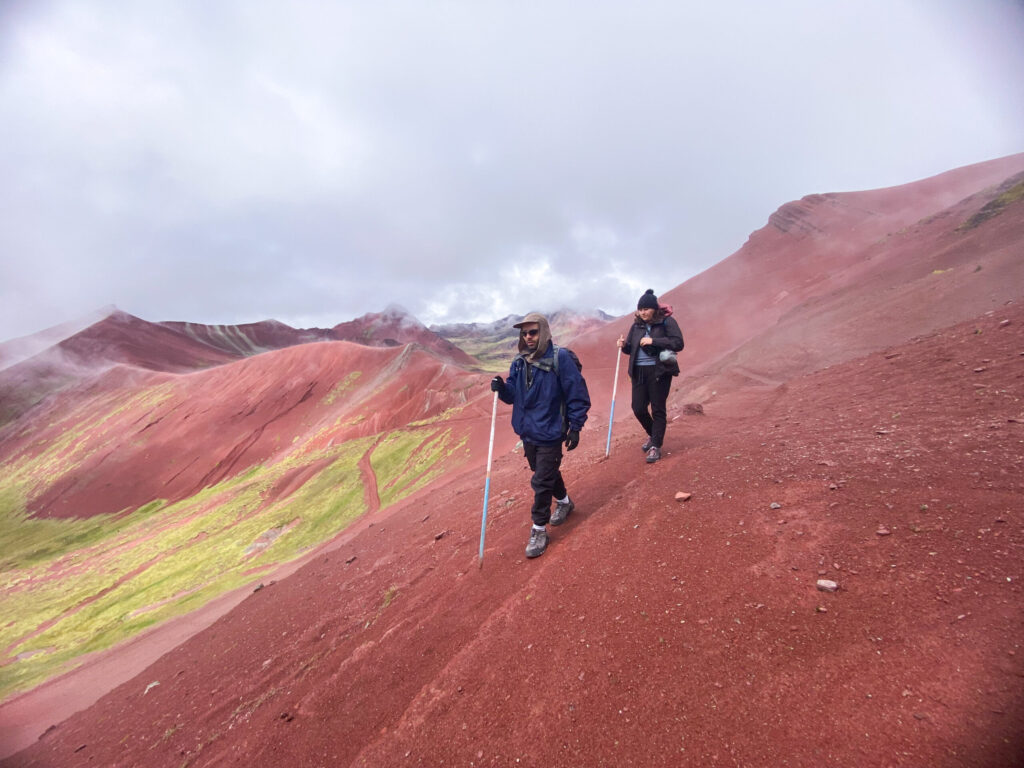
How much does it cost to visit the Red Valley?
The cost of visiting the Red Valley can include transportation from Cusco, the local entrance fee, meals, a guide, horse rental at some access points, and, if you combine the routes, entry to Rainbow Mountain. The final budget depends on whether you travel with an agency or independently.
Shared excursions tend to simplify expenses into a single payment, though you should review which services are included. On your own, the cost can vary more because local transportation and entrance fees are negotiated or paid separately.
Entrance fee and additional expenses
It’s not advisable to publish a fixed entrance price without recent verification, since rates can change and some are managed by local communities. Before traveling, check the current cost of access to the Red Valley and, if applicable, entry to Vinicunca.
Beyond the entrance fee, budget for local transportation, water, snacks, restrooms, and a possible ride back. Carry cash in soles as your main form of payment in the area. Card payments and online transfers aren’t guaranteed given the limited coverage.
Best time to visit the Red Valley
The best time to visit the Red Valley depends on whether you prioritize drier trails and better visibility or accept more variable conditions in exchange for landscapes with more vegetation. In Cusco, the dry season generally runs from about May to October and the rainy season from November to March.
In any month, check the forecast the day before and ask about access conditions. In high-mountain areas there can be wind, frost, or snowfall outside the usual periods.
Visiting during the dry season
The dry season usually offers better hiking conditions because rain is less likely and trails tend to be firmer. Clear morning skies are also more common, which helps for taking in the scenery.
On the downside, mornings can be very cold and visitor numbers rise in the peak months. Leaving early, bringing thermal clothing, and protecting yourself from the sun help you handle the temperature swings.
Visiting during the rainy season
During the rainy season you may find mud, fog, rainfall, snow, and rapid changes in access conditions. This can cut visibility and make some sections of trail more slippery.
If you travel in these months, wear waterproof footwear with good traction and bring a water-resistant jacket. Keep your itinerary flexible too, since some routes may have temporary restrictions for safety reasons.
What to bring to the Red Valley
For a visit to the Red Valley, bring gear for cold, sun, wind, and possible rain all in the same day. The temperature difference between the departure from Cusco, the morning on the mountain, and the return can be considerable.
A small, comfortable backpack lets you carry what you need without adding too much weight. Don’t count on shops or restaurants along the way, since available services are limited and not always open.
Recommended clothing and footwear
Dress in layers: a thermal garment, a warm mid layer, and a waterproof or windproof jacket. This combination lets you adapt to temperature swings without hiking in too much insulation once the effort picks up.
Footwear should have good traction and preferably be water resistant. Also bring a hat, gloves, and a scarf or neck gaiter to protect against the cold and wind. Trekking poles can help you keep your balance on slopes or uneven ground.
Water, food, and sun protection
Bring enough water for the whole hike and snacks that are easy to eat, such as dried fruit, cereal bars, chocolate, or nuts. At high altitude it’s better to sip water steadily than to wait until you’re very thirsty.
Pack sunscreen, sunglasses, and lip balm, since radiation is high in this area. Also carry cash, personal documents, and a power bank if you plan to use your phone for photos or communication.
Preparing for the altitude
It’s advisable to acclimatize at least one or two days in Cusco before doing the hike. During that time, avoid demanding activities, drink fluids, eat lightly, and don’t drink alcohol in excess.
On the route, walk slowly and keep a steady pace. If you feel a severe headache, dizziness, shortness of breath that doesn’t improve with rest, vomiting, or confusion, tell your guide or companion right away. Don’t push the climb just to reach a particular point.
Can you visit the Red Valley and Vinicunca on the same day?
Yes, the Red Valley and Vinicunca can be combined in a one-day excursion as long as access is available, the weather allows it, and you’re in adequate physical shape. This is one of the most common ways to see both landscapes on a single trip from Cusco.
The day tends to be long because it includes several hours of transportation, hiking at altitude, and the return to the city. That makes it a better fit for travelers who have already spent a few days acclimatizing in Cusco.
Combined route via Rainbow Mountain
The combined route normally starts with the hike to the Rainbow Mountain viewpoint. From there, you take a trail or detour leading toward the Red Valley before returning to the meeting point with the transportation.
The additional stretch can take one to three hours more, depending on the itinerary, the trail’s condition, and the group’s pace. Before taking the detour, check with the guide or local staff whether the trail is open and whether there’s an additional access fee.
Frequently asked questions about the Red Valley of Cusco
These are the most common questions before organizing a visit to the Red Valley from Cusco. Access conditions, rates, and times can change, so it’s always worth confirming the information close to your travel date.
How long does it take to get there from Cusco?
The drive from Cusco to the access points usually takes three to four hours. Then you add the hike, which can last several hours depending on the route chosen. The total time changes with the weather, traffic, the starting point, and each traveler’s pace.
Can you visit the Red Valley without a tour?
Yes, you can visit the Red Valley without a tour, but it requires arranging transportation both ways. You’ll need to verify which access is available, hire local transportation, and know the hiking route. It’s a more flexible option, though with a higher risk of logistical surprises.
What is the altitude of the Red Valley?
The Red Valley route runs at roughly 4,800 to 5,200 m (15,748 to 17,060 ft), depending on the trail and the viewpoint you visit. For that reason, acclimatize in Cusco beforehand. The altitude can affect even travelers in good physical shape.
Is the hike difficult?
The hike can be moderate or demanding depending on your fitness, your experience at altitude, and the weather. The slopes and uneven terrain play a part, but the biggest challenge is usually the reduced oxygen. Walking slowly and resting when needed helps you complete the route more comfortably.
Are there restrooms, restaurants, and cell signal?
Services are limited and concentrated at a few access points or parking areas. There may be basic restrooms and small food stands, but don’t rely on them. Cell signal can be unstable or nonexistent along several stretches, so it’s better to arrange your return in advance.


