
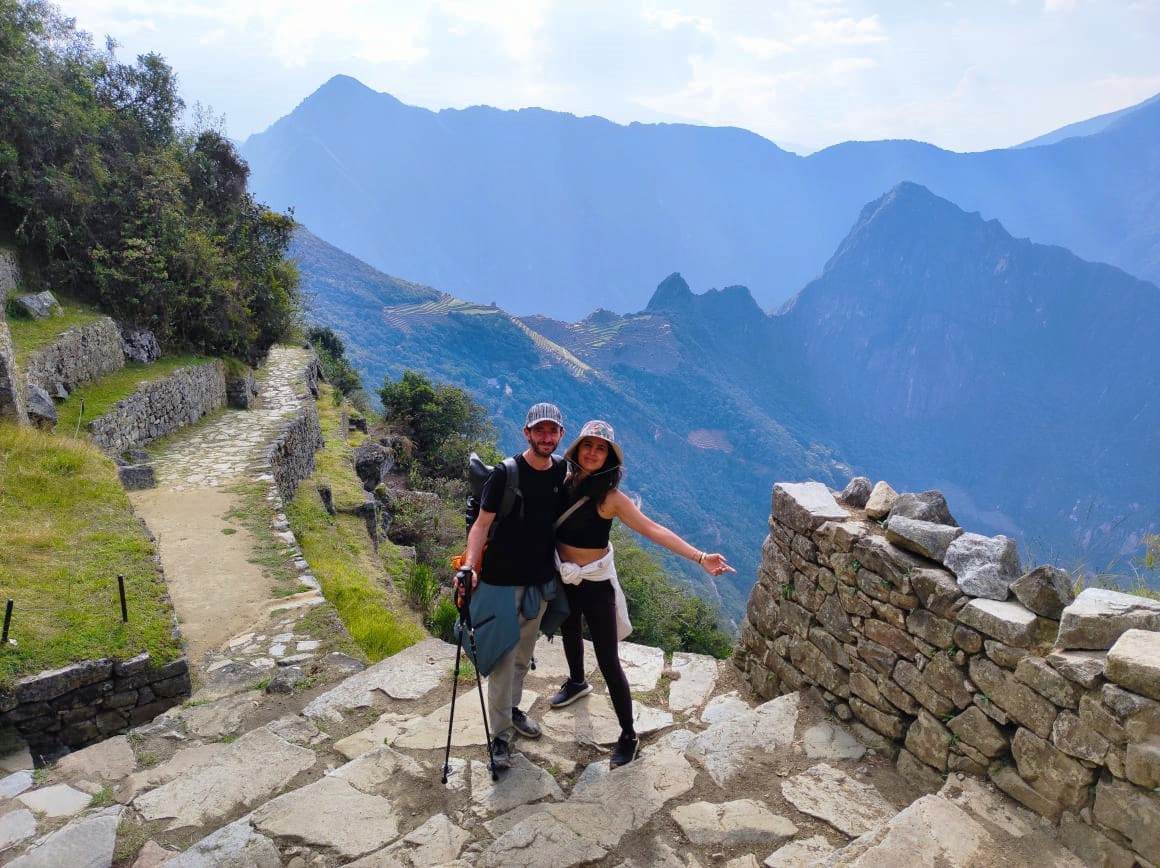
At Incredible Peru Tours, we operate both routes every week, and we receive this comparison very often: the Classic Inca Trail or the Inca Jungle Trek? Both end at Machu Picchu. Both depart from Cusco. Both combine nature and Andean culture in a single journey. But they are so different in their structure, their spirit, and the type of traveler they suit that choosing between them without understanding those differences means risking paying for something that was not exactly what you were looking for.
This guide compares the two routes using specific criteria so your choice is informed, not random.
What each route is about: a straightforward description
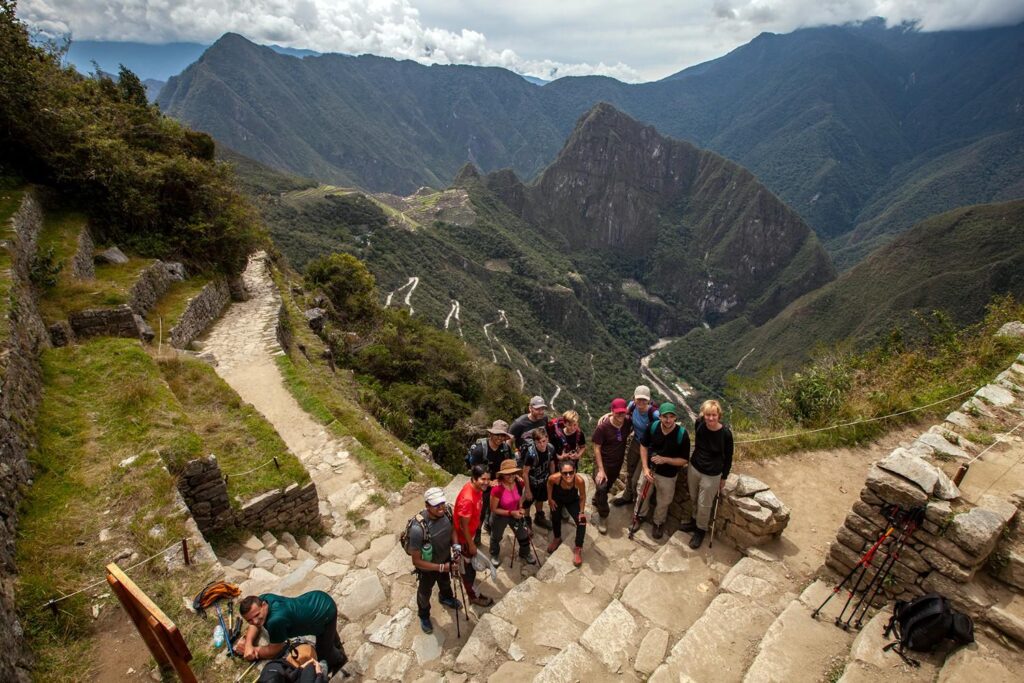
The Classic Inca Trail is a four-day trek along the pre-Hispanic stone path that connected imperial Cusco with the citadel of Machu Picchu. It covers approximately 43 kilometers through three mountain passes, five archaeological sites from the Inca period, and three different ecosystems. It reaches Machu Picchu through the Sun Gate (Inti Punku), the historic entrance of the Empire. It is the most iconic trek in Peru and probably in all of South America.
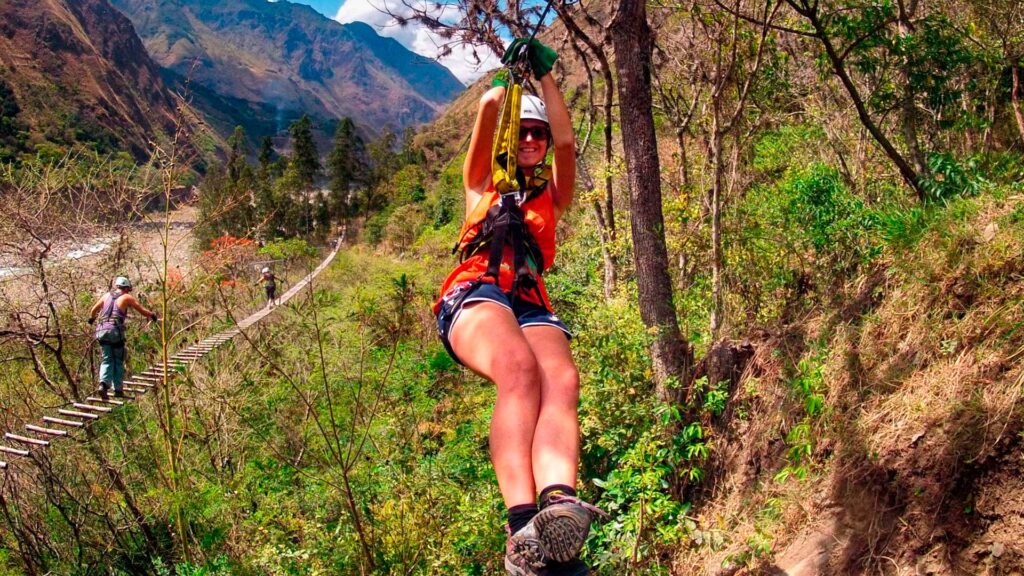
The Inca Jungle Trek is a three-day route that combines adventure activities with hiking and also ends at Machu Picchu. On the first day, it descends by mountain bike from Málaga Pass at over 4,300 meters to the subtropical area of Santa María. The second day includes hiking and optional activities such as waterfall rappelling and zip-lining over the Urubamba River canyon. The third day covers the final stretch on foot to Aguas Calientes. The Inca Jungle is one of the most popular options for groups of friends and travelers looking for adrenaline in addition to scenery.
The experience on the ground: what each route feels like
Those who hike the Inca Trail experience a trek of historical and archaeological immersion. The Inca stone path is present at every kilometer, the archaeological sites are part of the route rather than optional detours, and arriving at Machu Picchu through the Sun Gate after four days of walking the same route used by the messengers of the Tahuantinsuyo creates an experience that is difficult to describe without having lived it. It is a route that requires sustained effort over four days, but that accumulated effort is part of the value of the arrival.
Those who do the Inca Jungle Trek experience three dynamic, varied, and physically intense days in a different way. The downhill bike ride on the first day, with its 60 kilometers descending from the highlands to the subtropical zone, is for many the most memorable part of the route, not because of its historical depth but because of the combination of speed, changing scenery, and the physical satisfaction of completing one of the longest bike descents in Peru. The second day adds rappelling and zip-lining for those who include them, and the third day ends with the walk to Aguas Calientes. The structure is more varied and less demanding in terms of accumulated altitude, but equally intense in terms of concentrated physical activity.
Difficulty compared: which route is harder and in what way
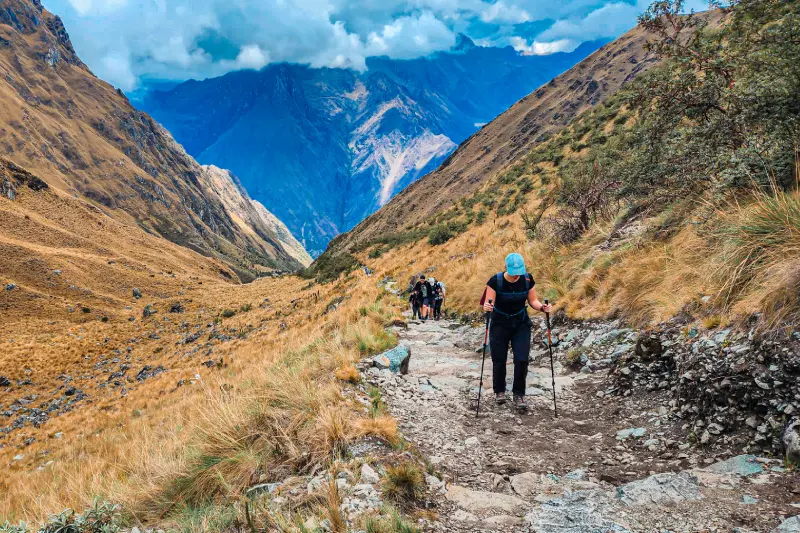
The Inca Trail is more demanding in terms of maximum altitude and the duration of sustained effort. Warmiwañusca, at 4,215 meters on the second day, combined with four consecutive days of hiking with a backpack, requires above-average physical condition and prior acclimatization. At Incredible Peru Tours, we always recommend spending at least two nights in Cusco before starting the trail.
The Inca Jungle Trek is physically less demanding in terms of altitude, but it has its own kind of intensity. The downhill bike ride on the first day requires constant attention and a certain level of comfort on a bicycle, although advanced technical experience is not required. The adventure activities on the second day have their own physical demands. And the full three-day route, although with a lower maximum hiking altitude than the Classic Inca Trail, leaves the body equally tired by the end because of the variety and intensity of the different types of effort.
Permits: a practical difference that matters
The Inca Trail has a maximum limit of 500 people per day regulated by Peru’s Ministry of Culture. At Incredible Peru Tours, we manage permits exclusively through the official system, and during the high season, from May to August, permits for the most requested months sell out four or five months in advance. Travelers who do not book within that time frame simply cannot hike the Inca Trail on those dates.
The Inca Jungle Trek does not have that regulated permit system. It can be organized with much less advance notice, even just days ahead during the low season. For travelers with tight dates or those who could not get a permit for the Classic Inca Trail, that availability is a concrete and practical advantage that we at Incredible Peru Tours point out from the first contact with the client.
The price: what difference exists and why
The Inca Trail is generally more expensive than the Inca Jungle Trek, mainly because of the cost of the official Ministry of Culture permit, which has no equivalent on the Inca Jungle route. Added to that base cost is the certified guide with specific training in Inca archaeology, which is a regulatory requirement for the Inca Trail. The camping equipment for four days also has a higher operational cost than the three-day logistics of the Inca Jungle.
The Inca Jungle has a more accessible price because there is no additional official permit and because part of the route is done by bicycle instead of entirely on foot, reducing the logistical requirements of the support team for that section. At Incredible Peru Tours, Inca Jungle packages include complete cycling equipment, the guide for all three days, and the Machu Picchu ticket, making the price comparison direct and free of hidden components.
Arrival at Machu Picchu: the most significant difference
The Inca Trail reaches Machu Picchu through the Sun Gate, the historic entrance used by the Incas, after four days of walking the pre-Hispanic trail. That arrival moment, with the citadel appearing from Inti Punku after the entire journey, is what turns the Inca Trail into more than just a trek for many participants. At Incredible Peru Tours, we organize that arrival so the group reaches the pass before sunrise, when the light begins to illuminate the stone terraces from above.
The Inca Jungle reaches Machu Picchu from Aguas Calientes by bus, the same way as any tourist arriving by train. The visit to the archaeological site is equally complete and equally impressive, but the entrance does not have the historical dimension of crossing the Sun Gate after days on the Inca trail.
Who each route is for: clear criteria
The Inca Trail is the right choice when the historical and archaeological dimension of the route is central to you, when you want to reach Machu Picchu through the original route of the Incas, when you have the time and advance planning needed to secure the permit, and when you are looking for the intensity of four days of sustained trekking in the high Andean mountains.
The Inca Jungle Trek is the right choice when you are looking for adrenaline in addition to scenery, when your available time is three days instead of four, when you could not get a permit for the Classic Inca Trail on the dates you need, when you are traveling with a group of friends who want adventure activities as part of the route, or when your budget is tighter and you still want to reach Machu Picchu in an active and memorable way.
At Incredible Peru Tours, we have seen people of all profiles enjoy both routes with equal intensity. What determines which one creates the best experience is not which route is objectively superior, but which one aligns better with what each traveler is looking for during those days in Cusco.
| Criterion | Inca Trail | Inca Jungle Trek |
|---|---|---|
| Duration | 4 days | 3 days |
| Walking distance | 43 km on foot | 12 to 15 km on foot + 60 km by bicycle |
| Maximum altitude | 4,215 m (Warmiwañusca) | 4,350 m (start of the bike descent, with no uphill effort) |
| Activities | Pure trekking | Mountain biking, hiking, rappelling, and zip-lining (optional) |
| Special permit | Yes, limited spaces with mandatory advance booking | No, no regulated permits |
| Availability | Low in high season (sells out months in advance) | High throughout the year |
| Arrival at Machu Picchu | On foot through the Sun Gate (Inti Punku) | By bus from Aguas Calientes |
| Price | Higher due to the official permit | More accessible |
| Monthly closure | Closed in February | Open year-round |
| Ideal profile | History, Inca archaeology, sustained trekking | Adventure, adrenaline, variety of activities |
Do you have questions about which of the two routes best fits your dates, your group, and what you are looking for in the experience? At Incredible Peru Tours, we operate both with the same level of quality in guides, equipment, and logistics, and we guide each group toward the most suitable option from the very first contact.


