
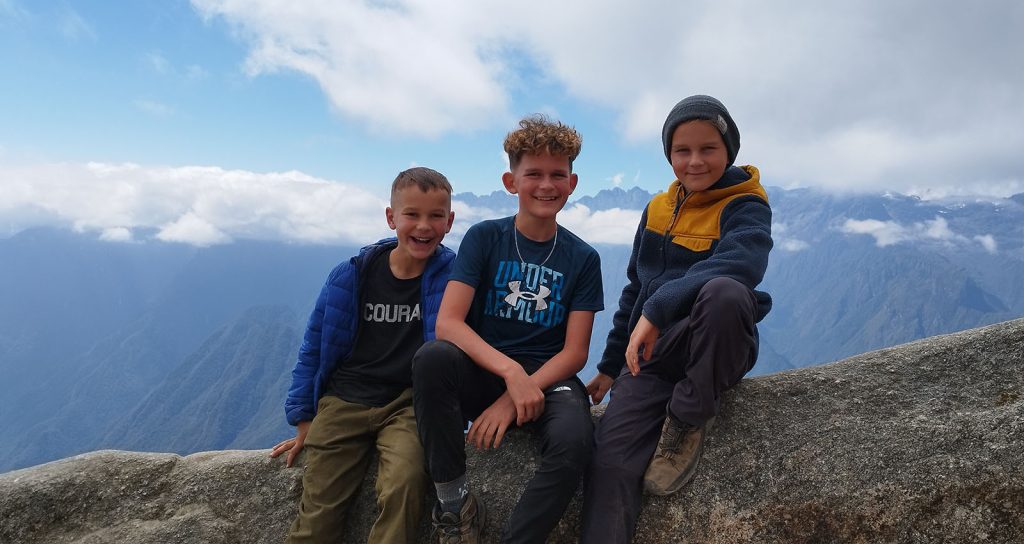
The question always comes from the same place: a father or mother who once dreamed of doing the Inca Trail and now has children, or a family that wants to share a travel experience that is not just museums and restaurants. Can you do the Inca Trail with kids? At what age does it make sense? Which version of the route is right for each stage?
The answers exist, but they are not simple. They depend on the child’s age, physical condition, the family’s previous experience with outdoor activities, and which version of the trek is being considered. This guide gives you the real criteria to make that decision with enough information and without romantic ideas that ignore practical limitations.
the Inca Trail has no official age restriction: but reality does
Peru’s Ministry of Culture does not set a minimum age to access the Inca Trail. Anyone with a valid permit, including a child of any age, can legally enter the trail. However, the absence of a legal restriction does not mean the absence of practical limitations, and confusing the two can lead to an experience that ends up exhausting or even frustrating for the whole family.
The four-day Classic Inca Trail involves six to eight hours of hiking each day over uneven terrain, with the second day crossing a mountain pass above 4,200 meters in altitude. Nighttime temperatures at the highest camps drop several degrees below freezing. Access to restroom facilities is very basic throughout the four days. These are conditions that a well-prepared adult can manage with effort. For a young child, that same setting may be too much.
The right question is not whether the child can technically do the route. The question is whether the experience will be something they enjoy or something they endure. And that difference depends largely on age.
by age group: what to expect from each range
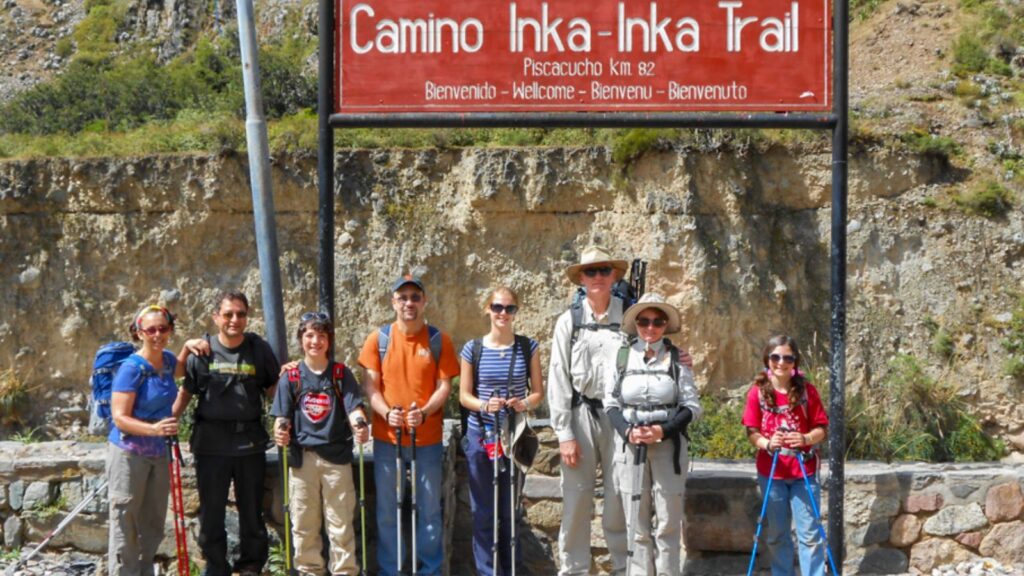
Under 5 years old: The Classic Inca Trail is not recommended for this age group in any of its multi-day versions. Not because it is impossible to take a three- or four-year-old child onto the trail, but because the combination of extreme altitude, nighttime cold, long distances, and lack of basic infrastructure creates conditions that are not suitable for a body that is still developing. Prolonged exposure to intense cold at high elevation and the risk of severe altitude sickness in very young children—who at that age cannot clearly communicate how they feel—are risk factors that should not be minimized.
For families with children at this stage who want to take them to Machu Picchu, the most suitable alternative is the train from Ollantaytambo to Aguas Calientes and the bus up to the archaeological site. The citadel itself is impressive at any age, and the experience of seeing llamas up close, walking among the ruins, and listening to the guide’s stories is perfectly enjoyable without needing four days of camping in the mountains.
Ages 6 to 9: This is the most variable age group in terms of outcomes. There are seven-year-olds who complete the two-day Short Inca Trail without major difficulties and others who are nine and spend the second day asking to go home. The difference is not only in chronological age but also in the child’s usual level of physical activity, whether they have previous experience with long hikes, and how well they tolerate cold and sustained effort.
For this range, the most suitable version is the two-day Short Inca Trail, which starts at kilometer 104, avoids the mountain passes of the classic route, and still reaches Machu Picchu through the Sun Gate. The maximum altitude on this section is around 2,700 meters, which considerably reduces the impact of altitude compared with the Classic Inca Trail. The total distance is manageable for a child in good physical condition, and the two-day length does not drain the emotional reserves of younger children in the same way that four consecutive days can.
Ages 10 to 12: Starting at age ten, with good prior preparation and proper acclimatization in Cusco, the four-day Classic Inca Trail starts to become a real option for many children. The cardiovascular and muscular capacity of a child that age is enough for the longer days of the route, and emotional maturity is often sufficient to handle difficult moments without turning them into a problem for the group.
The second day—the ascent to Dead Woman’s Pass at over 4,200 meters—is still the most demanding, even in this age group. The recommendation for prior acclimatization in Cusco is, if anything, even more important for children than for adults: a child who arrives without having spent enough time at that altitude may experience stronger altitude sickness symptoms than an adult in the same conditions, precisely because their body has less mass to distribute the oxygen deficit.
Teenagers ages 13 and up: From that age onward, the Classic Inca Trail is completely within reach for any teenager with average physical condition and proper prior acclimatization. In fact, many teens between 14 and 17 describe the trek as one of the most powerful experiences of their lives, precisely because they are at a stage when sustained physical effort brings an especially intense emotional reward.
altitude: the factor that matters most with children
A child’s response to altitude sickness cannot be predicted from their general physical condition. A very active, athletic child may experience soroche in Cusco, while another who is more sedentary may feel nothing at all. Sensitivity to altitude has an individual component that cannot be anticipated with precision without previous exposure.
What can be done is to significantly reduce the risk by taking the right steps before starting the trail. Spending at least two nights in Cusco before the first day of trekking is the minimum for any participant, adult or child. During those days, closely observing how the child responds to the city’s altitude—which is already 3,400 meters—gives very valuable information about how they are likely to handle the added effort on the trail.
If during the adaptation days in Cusco the child develops a persistent headache, total loss of appetite, repeated vomiting, or difficulty breathing at rest, the start of the trek should be postponed or reconsidered. A certified guide with experience in family trekking can help parents assess whether the child’s condition is suitable for continuing with the original plan.
which version of the Inca Trail makes the most sense depending on age
Choosing the right version of the route is just as important as deciding to do it in the first place. Picking a version that is too long or too demanding for the child’s age and condition can turn what should be a memorable family experience into something both parents and children remember for the wrong reasons.
The one-day Short Inca Trail in private format is the most accessible option for families with children between 7 and 10 years old who want to walk on the original Inca stone trail and reach Machu Picchu through the Sun Gate without the commitment of several days of camping. The route from kilometer 104 to the citadel can be completed in one day with enough time to enjoy it without pressure, and the return to Aguas Calientes is made the same day by train.
The two-day Short Inca Trail is the ideal version for families with children between 9 and 13 years old who are in good physical shape. It includes one night of camping at Wiñay Wayna, which for many children is an adventure in itself, and the final pre-dawn section to the Sun Gate at sunrise, which at that age often leaves a much longer-lasting impression than any conventional tourist attraction.
The four-day Classic Inca Trail is a better fit starting around age 12, with proper acclimatization and the prior physical preparation required for the second day. For families with children in that range, the full trek can become one of those experiences that shape the way a teenager remembers that period of life.
how to physically prepare a child for the trek
Physically preparing a child for the Inca Trail does not require specialized training, but it does require progressive exposure to hiking with proper footwear on varied terrain during the weeks before the trip. Children who usually live a sedentary life—with lots of screen time and little outdoor activity—will feel the difference much more strongly than those who get regular physical activity.
Hikes of one to two hours on terrain with some elevation gain during the month before the trip, ideally with the backpack and footwear they will use on the trek, are enough to prepare the body without needing a formal training program. The most important thing is that the footwear is well broken in: brand-new boots that cause blisters on the second day can ruin a child’s experience more than almost any other factor.
what to bring when you do the Inca Trail with children
- Hiking footwear with good traction, well broken in: Essential in all versions of the route. Never break in boots on the Inca Trail.
- Layered clothing that fits the child properly: Adult clothing adapted for a child does not work well in cold temperatures. Technical clothing in the correct size retains warmth much more efficiently.
- Lightweight rain jacket with hood: The weather can change on any day. A rain jacket that fits in the backpack without taking up much space is essential.
- Sleeping bag suitable for camp temperatures: Children’s sleeping bags are often rated for warmer temperatures than those found at the camps on the second and third days of the Classic Trail. Check with the agency what temperatures the campsite reaches and match the sleeping bag to that information.
- First-aid kit with children’s pain reliever and regular medication: Children’s acetaminophen for altitude headaches, bandages, high-SPF sunscreen, and any medication the child takes regularly.
- Child-size trekking poles: Very useful on downhill sections, especially on wet stone stairs. They reduce impact on the knees and improve stability on uneven terrain.
- High-energy snacks for the stretches between sites: Children need to refuel more often than adults. Nuts, chocolate, energy bars, or dried fruit in the daypack make a real difference in mood by mid-morning.
what children usually remember from the Inca Trail
Parents who have done the Inca Trail with their children tend to agree on something that surprises people who have never experienced it: the moments children remember are not the ones adults expect. It is usually not the first view of Machu Picchu from the Sun Gate, even though that image is also powerful. It is the llamas that came close to camp on the first night, the conversation with the porter who taught them four words in Quechua, the moment they crossed a hanging bridge over the river, or the feeling of waking up before dawn with a flashlight to walk the final stretch in the dark.
That ability children have to find the emotional weight of a trip in the small details is exactly what makes the Inca Trail a family experience worth the planning it requires. It is not the destination that stays with the child: it is the whole process, lived with the family in a setting that feels nothing like everyday life. And that, at any age when it can be done responsibly, has a value that cannot be measured in miles or altitude.
Would you like to do the Inca Trail with your family and need help choosing the most suitable version based on your children’s ages? At Incredible Peru Tours, we organize family treks with guides experienced in groups with minors, adapted equipment, and the flexible pace that a family expedition needs.


