
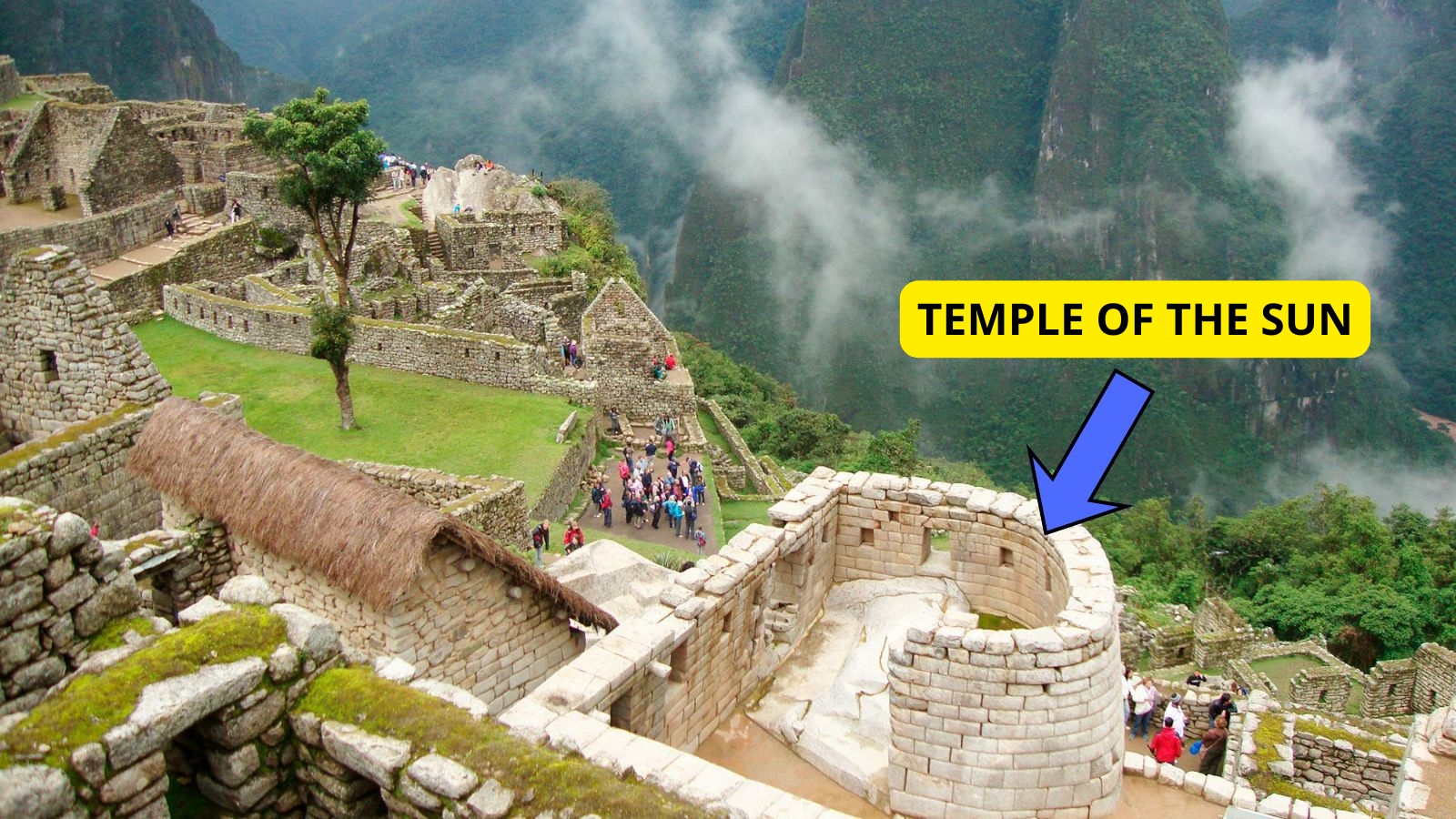
The Temple of the Sun is one of the most precise and meaningful elements in the entire archaeological complex of Machu Picchu. It is not the largest structure, nor the most visible from the upper viewpoint, but it is the one that best documents Inca astronomical sophistication and the relationship between architecture and the solar cycles that organized the ceremonial calendar of the Empire. This guide explains what the Temple of the Sun is, why it matters, where it is located within the site, and which circuit allows you to visit it.
What Is the Temple of the Sun?
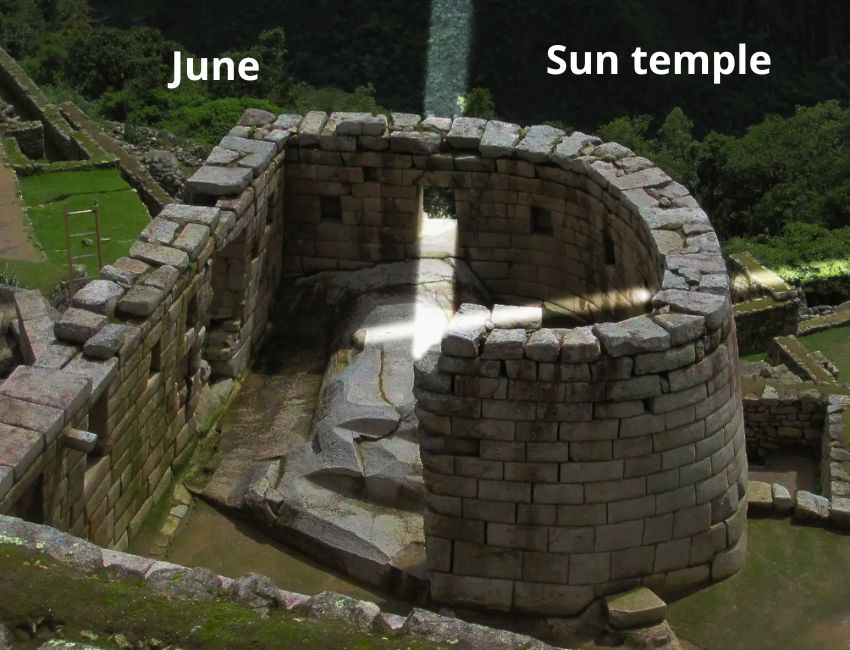
The Temple of the Sun at Machu Picchu is a semicircular enclosure built directly over a natural granite rock that forms part of the building’s foundation. This integration between the living rock of the ground and the architecture built above it is one of the most striking features of the enclosure and one of the elements that best reflects the Inca worldview, in which rock, mountain, and sun belonged to the same sacred system that architecture was meant to materialize.
The temple’s semicircular wall is considered by archaeologists to be one of the finest examples of Inca stonework in all of Peru. The stones are cut and fitted together with such precision that no mortar is required, and in the five centuries since its construction, no visible separation has appeared between the joints. The perfectly regular curvature of the wall required a mastery of stone cutting and fitting that was technologically extraordinary in the 15th century.
The Solstice Window: The Detail That Makes It Unique
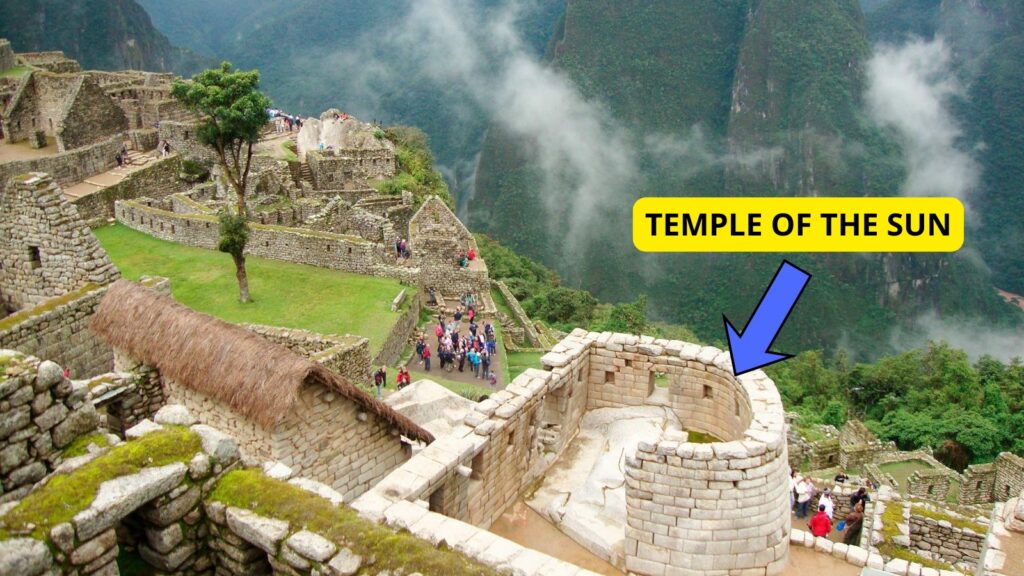
What makes the Temple of the Sun an object of interest beyond the quality of its construction is the trapezoidal window facing northeast, opened into the semicircular wall. This window was designed and oriented with precision so that the first ray of sunlight on the June solstice, June 21, enters through it and projects light directly onto the stone altar inside the enclosure.
The June solstice corresponds to Inti Raymi, the Inca festival of the sun and the most important celebration in the ceremonial calendar of the Tahuantinsuyo. The fact that the Temple of the Sun at Machu Picchu is oriented with the precision needed to capture that specific ray of sunlight on that specific day is not an architectural coincidence. It is the materialization in stone of the relationship between Inca imperial power, the worship of the sun as a divinity, and the control of ceremonial time that this relationship made possible.
This precise orientation of the temple has been verified by archaeologists and astronomers who have documented the phenomenon during solstices after the site’s restoration. The window, the altar, and the base rock on which the temple was built form a system of astronomical observation and ritual that, in the 15th century, would have been accessible only to the Inca priestly elite.
The Cave Beneath the Temple: The Underground Funerary Altar
Directly beneath the Temple of the Sun, in the space created by the natural rock and the walls of the enclosure between the ground and the base of the temple, there is a cave accessed through a narrow entrance from the outside of the building. This cave, commonly known as the Princess’s Room or the Royal Mausoleum, has its own trapezoidal niches carved into the natural rock and has been interpreted by archaeologists as a funerary space for the Inca elite.
The relationship between the solar altar on the upper level and the funerary space below reflects the Inca worldview of verticality: the sun and the upper world above, the ancestors and the underground world below, and the temple as the structure connecting these two planes. It was not a building with a single purpose, but one with several functions that, in the Inca worldview, formed part of the same system of relationships between the world of the living, the world of the dead, and the solar cycle that organized both.
Where Is the Temple of the Sun Located Within the Site?
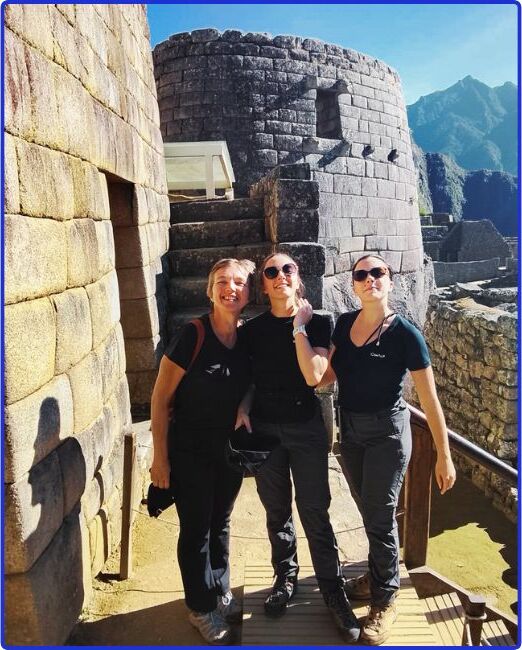
The Temple of the Sun is located in the northern urban sector of Machu Picchu, in the highest part of the group of temples and ceremonial enclosures that form the religious heart of the citadel. From the site’s main entrance checkpoint, the route to the Temple of the Sun follows the path toward the urban sector and climbs through the inner terraces toward the highest area of the complex, where the Temple of the Sun shares space with the Palace of the Ñusta and the residential enclosures with the finest construction quality in the site.
The temple’s location at the highest point of the urban sector was not accidental in Inca spatial planning. Enclosures associated with the sun and sacred power were placed at higher elevations, symbolically closer to the sun and with greater visibility over the surrounding complex.
Which Circuit Includes the Temple of the Sun?
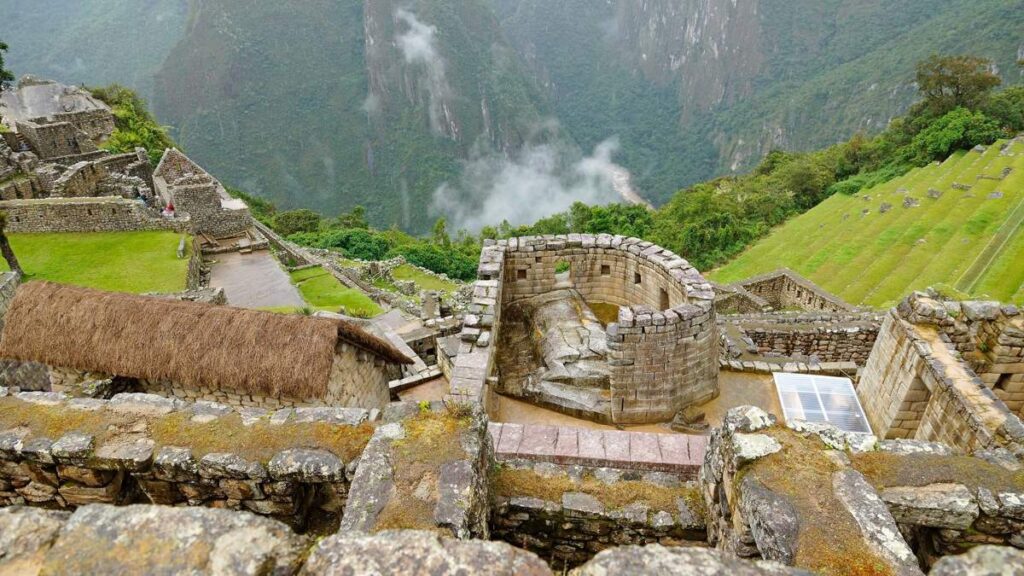
The Temple of the Sun is included in several routes within Machu Picchu’s ticket system. The circuits that definitely pass by this enclosure are Route 2A Classic Designed, which is the most complete circuit through the urban sector and the one that places the strongest emphasis on the site’s ceremonial temples, and Route 2B Lower Terrace, which also includes the main urban sector, although with a different focus among the various areas.
Route 3B Royalty Designed, which specifically prioritizes the ceremonial sectors of the Inca elite, also includes the Temple of the Sun as one of its main points, since the name of the circuit refers precisely to this type of high-quality architecture with a sacred function.
For travelers visiting Machu Picchu with the specific goal of seeing the Temple of the Sun and understanding its astronomical significance, Route 2A with a private guide specialized in Andean archaeology offers the most complete experience. The temple can be seen without a guide and still leaves a strong visual impression, but understanding the orientation of the solstice window, the function of the altar, and its relationship with the cave on the lower level requires the context that a guide with specialized training can provide.
The Best Time of Day to See It
The Temple of the Sun has its greatest visual impact during the early morning hours, when the side light of the rising sun illuminates the semicircular wall at an angle that highlights the texture and precision of the stonework in a way that midday overhead light does not. On days that coincide with or are close to the June solstice, visitors inside the enclosure before 7:00 a.m. may observe a light effect through the trapezoidal window that is not visible with the same precision on other days of the year.
For travelers who are not visiting specifically in June but have the first 6:00 a.m. entry time, the light at that hour on the Temple of the Sun has a photographic quality at any time of year that later hours cannot replicate. The semicircular wall with the first light of day produces one of the most technically precise architectural images that the archaeological site can offer for visitors whose goal is architectural photography.
Why It Deserves More Attention Than It Usually Receives
In the imagination of visitors, the Temple of the Sun competes for attention with the upper viewpoint and the Intihuatana, and in that competition, it sometimes loses because it is not on the most photogenic route and does not produce the most iconic image of the site. But for those who visit Machu Picchu with an interest in understanding what they are seeing beyond the photograph, the Temple of the Sun is the element that concentrates the most information about the Inca worldview, Andean astronomy, and the relationship between imperial power and control of the sacred calendar.
In a site whose meaning is still not fully understood by archaeologists, the Temple of the Sun is one of the few elements whose function is well documented with verifiable astronomical evidence. That certainty, in a complex full of hypotheses and academic debate, gives it a special place among all the enclosures at the site.
Do you want to visit the Temple of the Sun with full archaeological context and the most suitable circuit for your itinerary? At Incredible Peru Tours, we coordinate Machu Picchu tickets with the right circuit and specialized guides in Andean archaeology who turn the Temple of the Sun and the other ceremonial spaces around it into a truly meaningful experience. Send us your travel dates, and we will prepare the most suitable proposal for you.


