
In Arequipa, the color of the buildings is not just an aesthetic choice. Churches, historic mansions, arches, and walls in the center were built with a volcanic stone from the region: sillar.
In full sunlight it looks almost white. In other areas it appears pink, gray, or slightly yellow. It can be seen on large facades as well as thick walls, vaults, courtyards, and old civic buildings.
This constant presence explains the nickname White City. But color is not the only thing that matters. Its volcanic origin, the nearby quarries, and the craftsmanship of those who learned how to cut and carve it are equally important.
What exactly is Arequipa sillar?
Sillar is an ignimbrite, a volcanic rock. It is not marble or limestone. Nor is it simply a block of “frozen” lava.
Ignimbrites form when an eruption releases ash and fragments that travel in hot flows and later consolidate. Over time, these deposits formed around Arequipa. From them, more or less regular blocks were cut for construction.
In the city, the word refers both to the stone itself and to the block already shaped by a stonecutter. Saying that a church is made of sillar refers to the material and to the geology of the valley, not just to a light color.
Sillar does not simply come “from Misti” as people say
You often hear that Arequipa was built with stone from Misti. The reality is broader.
Around the city there are volcanic deposits from different geological events. The sillar used on facades was not taken directly from the current slopes of the volcanic cone. The volcano dominates the horizon and the image of the city. The stone tells a much older volcanic story.
Why there is white and pink sillar
Not all of the material looks the same. White sillar is the type most associated with the historic center. In strong sunlight, some facades appear almost luminous. There is also pink sillar, along with gray or cream colored pieces. UNESCO specifically mentions white and pink volcanic rock as a characteristic of the Historic Center.
The difference comes from the composition and the quarry. An old wall can change in tone depending on the source of the stone, the age of the surface, moisture, restoration work, and the time of day. The center is not a flat, uniform white.
Why it was used so extensively
It was nearby. Moving heavy stone over long distances was a major problem during the colonial period. Having usable deposits close to the city was a clear advantage.
But that alone does not explain everything. Arequipa is in an earthquake prone region. From the early colonial years, earthquakes damaged or destroyed buildings. People had to rebuild and learn from each event.
The systematic use of sillar increased after the major earthquakes of the late sixteenth century. Over time, robust walls, arches, and vaults became common. It was not simply a matter of copying Europe. Designs and trades arrived from abroad, but they mixed with local labor, Andean knowledge, volcanic stone, and lessons that had to be relearned after each earthquake.
Thick walls, arches, and vaults
When entering several historic buildings, the first thing you notice is the thickness of the walls. This is not a lightweight surface covering. In many buildings, sillar is part of the structure itself.
That mass contrasts with the brightness of the stone. From the street, a facade may look delicate because of its relief work. Once you cross the threshold, you find vaulted corridors and stone courtyards. Weight and detail together: that is part of its character.
It could also be carved
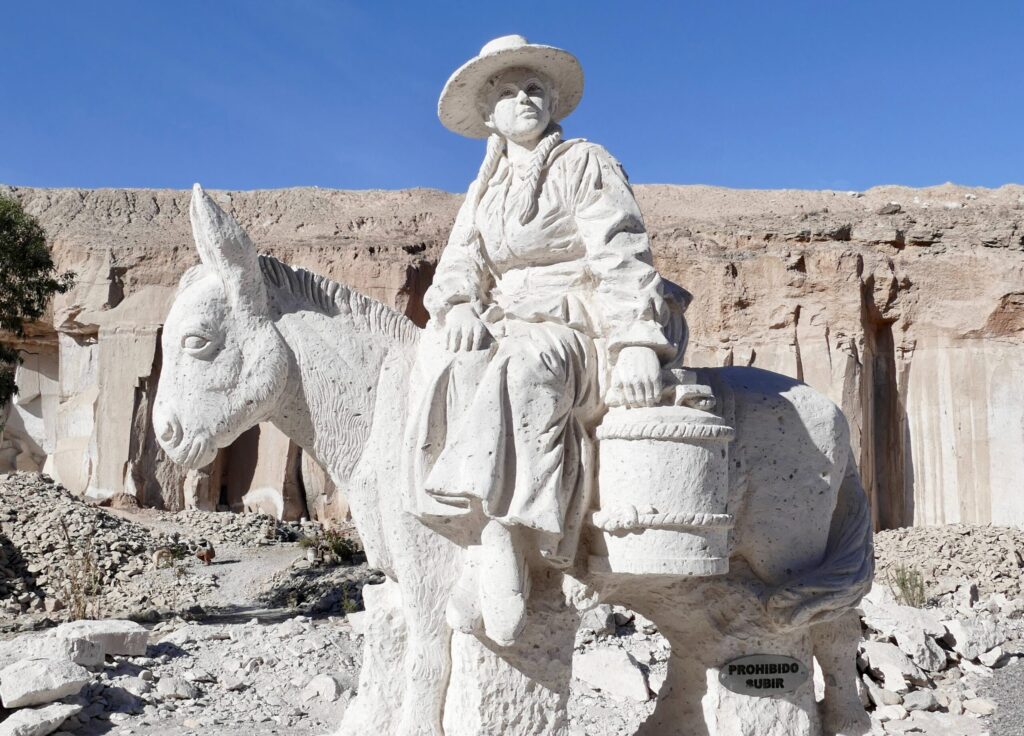
If sillar had only been useful for building walls, its visual importance would be much smaller. Stonecutters carved entrances with columns, flowers, leaves, animals, figures, and Christian symbols directly into the stone. The wall stopped being only structural. It became a decorated surface.
Mestizo Baroque and the stone
This is where the style known as Mestizo Baroque comes in. It is not simply European Baroque under a different name. The ornamentation combines Christian models with plants, animals, and decorative elements created by Andean artisans. The stone supports that blend.
The Church of La Compañía is the example most often cited. From a distance, you see the overall composition. Up close, the facade is covered with carvings. UNESCO highlights this fusion of European techniques and local craftsmanship as one of the values of the Historic Center.
Why Arequipa is called the White City
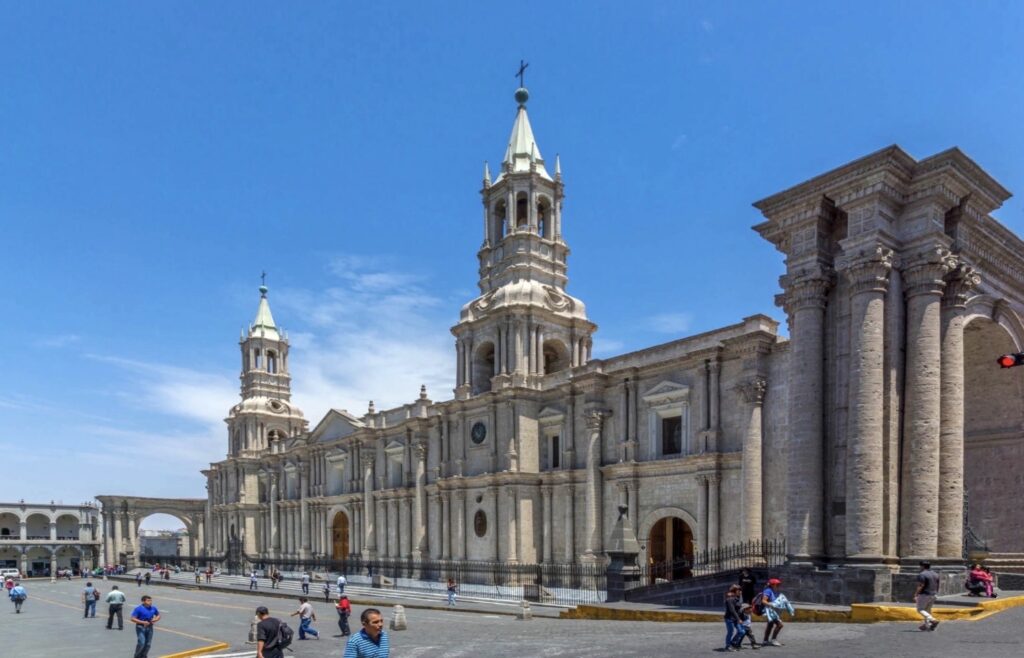
The nickname is closely tied to the sillar of the monumental historic center. At the Plaza de Armas, the Cathedral and the arcades are enough to see why. Sunlight changes the brightness of the stone throughout the day.
Not all of Arequipa is built with sillar. Not all sillar is white. The modern city extends far beyond the historic core and uses many other materials. Even within the heritage area there are variations in color and construction. White City refers above all to the visual identity of the Historic Center.
Where to recognize it
Plaza de Armas and Cathedral
This is the easiest place to start. The arcades and the cathedral show the light color, arches, and large stone surfaces. At midday the stone appears whiter. In lower light, the joints, reliefs, and volumes become easier to see.
Church of La Compañía
It is worth getting close. From a distance, you see the complete facade. From a few feet away, the shapes carved into the entrance become visible. This is where it becomes clear that sillar was also a material for sculptors.
Historic mansions in the center
It is not only about churches. There are civic entrances, courtyards, and thick walls. A pattern repeats with variations: a heavy door, corridor, courtyard, and rooms arranged around it. UNESCO refers to hundreds of historic mansions within the heritage area.
Santa Catalina Monastery
There, the stone stands beside walls painted blue, red, and ocher. It helps break the idea that sillar must always look white. The monastery deserves its own visit; in this context, it is an example of how the material changes depending on the colors around it.
Where it is extracted
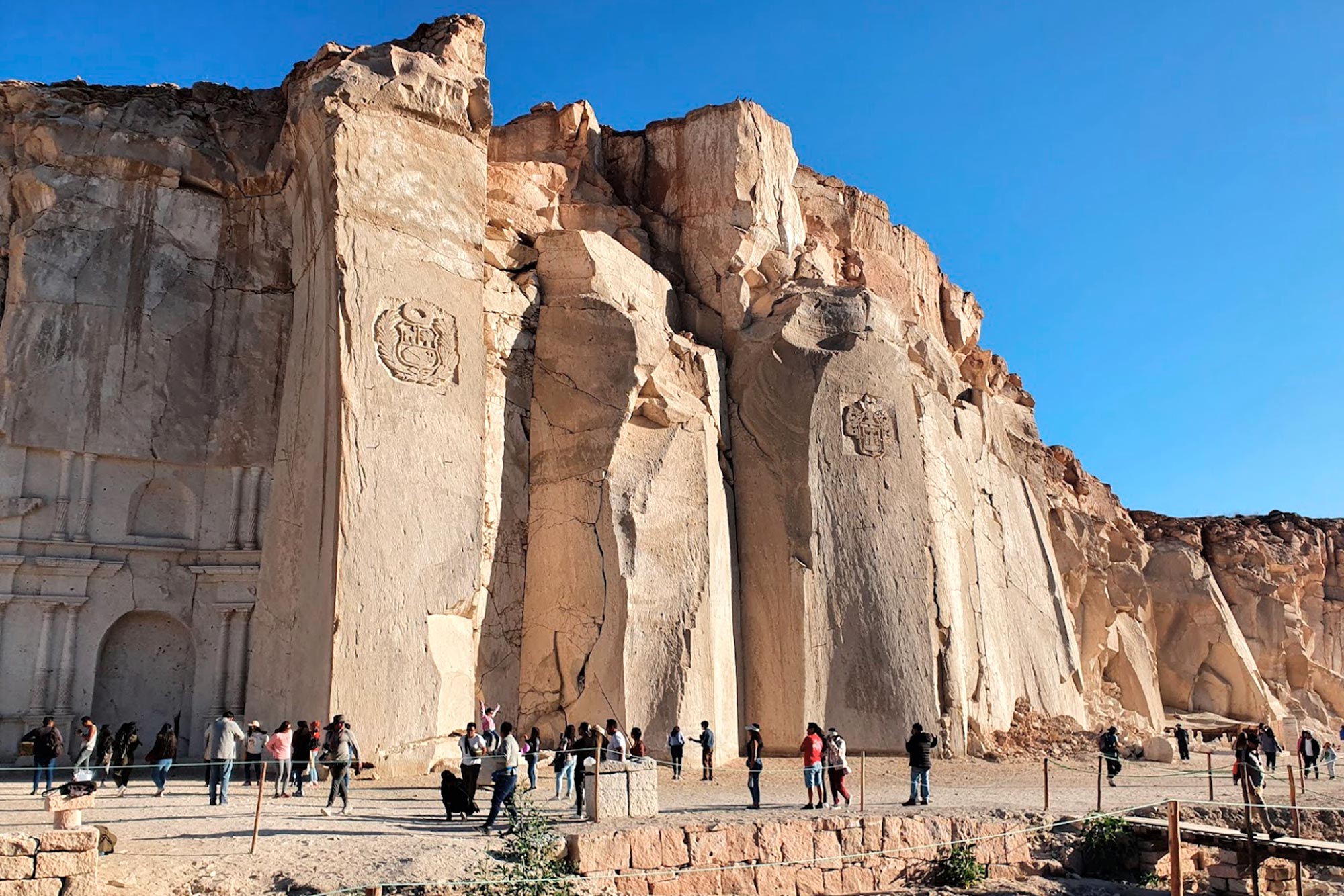
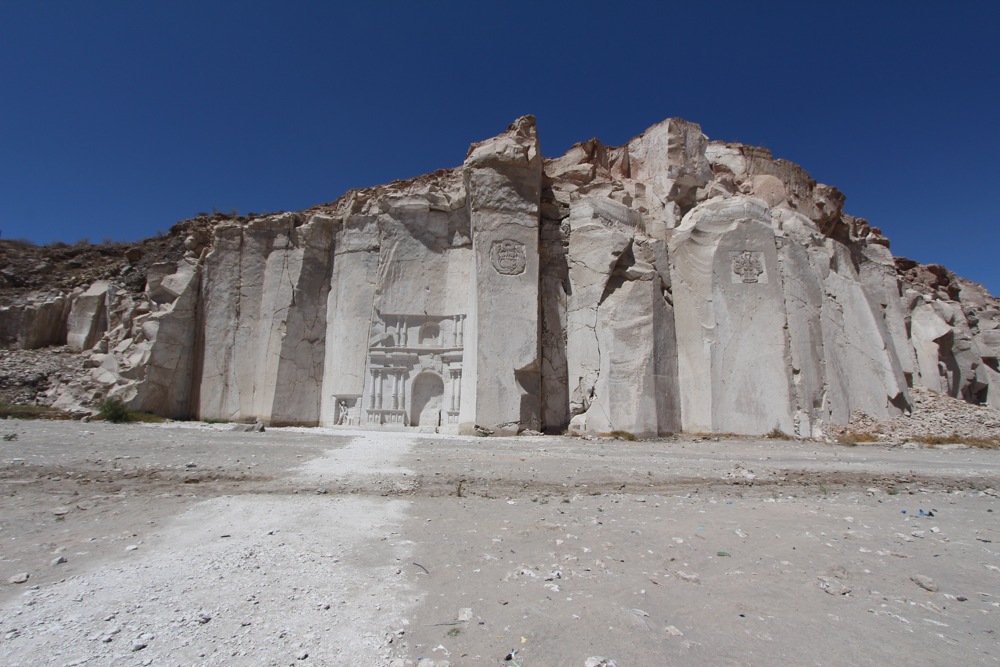
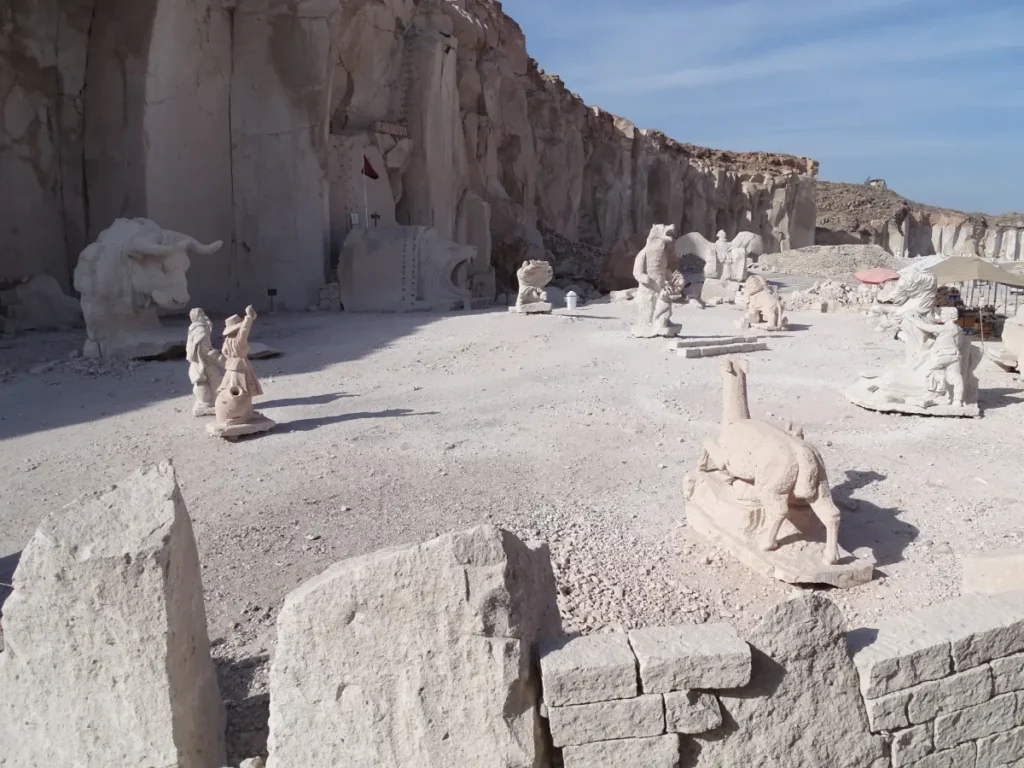
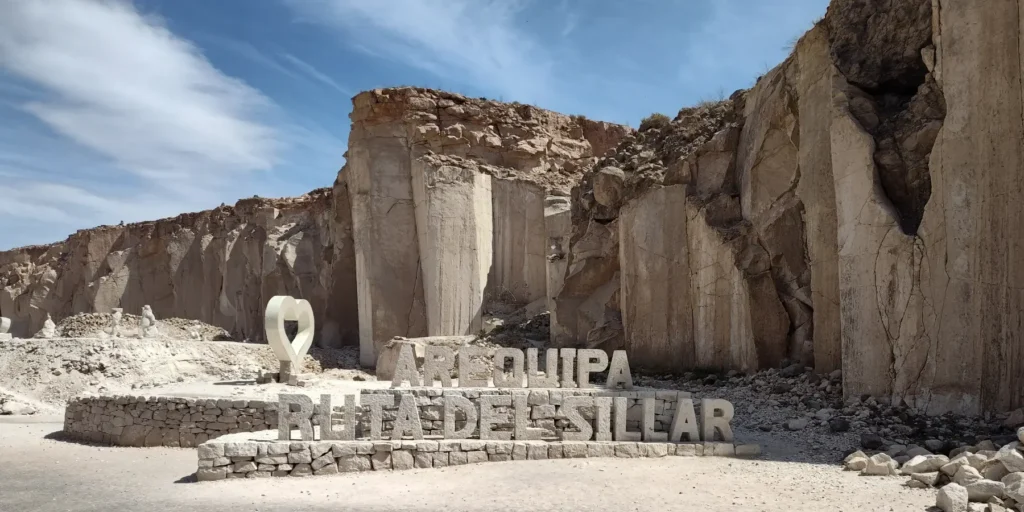
One well known area is Añashuayco, in Cerro Colorado. At the quarry, you can see the ignimbrite before it becomes a finished facade: natural walls, cuts, and blocks in progress. It was an important source of stone for the city. Today it forms part of the Sillar Route, offering a closer look at the landscape and the craft. Visiting is not necessary to understand the Historic Center. Seeing where the stone comes from, however, changes the way you look at the buildings afterward.
The craft of the stonecutters
There is a skilled process between the quarry and the wall. Workers have to read the rock, mark it, separate pieces that can be transported, and shape them. It is not simply a matter of hitting the stone until a piece falls away. This knowledge belongs to Arequipa’s building tradition. A finished facade is not only the work of an architect. It is extraction, cutting, transportation, and carving.
Sillar and earthquakes
Be careful with the easy explanation. A building made of sillar is not immune to earthquakes. Arequipa’s history is full of damage and reconstruction.
What did happen is that earthquakes pushed the development of a particular way of building: local stone, thick walls, arches, vaults, and solutions that were refined over time. UNESCO considers this response to unstable ground one of the characteristics of Arequipa’s historic architecture. The value lies in the system, not in an individual block.
Light is part of the building
Sillar changes throughout the day. At midday, the light surfaces reflect the sun. Early in the morning or near sunset, shadows define columns and reliefs. A heavily carved entrance can look flat under direct frontal light. When the light comes from an angle, the design appears. The material is the same. The facade is not.
Is it still used?
Yes. It is not only a colonial stone. It is still used in new construction, restoration, and decoration, although the modern city works with many other materials.
Restoring an old building requires understanding the original stone and the technique used to construct it. Replacing an old piece carelessly with a modern material can alter both its appearance and behavior. Preserving sillar also means preserving the craft.
How to look at it while walking
Stop seeing every wall as the same white surface. Look at the thickness of the walls, the arches, and the vaults. Get close to an entrance and see whether the decoration was attached or carved directly into the stone. Compare a church with a historic mansion. Look at the color in direct sunlight and then in a shaded courtyard.
With that, the center begins to tell a different story: not just “beautiful buildings,” but locally available material, volcanic terrain, centuries of earthquakes, and generations of stonecutters.
Sillar in an Arequipa itinerary
You do not need an entire day dedicated only to this subject. Sillar is present in the Plaza, churches, historic mansions, and the rest of the historic district. It works as a key for understanding the city.
On a broader journey such as Peru 13 Days, knowing what sillar is before walking through Arequipa helps prevent every facade from looking the same. You do not need to memorize geological terms. It is enough to remember that this stone was formed by volcanic processes, came from nearby deposits, and was transformed by generations of workers.
Why it defines Arequipa’s architecture
It brings several stories together in a single material. It comes from the volcanic landscape. It was available nearby. Local stonecutters worked it. It was used for walls, arches, and vaults. It provided the surface for Mestizo Baroque decoration. And it gave the Historic Center an appearance that is now immediately recognized as Arequipeño.
The stone alone does not explain the city. You also have to consider earthquakes, European techniques, Indigenous and mestizo knowledge, the needs of churches and homes, and centuries of rebuilding. Without this stone, the White City would have different light, different facades, and a different face.


