
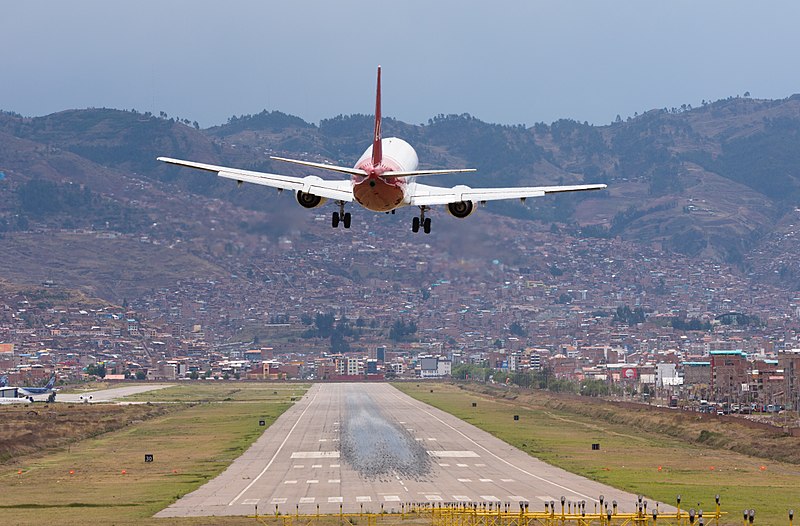
Southern Peru is best explored by combining three types of transportation: flights for long distances, buses for most trips between cities, and trains for reaching Machu Picchu or crossing the highlands at a more relaxed pace. Choosing the right option for each leg of your journey can save you hours of travel time and help you make the most of your trip. In this guide, we explain which option works best for each route, how long it takes, and what you should know before you travel.
Recommended transportation by route
Travel times are approximate and may vary due to traffic, weather, or roadwork.
| Route | Recommended option | Approximate travel time |
|---|---|---|
| Lima to Paracas | Bus | 3.5 to 4 hours |
| Paracas to Ica or Huacachina | Bus or private transfer | 1 hour |
| Ica to Nazca | Bus | 2.5 hours |
| Nazca to Arequipa | Overnight bus | 9 to 10 hours |
| Lima to Arequipa | Flight | 1 hour 30 minutes |
| Arequipa to Chivay (Colca) | Bus or tour | 3 to 4 hours |
| Arequipa to Puno | Bus | 5 to 6 hours |
| Puno to Cusco | Direct bus, sightseeing bus, or train | 7 to 10.5 hours |
| Lima to Cusco | Flight | 1 hour 20 minutes |
| Cusco to Ollantaytambo | Shared van, bus, or private transfer | 1.5 to 2 hours |
| Ollantaytambo to Aguas Calientes | Train | 1.5 hours |
| Juliaca (Puno) to Lima | Flight | 1 hour 40 minutes |
Flights: when flying is worth it
Flying makes sense when traveling by land would take more than 10 hours or when you have limited time. Domestic flights connect Lima with the main cities in southern Peru in less than two hours, and direct routes between some southern cities may also be available depending on the season.
Southern Peru airports and the destinations they serve
- Lima (Jorge Chávez): Peru’s main international gateway and connection hub. Allow approximately 45 to 90 minutes between the airport and Miraflores, depending on traffic.
- Arequipa (Rodríguez Ballón): about 30 minutes from the historic center. It serves Arequipa and the Colca Canyon.
- Juliaca (Inca Manco Cápac): the airport used to visit Puno and Lake Titicaca. It is about 45 kilometers from Puno, or approximately one hour by road.
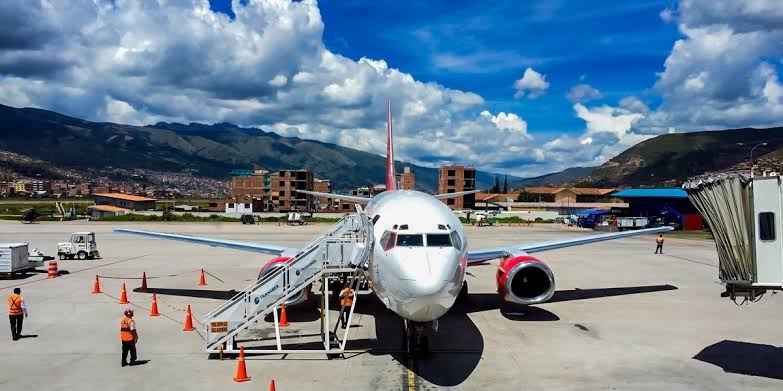
- Cusco (Velasco Astete): about 15 to 20 minutes from downtown Cusco. It is the main gateway to the Sacred Valley and Machu Picchu.
What to keep in mind when flying to Cusco
Cusco Airport is surrounded by mountains, and afternoon winds and cloud cover can sometimes cause delays or diversions. If you have a connecting flight or a tour scheduled for the same day, choose a morning flight and leave plenty of time between your arrival and your next activity.
Bus: the backbone of overland travel
Peru has an extensive intercity bus network covering almost every route in the south. Companies such as Cruz del Sur, Oltursa, and Civa operate their own terminals in Lima and Arequipa, offer daily departures, and provide overnight services with reclining seats.
Types of service and seats
Long-distance buses generally offer two main types of seating. Semi-reclining seats tilt back to around 140 degrees and are suitable for daytime trips. Full-cama or VIP seats recline to approximately 160 or 180 degrees, are often located on the lower level of the bus, and are the most comfortable option for sleeping on overnight routes such as Nazca to Arequipa.
Sightseeing buses with stops along the way
Sightseeing buses operate between Puno and Cusco, as well as between Arequipa and Puno via the Colca region, stopping at points of interest along the way with a guide. On the Puno-to-Cusco route, for example, stops may include Pukara, La Raya Pass at more than 4,300 meters above sea level, Raqchi, and Andahuaylillas. The journey takes about 10 hours, but it turns a travel day into a full day of sightseeing.
How to travel safely on an overnight bus
Choose reputable companies that depart from their own terminals rather than roadside stops. Keep your documents, money, and electronic devices with you at your seat, and do not accept transportation offers from people approaching passengers outside the terminal.
Train: two routes with different purposes
In southern Peru, trains are not a general means of transportation between cities. There is no passenger train between Lima and Cusco or along the coast. The two main train routes travelers use are the route to Machu Picchu and the route across the highlands between Cusco and Puno.
Train to Machu Picchu and service classes
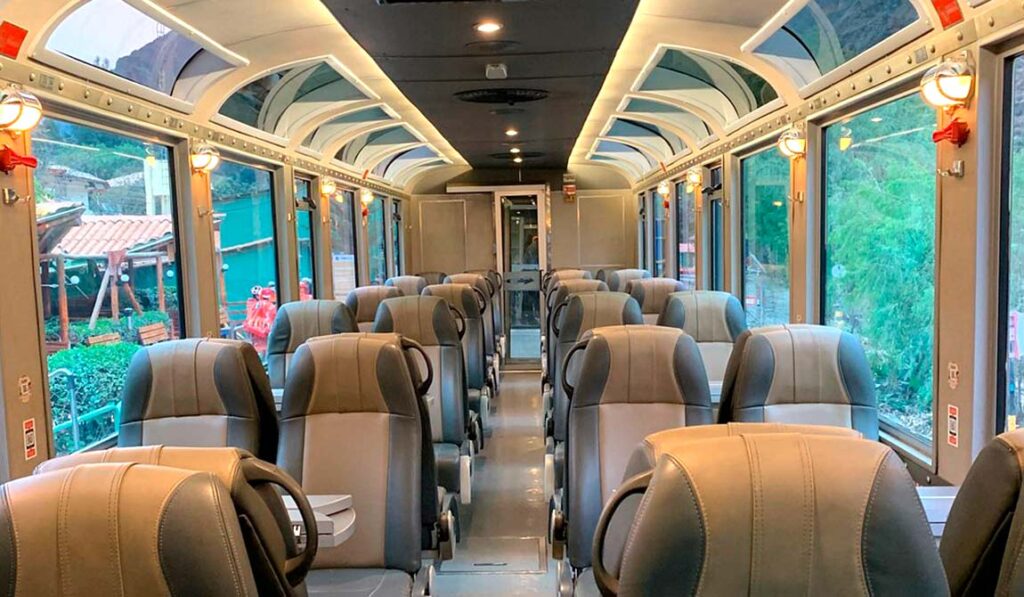
The train is the only way to reach Aguas Calientes without hiking. PeruRail and Inca Rail offer several service classes, ranging from basic trains with panoramic windows to luxury services with onboard meals, such as Belmond’s Hiram Bingham. The main differences between classes are the amount of space, window design, food service, and price; travel time is almost the same. If you want to visit and return in one day with all the arrangements taken care of, check out our one-day Machu Picchu train tour.
Once you arrive in Aguas Calientes, you can reach the citadel by bus, which takes about 25 minutes along a winding mountain road, or hike up a steep staircase trail, which takes approximately an hour and a half.
Train from Cusco to Puno
The PeruRail Titicaca travels across the highlands between Cusco and Puno in approximately 10.5 hours, including lunch, an observation car, and a stop at La Raya. It does not operate every day, so check the schedule in advance. For travelers looking for a multi-day experience, the Belmond Andean Explorer is a sleeper train connecting Cusco, Puno, and Arequipa.
Connections between the coast and the highlands
Traveling from the coastal desert to the highlands is one of the most important parts of planning your route. There are three main ways to do it:
Along the Pan-American Highway to Arequipa
From Nazca, the highway continues along the coast before climbing toward Arequipa. This is the most common route for travelers exploring southern Peru by land, and most people take an overnight bus. There are also direct buses from Lima to Arequipa, which take approximately 16 to 17 hours.
Via Abancay to Cusco
This is the direct route from Lima or Nazca to Cusco. The bus from Lima to Cusco takes approximately 20 to 22 hours and crosses high-altitude mountain passes with many winding sections. It is the most economical option, but also the most tiring.
Flying from Lima
If you do not want to spend an entire day on the road, fly from Lima to Cusco, Arequipa, or Juliaca. Many travelers combine both approaches: they explore the coast by bus and then fly from Lima to the highlands. If you are still deciding which region to visit first, read our guide on how to plan a route between Peru’s coast and highlands.
Would you rather not organize each leg of the trip yourself? Our 12-day Peru package covering Lima, Paracas, Nazca, Lake Titicaca, and Machu Picchu includes prearranged transportation between cities.
How to get around within each destination
Lima and Arequipa
Ride-hailing apps work well and are one of the most practical ways to travel between the airport and your hotel or between different neighborhoods. In Lima, always allow more travel time than the map suggests because of traffic.
Cusco and the Sacred Valley
Cusco’s historic center is easy to explore on foot. To reach the Sacred Valley, shared vans and minivans depart from the city for Urubamba and Ollantaytambo. If you want to visit Pisac, Ollantaytambo, and Chinchero in one day without changing transportation, the classic Sacred Valley tour includes transportation between each site.
Puno and Lake Titicaca
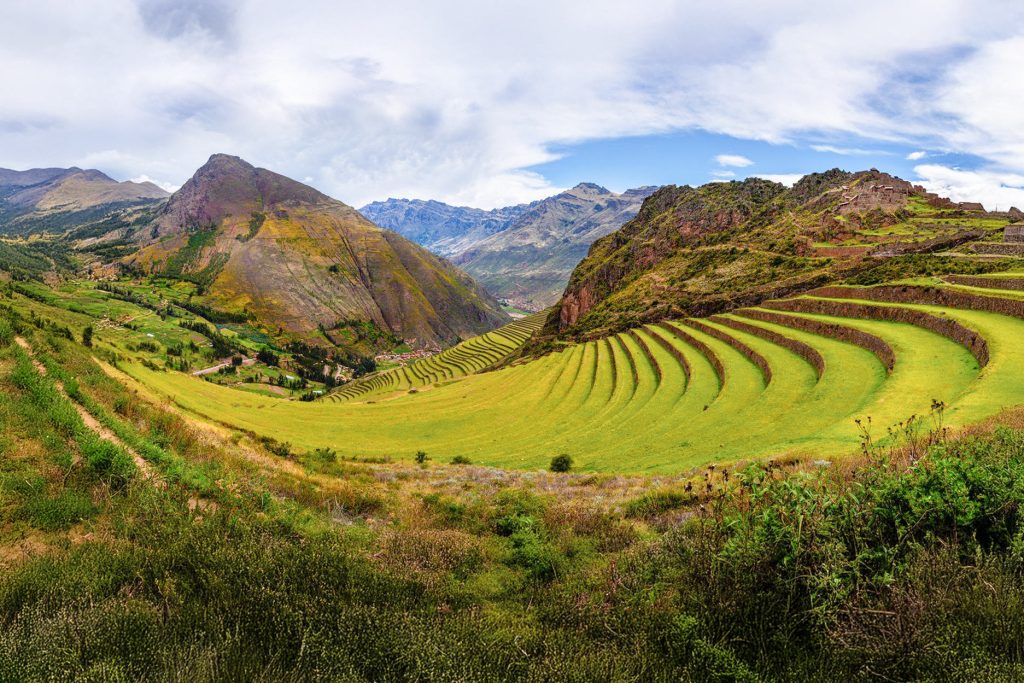
Distances within Puno are short, and taxis and mototaxis are inexpensive. To visit the Uros and Taquile islands, you need to take a boat from the port of Puno, which is usually included in Lake Titicaca tours.
Frequently asked questions about transportation in southern Peru
Is there a train from Lima to Cusco?
No. Between Lima and Cusco, you can only travel by plane or bus. Passenger trains in southern Peru operate only toward Machu Picchu and between Cusco, Puno, and Arequipa.
Which airport should I use to visit Lake Titicaca?
Juliaca Airport. Puno does not have its own airport, and the drive from Juliaca to the city takes about one hour.
Is it safe to travel by overnight bus in Peru?
Yes, if you choose reputable companies


