
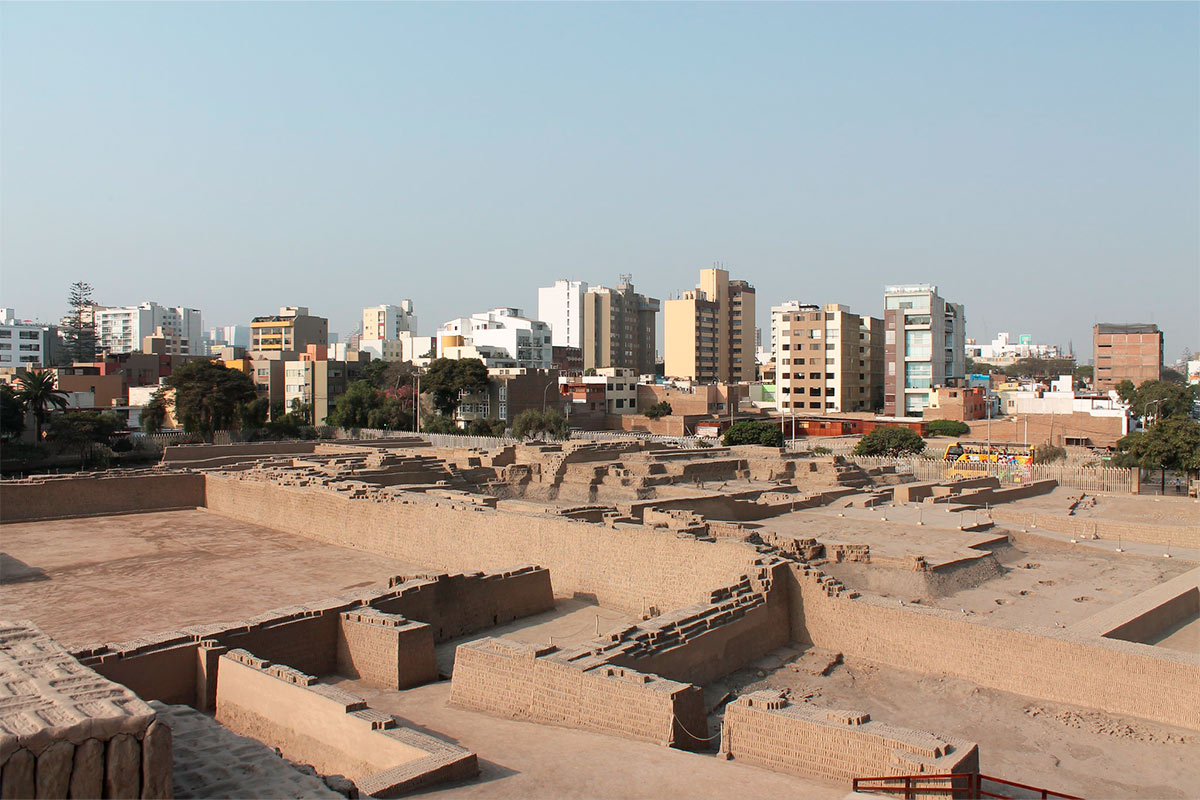
In Miraflores, surrounded by buildings, avenues, and cafés, stands an adobe pyramid more than a thousand years old. Huaca Pucllana is not on the outskirts of the city, nor does it require an entire day to visit. It is located in the district where many travelers stay while visiting Lima, just a few minutes from Kennedy Park and the oceanfront promenade. That makes it easy to include in a short itinerary: visit in the morning, have lunch nearby, and then continue to Barranco or downtown Lima. What is surprising is not only the size of the pyramid. It is seeing a ceremonial complex from Peru’s pre-Hispanic coast right next to the modern city, with traffic along General Borgoño Street on one side and vertically arranged adobe bricks on the other.
History and Origins of Huaca Pucllana
Huaca Pucllana was built by the Lima culture, which occupied Peru’s central coast roughly between 200 and 700 AD. It was not simply a neighborhood monument. It served as a ceremonial and administrative center where local power was organized, rituals were performed, and part of the valley was controlled. The name is associated with the Quechua word pucllay, meaning “to play.” This has led to the interpretation that the site may also have been used for games or sacred ceremonies, rather than only for burials or storage.
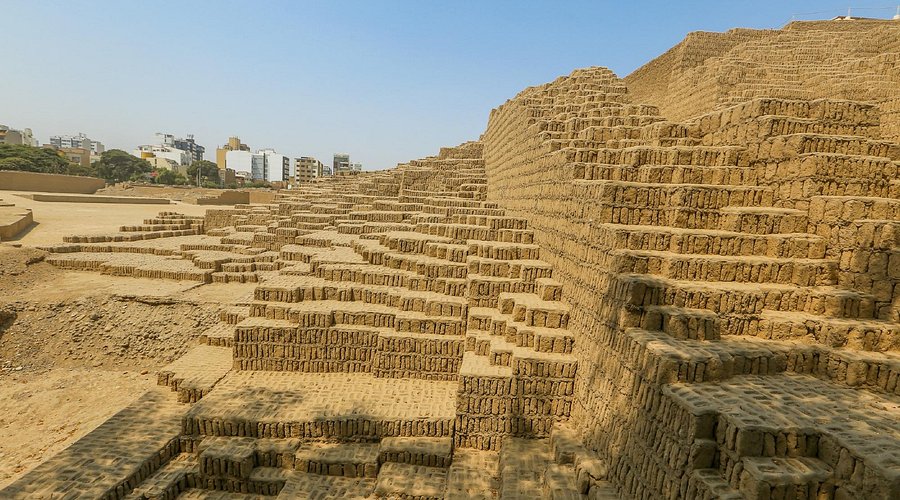
The pyramid was built with thousands of adobe bricks placed vertically, like books on a shelf. This technique, typical of the Lima culture, allowed the walls to move slightly when the ground shook. Lima remains an earthquake-prone area, and this construction method partly explains why the core of the huaca survived centuries of humidity, abandonment, and urban development around it. Over time, other cultures also occupied the site. What visitors see today is the result of excavation and preservation work: platforms, courtyards, ramps, and the large stepped pyramid visible from the street.
What to See at Huaca Pucllana
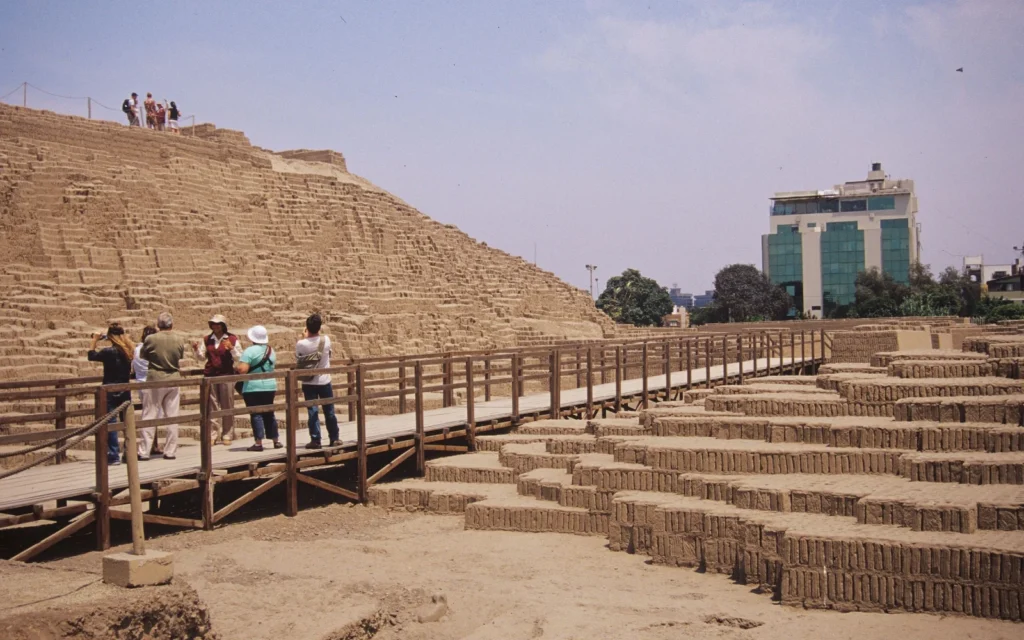
The visit does not end with a photo of the pyramid. You walk through the ceremonial area, spaces where the people who managed the site lived or worked, and the adobe platforms that support the complex. The ground is made of dirt, and there are uneven sections, passageways, and viewpoints overlooking Miraflores. From above, the contrast becomes clear: the huaca below and modern buildings all around it.
The Site Museum houses artifacts uncovered during excavations, including ceramics, textiles, and objects used in ceremonies. It helps visitors understand what might otherwise look like simple adobe walls outside. The complex also includes areas displaying plants and animals associated with the ancient coast, with crops and species that help visitors imagine what the valley looked like before the huaca was surrounded by the city. Visitors who explore without a guide may only see the outline of the pyramid. With a guide, you can better understand the adobe construction technique, the different building stages, and the purpose of each courtyard.
Visiting Hours
| Type of Visit | Days | Hours | Notes |
|---|---|---|---|
| Daytime visit | Wednesday to Monday | 9:00 a.m. to 5:00 p.m. | Closed on Tuesdays. |
| Nighttime visit | Wednesday to Sunday | Approximately 6:30 p.m. to 9:00 p.m. | Advance reservation required. |
Admission Prices
| Visitor Type | Daytime Visit | Nighttime Visit |
|---|---|---|
| Peruvian adult | S/ 15.00 | S/ 17.00 |
| Foreign adult | S/ 15.00 | S/ 17.00 |
| Students and teachers | S/ 7.50 | No special rate listed |
| Children up to 12 years old | S/ 7.50 | S/ 8.50 |
| Senior citizens | S/ 7.50 | S/ 8.50 |
| Visitors with disabilities | S/ 7.50 | S/ 8.50 |
How to Get There
Huaca Pucllana is located on the 8th block of General Borgoño Street in Miraflores. It is close to Kennedy Park and the oceanfront promenade. From central Miraflores, it is about a 10- to 15-minute walk. If you are staying in another district, the easiest option for visitors is to use a ride-hailing app. This helps you avoid dealing with rush-hour traffic and eliminates the need to navigate local buses or bus stops. Ask to be dropped off at the 8th block of General Borgoño Street; the entrance to the archaeological complex is visible from the street.
Huaca Pucllana Restaurant
Huaca Pucllana Restaurant operates inside the archaeological complex. The menu features Peruvian cuisine, and the dining area overlooks the pyramid. At night, when the huaca is illuminated, the restaurant becomes especially popular. If you want to eat there after your visit, make a reservation. The restaurant does not replace the guided tour; it is an additional experience for travelers already in Miraflores who want to stay for dinner with a view of the archaeological site.
Recommendations for Your Visit
Take the guided tour. Without an explanation, the huaca may look like little more than a large adobe mound. With a guide, you learn about the Lima culture, the system of vertically placed adobe bricks, and the ceremonial purpose of the site.
- During the day, bring sunscreen and water. Most of the route is outdoors, and Lima’s cloudy skies do not necessarily mean weak sun exposure.
- Wear comfortable, closed-toe shoes. You will walk on dirt paths, and some sections are uneven.
- Allow between 1 hour and 1.5 hours to explore the pyramid, museum, and platforms without rushing.
- If you want photos of the illuminated pyramid, plan a nighttime visit and make a reservation. A daytime visit is better for seeing the details of the adobe walls and the artifacts inside the museum.


