
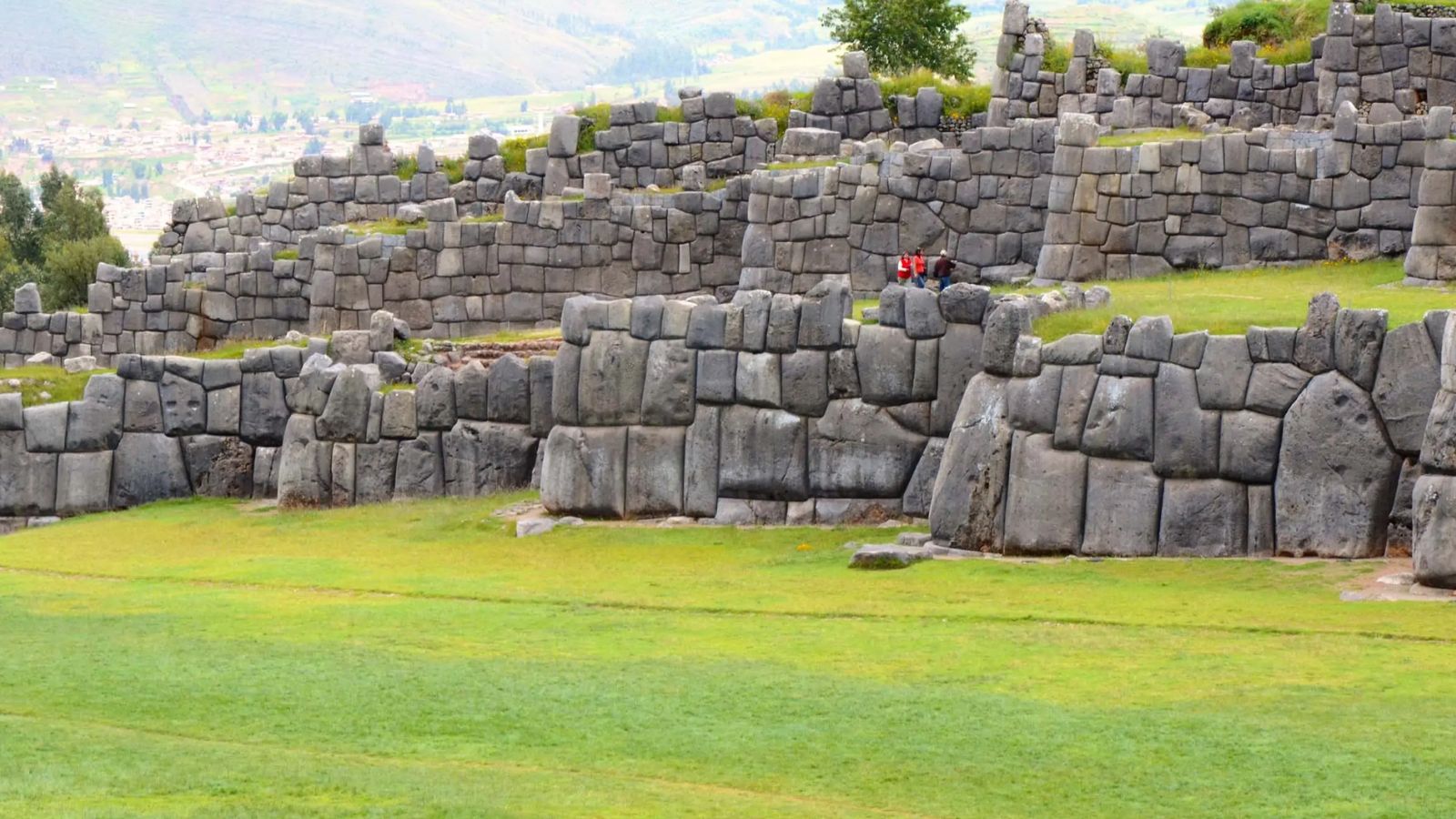
Sacsayhuamán is an Inca archaeological complex located north of Cusco’s historic center, just a few miles from the Plaza de Armas. It’s one of the city’s most important archaeological sites for its massive stone walls, its role in the planning of the Inca capital, and its ceremonial use. Entry requires the Cusco Tourist Ticket, the usual visiting hours are 7:00 a.m. to 5:30 p.m., and you can visit on your own, by taxi, on foot, or as part of a City Tour.
The visit lets you walk along zigzagging walls, a wide esplanade, rocky sectors, and former spaces linked to the Inca elite. Given its location above 11,800 feet above sea level, it’s a good idea to spend at least one or two days in Cusco before taking on demanding walks around the complex.
What Sacsayhuamán is
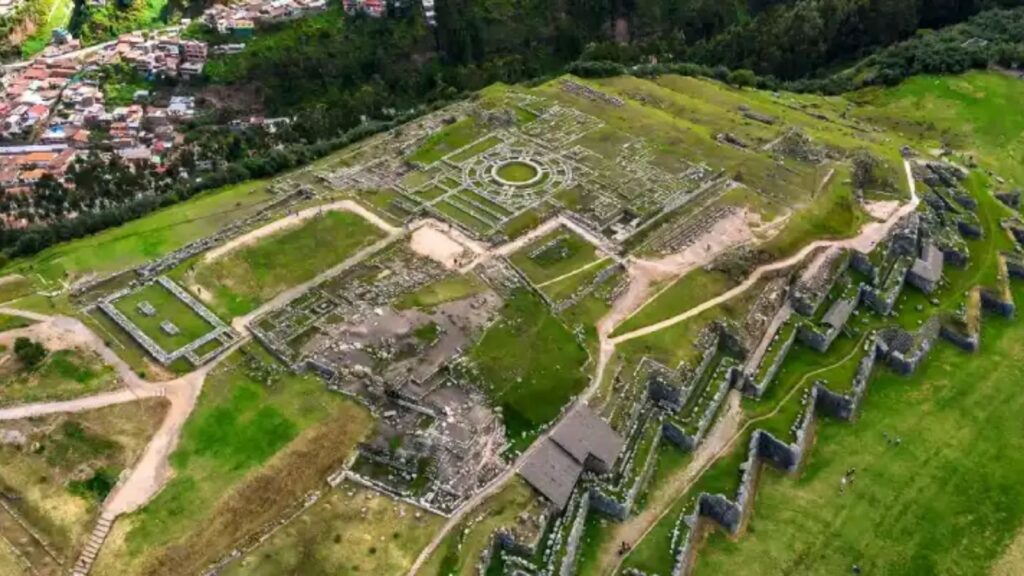
Sacsayhuamán, also spelled Saqsaywaman, is an Inca archaeological complex located on a hill near the city of Cusco. It’s part of the historic setting of the former Tahuantinsuyo capital and preserves large-scale stone structures, platforms, enclosures, and open areas.
The site is especially known for its megalithic walls, assembled with remarkable precision. Its elevated position also helps convey the territorial connection that existed between the complex and the Inca city of Cusco.
What Sacsayhuamán means
The name Saqsaywaman comes from Quechua and is usually interpreted as “satisfied falcon” or “well-fed falcon.” The translation can vary depending on the source and how the Quechua terms are analyzed, so there’s no single, universally accepted interpretation.
In Spanish, the spelling Sacsayhuamán is commonly used. You’ll also find the spellings Saqsaywaman, closer to contemporary Quechua writing, and Sacsayhuaman, without an accent, common in online searches and tourism documents.
Where Sacsayhuamán is located
Sacsayhuamán sits north of Cusco’s historic center, on the slopes that rise behind the city. From the Plaza de Armas, the drive is short, and a taxi ride usually takes around 10 to 15 minutes, depending on traffic.
Its proximity to downtown makes it easy to fit into a half-day itinerary. Even so, the route up has curves, slopes, and a quick gain in altitude, so walking to the entrance takes more effort than the distance on a map might suggest.
How high up Sacsayhuamán is
The Sacsayhuamán complex sits at an approximate altitude of 11,800 feet above sea level. This is higher than downtown Cusco, which sits at around 11,150 feet above sea level.
If you’ve just arrived in Cusco, prioritize rest, light meals, and good hydration before heading up. Walking around the complex can feel more demanding due to the altitude, the slopes, and sun exposure, even when the route doesn’t look long.
History of Sacsayhuamán
The construction of Sacsayhuamán is tied to the expansion of the Inca state during the 15th century. The complex was built as part of Cusco’s urban and political reorganization, a city the Incas designed with a defined symbolic and territorial layout.
After the Spanish invasion, much of its structure was dismantled to reuse the stones in Cusco’s colonial buildings. The largest blocks from the main walls stayed in place because of how difficult they were to move.
Who built Sacsayhuamán
The construction of Sacsayhuamán is mainly linked to the reign of the Inca Pachacútec, who drove a major transformation of Cusco during the 15th century. Colonial chronicles indicate that its development continued under his successors, including Túpac Inca Yupanqui and Huayna Cápac.
The project required skilled labor and workers brought in from various parts of the Tahuantinsuyo. It wasn’t an isolated construction, but part of a broader state expansion that included temples, roads, canals, administrative centers, and production areas.
Was Sacsayhuamán a fortress or a temple
Sacsayhuamán served ceremonial, political, and defensive functions. For a long time it was mainly presented as a fortress because of its elevated location and its walls, but that definition doesn’t fully account for the variety of spaces found within the complex.
Its visual relationship with Cusco, the presence of esplanades and enclosures, and the ceremonies still held there today all point to a significant ritual and state function. It may also have served as a control and protection point in a strategic part of the city.
Architecture of Sacsayhuamán
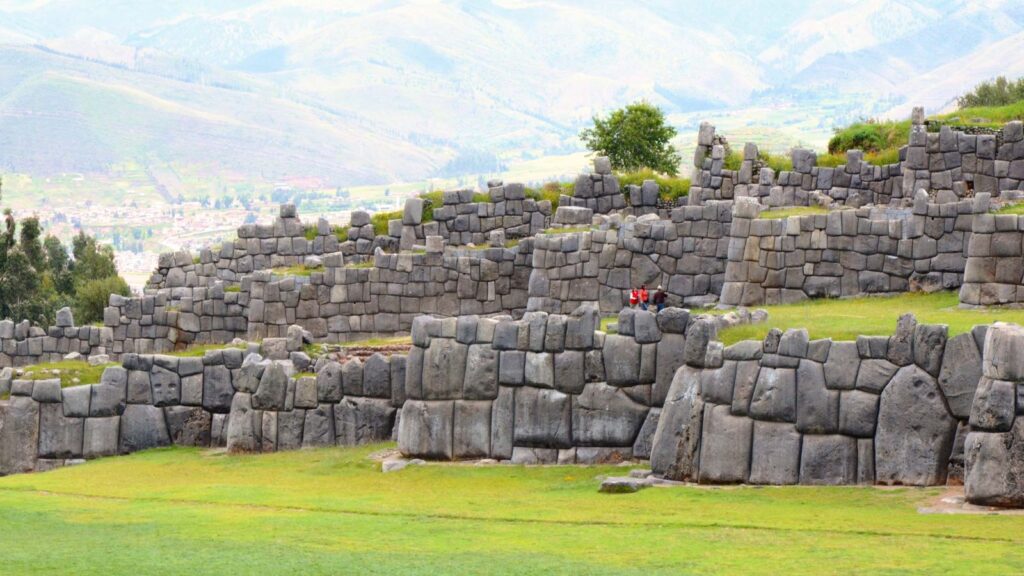
The architecture of Sacsayhuamán stands out for the stonework applied to blocks of widely varying sizes. The pieces were carved to fit together without visible mortar, forming stable structures that have withstood earthquakes for centuries.
The main walls follow a multi-level zigzag design. This shape increases the structure’s strength and creates a clearly recognizable image of the site when viewed from the esplanade or from the higher points along the route.
How Sacsayhuamán was built
The Incas quarried stone from nearby sites and from farther locations, then transported it using collective labor, ramps, ropes, and stone tools. Moving the heaviest blocks demanded considerable organization and precise knowledge of the terrain.
Once on site, stonemasons carved and tested each block until it fit tightly against its neighbors. No mortar was used to join them; the structure’s stability comes from the shape, weight, and fit of each stone.
What to see at Sacsayhuamán
A visit to Sacsayhuamán lets you see the main walls, the ceremonial esplanade, the sectors where the towers once stood, and several rock formations. The route combines open trails, grassy areas, and sections with stairs or elevation changes.
The time you have available affects how much of the site you can cover. Visiting with a guide gives you more context on the structures and the archaeological interpretations; if you go on your own, it’s a good idea to have a map of the park and stick to the marked routes.
Walls of Sacsayhuamán
The walls of Sacsayhuamán are arranged in three stacked levels and follow a zigzag shape. Their blocks fit together with precision, and some measure several yards tall and wide, with estimated weights of dozens of tons.
The appeal of the site doesn’t come only from the size of the stones, but from how they were fitted together. Looking closely, you can see irregularly shaped pieces that align without wide gaps, a technique characteristic of high-quality Inca stonework.
Towers and esplanade of Sacsayhuamán
Towers described by colonial chroniclers once stood at the upper part of the complex. The best known is Muyuqmarca, a circular structure associated with observation, control, and elite activities. Today, mainly its foundations and archaeological evidence remain.
The Sacsayhuamán esplanade is a large open space in front of the main walls. Every June 24, it hosts the modern reenactment of Inti Raymi, so access and circulation can change around that date due to the event’s organization.
Rodadero and chincanas of Sacsayhuamán
The Rodadero is an area of polished, weathered natural rock located near the complex. It’s known for its sloped surfaces and is a common stop during tours around Sacsayhuamán.
The chincanas are rocky tunnels and passages tied to the site’s geography. Some access points may be closed or restricted for safety and conservation reasons, so you shouldn’t try to enter through unauthorized openings or stray from the marked trails.
Sacsayhuamán hours
The usual visiting hours at Sacsayhuamán are 7:00 a.m. to 5:30 p.m. These hours can change due to official events, conservation work, weather conditions, or local festivities, especially around Inti Raymi.
Before heading out, confirm the current hours with the archaeological park’s administration or with the entity in charge of the Cusco Tourist Ticket. Try to arrive with enough time to tour the site before closing, and keep in mind that the last entry may be cut off before the closing time.
What’s the best time to visit Sacsayhuamán
The best time to visit Sacsayhuamán is usually early, shortly after opening. At that hour there are fewer groups, the light is softer, and you can walk around the walls more calmly before visitor numbers pick up.
The afternoon is also a practical option if you’re joining the Cusco City Tour, which usually visits the complex after touring Coricancha. During the rainy season, try not to leave the visit too late in the day, since rainfall tends to be more frequent in the afternoon.
How long the visit to Sacsayhuamán takes
A visit to Sacsayhuamán usually lasts between one and two hours. The time varies depending on your pace, how much you want to take photos, how many sectors are open, and whether you tour with a guide.
On a City Tour, your time there may be shorter since the program includes other archaeological sites. If you go on your own and want to walk around the surrounding area, set aside at least two and a half hours, including the transfer from the historic center.
Sacsayhuamán entry ticket
To enter Sacsayhuamán you need a valid type of the Cusco Tourist Ticket. There’s no individual ticket sold exclusively for this complex, so you need to choose the corresponding partial ticket or the integral ticket, depending on the other places you plan to visit.
The ticket can be purchased at authorized points in Cusco and, depending on the type, also at some entrances of the included attractions. Bring your ID or passport, since visitor information is recorded on the ticket and may be requested at entry.
Sacsayhuamán entry price
Access to Sacsayhuamán is included in the Cusco Tourist Ticket, but the price depends on the type chosen, the visitor’s category, and current rates. Since these figures can be updated, it’s a good idea to check the official COSITUC information before buying.
It’s not advisable to base your budget on old rates published by third parties. Also check each ticket’s validity period, since buying a cheaper option might not be worthwhile if you plan to visit several archaeological sites over the following days.
Which ticket do you need to visit Sacsayhuamán
To visit Sacsayhuamán you can use the Partial Tourist Ticket, Circuit I. This type tends to suit those who want to see the archaeological sites near Cusco, such as Sacsayhuamán, Qenqo, Puca Pucara, and Tambomachay, within its validity period.
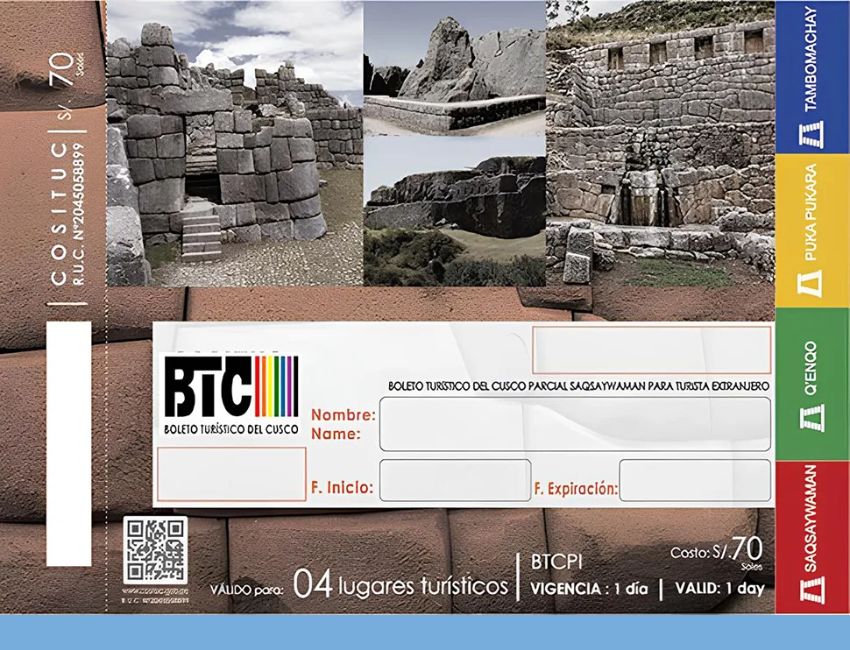
The Integral Tourist Ticket includes these sites along with other cultural and archaeological attractions in Cusco, the Sacred Valley, and the southern area. It’s a more convenient option if your itinerary spans several days of sightseeing and you’d rather avoid buying separate partial tickets.
How to get to Sacsayhuamán
From Cusco’s historic center you can reach Sacsayhuamán on foot, by taxi, or with a City Tour. The best option depends on your physical condition, the time you have available, and the level of comfort you want for the transfer.
Walking costs less, but involves a demanding climb due to the altitude. A taxi is fast and comfortable for most travelers. A City Tour simplifies logistics since it bundles transportation and a guide, though it follows a fixed schedule and limits your time at each stop.
How to walk to Sacsayhuamán
You can walk from Cusco’s historic center by following routes uphill toward the upper neighborhoods and the entrance to the archaeological park. The walk can take between 35 minutes and over an hour, depending on your starting point, pace, and stops.
The main downside is the constant slope and the altitude. It’s not the best option for your first day in Cusco, nor for people with symptoms of altitude sickness. Wear footwear with good soles, bring water, and avoid walking at night along quiet routes.
How to get to Sacsayhuamán by taxi
Taking a taxi from the Plaza de Armas is one of the fastest ways to reach Sacsayhuamán. The ride usually takes between 10 and 15 minutes, though it can take longer during traffic hours or local celebrations.
Agree on the fare before getting in, and use a formal taxi service or one arranged through your lodging. If you’d like the driver to wait for you, confirm the wait time and total fare in advance; otherwise, you can find another taxi once you finish the visit, depending on availability at the time.
How to visit Sacsayhuamán on a City Tour
The Cusco City Tour usually combines Sacsayhuamán with Coricancha, Qenqo, Puca Pucara, and Tambomachay. It’s a useful option for those with limited time who’d rather handle transfers with a guide and a pre-organized itinerary.
Before booking, check whether the service includes the Cusco Tourist Ticket or whether you need to buy it separately. Also confirm the meeting point, total duration, the language of the guiding, and the time allotted to each site, since programs can vary between operators.
Best time to visit Sacsayhuamán
The dry season, roughly from May to October, tends to offer days with a lower chance of rain and better conditions for walking the trails at Sacsayhuamán. It’s also the period with the most visitors, especially between June and August.
The rainy season, from November to March, leaves the landscape greener and can mean fewer visitors on certain days, but it calls for more preparation. Bring waterproof protection, keep in mind the paths can be slippery, and plan your visit early in the day to lower the risk of heavy rain.
Tips for visiting Sacsayhuamán
Plan your visit after acclimatizing in Cusco, and avoid combining it with too many other walks the same day if you’ve just arrived. Sun exposure is strong even when the sky is cloudy, and the temperature can shift quickly between morning and afternoon.
Stick to the trails, follow staff instructions, and respect the marked-off areas. Sacsayhuamán is a protected archaeological site; taking care of it lets other travelers enjoy it in good condition too.
What to bring to Sacsayhuamán
Bring comfortable footwear with good grip, a water bottle, sunscreen, and a hat or cap. Because of the altitude, it’s best to walk at a relaxed pace and avoid carrying unnecessary items during the tour.
Also bring your ID or passport, since it may be requested along with the Tourist Ticket. Between November and March, it’s a good idea to add a rain jacket or poncho; during the dry season, a warm layer is useful for the morning and late-afternoon cold.
What you can’t do at Sacsayhuamán
You shouldn’t climb on the walls, sit on archaeological structures, or enter areas marked as restricted. It’s also not allowed to damage, scratch, or move stones, even if they appear to be outside the tour’s main sectors.
Drone use requires prior authorization from the relevant authorities. Avoid leaving trash, feeding animals in the area, or straying from the designated paths, especially near tunnels, elevation changes, and rock formations.
Frequently asked questions about Sacsayhuamán
These answers clear up common questions when planning a visit to Sacsayhuamán from Cusco. Always check the operational details before traveling, since hours and entry conditions can change.
Can you visit Sacsayhuamán without a tour
Yes, you can visit Sacsayhuamán without a tour. You’ll need to arrange your own transportation, get a valid type of the Cusco Tourist Ticket, and tour the site on your own. It’s a good option if you’d like to move at your own pace and spend more time at the complex.
Can you buy a ticket just for Sacsayhuamán
There’s no individual ticket just for Sacsayhuamán. Access is included in the Partial Tourist Ticket, Circuit I, or in the Integral Tourist Ticket. Your choice depends on the other attractions you want to visit during your stay in Cusco.
Is Sacsayhuamán included in the Cusco City Tour
Yes, Sacsayhuamán is one of the main attractions included in the traditional Cusco City Tour, along with Coricancha, Qenqo, Puca Pucara, and Tambomachay. If you need help coordinating the tour, schedules, and tickets, you can consult with Incredible Peru Tours to organize the logistics of your visit.


