
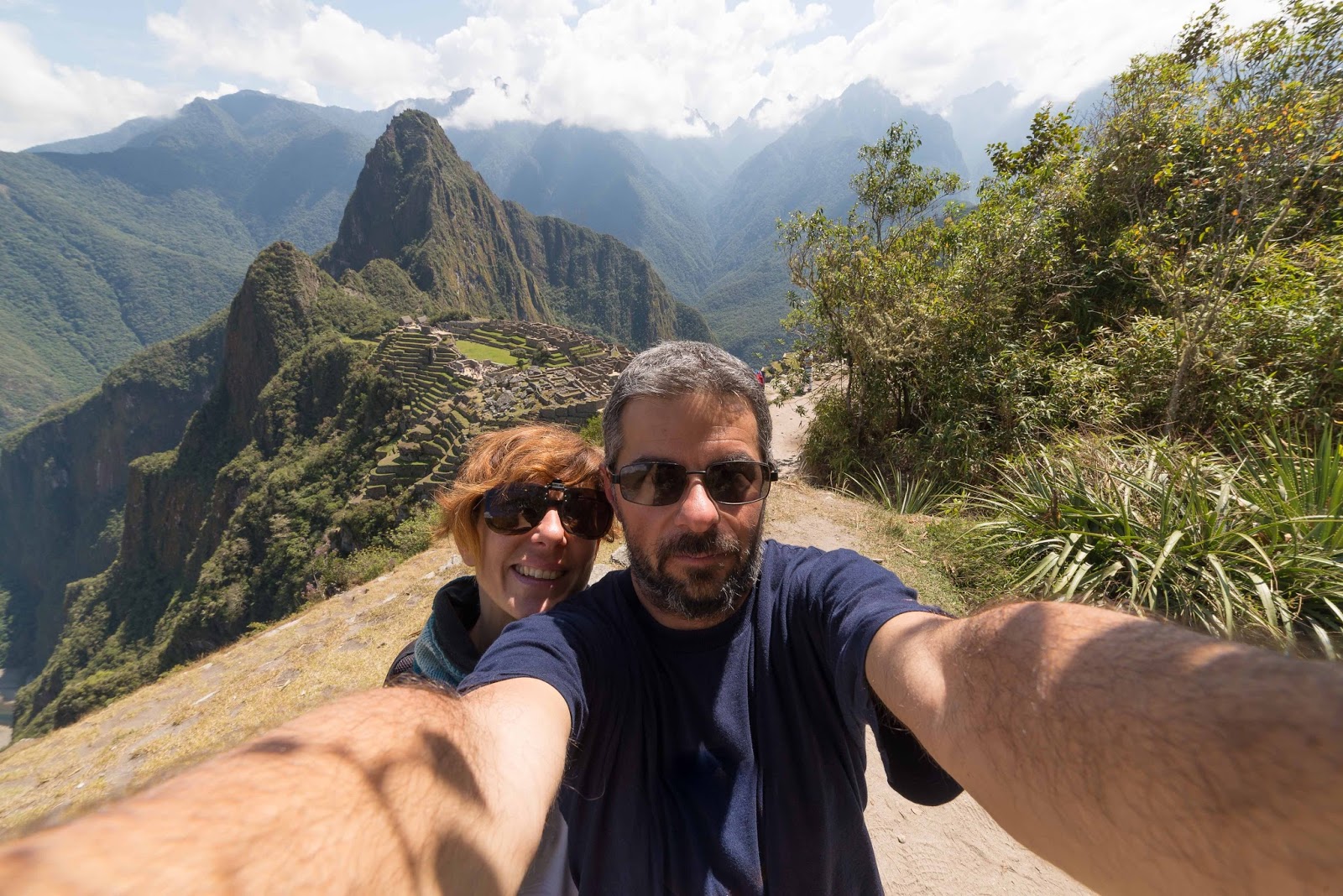
Few travel experiences test a couple in the same way as four days walking the Inca Trail. Not in the dramatic sense of the word, but in the most honest one: four days without a phone, without an agenda, and without the usual distractions of everyday life, sharing physical effort, extraordinary landscapes, cold nights in a tent, and the building emotion of reaching Machu Picchu together through the Sun Gate. That does something. Not always the same thing for every couple, but always something that would not have happened any other way.
This guide is not going to tell you that doing the Inca Trail as a couple is automatically a romantic experience. It is going to explain what it really is, what makes it special for two people doing it together, and what you should know before booking so the experience matches what you expect from it.
What the Inca Trail does for a couple that no resort can replicate
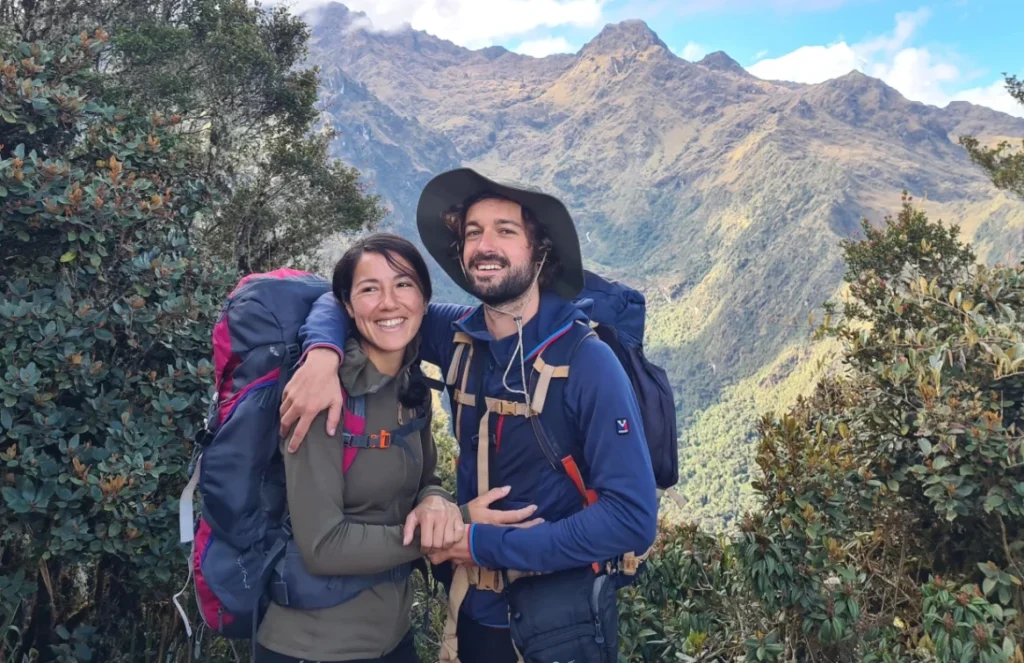
There is something about shared physical effort that creates a different kind of connection than conventional vacations do. At a beach hotel or on a city break, a couple shares pleasant and comfortable experiences. On the Inca Trail, they share something more complex: the real fatigue of the second day, the cold of the early morning before crossing Dead Woman’s Pass, the moments when one of them needs to go slower and the other adjusts their pace without anything needing to be said, and the arrival together at Inti Punku after four days of all of the above.
That kind of shared experience has a depth that comfortable trips do not produce in the same way. Not because effort is necessarily a romantic element, but because under the conditions of the Inca Trail, defenses come down, the present becomes the only thing that exists, and the person beside you is exactly who they are, without the mediation of social roles or the dynamics of urban life. Many couples who have done the Inca Trail describe those four days as one of the periods when they came to know the other person best, not because they had deep conversations, but because the way someone walks, rests, relates to the guide, and reacts to cold or fatigue says more about who they are than any conversation.
Private service for couples: the difference that changes everything
The Inca Trail can be done as a group service, sharing the guide, support team, and campsites with other travelers who do not know each other beforehand, or as a private service, with the guide and support team exclusively for the two of you. For a couple, this difference has real consequences for the kind of experience they take away from the trek.
In a group service, the pace is set by the guide according to the overall level of all participants. If one member of the group struggles on the second day, the whole group adjusts its pace. If someone wants to spend more time at an archaeological site, the group decides. The group dynamic has its own advantages, including the chance to meet other travelers and share the experience with people from different parts of the world. But that dynamic also means the couple does not control its own pace or the timing of stops at the moments that matter most.
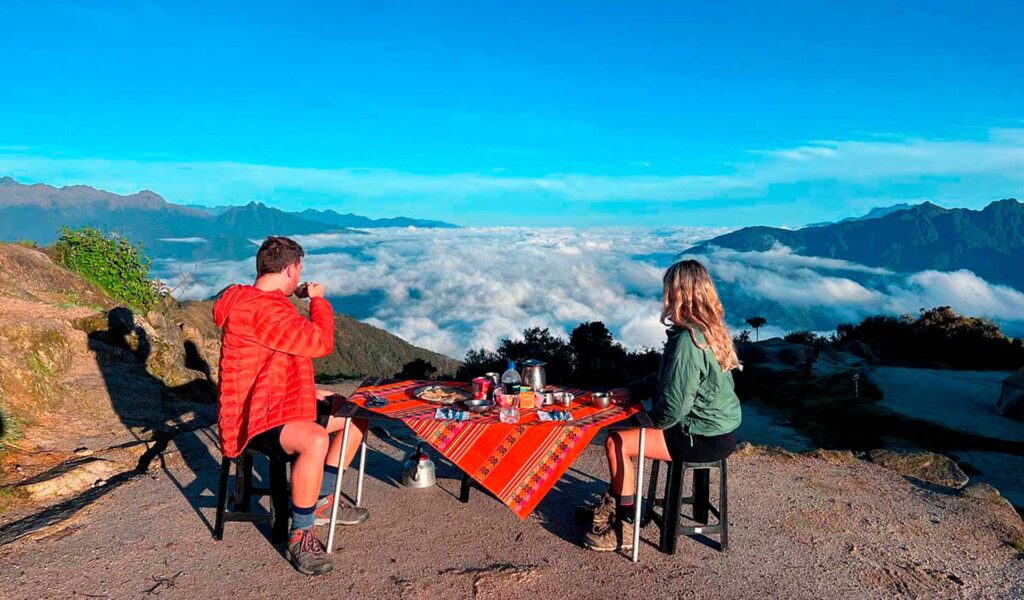
In a private service, the pace belongs to the two of you. If one of you needs to stop at the top of Warmiwañusca, also known as Dead Woman’s Pass, longer than usual, you stop. If you want to spend twenty minutes in silence in front of the water fountains of Phuyupatamarca without anyone waiting or interrupting, you do. If you prefer to have dinner alone at camp without the group conversation, the cook serves dinner exactly that way. That freedom to manage time and space on the Inca Trail is the main reason couples choose private service, and it is one of the reasons this format has become one of the most requested options for anniversary trips, honeymoons, or simply couples’ trips looking for something more than tourism.
The moments couples remember most from the Inca Trail
When couples who have done the Inca Trail are asked what they remember most intensely from the route, the answer is rarely “the first view of Machu Picchu” or “the climb to Dead Woman’s Pass.” The moments they mention most are the smallest and most unexpected ones.
The first night at the Wayllabamba campsite, when the cold is already noticeable and the two of you are inside your sleeping bags talking about the first day with the flashlights off and the silence of the mountains outside. The moment at the top of Dead Woman’s Pass when you both stop without speaking, with the glacier in the background and your bodies still recovering from the ascent. Dinner on the third day at Wiñay Wayna, with the accumulated fatigue of three days and the anticipation of the following day. And sunrise at Inti Punku, when Machu Picchu appears below and you both see it together for the first time after four days walking the same path the Incas walked five hundred years ago.
Those moments are not on any itinerary. They happen because the Inca Trail creates the conditions for them to happen, and that is something very few travel experiences can say.
What to know before doing the Inca Trail as a couple
Doing the Inca Trail as a couple also has a practical side that is worth anticipating so the experience becomes what you expect it to be and not a source of avoidable friction.
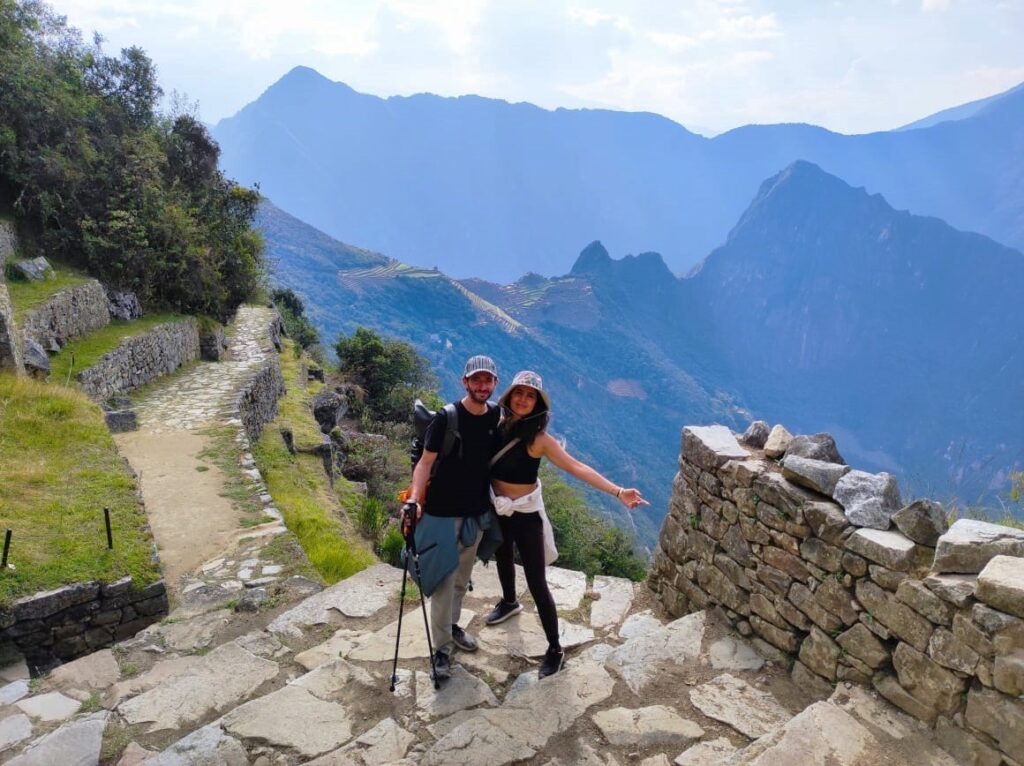
The most important thing is to be honest about differences in physical condition between the two of you. If one of you has more experience in mountain trekking or a noticeably better fitness level than the other, that difference will become visible on the second day. It is not a problem if it is approached naturally, but if it is not discussed before setting out, it can create tension on the trail when one person wants to go faster and the other needs more time. In a private service, the guide can manage that difference by adjusting the group’s pace without either of you feeling pressured. In a group service, that management is more difficult because the pace depends on the whole group.
The other conversation worth having before booking is about expectations for the type of experience. If one of you expects four romantic days with candlelit dinners and the other expects four days of intense physical adventure, both expectations are legitimate, but the Inca Trail cannot satisfy them in the same way at the same time. The route has moments of great beauty and intimacy, but it also has moments of real discomfort: the cold inside the tent, the absence of a shower, camp bathrooms, and the exhaustion of the second day are part of the experience, not avoidable circumstances. A couple that arrives with that clear enjoys it more than a couple that arrives expecting something different.
Ideas to make the Inca Trail more special as a couple
There are small logistical decisions that, when made in advance, add an extra dimension to the couples’ experience on the Inca Trail without requiring a disproportionate budget.
The first is to request a double tent with a queen bed instead of two separate sleeping bags in individual tents. Not all operators offer this, but many can arrange it with advance notice. It is one of those details that, at the Pacaymayo campsite at several degrees below freezing, has a value that needs no further explanation.
The second is to choose the dome version instead of a conventional campsite, especially at Wiñay Wayna if it is available. A transparent dome with a view of the starry sky of the high Andean mountains from a queen bed on the last night before Machu Picchu is the kind of scene that can hardly be planned in any other travel context.
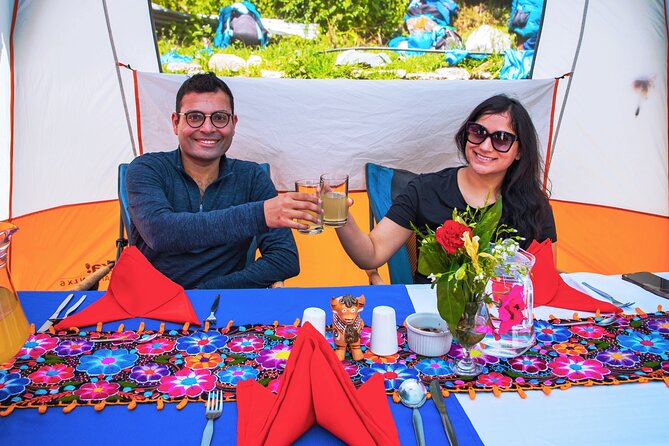
The third is to coordinate with the operator for a bottle of wine or a pisco sour at dinner in the third camp, if the service allows it. It is not something every operator offers, but higher-end operators can arrange it with advance notice. Arriving at Wiñay Wayna after the third day with a glass in hand and Machu Picchu only a few hours away on foot has a charm that no city restaurant can exactly imitate.
The Inca Trail as a honeymoon or anniversary trip
Every year, a growing number of couples choose the Inca Trail as part of their honeymoon or as an anniversary trip. It is not the most obvious option for those occasions, but for couples who share a love of adventure and active travel, it makes perfect sense: it is an experience no other destination can replicate, one that creates memories with enough depth to be remembered clearly decades later, and one that reaches one of the most extraordinary places on the planet in the most meaningful way possible.
For couples choosing the Inca Trail as a honeymoon or anniversary trip, private service is the option that makes the most sense for obvious reasons. The intimacy of having the guide and support team exclusively for two, the pace fully adapted to the couple, and the possibility of managing the special moments of the route without depending on a group’s schedule are elements that, on an occasion of this kind, justify the price difference compared to group service.
One final consideration before booking
Doing the Inca Trail as a couple will not solve problems the couple already has before leaving Cusco, but it will reveal things about both of you that everyday life does not show. The way someone handles fatigue, supports the other person during the hardest moment of the second day, reacts to the cold of the early morning, and experiences the arrival at the Sun Gate are small windows into the person beside you. In four days along the trail of the Incas, those windows open more than they do in months of shared everyday life.
That is the Inca Trail as a couple. Not exactly romantic in the conventional sense of the word, not exactly a challenge in the athletic sense, but exactly both things at once in a way that only this route, in this setting, with that person beside you, can produce.
Do you want to do the Inca Trail as a couple with private service and the special details that make those four days truly unique? At Incredible Peru Tours, we organize the couples’ route with an exclusive guide, private camp, and the additional elements that turn the trek into an experience you will both remember for years.


