
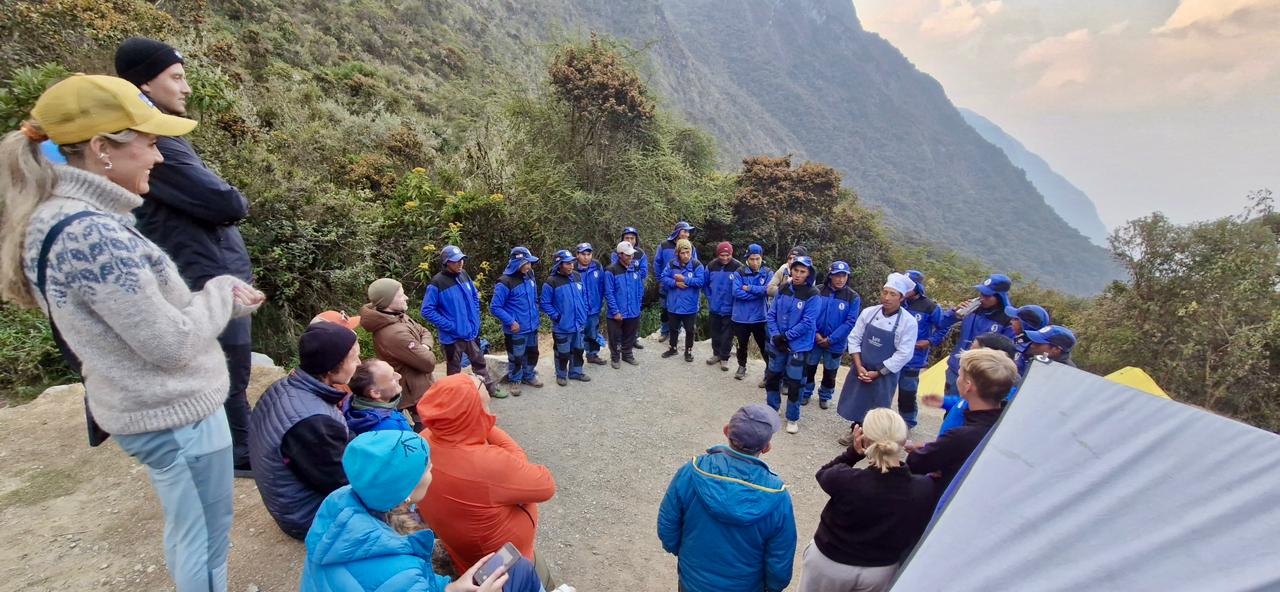
Most articles about the Inca Trail talk about what happens when everything goes well. Few talk about what happens when something goes wrong. However, every season there are participants who, for medical, physical, or personal emergency reasons, cannot complete the trek. Knowing in advance what options exist, how evacuation routes work, and what refund policy the agency applies in those cases is information you should have before stepping onto the trail, not at the moment you need it.
The most common reasons why someone leaves the Inca Trail
The most common cause of leaving the Inca Trail is severe altitude sickness. The route crosses Dead Woman’s Pass at 4,215 meters on the second day, and for those who arrive without sufficient acclimatization, that point can trigger symptoms ranging from moderate altitude sickness, manageable with rest and a slower pace, to severe altitude sickness, which requires immediate descent as the only effective solution.
The symptoms that indicate descent is necessary and not optional are: disorientation, inability to walk in a straight line, severe difficulty breathing at rest, persistent vomiting that does not stop, or loss of consciousness. In those cases, the guide has both the authority and responsibility to stop the group’s progress and initiate the evacuation protocol for the affected participant.
Other causes of leaving include musculoskeletal injuries, especially ankle or knee sprains on uneven terrain, and to a lesser extent personal or family emergencies that force a participant to return earlier than planned to Cusco or their home country.
Exit routes from the Inca Trail: what options exist
The Inca Trail is not a dead-end route. Along the trek there are access points to evacuation routes that certified guides know and that park rangers from Peru’s Ministry of Culture manage in case of emergency. However, not all points along the route have the same level of accessibility for a quick evacuation, and that is something worth understanding before you begin.
From the first campsite in Wayllabamba, at 3,000 meters, there is relatively direct access back to kilometer 82 via the same trail used on the first day. This is the simplest option logistically and the one most commonly used in cases of altitude sickness detected early in the trek.
From the Pacaymayo campsite at the end of the second day, the situation is more complex. A participant needing to leave at this point basically has two options: return along the same route toward Wayllabamba, which requires climbing Dead Woman’s Pass again and is physically unfeasible if the reason for leaving is altitude sickness; or continue forward along the trail to reach Wiñay Wayna, from where there is access to the train at Aguas Calientes station. In urgent medical cases from this point, the guide can coordinate with park rangers for rescue support, but response times in this area are significantly longer than in an urban environment.
From the Wiñay Wayna campsite on the third night, exit is more accessible. From there, it is possible to reach the Aguas Calientes train station in a relatively short time, and Ministry of Culture staff are present in the area to coordinate assistance.
The role of the guide in a situation where someone leaves
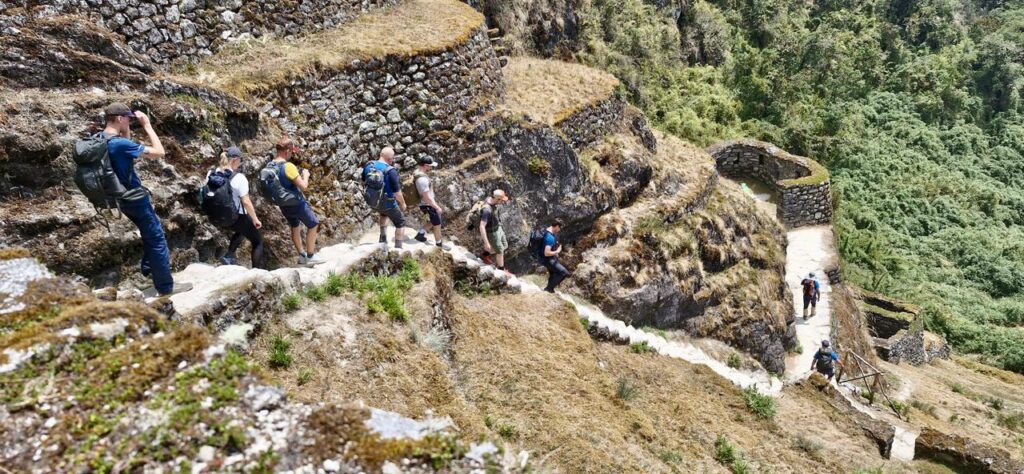
A certified Inca Trail guide is trained in mountain first aid and emergency management on the trail. Their role in a situation where someone leaves includes assessing the participant’s condition, determining whether leaving is voluntary or medically necessary, communicating the situation to the operating agency and park rangers if required, and coordinating the most appropriate exit route depending on the group’s location.
In a group with several participants where one needs to leave and the others can continue, the guide usually accompanies the participant to the first safe evacuation point and from there coordinates with the agency team for pickup. Some operators have support staff specifically for these situations. In private groups of only two people, if one leaves, the other usually decides to stop the trek as well for obvious reasons.
What happens to the permit and Machu Picchu ticket
The Inca Trail permit is personal, non-transferable, and non-refundable by Peru’s Ministry of Culture. This means that if a participant leaves the trek for any reason, the permit cost cannot be recovered. This policy is clear from the moment of booking and has no exceptions, not even in documented medical emergencies.
The Machu Picchu entrance ticket has a similar policy: tickets purchased through the official Ministry of Culture platform are non-refundable and do not allow date changes once issued. If a participant who leaves the Inca Trail still reaches Machu Picchu by another route, such as by train from Aguas Calientes, they can use the ticket on the original date and time. If they cannot arrive on that date, the ticket is lost without reimbursement.
What happens to the agency package cost
The refund policy for the package cost in case of leaving varies depending on the agency and the contract terms agreed upon at booking. There are three common scenarios in the market:
The first is no partial refund: the agency does not return any part of the package price in case of voluntary or medical withdrawal once the trek has started, because operational costs are already committed to guides, porters, food, and equipment from day one. This is the most common scenario in standard-priced packages.
The second is partial refund proportional to the days not completed, deducting fixed costs already incurred. Some higher-end operators offer this option, although the refund is usually smaller than participants expect because most operational costs are incurred during the first days of the trek.
The third is coverage through travel insurance, which is the most effective way to recover part of the cost in case of withdrawal due to documented medical reasons. Travel insurance with cancellation or trip interruption coverage that explicitly includes high-altitude trekking can reimburse the package cost, unused train tickets, and in some cases the official permit, as long as the withdrawal is justified by a medical report that the insurer can verify.
Travel insurance as the only real financial protection
This is the point most Inca Trail participants discover too late. Travel insurance with the correct coverage is the only tool that financially protects you in case of withdrawal for medical reasons. Without it, the cost of the permit, the package, and additional evacuation and return expenses to Cusco are unrecoverable.
For insurance to cover a withdrawal from the Inca Trail, it must meet three conditions. First, it must specifically include high-altitude trekking as a covered activity, as many standard travel insurance policies exclude risky physical activities or limit coverage to lower altitudes. Second, it must include trip interruption coverage, not just cancellation before departure: interruption covers costs incurred when the issue happens during the trek, not before it begins. Third, the attending doctor must issue a documented report explaining the reason for withdrawal, which is required by the insurer to process the claim.
What to do if you reach Machu Picchu by another route after leaving
Leaving the Inca Trail does not necessarily mean not reaching Machu Picchu. Those who leave in the early days and arrive by train to Aguas Calientes can take the bus to the archaeological site on the date of their ticket if their physical condition allows it. Visiting the site does not require completing the trek: the entrance ticket is valid regardless of how you arrive at Aguas Calientes.
Some participants who leave the Inca Trail due to altitude sickness at the second campsite rest for one or two days in Cusco or Aguas Calientes and then visit Machu Picchu in the conventional way. The experience is not what they originally planned, but the archaeological site is the same. And in some cases, the perspective gained from having tried and needing to turn back creates a different way of seeing the citadel when they finally arrive.
How to minimize the probability of having to leave
The most effective way to manage the risk of leaving is not knowing what to do when it happens, but reducing the likelihood of it happening in the first place. The two factors that most determine that risk are prior acclimatization and honesty about physical condition before booking.
Spending at least two full nights in Cusco before starting the trek, with moderate activities and proper hydration, significantly reduces the risk of severe altitude sickness on the second day. Choosing an agency with certified guides who recognize early symptoms and know when to intervene reduces the risk of a manageable situation becoming an emergency. And purchasing travel insurance with the correct coverage before leaving home is the only measure that provides financial protection if, despite everything, the trek cannot be completed.
Do you have questions about how to manage the risk of leaving before booking the Inca Trail or want information about our package cancellation policies? At Incredible Peru Tours, we clearly explain refund policies and available options in case of interruption before confirming any booking.


