
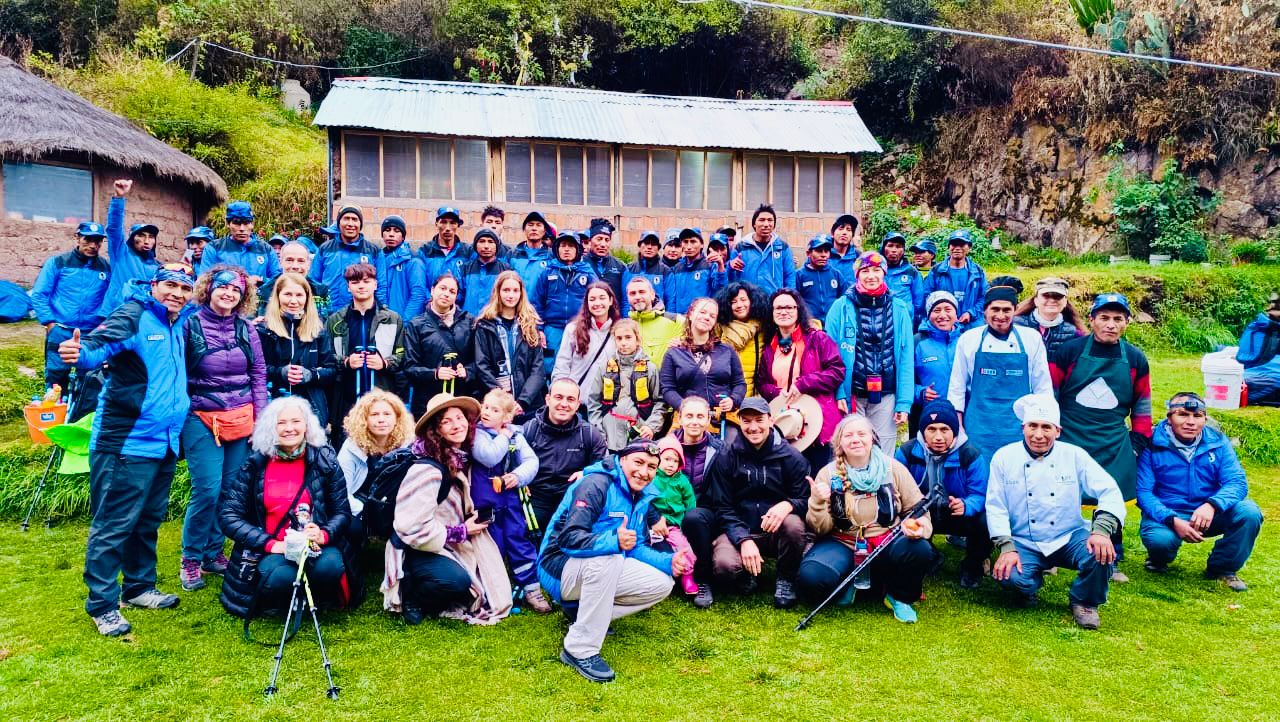
This question comes up more and more often before booking the Inca Trail: does it make sense to pay for an additional porter to carry your daypack during the four days of the route? The answer is not the same for everyone, and giving it in a generic way without considering the profile of the person asking leads to a useless recommendation. This guide answers it with specific criteria for each real situation.
What load the porter team included in the package carries
The standard Inca Trail package includes a team of porters whose role is to transport the group’s collective equipment: the tents, sleeping pads, the agency’s sleeping bag, the portable kitchen, the food, and the utensils. That collective weight, which can easily exceed 15 or 20 kilograms per porter, is what travels with the support team while the group walks with their personal daypacks.
The daypack, which each participant carries during the hiking hours, is an individual responsibility. It contains water, warm clothing, sunscreen, a first-aid kit, camera, snacks, documents, and a headlamp. Well organized, that backpack should not exceed 6 or 8 kilograms. When it does, the difference is noticeable on the second day with an intensity that many participants do not anticipate from Cusco.
What exactly an extra porter for your daypack does
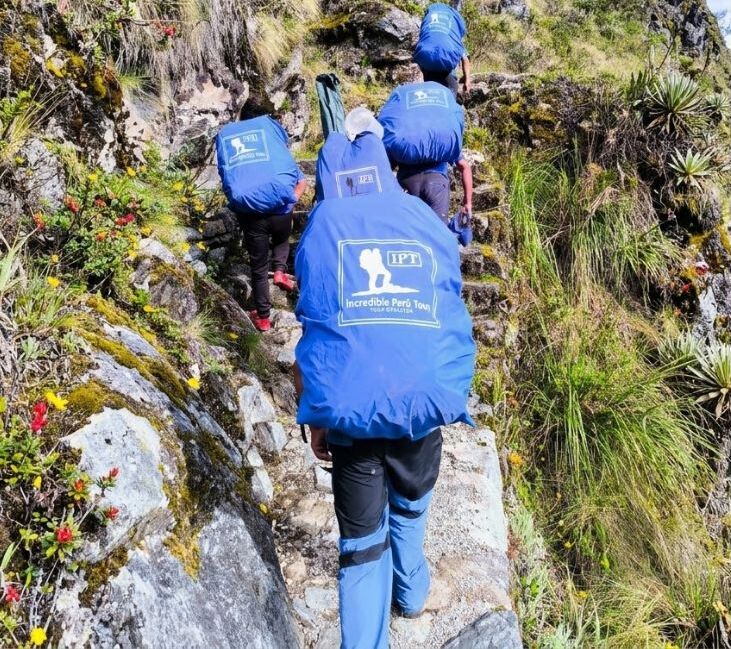
An additional porter for your personal backpack is someone whose specific role during the four days of the Inca Trail is to carry that backpack while the participant walks only with what they need immediately: a bottle of water, a rain jacket, and documents in a pocket. The porter moves with the group or slightly ahead and hands over the backpack at the rest stops where something from its contents is needed.
The difference that this reduction in load produces on the second day of the Inca Trail, with the ascent to Warmiwañusca at 4,215 meters and the subsequent descent toward Pacaymayo, is noticeable in terms of available energy, recovery speed between sections, and accumulated joint stress in the knees and ankles over several hours of uneven terrain.
Who this service truly makes sense for
There are specific profiles for whom hiring an extra porter on the Inca Trail produces a direct and measurable benefit in the experience of the route.
People with previous knee or ankle injuries. Those who wear a knee brace or orthosis during the route are already managing a known joint vulnerability. The weight of the daypack, even when it is within the recommended range, still creates load on that joint with every downhill step. Reducing that weight to zero can be the difference between completing the third day and having to interrupt it because of accumulated pain from the second day.
People over 60 years old. Not because they cannot do the trek, but because muscular recovery capacity between days decreases with age in a way that previous training does not fully compensate for. Arriving at the Wiñay Wayna campsite on the third night with more energy available to enjoy the archaeological site and face the fourth day in better overall condition justifies the additional cost for many people in this age range.
Groups with mixed physical condition. In couples or groups where one participant has noticeably lower physical endurance than the rest, the extra porter for that participant allows the group to maintain a compatible pace without anyone having to push too hard or slow down excessively. That dynamic improves the collective experience of the route.
Participants with bulky photography or filming equipment. Anyone carrying a daypack that exceeds the recommended range because of professional equipment has two options: leave equipment in Cusco or hire the extra porter. For certain trips with a photographic purpose, the second option is what makes the work possible without compromising the route.
Who probably will not notice much difference
For someone with good physical condition, no previous injuries, experience in mountain trekking, and a daypack within the properly organized 6 to 8 kilogram range, the extra porter probably does not produce a significant difference in the experience of the route. The effort of the second day of the Inca Trail remains the same with or without that backpack if the weight is already correct from the start, and the pleasure of arriving at Machu Picchu is not multiplied by having walked without weight.
For that profile, the money for the extra porter probably has a better return in the price of the package itself, travel insurance, or the tip for the support team at the end of the route.
How much it costs to hire an extra porter on the Inca Trail
The cost of an additional porter for the daypack on the Classic four-day Inca Trail usually ranges between 80 and 150 additional dollars on top of the package price, depending on the operator and whether or not the price includes tips for that porter at the end of the route. In high season, availability may be limited if it is not requested at the time of booking, because the number of Inca Trail porters has the same limits as the rest of the service.
Put into perspective: if the full Inca Trail package costs between 700 and 900 dollars, the extra porter represents between 10 and 20 percent of that total. For those who need it for specific physical reasons, that proportion is reasonable. For those who do not need it, it is money that produces only a marginal benefit.
The impact on the porter: a detail that changes the perspective
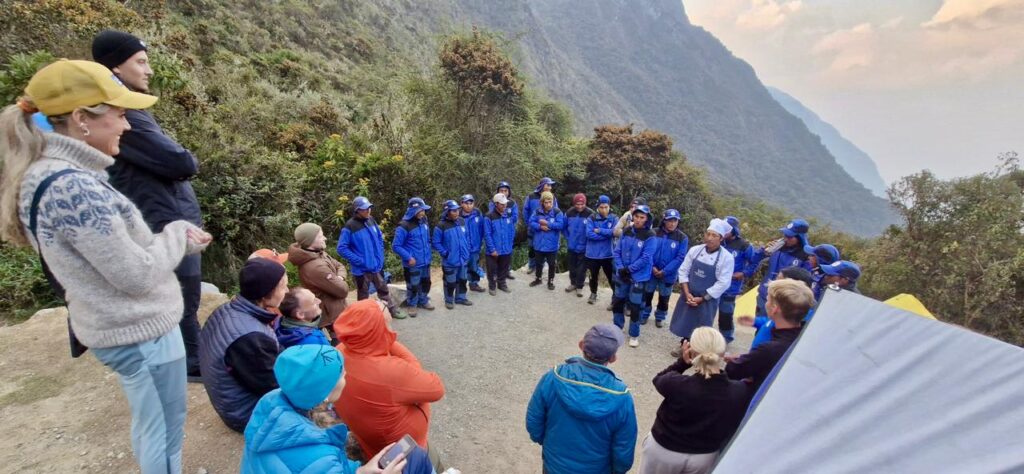
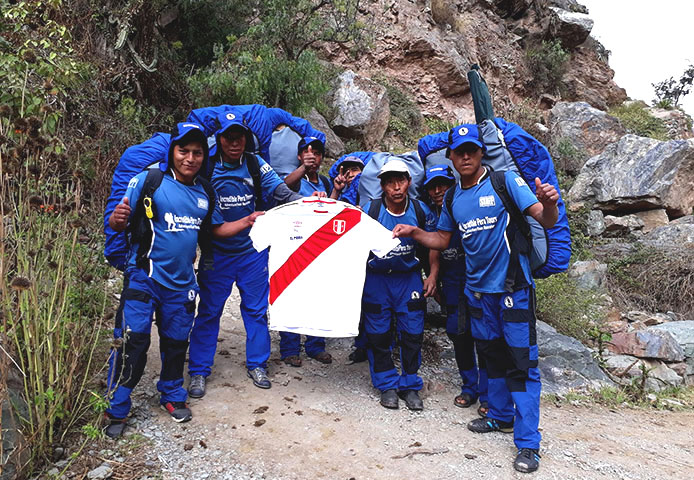
There is a dimension to this decision that goes beyond the participant’s personal comfort. Inca Trail porters are mostly men from Quechua-speaking communities in the Sacred Valley whose main income during trekking season comes from field work. An additional porter service for the daypack represents a day of work with its corresponding salary, which in family economies with limited income has a concrete and direct impact.
That does not turn the extra porter into a moral obligation for every Inca Trail participant. It means that when the decision is balanced between yes and no, that argument has its own weight and can legitimately tip the scale.
How to request it and what to ask the operator
The right time to request the extra porter is when confirming the Inca Trail reservation, not the day before departure. The request is direct: additional porter for the daypack during the four days of the route, with the name of the participant it will be assigned to if the group has different physical profiles among its members.
When confirming the service, it is worth asking three specific things. First: what daily wage that porter receives for the additional service. Second: whether they have active accident insurance during the four days of the trek. Third: whether the price of the service includes the porter’s return transportation from Aguas Calientes to their community at the end of the route. An operator that works within the legal framework of the Porter Law answers those three questions with specific data. One that avoids them or answers vaguely is communicating something relevant about its practices.
The no cost alternative: reduce the weight of your backpack
If the budget does not allow for the additional cost of an extra porter, or if one is not available for the dates of the route, the most effective alternative is to honestly review the contents of the daypack and remove everything that does not have a specific function on that particular day of the route.
The items that most often cause a daypack to exceed the recommended range on the Inca Trail are excess spare clothing that could go with the porter team, larger-format photography equipment when a phone could serve the purpose, physical books or entertainment tablets, and personal hygiene items that are not needed during the hours of hiking. An honest review the night before each day can reduce the weight by one to three kilograms at no additional cost.
That reduction, combined with the use of trekking poles on the downhill sections of the second and third days, produces a joint relief that in practical terms comes close to that of the extra porter, especially for participants without previous injuries who simply want to better manage the accumulated effort of the route.
Do you have questions about whether the extra porter makes sense for your profile or how to organize it within the Inca Trail package? At Incredible Peru Tours, we evaluate each situation before recommending the additional service and coordinate it with certified, well-paid porters.


