
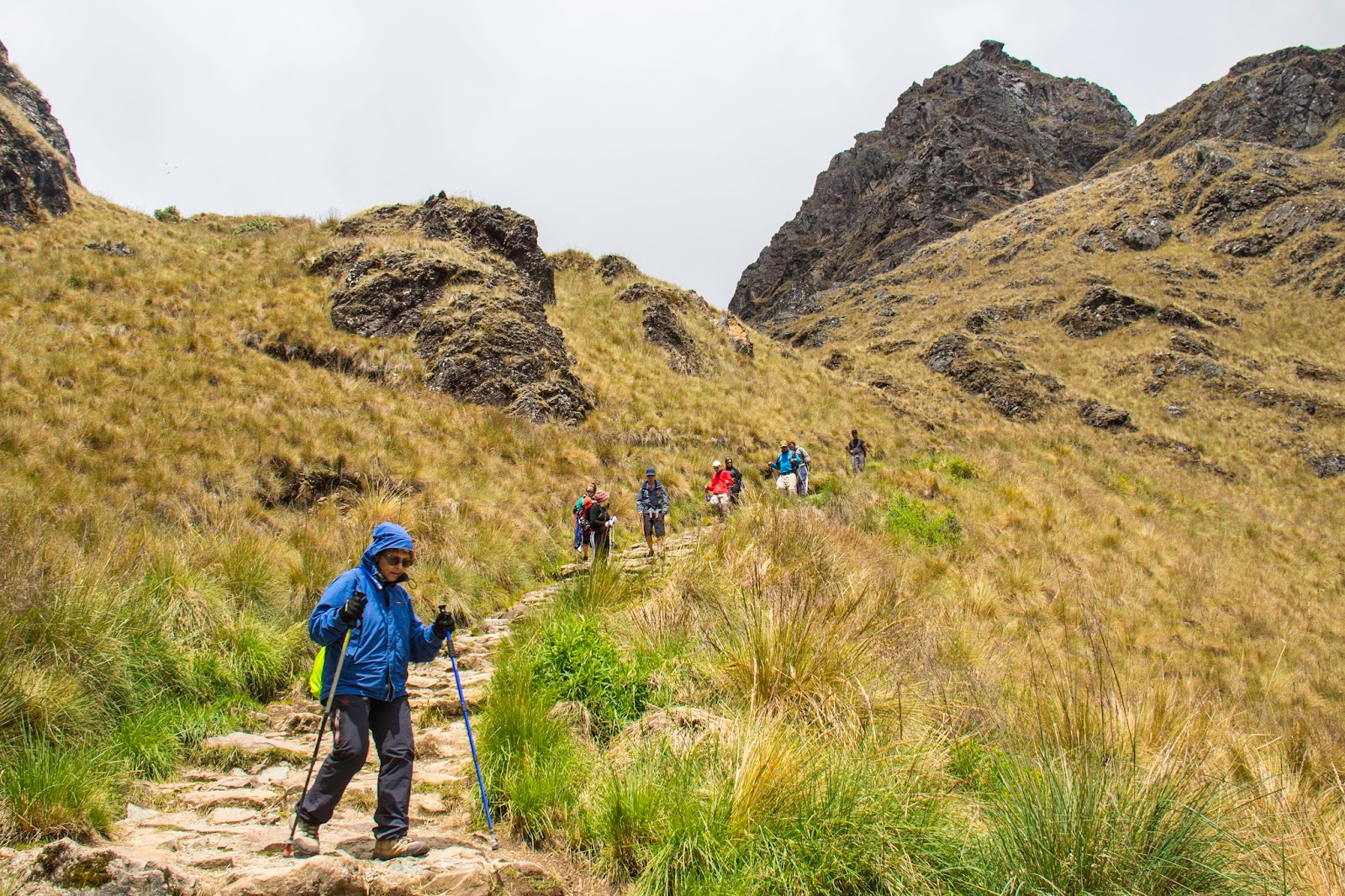
Travel insurance is one of those things most trekkers buy without reading, or simply do not buy at all assuming they will not need it. In urban or beach destinations, that gamble may work out fine. On the Inca Trail, with campsites above 3,500 meters of altitude, uneven terrain, below-freezing nighttime temperatures, and the real possibility of altitude sickness, setting out without the right coverage is a financial and medical risk that no last-minute savings justify.
What makes the situation more complicated is that not all travel insurance policies cover the same things. Many standard policies that work perfectly well for a conventional sightseeing trip have specific exclusions for high-altitude trekking activities, evacuations in remote areas, or medical assistance above certain elevations. Buying the wrong policy is almost the same as buying none at all.
This guide explains exactly what coverage you need to do the Inca Trail with proper protection, which clauses to review before signing, and which specific scenarios can leave you uncovered at the exact moment you need protection most if your policy is inadequate.
Why the Inca Trail requires specific insurance for high-altitude trekking
Most conventional travel insurance policies are designed to cover standard travel mishaps: flight cancellations, lost luggage, basic medical care for illness or accident in accessible tourist destinations. The Inca Trail falls outside that framework in several critical ways.
The first is altitude. Many policies include a clause excluding medical or evacuation coverage above a certain elevation, usually somewhere between 3,000 and 4,000 meters. The Classic Inca Trail exceeds 4,200 meters at its highest point. If your insurance excludes incidents above that elevation and you suffer severe altitude sickness at Dead Woman’s Pass, evacuation and medical care may be completely outside your coverage.
The second is the nature of the activity. Some insurers classify mountain trekking as a high-risk activity and exclude it from basic coverage, offering it only as an additional paid add-on. Others include it up to a certain level of difficulty or altitude but exclude the use of porters or guides, which makes no sense in the context of the Inca Trail where both are mandatory. Reviewing how your insurer classifies high-altitude trekking before purchasing is essential.
The third is evacuation from a remote area. If someone needs to be evacuated from the trail due to a medical emergency, the process is not simply calling an ambulance. On the Inca Trail, depending on where along the route the incident occurs, it may involve transport on foot to the nearest access point, coordination with the local health system in Aguas Calientes or Cusco, and in the most serious cases, helicopter evacuation. That last scenario can cost several thousand dollars without insurance, and many standard policies do not even contemplate it.
Coverage your policy cannot be without
Medical assistance with no altitude limit. Verify that the policy does not have an altitude exclusion clause, or that the stated limit is above 4,500 meters. If the document does not specify this, ask the insurer directly in writing before purchasing. An ambiguous answer is the same as an exclusion.
Emergency evacuation from remote areas. This coverage should explicitly include transportation from places without road access, which in insurance language is often described as “evacuation from a hard-to-reach area” or “mountain rescue.” It should cover both transport by mule or on foot to the first vehicle-accessible point and onward transport to the most appropriate medical center, including helicopter transport if the medical situation requires it.
Medical repatriation. If the situation requires transfer to a higher-level hospital in another Peruvian city or even return to your home country for medical reasons, this coverage ensures that transfer does not come out of your own pocket. It is one of the most expensive things when it happens and one of the most underrated coverages when the policy is purchased.
Cancellation due to illness or altitude sickness. If you must abandon the trek before completing it for certified medical reasons, this coverage may compensate part of the cost of the unused portion of the package. Not all insurers include altitude sickness as a valid reason for cancellation: this is a point you need to verify explicitly before signing.
High-altitude trekking as a covered activity. It must be explicitly stated in the policy that mountain trekking above 4,000 meters is included in the base coverage or in the adventure activity add-on you purchased. Without that express mention, the insurer may reject any claim by arguing that the activity was not contemplated in the policy.
Loss or cancellation of the Inca Trail permit. Some insurance policies specialized in adventure travel include specific coverage for the loss of the Inca Trail access permit for reasons beyond the traveler’s control, such as route closure due to a weather emergency or natural disaster. This coverage is less common than the ones above, but it does exist in some premium policies and may be very relevant if the permit has already been paid for in advance.
Additional coverage worth considering
Beyond essential coverage, there are a number of additional protections that make specific sense in the context of the Inca Trail and that some insurers offer as supplements to the base policy.
Trekking equipment coverage protects your personal gear boots, technical clothing, trekking poles, camera in case of theft, loss, or damage during the trip. The trail itself is not a particularly high-risk environment for gear, but the bus and train transfers to and from kilometer 82 or Aguas Calientes are. A backpack with quality equipment can represent several hundred euros or dollars, and losing it without coverage at the beginning of the trek is a bigger problem than it may seem.
Trip interruption coverage compensates for additional lodging, transportation, or flight change costs that may arise if an unexpected event forces you to abruptly alter your itinerary. In Cusco or Aguas Calientes, where flight options are limited and last-minute prices can be very high, this coverage has real value.
Legal assistance at destination is a minor but useful coverage in case of unexpected situations involving local authorities, loss of documents, or issues that require administrative handling in a country with a legal system different from your own.
How to read an insurance policy before buying: what you should look for
Reading the general terms of an insurance policy is not the most entertaining part of planning a trip, but in this context it is time well spent. There are three sections that contain most of the relevant exclusions and deserve specific attention.
The first is the glossary of definitions. Terms such as “accident,” “illness,” “medical emergency,” and “remote area” have specific definitions within each policy that do not always match their intuitive meaning. Altitude sickness, for example, is not always classified as an illness for insurance purposes by every insurer. Verifying how the policy defines each relevant concept helps avoid surprises when it is time to file a claim.
The second is the general exclusions and activity exclusions section. This is where you find the maximum altitude clauses, excluded risk activities, and pre-existing conditions that invalidate coverage. Reading this section carefully, with specific attention to the terms “trekking,” “mountaineering,” “adventure activities,” and “altitude,” is the most important step in the entire review process.
The third is the emergency assistance procedure. Every insurer has an emergency phone number and a specific protocol you must follow to activate coverage. In some cases, if the insurer is not notified before receiving medical care, the coverage does not apply even if the situation was objectively covered by the policy. Knowing that procedure before going out on the trail and saving it on your phone and on paper is just as important as having purchased the policy itself.
How much proper insurance for the Inca Trail costs
The price range of a policy with the coverage needed for the Inca Trail varies considerably depending on the insurer, the traveler’s country of residence, the total length of the trip, and the level of medical and evacuation coverage purchased. As a general reference, a policy with high-altitude trekking coverage, evacuation from remote areas, and medical assistance with no altitude limit for a two- to three-week trip in Peru usually costs between $80 and $200 per person.
That figure may seem high compared with standard travel insurance for conventional tourism destinations. But when placed in perspective against the real cost of a helicopter evacuation from the Inca Trail which can exceed $5,000 or a hospitalization in Cusco followed by medical repatriation, which can reach several tens of thousands of dollars depending on the traveler’s country of origin, the price of the policy is one of the best cost-to-protection ratios in the entire trip budget.
Common mistakes when buying insurance for the Inca Trail
Buying the insurance offered by your credit card without verifying its coverage. Many credit cards include basic travel insurance as a benefit. That insurance usually covers flight cancellations and lost luggage, but it rarely includes high-altitude trekking, evacuation from remote areas, or medical assistance with no altitude limit. Using it as your only coverage for the Inca Trail is a real risk.
Buying insurance at the last minute before departure. Some coverage, especially trip cancellation, only applies if the insurance was purchased within a certain period after making the first payment for the trip. Buying the policy the day before leaving may leave that coverage ineffective. The safest option is to buy the insurance at the same time you confirm the trek reservation.
Not declaring pre-existing health conditions. If you have a pre-existing medical condition high blood pressure, asthma, heart problems, diabetes and do not declare it when buying the insurance, any claim related to that condition may be rejected even if the incident occurs in a context that appears unrelated. The health declaration is a step that should not be skipped out of haste or fear that the policy price will go up.
Assuming the agency’s insurance covers the trekker. Inca Trail tour operators are required by law to carry accident insurance for their staff guides and porters but that insurance covers the worker, not the client. The traveler needs their own individual insurance purchased independently before leaving their home country.
Do you have questions about what kind of insurance you need for the Inca Trail based on your profile and country of origin? At Incredible Peru Tours, we guide our clients on coverage requirements before confirming each booking. Write to us and we will tell you what to ask your insurer to make sure the policy you have in mind truly covers what you need on the trail.


