
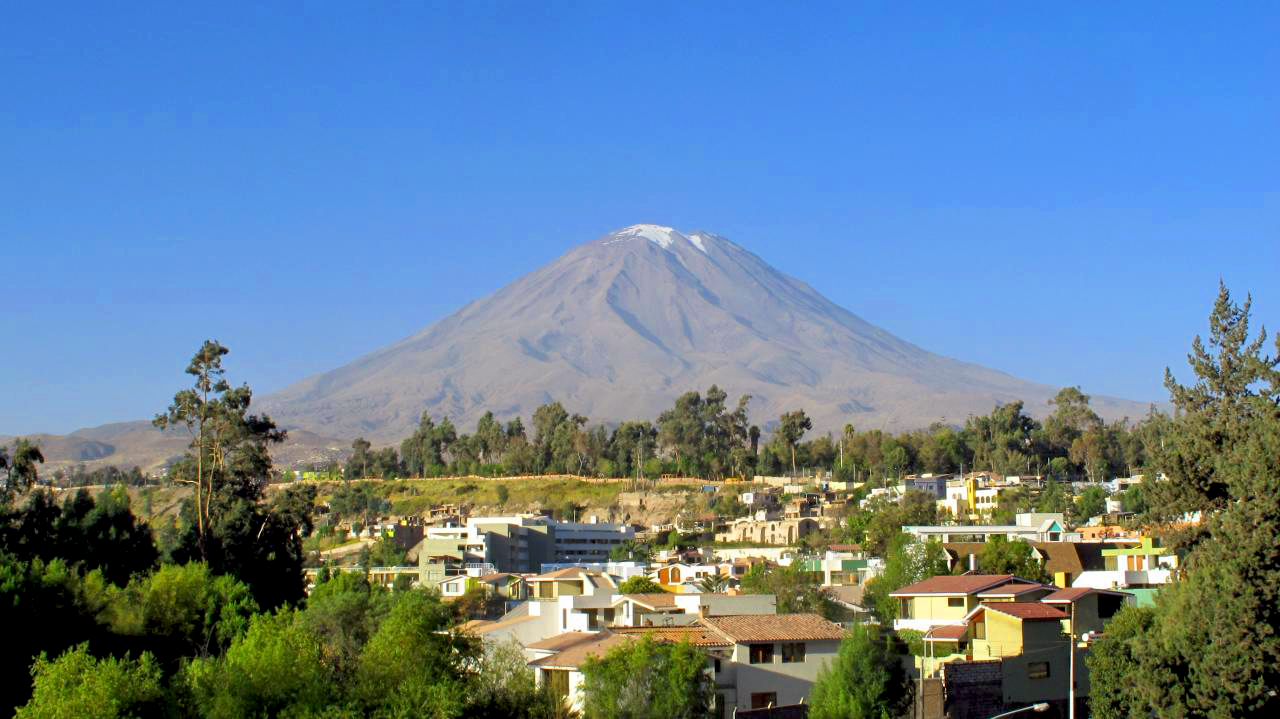
From almost any street in Arequipa, you can see Misti, with its perfect cone dominating the horizon. It is only natural that, after a couple of days looking at it, you may want to climb it. The good news is that you do not need climbing experience. The bad news is that it is not just another hike either: the altitude and terrain make it a serious challenge. Here we explain what to expect, which route to choose, and when it really makes sense to attempt it in a single day.
Misti in numbers before you decide
The summit of Misti stands at 5,822 m.a.s.l., although some sources place it at 5,825 meters. Arequipa is located at 2,335 m.a.s.l., so there is a difference of almost 3,500 meters between the city and the summit. It is an active volcano under permanent monitoring; fumaroles can still be seen inside the crater, and the smell of sulfur is noticeable.
The ascent does not require ropes, an ice axe, or technical climbing skills. What it does require is good physical condition, tolerance to altitude, and the discipline to walk slowly for many hours.
How difficult is it to climb Misti?
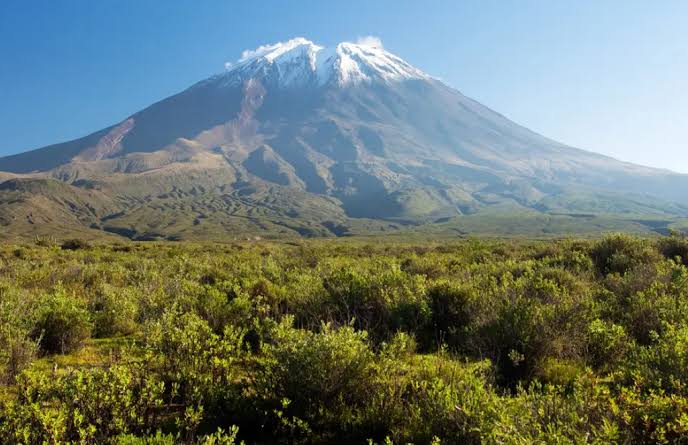
If you had to sum it up, it is a long and steep high-altitude hike. Three things make it difficult.
The altitude. Above 5,000 meters, the air contains much less oxygen. Every step requires more effort, your pace slows down, and fatigue sets in sooner than you might expect.
The terrain. Much of the trail consists of loose volcanic sand and scree. On the way up, your feet sink and slide backward slightly, which means you make less progress than your effort suggests. On the descent, the opposite happens: you can go down quickly by “skiing” over the sand, but it can be hard on your knees.
The cold and schedule. The final section begins in the early hours of the morning, with below-freezing temperatures and wind at higher elevations.
If you have done multi-day hikes such as the Inca Trail or Salkantay and felt comfortable at the high mountain passes, you already have a good base. If you have never been above 4,500 meters, Misti will be demanding for you.
The two routes to climb Misti
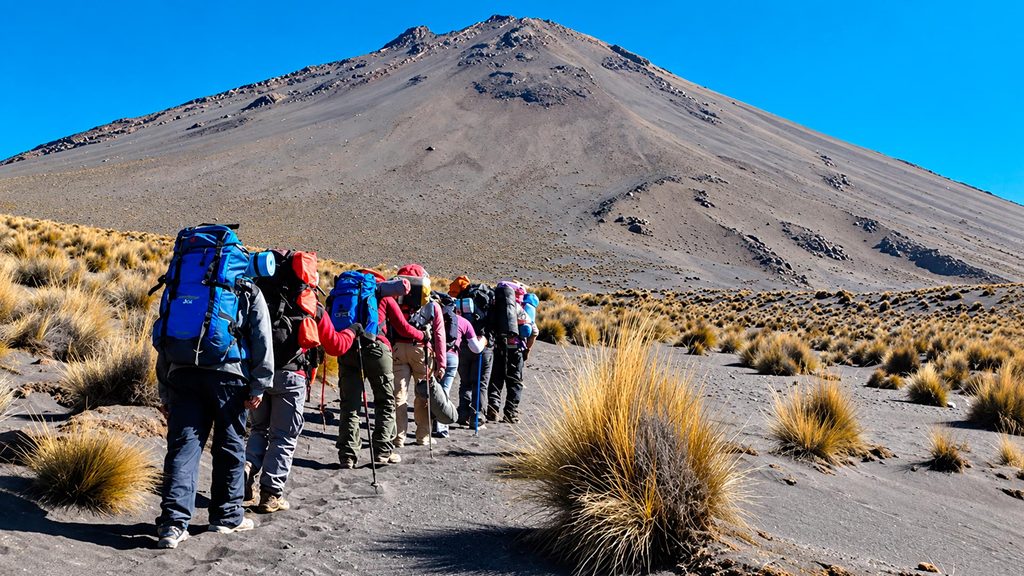
Pastores Route, from the south. This is the classic route. A 4×4 vehicle takes you to around 3,300 or 3,400 m.a.s.l., and from there you hike to the campsite, located at approximately 4,500 to 4,600 m.a.s.l. It starts lower down, so the first day is longer, but the ascent is more gradual and helps with acclimatization.
Aguada Blanca Route, from the north. This route crosses the Salinas y Aguada Blanca National Reserve, and the vehicle drops you off higher up, at around 4,100 m.a.s.l. Camp is set up at approximately 4,800 m.a.s.l., closer to the summit. It requires a prior permit arranged by the tour operator and has the advantage of offering views over the reservoir and the high Andean plateau.
There are no water sources on the volcano along either route, so all the water you need for drinking and cooking must be carried up from below.
What the two-day ascent is like
Day one. You leave Arequipa in the morning by 4×4. Once you reach the starting point, you begin hiking slowly toward the campsite, which takes between four and six hours depending on the route. When you arrive, you set up your tent, have an early dinner, and try to sleep, although it is normal to get little rest at that altitude.
Day two. You wake up between 1:00 and 3:00 a.m., have something warm, and begin the final section with a headlamp. The goal is to reach the summit in the morning, when weather conditions are usually more stable. At the top, you will find the iron cross, views of the crater, and, on a clear day, Chachani, Pichu Pichu, and the entire city below you. The descent back to the vehicle takes around three to four hours, and by the afternoon you are back in Arequipa.
Can you climb Misti in one day?
Yes, it is possible, but it is not suitable for most people. A one-day ascent means leaving Arequipa in the early hours of the morning, starting the hike from the highest possible point, and completing between 10 and 12 hours of continuous effort between the ascent and descent.
It only makes sense if you meet these conditions:
- You have already spent several weeks at high altitude, for example after traveling through Cusco, Puno, or the Colca region.
- You have previously climbed above 5,000 meters without problems.
- You have a strong and steady hiking pace on steep terrain.
If this does not describe you, the two-day format is much safer. Spending the night at camp is not wasted time: it gives your body a few extra hours to adapt before the final section, and that is often what separates those who reach the summit from those who have to turn back.
How long should you acclimatize before the ascent?
At a minimum, spend two or three days in Arequipa before attempting the climb. Better yet, organize your trip so that Misti comes after you have already spent time at higher elevations. A two-day trip through the Colca Canyon, which passes through areas above 4,800 m.a.s.l., is excellent preparation. If you are coming from Cusco, you will already have a clear advantage.
During those days, drink plenty of water, avoid alcohol, and eat light meals.
Best time to climb Misti
The dry season, from April to November, is the most recommended time: skies are clearer and there is less risk of storms. Between December and March, rainfall in Arequipa can turn into snow on the upper slopes of the volcano, visibility decreases, and some operators suspend departures. Keep in mind that during the winter months, from June to August, nights at the campsite are especially cold.
What to bring for climbing Misti
- A sleeping bag suitable for below-freezing temperatures.
- Layered clothing: thermal base layer, fleece, and a windproof jacket.
- Gloves, a warm hat, and a buff.
- Trekking boots with good ankle support and gaiters to keep sand out.
- Trekking poles, which are very useful on loose volcanic sand.
- A headlamp with spare batteries.
- At least three or four liters of water per person for the entire ascent, unless this is provided by your tour operator.
- Sunglasses and high-SPF sunscreen.
- Energy snacks that are easy to eat in cold conditions.
When to turn back
Reaching the summit is the goal, but getting back safely is what matters most. A mild headache and fatigue can be common. However, if you experience a severe headache that does not improve, dizziness, vomiting, confusion, or shortness of breath even while resting, the only solution is to descend. An experienced guide will know how to recognize these warning signs; follow their advice even if you are close to the summit.
Frequently asked questions about climbing Misti
Do I need mountaineering experience to climb Misti?
You do not need technical climbing experience, but it is important to have completed long hikes at high altitude before.
Is it mandatory to go with a guide?
It is highly recommended. A guide knows the route, manages the permits, and knows when it is time to turn back.
Which route is better for beginners?
The Pastores Route, because the ascent is more gradual and gives you more time to adapt to the altitude.
Is it dangerous because Misti is an active volcano?
Misti is permanently monitored, and departures are suspended if any alerts are issued.
Can you combine Misti with Chachani?
Yes. Many mountaineers climb Misti first and then Chachani, which stands at 6,075 m.a.s.l., taking advantage of the acclimatization gained from the first ascent.


