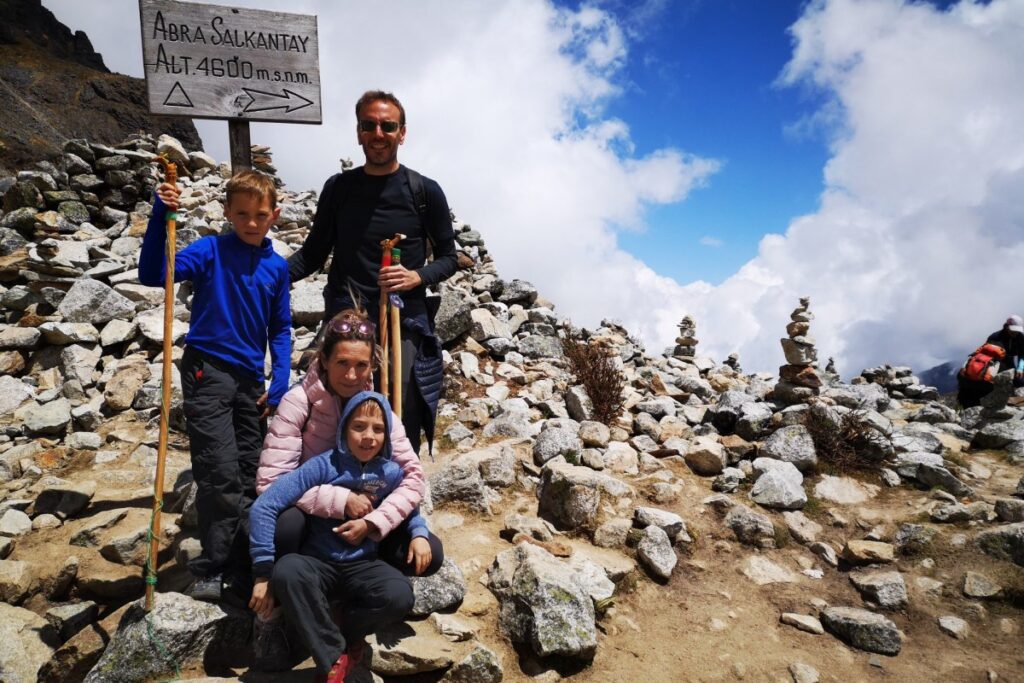
2026 Book your spot for the Inca Trail 2026!

Inicio » salkantay » Page 5

Choosing accommodation on the Salkantay Trek is not a minor detail. It largely determines sleep quality at each stage, the level of recovery available for the next day, and the type of nighttime experience you take away from the journey. Arriving at the Soraypampa camp after the first day knowing there is a real bed waiting is not the same as knowing there is a sleeping pad in a tent with sub-zero temperatures. Both options are valid for different traveler profiles, but choosing without information means risking a surprise that, on the second day of the Salkantay, has real physical consequences.

This guide describes the accommodation options available at each overnight stop along the route, night by night, with the specific features of each option and which type of traveler they best suit.

Night 1: Soraypampa (3,900 meters)

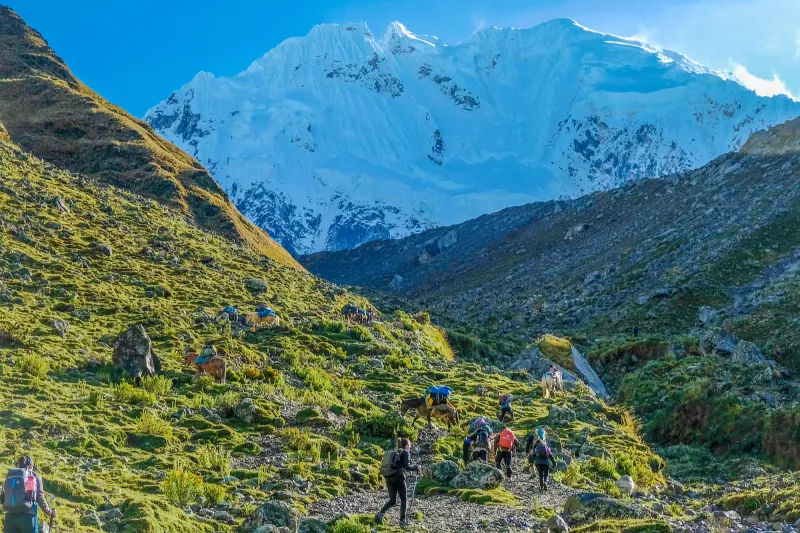
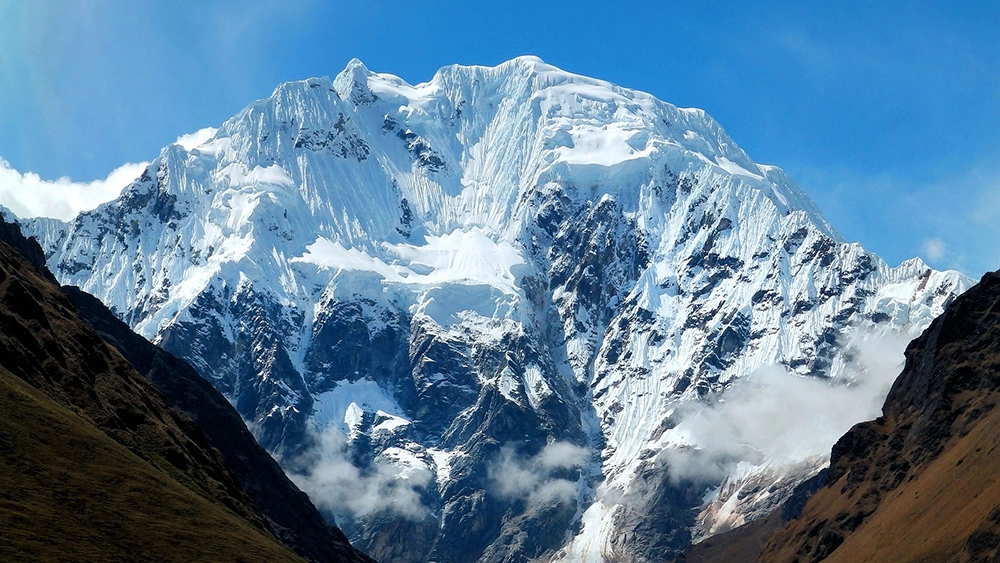
The first overnight point of the Salkantay Trek is the Soraypampa base camp, at 3,900 meters above sea level, with the Salkantay snow-capped peak visible in the background on clear days and Humantay Lake less than an hour’s hike away. It is the coldest night of the trek and the one that depends most on the quality of the accommodation to ensure proper rest for the demanding second day.

Tent camping: The most common option in standard-priced packages. Two- to three-person tents are set up in the designated base camp area, with an insulating sleeping pad and sleeping bag. Responsible agencies provide sleeping bags rated for sub-zero temperatures, which are typical in Soraypampa year-round. The quality of the tent and sleeping bag varies by operator and is one of the key aspects to verify before booking. Sanitary facilities are basic: campsite latrines or portable toilets depending on the operator.

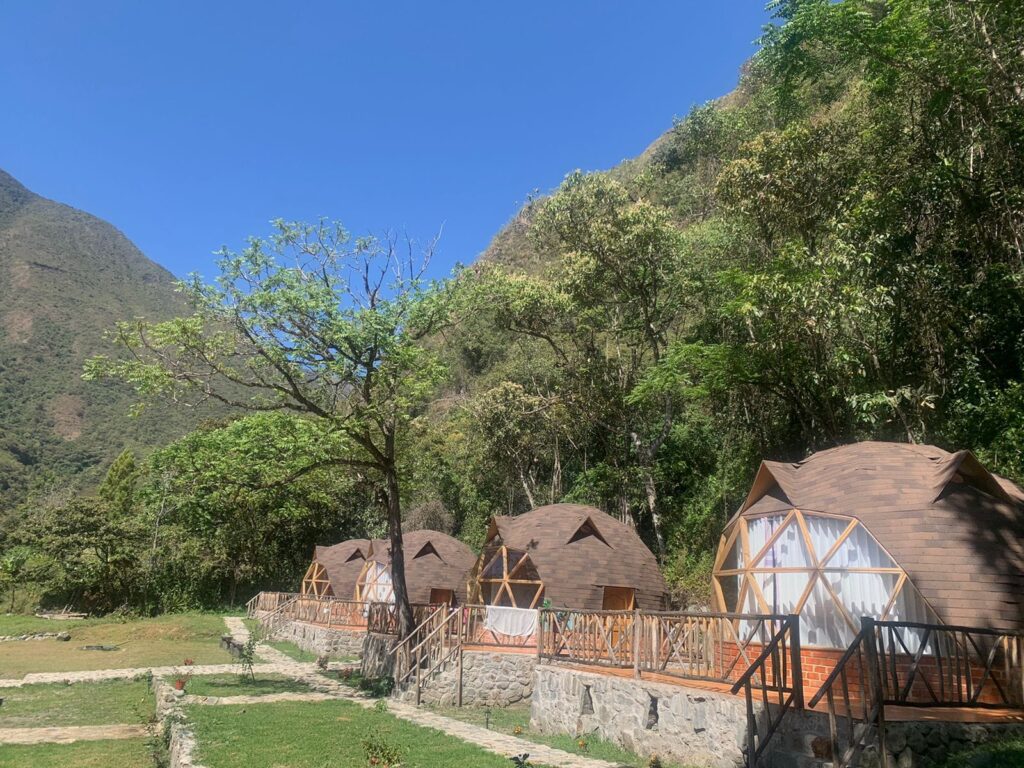
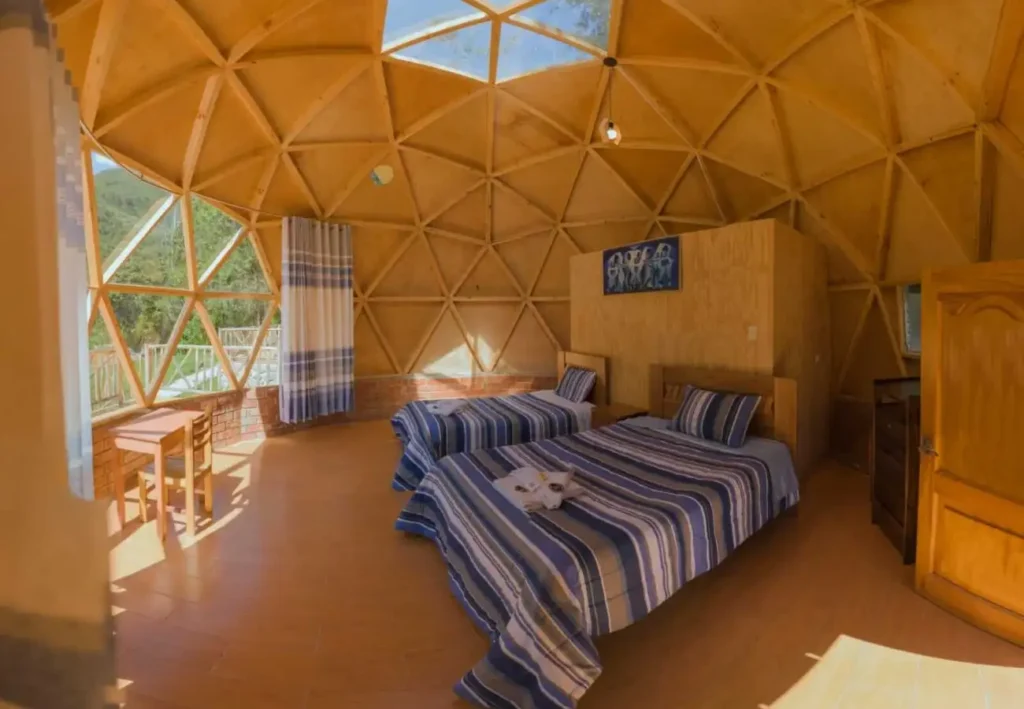
Domes with transparent panels: Glamping complexes in the Soraypampa area offer real beds with quality bedding, dome structures with transparent panels to view the sky and the mountain from inside, shared or private bathrooms with hot showers, and covered dining areas. The greenhouse effect of the structure keeps the interior several degrees warmer than a conventional tent, noticeably improving sleep quality. In higher-end domes, built-in heating or a fireplace virtually eliminates the nighttime cold issue.

Who each option is for: Tents are suitable for travelers with experience in high-altitude camping, good tolerance to nighttime cold, and an appropriate sleeping bag. Domes are the better option for couples, for people more sensitive to cold or with less camping experience, and for those who want waking up to sunrise over the mountain from a bed to be part of their travel memory.
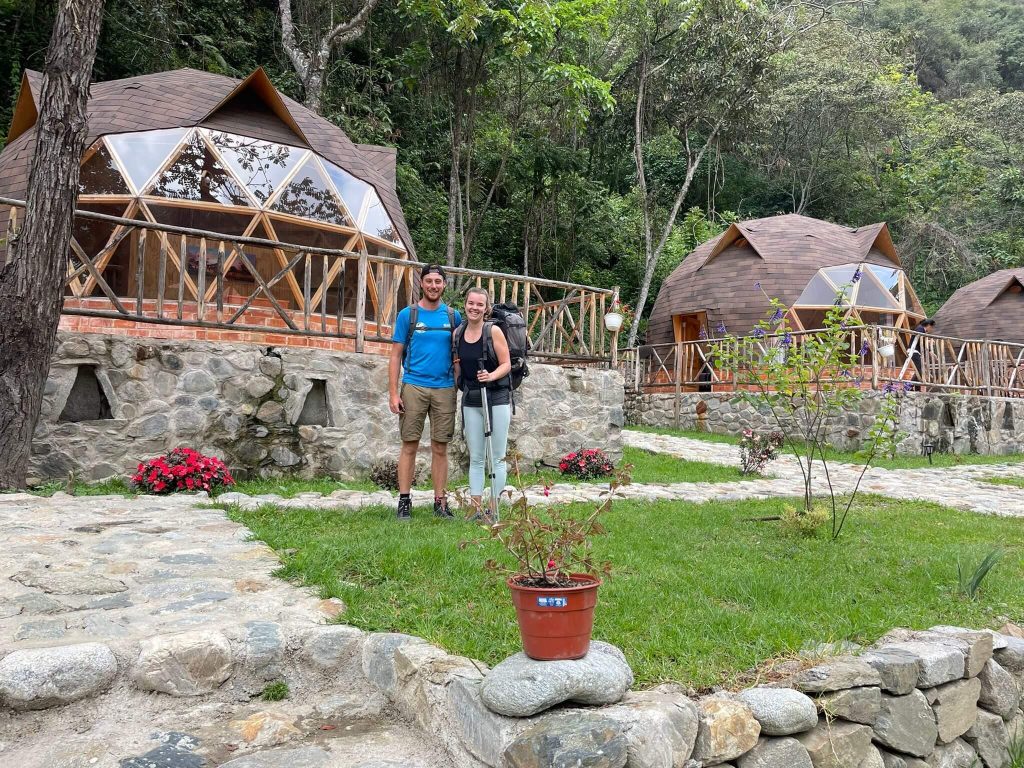
Domos incredible Peru Tours
Salkantay Domes IPT (Incredible Peru Tours) – Night 1 of the Salkantay Trek

Night 2: Chaullay or transition zone (2,700 to 3,200 meters)

The second overnight stop is in the transition zone between the high-altitude plains and the intermediate valleys, usually in the Chaullay area or a similar point along the descent from the Salkantay Pass. The altitude is significantly lower than Soraypampa, which means warmer nights and faster recovery from the effort of the second day.

Tent camping: At this point, nighttime conditions are more manageable than in Soraypampa, with temperatures that rarely drop below freezing except during the coldest months of the year. Camping here is comfortable for most traveler profiles with the right basic equipment. The surrounding humid forest adds a sound dimension that does not exist in Soraypampa: the sound of the river and nocturnal insects forms the backdrop of the second night.

Domes in the transition valleys: Some operators offer glamping installations in this intermediate section of the route, with structures similar to those in Soraypampa but in a completely different environment. Dense vegetation surrounds the domes, temperatures are warmer, and some complexes include additional features such as outdoor jacuzzis that combine hot water with the cool mountain night. It is the night with the greatest sensory contrast of the trek: the same day that began crossing a glacier at 4,630 meters can end in a jacuzzi at 2,800 meters surrounded by ferns and bromeliads.

Who each option is for: At this point in the trek, the difference between tent and dome is less critical than in Soraypampa in terms of thermal comfort. The choice depends more on budget and personal preferences regarding the type of nighttime experience rather than practical impact on next-day performance.
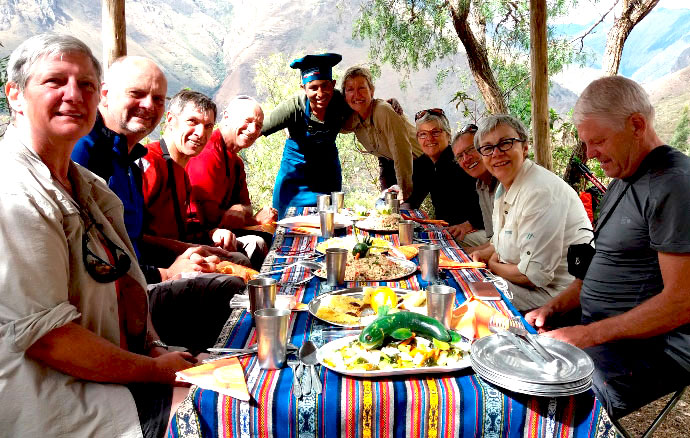
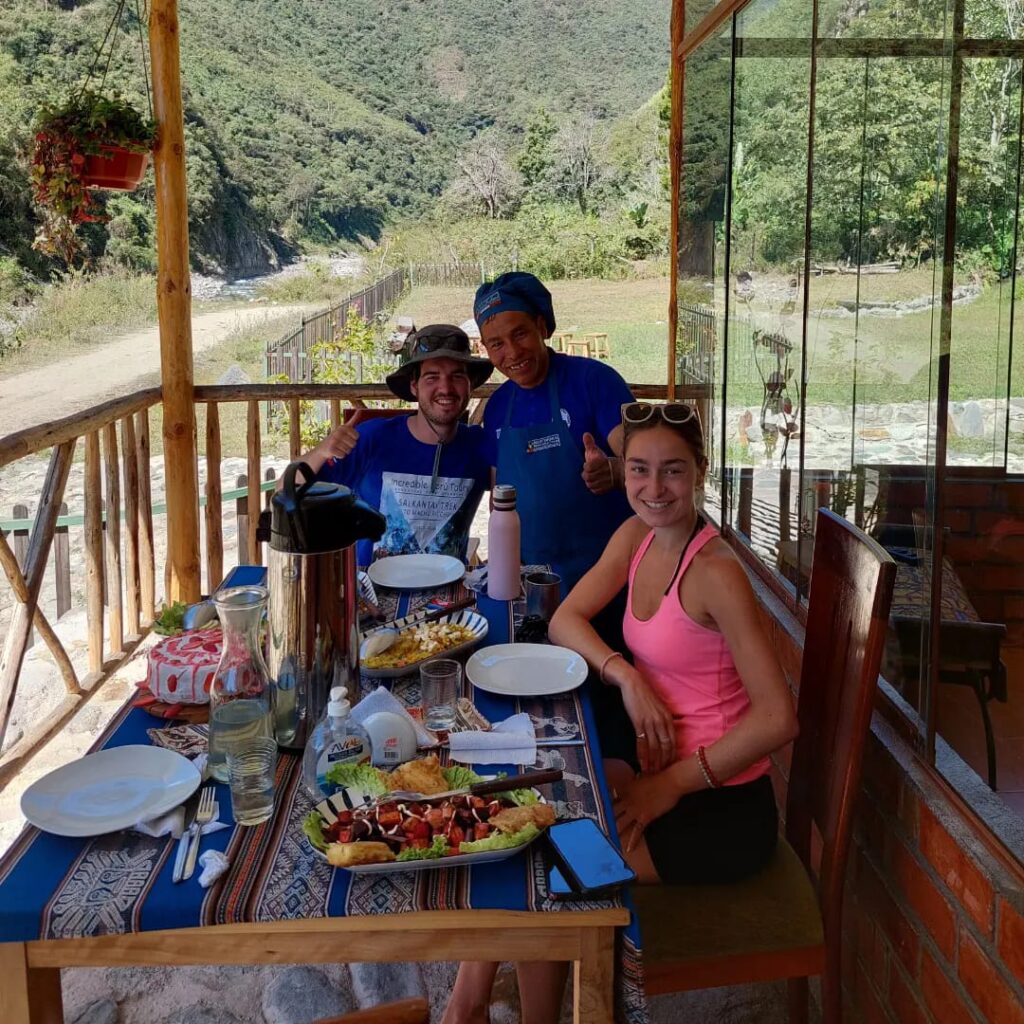
Lunch at Camp with Incredible Peru Tours

Night 3: Santa Teresa or La Playa (1,500 to 2,000 meters)

The third overnight stop is in the subtropical Santa Teresa valley, where nighttime temperature is no longer a risk factor and the environment changes completely from the previous days. At this altitude, the trek has already completed its descent from the high mountains, and the night climate is warm enough for even cold-sensitive travelers to sleep comfortably with very basic gear.

Tent camping: At this stage, camping is a fully comfortable option for nearly all traveler profiles. Night temperatures allow for good sleep without a high-altitude sleeping bag, and the subtropical vegetation with river sounds creates a campsite atmosphere that many participants describe as the most pleasant night of the trek in terms of comfort.

Local lodging in Santa Teresa: Santa Teresa offers accommodation in guesthouses and small hotels that some operators include as an alternative to camping for this stage. Rooms are basic but comfortable, with beds, private or shared bathrooms with hot water, and sometimes breakfast service. For groups who prefer a hotel bed after three days in the field, this option provides a smoother transition between trekking and the more urban environment of Aguas Calientes on the following day.

Domes near Cocalmayo hot springs: Some operators have glamping installations in the Cocalmayo area or around Santa Teresa, combining proximity to the hot springs with the dome lodging experience. It is the warmest and most relaxed glamping night of the trek, especially when combined with an afternoon visit to the hot springs before dinner.

Who each option is for: At this point, all three formats make sense depending on group preferences. Camping is comfortable for everyone and maintains consistency with the outdoor experience. Local lodging suits those who want a hotel bed before the final stretch. Glamping in this area is the most relaxing option and best takes advantage of proximity to the hot springs.

Night 4: Aguas Calientes (2,040 meters)

The fourth night is spent in Aguas Calientes, the gateway town to Machu Picchu, reached at the end of the fourth day. It is the only night of the trek not spent outdoors: Aguas Calientes offers a wide range of accommodation, from budget hostels to luxury hotels with spa facilities and river views.

Hostels and budget accommodation: For travelers on a tight budget, hostels in Aguas Calientes offer private or shared rooms with private or shared bathrooms at very accessible prices compared to other tourist destinations in Peru. Quality varies by establishment, but most offer hot water and Wi-Fi, which after four days in the field are especially appreciated.

Mid-range hotels: The mid-range offer includes hotels with spacious rooms, on-site restaurants, and in some cases views of the Urubamba River or surrounding mountains. It is the most popular category for groups and families seeking comfort without the cost of luxury hotels. Booking in advance during high season is important due to limited availability in Aguas Calientes.

Boutique and luxury hotels: Aguas Calientes also offers high-end hotels that combine architecture integrated into the natural environment, spa facilities with access to private hot springs, and fine dining restaurants. Some are built along the river or on mountain slopes with views that make them destinations in themselves beyond their lodging function. Prices are high, but the experience is difficult to match anywhere else on the route.

Who each option is for: The choice in Aguas Calientes depends mainly on budget and whether the group wants to recover in comfort before the final day at Machu Picchu or simply rest in a basic setting. For groups who stayed in high-end domes earlier, maintaining consistency with a similar-level hotel makes sense. For those doing standard camping, a hostel or mid-range hotel is more than sufficient for a good rest before the last day.
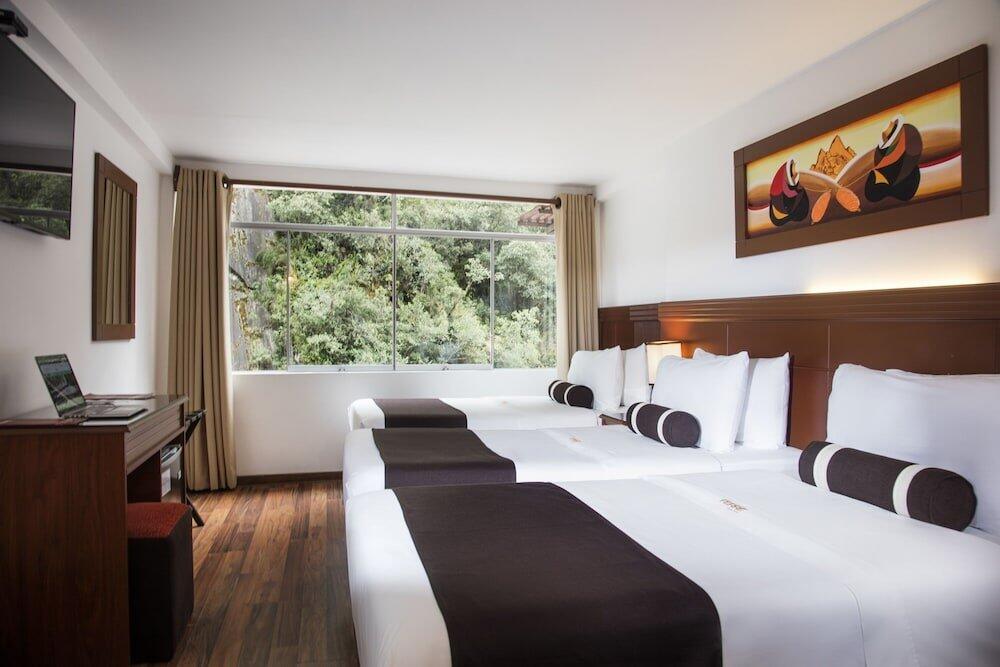
Hotel in Aguas Calientes, Machu Picchu town

How accommodation type affects trekking performance

Sleep quality at higher altitudes, especially on the first night in Soraypampa, has a direct and measurable impact on physical performance on the second day. This is not subjective: lack of sleep at altitude amplifies altitude sickness effects, reduces available cardiovascular capacity, and causes fatigue to set in earlier on the trail.

Those who sleep well in Soraypampa reach the Salkantay Pass in a very different physical state than those who spent the night cold or with an inadequate sleeping bag. That difference is felt in every step of the ascent and in the ability to enjoy the surroundings rather than focusing solely on completing the climb.

For the third night in Santa Teresa and the fourth in Aguas Calientes, the impact of accommodation on performance is lower because the most demanding part of the trek has already been completed. Rest quality on those nights mainly affects energy levels for the visit to Machu Picchu on day five, which is experienced very differently depending on how well the body has recovered.

What to ask the agency before confirming your booking

Before booking any Salkantay Trek package, there are specific accommodation-related questions worth asking to avoid surprises in the field.

  • What temperature rating does the sleeping bag provided by the agency have? For Soraypampa, it should be rated for at least 23°F (-5°C). If it does not meet that specification, you should bring your own or rent a suitable one.
  • How many people share each tent? In group packages, tent distribution may vary depending on the number of participants. For couples or groups seeking privacy, it is useful to confirm whether a private tent is available for an extra fee.
  • Do the domes have private or shared bathrooms? The difference is significant: on the coldest night of the trek, leaving the dome at 3 a.m. to use a shared bathroom several meters away is an experience worth anticipating.
  • Is accommodation in Aguas Calientes included in the package or booked separately? Some operators include the hotel in Aguas Calientes in the trekking price, while others offer it as an add-on. Clarifying this before booking avoids arriving on the fourth day without confirmed accommodation in a town with limited availability.

Do you want to do the Salkantay Trek with accommodation tailored to your profile at each point of the route? At Incredible Peru Tours, we coordinate lodging night by night according to each group’s preferences and budget, with options including camping, domes, and hotels at different points along the trek.
Inicio » salkantay » Page 5

Salkantay Trek domes have become, in recent years, one of the most sought-after tourism products in the Cusco region for a very specific type of traveler: those who want to experience one of the most impressive treks in South America without giving up a good night’s sleep. The combination of high mountains, glaciers, and a real bed under a transparent dome with the Salkantay snow-capped peak in the background is a product that does not exist on any other route in the region with the same level of scenic impact.

However, the dome offering on the Salkantay Trek is broad and uneven. There are complexes with top-level facilities and others that use the term “dome” to describe structures that provide a very different experience from what travelers expect when choosing this option. This guide gives you clear information on prices, locations, and what to realistically expect from each type of complex so you can make an informed decision before paying.

Where the domes are located along the Salkantay route

Dome complexes along the Salkantay Trek are distributed at the most scenic points of the route, which coincide with the usual campsites for multi-day versions. There is no single reference complex, but rather a series of facilities at different points along the trail, each with its own characteristics and service level.

The highest point with the most dramatic views of the snow-capped mountain is the Soraypampa area, at 3,900 meters above sea level. Domes installed in this sector offer direct views of the north face of Salkantay and Humantay Lake, which is less than an hour’s hike away. It is the coldest point on the route at night and the one that most depends on proper thermal insulation in the domes to ensure a comfortable experience.

Salkantay Domes IPT (Incredible Peru Tours)

The second relevant group of domes is located in the intermediate valleys during the descent, between 2,500 and 3,200 meters in altitude, in the transition zone between high-altitude plains and subtropical vegetation. These complexes have warmer nighttime temperatures, a humid forest environment, and in some cases additional amenities such as jacuzzis or outdoor relaxation areas. The view of the snow-capped peak is no longer as direct as in Soraypampa, but the natural setting offers its own beauty of forest and canyon landscapes.

Some operators have also set up glamping options in the Santa Teresa area, near the Cocalmayo hot springs, at around 1,600 meters altitude with a subtropical climate that makes high-mountain gear unnecessary. These domes are the most comfortable in terms of temperature but are also the farthest removed from the high-mountain experience that defines the identity of the Salkantay Trek.

Types of domes available and differences in level

Not all Salkantay domes offer the same experience, and that difference goes beyond price. There are essentially three categories based on equipment and service level.

Basic-level domes are dome-shaped structures with a double bed or twin beds, bedding suitable for local temperatures, shared bathrooms with hot showers, and a covered dining area with meal service. They are the most accessible option within glamping and offer a real upgrade over standard camping, mainly in bed comfort and interior temperature. The transparent panel for sky views may be partial or full depending on the design.

Mid-level domes add to the basic setup with private or semi-private bathrooms, higher-quality bedding, more refined interior finishes, adjustable interior lighting, and in some cases a small outdoor terrace with a chair or hammock. The structure is usually larger and includes a greater proportion of transparent panels. The food service is more elaborate, and some complexes offer buffet-style breakfast or multi-course dinners.

High-end domes, found in some complexes in the Soraypampa area and the intermediate valleys, include amenities that in another geographic context would belong to a boutique hotel: outdoor hot tubs or jacuzzis, fireplaces or built-in heating, room service, à la carte dining, and in some cases dedicated staff for each dome. The structures are larger, built with higher-quality materials, and feature a higher proportion of transparent panels that make the night sky an integral part of the interior design.

Panoramic Wooden Geodesic Domes

Price ranges: what to expect in each category

Prices for domes on the Salkantay Trek vary depending on the complex category, the time of year, the number of nights included in the package, and whether pricing is per dome or per person. As a general reference for full five-day trekking packages that include dome accommodation:

Basic-level dome packages typically range between $450 and $650 per person during standard season. This range includes complexes that provide the glamping structure with essential services but without the additional amenities of higher categories. They represent the entry point to glamping on the Salkantay and a real upgrade over standard camping at a per-person price that, in high season, is not much higher than some well-equipped camping packages.

Mid-level dome packages range between $650 and $900 per person, with more variation depending on season and operator. This range includes most of the high-quality glamping options on the Salkantay and the most highly rated complexes on review platforms due to their balance of price and experience.

High-end dome packages start at $900 per person and can exceed $1,500 for the most exclusive options with full services included. This range corresponds to complexes with jacuzzis, heating, and personalized service, aimed at travelers seeking a luxury high-mountain experience as a central part of their trip to Peru.

These ranges are indicative and may vary depending on the agency, time of year, and specific booking conditions. High season, from June to August, usually results in prices 15 to 25 percent higher than low season, especially in the most in-demand complexes.

Salkantay Domes IPT (Incredible Peru Tours)

What the price includes and what may not be included

Before comparing prices between different operators, it is important to verify exactly what each package includes, as differences in this aspect can make an option that appears cheaper end up being more expensive once additional costs are added.

What is usually included in all Salkantay dome packages: transportation from Cusco to Soraypampa and return from Aguas Calientes, the guide for all five days, porters or muleteers, all meals during the trek, access to the domes at the agreed overnight points, and the Machu Picchu entrance ticket for the final day.

What may or may not be included depending on the operator: entrance to Humantay Lake, which in some complexes has an additional fee as it is not part of the standard itinerary; a visit to the Cocalmayo hot springs on the third day; the return train from Aguas Calientes, which in some packages is quoted separately; a personal sleeping bag if the complex does not provide one suitable for the temperatures at Soraypampa; and additional beverages in the dining area beyond water and the infusions included with meals.

Asking point by point what is included before confirming your reservation avoids surprises that cannot be solved on-site and that can disproportionately affect your overall experience compared to the cost of the missing item.

The real experience: what travelers say

Feedback from travelers who have done the Salkantay Trek with dome accommodation shows a fairly consistent pattern in what they highlight most. The first recurring point is sunrise at Soraypampa: waking up in a dome with Salkantay gradually lighting up through the transparent panel is frequently described as the most unexpectedly impactful moment of the entire trip, even above crossing the pass itself.

The second most mentioned aspect is the thermal contrast: going from several degrees below freezing outside at dawn on the second day to the warmth inside the dome for breakfast is a transition that standard campers do not experience in the same way. That indoor temperature difference makes the early departure for crossing the pass physically and psychologically easier.

The third recurring element, especially among those who choose high-end domes, is sleep quality. Sleeping well at 3,900 meters is difficult even with a proper sleeping bag, because altitude noticeably affects sleep cycles during the first nights. A real bed with a mattress, pillow, and quality bedding significantly improves that experience and translates into a different energy level on the second day.

Incredible Peru Tours Dome Guests

Who the dome option makes the most sense for

Salkantay domes are not the right option for everyone, and understanding who they are for helps you make the decision without being influenced only by marketing photos.

They make sense for couples looking for a travel experience with a romantic component, for travelers who value the setting as much as the trek itself, and for those whose budget allows access to the level that matches their expectations. For groups of friends traveling together who want to share a glamping experience in a setting that has no equivalent in their home countries. For people over 50 who want to do the Salkantay Trek but need better sleep quality and controlled nighttime temperatures. And for any traveler who knows they sleep poorly in the cold and wants that factor not to affect their performance and enjoyment of the trek.

They do not make sense for those who value full immersion in the natural trekking environment, for whom standard camping is an essential part of the experience they seek, or for those whose budget does not justify the price difference compared to well-equipped camping. For these profiles, standard camping with a good agency provides a completely satisfying experience without the additional cost of glamping.

Do you want to book the Salkantay Trek with domes and need guidance on which level of complex best matches what you are looking for? At Incredible Peru Tours, we offer Salkantay glamping packages across the different available categories and help you choose the one that best fits your profile and budget before confirming any reservation.

Inicio » salkantay » Page 5

Before confirming any Salkantay Trek reservation, most people build up a list of questions that general articles never fully answer. How much fitness do you really need? Can you do it solo? What happens if it rains on the day of the tour? Does the price include the return train? This guide brings together the most frequently asked questions travelers have before setting out and answers them with the same clear, practical information you would get in a direct conversation with an operator who knows the route well.

How many days does the Salkantay Trek last?

The standard version lasts five days and includes a visit to Machu Picchu on the final day. There are also four-day and three-day versions that shorten the route, with longer hiking days and less time to explore the intermediate sections. The five-day version is the most recommended for people doing the trek for the first time because it allows you to arrive at Machu Picchu with enough energy to enjoy the visit instead of dealing with the level of exhaustion that shorter versions usually cause.

Do you need a special permit for the Salkantay Trek?

No. Unlike the Inca Trail, the Salkantay Trek does not require an official permit from Peru’s Ministry of Culture for the mountain route itself. What is mandatory, and must be purchased separately, is the Machu Picchu entrance ticket for the last day, which is bought through the official Ministry of Culture website. In most cases, the tour operator handles that purchase as part of the package.

Is it necessary to hire an agency, or can it be done independently?

Technically, the Salkantay Trek can be done independently, since it does not require a mandatory guide like the Inca Trail. However, the reality of the route makes going with an agency the most sensible option for the vast majority of people. The logistics of carrying food for five days in an area without stores, coordinating transportation to and from the start and end points, knowing the trail conditions at different times of year, and handling unexpected issues on the ground are all difficult to manage alone unless you already have experience with multi-day high-altitude trekking. People with that background may consider doing it on their own. For everyone else, an agency is not a luxury but a safety and quality-of-experience tool.

What level of fitness do you need for the Salkantay Trek?

The Salkantay Trek is classified as a high-difficulty hike, mainly because of the combination of the 4,630-meter pass on the second day and the cumulative elevation loss on the descents during the second and third days. No technical mountaineering experience or athlete-level training is required, but you do need a fitness level above that of a sedentary person. What affects performance on the trail most is not fitness by itself but prior acclimatization: anyone who has spent at least two nights in Cusco before starting the trek has a much better chance of enjoying the second day than someone who arrives without that adjustment period.

How many days of acclimatization do you need before starting?

The recommended minimum is two full nights in Cusco before leaving for the trek. Three nights are more appropriate for people over 55, for those with high blood pressure, or for travelers who have experienced altitude sickness at similar elevations in the past. During those adjustment days, activity should be moderate: short walks through the historic center, a visit to the Sacred Valley, or excursions to areas at lower altitude than Cusco are the best options to support acclimatization without overloading the body.

How high does the Salkantay Trek go?

The highest point of the route is the Salkantay Pass, at 4,630 meters above sea level. It is crossed on the second day and concentrates the greatest physical effort of the entire trek. From that point, the route descends progressively to 1,580 meters in the Santa Teresa area on the third day, then continues to Aguas Calientes at 2,040 meters, and ends at Machu Picchu at 2,430 meters.

What happens if it rains on the second day, the day of the Salkantay Pass?

The trek continues regardless of rain, except in extreme weather conditions that create a real safety risk for the group. Rain on the second day reduces visibility of the snowcapped peak from the pass, which changes the visual experience but does not prevent crossing the pass itself. With the right waterproof gear, a rainy day on the Salkantay route is completely manageable. Weather-related cancellations are exceptional and usually correspond to situations such as heavy snowfall or electrical storms that the guide evaluates in real time.

What is the temperature like on the second day of the trek?

At the Soraypampa base camp, at 3,900 meters, nighttime temperatures can drop several degrees below freezing at any time of year. While crossing the Salkantay Pass, with the wind and the altitude of 4,630 meters, the felt temperature can range between 32 and 41 degrees Fahrenheit on clear days and significantly lower on windy days. On the descent into the valleys on the third day, the temperature rises progressively until it exceeds 77 degrees Fahrenheit in the bottom of the Santa Teresa Valley. That swing of more than 35 degrees between the morning and afternoon of the third day is what makes a layering system essential in your gear.

Does the Salkantay Trek close in February like the Inca Trail?

No. This is one of the most important practical differences between the two routes. The Inca Trail closes for the entire month of February for official maintenance and because of rainy-season conditions. The Salkantay Trek does not have that closure: it is accessible year-round with no official restrictions. For travelers with fixed dates in February who want to reach Machu Picchu on foot, Salkantay is the most complete alternative available during that period.

What does a standard Salkantay Trek package include?

Packages from authorized agencies usually include transportation from Cusco to the starting point of the trek and the return from Aguas Calientes, the guide for all trekking days, the porters or muleteers with mules carrying the camping equipment and food, tents and sleeping pads, all meals during the route, and the Machu Picchu entrance ticket for the final day. Some operators also include entrance to Humantay Lake and a visit to the Cocalmayo hot springs. What the standard package usually does not include is a personal sleeping bag, which can be rented from the agency, and the return train from Aguas Calientes, which in some packages is billed separately.

Is there a difference between doing the Salkantay Trek with camping or with dome lodging?

The main difference is nighttime comfort and price. Domes are glamping-style structures with real beds, quality bedding, and transparent panels that let you see the starry sky and the snowcapped mountain from your room. Standard camping uses tents with sleeping pads and a sleeping bag, offering a deeper immersion in the natural environment but less temperature comfort at the higher-altitude camps. The daytime route is identical in both cases. Dome packages cost between 40 and 80 percent more than standard camping packages, depending on the level of the lodge.

Domes on the Salkantay Trek

Can the Salkantay Trek be done with children?

It depends on the child’s age and physical condition. For children under 8, the second day with the crossing of the 4,630-meter pass is not recommended because of the impact of altitude on developing bodies and the physical demands of that day. For children between 10 and 14 with good physical condition and proper prior acclimatization, the route is feasible in the five-day version. For teenagers aged 14 and older, the Salkantay Trek is completely accessible with the right preparation. In all cases, private service is more appropriate than a group departure when traveling with minors because it allows the pace to be adjusted to the child’s needs without group pressure.

Salkantay Trek with children

Can you do the Salkantay Trek solo as an individual traveler?

Yes. Group Salkantay Trek packages bring together solo travelers who book independently and share the guide, support staff, and campsites during the route. It is one of the most common ways for solo travelers to do the trek, and the group dynamic during five days of shared effort often creates bonds that many participants describe as one of the most unexpected and most valued parts of the experience. There is also the option of booking a private service as a solo traveler, with a higher per-person cost but with the entire trek paced entirely to your rhythm.

What should you do if altitude sickness symptoms appear during the trek?

Mild altitude sickness symptoms, such as a moderate headache, slight loss of appetite, or unusual fatigue, are common on the second day and are generally managed with a slow pace, constant hydration, and rest upon reaching camp. If symptoms intensify, especially if repeated vomiting, disorientation, shortness of breath at rest, or loss of balance appear, you must tell the guide immediately. Descent is the only effective treatment for severe altitude sickness, and the guide is trained to manage that situation and coordinate the evacuation routes available at each point along the route.

Is it possible to combine the Salkantay Trek with the Inca Trail on the same trip?

Yes, and it is a combination that some travelers with more than a week available in the region choose deliberately. The two routes have completely different identities: Salkantay offers large-scale nature with glaciers and extreme ecosystem changes, while the Inca Trail offers Inca archaeology and the historic arrival to Machu Picchu through the Sun Gate. Doing both on the same trip requires additional planning, especially to secure Inca Trail permits far enough in advance, and a level of physical condition that allows you to handle two high-altitude treks in the same week. For travelers who have that time and fitness, the combination is one of the most complete trekking experiences the Cusco region can offer.

How much does the Salkantay Trek cost?

The price varies considerably depending on the operator, the length of the package, the type of lodging, and the services included. As a general reference, five-day camping packages with well-regarded agencies range between $350 and $600 per person. Dome or glamping packages range from $500 to $900. Packages priced far below those ranges almost always involve cuts in guide quality, porter conditions, or camping equipment. An unusually low price is more of a warning sign than an opportunity.

What makes the Salkantay Trek different from the Inca Trail?

There are several differences, and all of them matter. The Salkantay Trek does not require a special permit and is available year-round, including February. The Inca Trail has limited permits and closes in February. Salkantay offers monumental natural scenery with glaciers, lakes, and changing ecosystems; the Inca Trail offers Inca archaeology along the route and arrival at Machu Picchu through the Sun Gate. Salkantay is more difficult in terms of maximum altitude and cumulative elevation change. The Inca Trail is generally more expensive because of the cost of the official permit. For anyone choosing between the two without having done either, the decision mainly depends on whether your priority is large-scale scenery or the historical and archaeological context of the route.

What tips are given at the end of the Salkantay Trek?

Tipping the support staff is a common and economically significant practice for the porters and cook on the route. As a general guideline for the five-day version, the usual per-person ranges are between $15 and $25 total for the porters, between $20 and $30 for the cook, and between $25 and $40 for the lead guide. Tips are given in cash on the final day of the trek, before the support staff takes transportation back. Bringing the cash prepared from Cusco in individual envelopes is the most organized way to handle it.

Do you have more questions about the Salkantay Trek that are not covered in this guide? At Incredible Peru Tours, we answer any questions before confirming any reservation and help each traveler choose the version of the route that best fits their situation.

Inicio » salkantay » Page 5

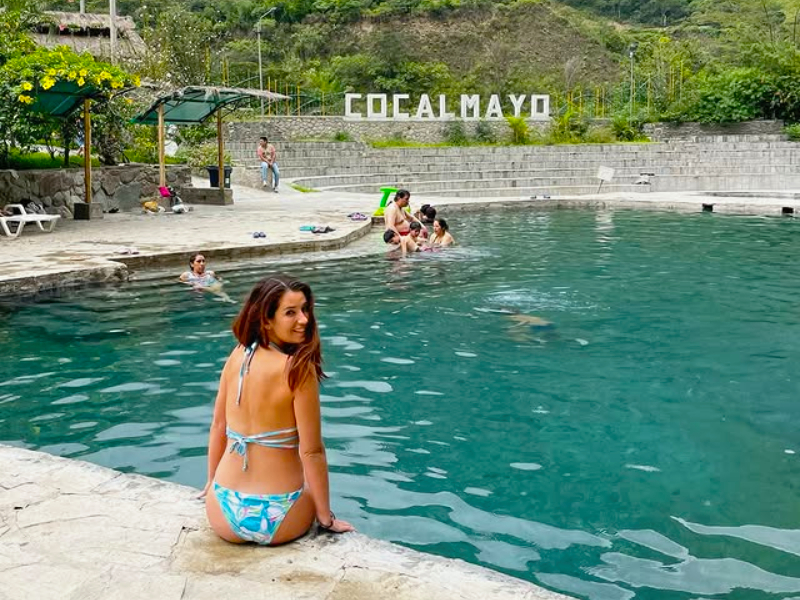
After two days in the high mountains, crossing the Abra de Salkantay with the cold of the pass and the long hours of steep descent that leave their mark on your legs, arriving at the Cocalmayo hot springs at dusk on the third day creates a contrast that few travel experiences can match. The natural hot water at nearly thirty degrees Celsius, the pools beside the river, the sound of the current, and the subtropical vegetation enclosing the space from every side are the sequence of images that many Salkantay Trek participants remember as clearly as the snowy pass itself.

This guide explains everything you need to know about the Cocalmayo hot springs: where they are, how to get there from the route, what they offer, how much they cost, and why this point on the trek deserves more attention than it usually receives in route descriptions.

Where the Cocalmayo hot springs are and how to get there from the trail

The Cocalmayo hot springs are located in the district of Santa Teresa, in La Convención Province, in the Cusco region, at about 1,580 meters above sea level. The complex sits on the bank of the Santa Teresa River, at a point where the valley opens up slightly and the subtropical vegetation creates a naturally private setting around the facilities.

From the Salkantay Trek trail, the hot springs are a short distance from the point where the third day of the route reaches the Santa Teresa area. Depending on the agency’s specific itinerary and the exact point where the day’s hike ends, access to the hot springs can be on foot in just a few minutes or by a short mototaxi ride from the center of town. Most Salkantay Trek operators include the stop at Cocalmayo in the third-day itinerary, either as part of the package or as an optional add-on for a very small extra cost.

Access to the complex has an entrance fee that varies slightly depending on the season and the type of visitor, but in all cases it is very affordable. Some Salkantay Trek packages include it directly in the price of the trek. If it is not included, it is paid at the entrance to the complex in cash, in Peruvian soles.

What the facilities are like and the water temperature

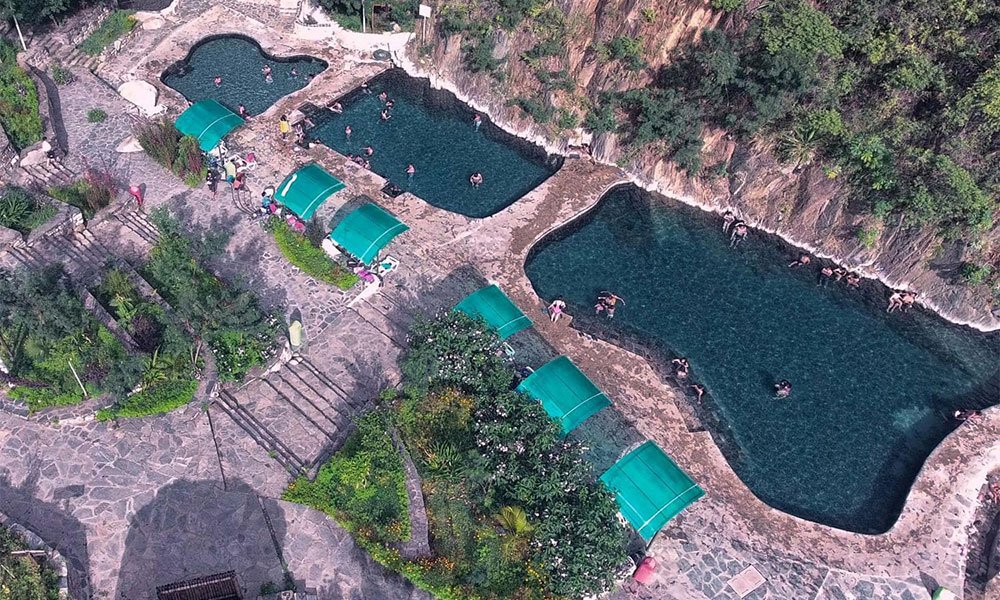
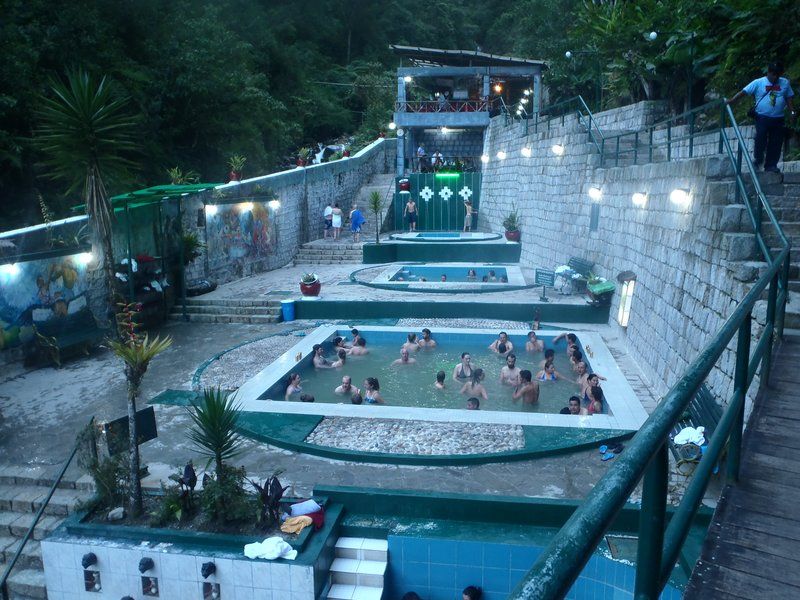
The Cocalmayo complex has several pools of different sizes built at different levels along the riverbank, with a design that takes advantage of the natural slope of the land to create a tiered layout for the facilities. The pools are fed by thermal springs that emerge in the area at a source temperature above forty degrees Celsius and usually stabilize in the pools between 27 and 35 degrees Celsius depending on the flow and the specific pool.

The contrast in temperature between the different pools is one of the most appreciated features of the complex. The smaller, better-insulated pools maintain the highest temperatures, while the larger ones with greater exposure to the river stay at more moderate temperatures. Alternating between pools of different temperatures after days of effort on the Salkantay has an effect on the muscles and circulation that goes beyond simple relaxation: it is a form of active recovery that the body appreciates with noticeable effectiveness the next day.

The facilities include changing rooms, cold and hot showers, and a bar and dining area where you can get drinks and snacks. The quality of the facilities is that of a well-maintained rural tourism complex, not a luxury spa, and that is exactly what fits the spirit of the setting and of the route that comes before it.

The time of day: why the afternoon is the perfect hour

Most Salkantay Trek groups arrive at the Cocalmayo hot springs in the middle of the afternoon, usually between 3:00 and 5:00 pm, which is exactly when the experience has the most value. At that hour, the sun still partially lights the canyon, and the contrast between the warmth of the water, the afternoon air, and the sound of the river creates an atmosphere that simply does not exist in the same way early in the morning.

The last rays of sunlight on the pool water and the vegetation surrounding the complex create a warm light that makes the moment photographically very special, with that kind of sunset light that makes photos turn out well almost regardless of the framing. It is a detail that Salkantay participants with a photographic sensibility tend to value especially after two days in which the altitude and physical effort did not always leave time for slow observation.

The hot springs also operate at night during some periods of the year, with artificial lighting throughout the complex. That nighttime experience, with the sound of the river amplified by the darkness and the contrast between the heat of the water and the cool subtropical night air, has its own appeal, although it is different from the late afternoon experience with natural light.

The hot springs also operate at night
The hot springs also operate at night during some periods of the year

Why this moment matters more than it seems in the context of the trek

The stop at Cocalmayo is not just a physical break between the third and fourth day of the Salkantay. It is also a psychological transition that closes the most demanding chapter of the route and prepares the mind for the final day toward Aguas Calientes and the visit to Machu Picchu the following day.

There is something about the combination of hot water, well-earned fatigue, and natural surroundings that creates a calm that is difficult to achieve in any other context. The conversations that happen in the pools of Cocalmayo at the end of the third day of the Salkantay, when the group has shared the effort of the second day and the descent into the valleys, have a quality and ease that the setting encourages in a way that is hard to explain but easy to recognize once you experience it.

For participants doing the Salkantay Trek in private service, that moment at Cocalmayo can have an additional dimension of intimacy that shared groups do not always allow. Sharing that pause with the people you chose to bring on this trip, in that setting and after that route, creates the kind of memory that is not planned in advance but becomes one of the most lasting of the entire trip.

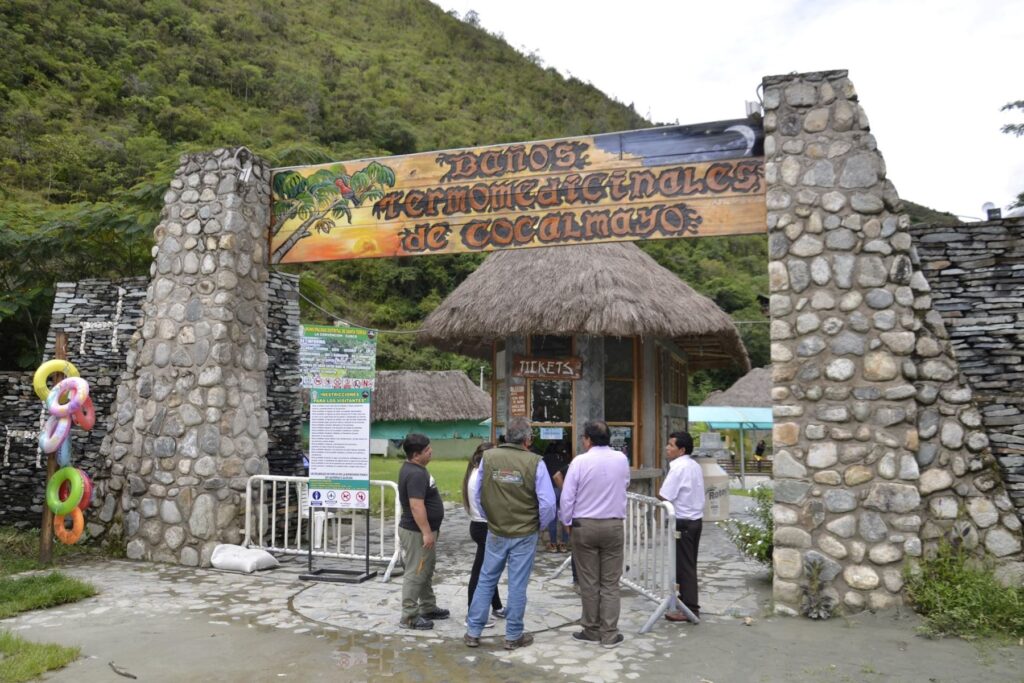
Cocalmayo, a stop for travelers doing the Salkantay Trek

What to bring to make the most of the visit

Getting ready for Cocalmayo is simple, but it does require having packed the right items for the trek from the beginning. The most basic item, and the one most often forgotten, is swimwear. It always appears as a recommended item in Salkantay Trek gear lists, but in practice some participants arrive at Cocalmayo without it and have to go in wearing sports clothes, which works but limits the experience.

A compact microfiber towel is the second item that makes a difference: it takes up almost no space in the backpack, weighs less than two hundred grams, and allows you to dry off properly before putting on your change of clothes to continue to the campsite or accommodation. Conventional cotton towels absorb well, but they are heavy and take up space that it is not reasonable to dedicate to that purpose in a backpack for a five-day trek.

Bringing a clean change of clothes for after the hot springs is a small detail that noticeably improves comfort for the rest of the day. Arriving at the third day’s accommodation in fresh clothes after spending time in the pools closes the day with a feeling of recovery that no conventional shower can replicate exactly.

Cocalmayo vs. Aguas Calientes: two hot springs with different personalities

Travelers doing the Salkantay Trek also visit Aguas Calientes when they reach the end of the fourth day, and that town has its own hot springs with the same name, which are the best known in the region because of their easy access from the train station. The comparison between the two complexes is inevitable for anyone who knows them both.

The hot springs in Aguas Calientes are larger, easier to access, and more crowded. They are in the center of a town with constant tourist traffic, and at certain times of day they have a level of occupancy that reduces the relaxation experience. The infrastructure is more developed and the services are more varied, but the natural atmosphere surrounding Cocalmayo does not exist in Aguas Calientes, which is surrounded by buildings and urban services.

Cocalmayo is smaller in scale, has an untouched natural setting, and a clientele made up mostly of trekking participants passing through the area, which gives it a more intimate and less crowded character than the hot springs in the base town for Machu Picchu. Both have value in the context of the trip, but the moment when Cocalmayo appears, at the end of the warmest and most demanding third day of the Salkantay, gives it an emotional advantage that the hot springs of Aguas Calientes simply cannot have because they come at a different point in the route.

Cocalmayo
Cocalmayo
Aguas Calientes
Aguas Calientes

Practical information for the visit

The Cocalmayo hot springs usually open from 5:00 in the morning until 9:00 or 10:00 at night, although schedules may vary during lower seasons or due to facility maintenance. It is recommended to confirm the schedule with the agency before departure in order to adjust the planning for the third day of the trek.

The entrance fee for foreign travelers is affordable, and in many Salkantay Trek packages it is included directly in the price of the route. If it is not included, it is paid in cash at the entrance. There is no card payment option at the complex or in the immediate surroundings, so bringing Peruvian soles in cash from Cusco is necessary for any small expense in the towns along the route, including this one.

The nearby facilities, including a few small restaurants and shops in Santa Teresa, make it possible to eat something after the hot springs before continuing to the third day’s accommodation. Trout from the Santa Teresa River, prepared grilled or in garlic sauce in one of those local dining spots, is a good option to end the day with something nutritious and representative of the valley’s local cuisine.

Do you want to do the Salkantay Trek with the stop at Cocalmayo fully integrated into the itinerary and with all the time needed to enjoy it without rushing? At Incredible Peru Tours, we coordinate each day of the route so that moments of rest carry the same weight in the experience as the most demanding ones.

Inicio » salkantay » Page 5

The Salkantay Trek is not just a route to Machu Picchu. It is a biological corridor that, over five days, crosses several of the richest and most distinct ecosystems in the Peruvian Andes. From the glacial puna of the base camp to the subtropical valleys of Santa Teresa, the route passes through areas where plant and animal life changes dramatically within just a few hours of hiking. For anyone with an eye trained to observe the surroundings while walking, each section of the Salkantay offers something different that is not repeated anywhere else along the route.

This guide describes the characteristic flora and fauna of each stage of the route, organized by ecosystem and altitude, with information on the most representative species and the best times of day to observe them.

the glacial puna (3,900 to 4,630 meters): life at the extreme

The puna ecosystem surrounding the Soraypampa base camp and Salkantay Pass may look like the most austere part of the route, but it is also the one that surprises attentive observers the most. At over 4,000 meters above sea level, with nighttime temperatures dropping below freezing and intense solar radiation during the day, life has developed adaptation strategies with no equivalent in any lower-altitude ecosystem.

The most characteristic plant in this area is ichu grass (Stipa ichu), the golden grass that covers the puna slopes with a pale yellow color that becomes almost luminous when lit from the side by the afternoon sun. Ichu is not just part of the scenery: it is the main forage resource for the llamas and alpacas that graze in these valleys, and its deep root system is what keeps the puna soil cohesive against wind erosion and snowmelt.

Among the rocks in the highest sections grows yareta (Azorella compacta), a bright green cushion plant that can take hundreds of years to reach the size of a soccer ball. Its compact, dense form allows it to retain internal heat even when outside temperatures drop sharply. It is one of the oldest plants in high-mountain Andean ecosystems and one of the hardest to spot unless you know how to recognize it.

In the area around Humantay Lake, you can also find wildflowers with unexpectedly intense colors for that altitude: chinchircuma (Mutisia acuminata), with its orange and pink petals, and several species of deep blue gentian growing among the rocks of the glacial cirque. These flowers are the result of an adaptation that concentrates pigments to attract pollinators during very short blooming periods.

As for fauna, the most iconic animal of the Andean puna and the hardest to see clearly is the Andean condor (Vultur gryphus). With a wingspan of up to three meters, it is the largest flying bird in the Western Hemisphere and one of the most representative animals in the entire Cusco region. Sightings around Salkantay are not frequent, but they are not exceptional either: thermals rising from the slopes of the snow-capped mountain create columns of warm air that condors use to glide effortlessly for hours. The early morning and late afternoon offer the highest chances of spotting one.

The vicuña (Vicugna vicugna), the slimmest and most agile of the four South American camelids, appears with some frequency in the high-altitude grasslands on the first and second days. Its coat is a light cinnamon color with white markings on the chest, and its silhouette against the green backdrop of ichu grass creates one of the cleanest visual contrasts in the puna landscape. Unlike domestic llamas, vicuñas are wild and quickly move away from the trail when they detect human presence, so observing them from a distance is always better than trying to get closer.

Salkantay route fauna

the transitional cloud forest (3,000 to 3,900 meters): the visible shift

On the descent from the pass toward the intermediate valleys, the vegetation begins to change noticeably with every stretch downhill. Starting at around 3,500 meters, the ichu grasslands are gradually replaced by the first high-altitude shrubs and brush, and between 3,000 and 3,500 meters, the transitional cloud forest appears, one of the most biodiversity-rich ecosystems in the Andes.

In this section of the second day’s descent, mosses and lichens begin to cover the rocks and the trunks of the first trees with a density that reflects the constant humidity of the area. The most characteristic tree at this elevation is polylepis (Polylepis sp.), known locally as queñua, with its reddish, fibrous bark that peels off in layers and its unmatched ability to survive at extreme altitudes. The polylepis forests that survive in the more protected Salkantay valleys are among the most threatened ecosystems in the Andes due to the area’s long history of deforestation.

In the densest vegetation zones at this elevation, the spectacled bear (Tremarctos ornatus) has a documented presence, although direct sightings are extremely rare. It is the only bear native to South America and one of the most elusive mammals in Andean ecosystems. Tracks in the trail’s mud and markings on tree trunks are the most common signs of its presence in the area. A guide experienced on the route can identify these signs and explain this animal’s habitat range in the different sections of the trek.

The birds at this elevation are especially striking for those who pay attention during the descent. The resplendent quetzal (Pharomachrus mocinno) is present in the region’s cloud forests, although spotting one requires a lot of patience and some luck. More common is the Andean cock-of-the-rock (Rupicola peruvianus), Peru’s national bird, with its vivid orange plumage standing out against the green of the forest, and during mating season it performs visual displays that are hard to forget if you get the chance to witness them.

the subtropical forest and coffee valleys (1,800 to 2,800 meters): the greatest biodiversity

The third and fourth days of the Salkantay Trek pass through the biologically richest zone of the entire route. At altitudes between 1,800 and 2,800 meters, in the valleys descending toward Santa Teresa, warm temperatures, high humidity, and a diversity of microhabitats create the conditions for a level of biodiversity that rivals any tropical rainforest zone on the continent.

Orchids are the most representative plant family in this stretch. The Sacred Valley region and its southern tributaries are home to more than three hundred different orchid species, many of them endemic to this specific altitudinal band. Along the third day’s trail, it is common to find orchids growing directly on tree bark or among the rocks along the path, ranging in size from tiny flowers just a few millimeters across to large plants with blooms several centimeters wide. The wet season, from November to March, is the peak flowering period and offers the greatest visible diversity of these plants.

Bromeliads, with their rosettes of stiff leaves that collect rainwater inside and create small self-contained ecosystems, cover the tree branches in the densest vegetation sections of the third day. Some of these water reservoirs inside the rosette hold insect eggs and larvae, small amphibians, and even miniature freshwater crabs that complete their life cycle without ever needing to reach the ground. They are microecosystems within another ecosystem, and observing them up close reveals a complexity that the scale of the landscape does not suggest.

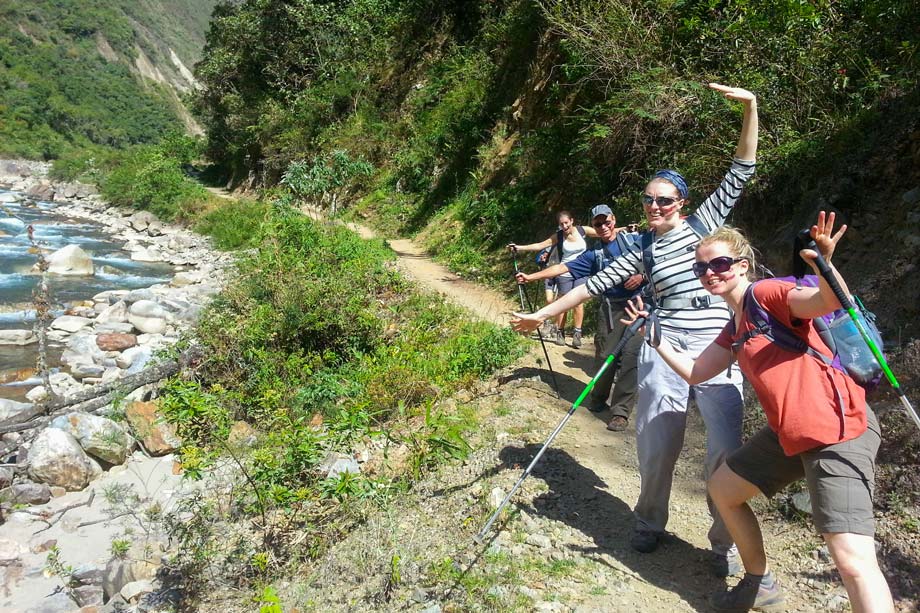
Salkantay Trek hiking

Tree ferns, with fronds that can reach several meters in length, appear in the valley’s most humid and shaded sections and create a visual atmosphere of primeval forest that contrasts sharply with the austerity of Soraypampa base camp on the first day. Some of the species growing in these valleys are almost identical to those found in the Carboniferous fossil record more than 300 million years ago. That evolutionary continuity, visible in a shrub by the side of the trail, is one of those facts that changes the way you see the landscape once you know it.

As for fauna in the subtropical section, butterflies are the most visible and abundant animals. In the sunny stretches of the third day’s trail, blue morpho butterflies (Morpho sp.) frequently appear, their iridescent metallic-blue wings creating one of the most striking images of the trek for anyone seeing them for the first time. Butterflies from the Heliconidae family, with their red-and-black patterns against a dark background, are equally common and easy to photograph because they tend to rest with their wings open on sunlit leaves along the edge of the trail.

Toucans (Ramphastos sp.) are heard before they are seen in these valleys: their characteristic call, similar to a hoarse, repetitive grunt, announces their presence in the tallest trees before the eye can locate them among the foliage. When they do appear, the contrast between the large, brightly colored bill and the compact black body creates an impression that no nature book can fully convey. Sightings are more frequent in the early morning, when these birds move among the valley’s fruit trees in search of food.

Mitred parakeets (Aratinga mitrata) appear in noisy groups in the higher sections of the third day. Their flocking flight, together with calls that can be heard from far away, adds a sound element to the landscape that did not exist during the first days of the route, in the silence of the puna. The acoustic transformation of the trek, from the near-total silence of the pass to the rich soundscape of the subtropical valleys, is one of the most striking changes on the Salkantay Trek and one of the least mentioned in conventional guidebooks.

Salkantay flora
Salkantay flora

the Urubamba River edge (day four): a corridor of life

On the fourth day of the route, with the trail following the riverbank toward Aguas Calientes, the trek takes on its own biological identity. The Urubamba River corridor in this stretch is one of the richest areas for birdlife in the entire Cusco region, with species associated with water and the rocky banks that do not appear anywhere else along the route.

The Amazon kingfisher (Chloroceryle amazona) is common along the riverbanks, with its characteristic still posture on a branch above the water before diving down to catch fish. The torrent duck (Merganetta armata) is another species that appears fairly regularly in the faster-flowing sections of the Urubamba, swimming with an astonishing skill in the current given the strength of the river in this area.

Plum-crowned parrots (Pionus tumultuosus) fly over the canyon in small groups during the early hours of the fourth day. Their calls are amplified by the canyon walls and reach the trail before the birds become visible. The density of vegetation on the canyon walls means that many of the species present in this area are more easily heard than seen, making this stretch especially interesting for anyone used to identifying birds by song.

tips for better observing flora and fauna along the route

  • Walk quietly through forest sections. Most animals along the route detect human presence mainly by sound. A group that hikes without speaking loudly and without music has exponentially better chances of direct sightings than a noisy one.
  • The early morning hours concentrate the greatest bird and mammal activity. The early departures from camp on the second and third days coincide with the time of peak wildlife activity in all the ecosystems along the route.
  • Ask your guide to identify the plants and animals along the way. Guides with experience on the Salkantay know the most representative species in each section. Taking advantage of that knowledge during the hike adds a dimension to the route that no book can provide.
  • Bring lightweight binoculars if the weight allows. For birdwatching in the subtropical valleys and in the fourth-day sections beside the river, binoculars make the difference between seeing a dot of color on a distant branch and seeing the detailed plumage of an Andean cock-of-the-rock.
  • Do not pick plants or feed any animals. The balance of these ecosystems is more fragile than it seems, and uncontrolled interactions between visitors and local wildlife have consequences that build up with the number of groups passing through each season.

Would you like to hike the Salkantay Trek with a guide who knows the flora and fauna of each section and can turn every sighting into an experience with context? At Incredible Peru Tours, we select guides specialized in the route who combine the region’s historical and cultural knowledge with a deep understanding of the natural environment along the trail.

Inicio » salkantay » Page 5

The question of when is the best time to do the Salkantay Trek has a short answer and a real answer. The short one is: during the dry season, from May to October. The real answer is more nuanced, because the Salkantay crosses such different ecosystems that the same rain that makes the pass more difficult turns the coffee valleys into something visually extraordinary. Understanding these differences before setting your dates allows you to choose based on criteria rather than following a generic recommendation that does not consider what each traveler is looking for in the experience.

This guide walks through the calendar month by month with specific information about what each period offers, what makes it more challenging, and what does not change regardless of when you travel.

how the weather works on the Salkantay: why it is not the same along the entire route

The Salkantay Trek connects, in five days, glacial high mountains with the subtropical Santa Teresa valley. These two climate extremes do not respond the same way to the seasons. What means snow or heavy rain at the pass translates into lush vegetation and more saturated colors in the coffee valleys on the third day. Talking about the Salkantay weather as if it were uniform along the entire route is a mistake that leads to incorrect expectations.

The most weather-sensitive point on the route is Salkantay Pass, at 4,630 meters. At that point, wet-season precipitation increases the risk of snow, reduced visibility, and stronger winds. The visual experience of the glacier from the pass depends directly on the sky: a clear day at the pass produces views that justify the trip on their own. A cloudy day can mean crossing without visibility, which does not prevent completing the trek but completely changes what you take away from the experience.

The valleys on the second and third days, at altitudes between 2,000 and 2,800 meters, respond differently. Rain in that zone creates dense vegetation, stronger waterfalls, and a level of green that the dry season cannot offer. For many people who have done the Salkantay in different seasons, the valley section during the wet season is visually superior to that of the dry months.

Salkantay snow-capped mountain

dry season (May to October): the most predictable conditions

The dry season is the most recommended time for the Salkantay Trek, for reasons that have more to do with predictability than with absolute beauty. Between May and October, most days along the route are clear, the trail is dry and firm, and visibility at the pass is the most consistent of the year. For someone doing the trek for the first time and wanting the highest chance of seeing the glacier clearly from the pass, these months are the safest choice.

Nights at the Soraypampa base camp are especially cold during this season, with temperatures that can drop several degrees below freezing even in July and August. This dry cold is easier to manage with the right gear than the damp cold of the rainy months, but it requires a sleeping bag rated for sub-freezing temperatures.

The number of trekkers reaches its peak between June and August, which coincide with summer vacations in the Northern Hemisphere and the highest tourist demand in the Cusco region. Campsites and domes at the most requested points of the trek can be full during these months, and booking several months in advance is necessary to secure availability on your preferred dates.

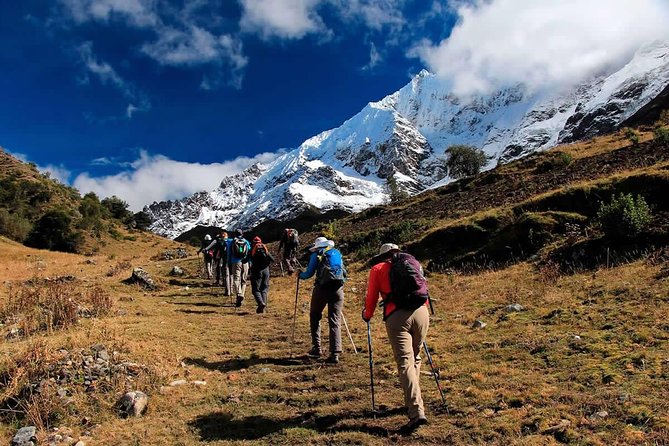
Dry season Salkantay route

month by month in the dry season: what makes each one different

May is one of the best months of the year for the Salkantay Trek and the one most often recommended by experienced guides. The last rains of the wet season have left the valleys at their greenest and freshest, the sky is clear most days, and the number of trekkers has not yet reached peak levels. Prices also reflect this transition: they are more affordable than in July and August without any change in service quality.

June offers full climate stability and the added attraction of Inti Raymi, the Inca Festival of the Sun celebrated in Cusco on June 24, which brings an additional flow of visitors to the region. For those who want to combine the Salkantay Trek with Inti Raymi, this month allows both in the same trip with proper planning.

July and August are the busiest months and the most reliable in terms of weather. Nights are the coldest of the year at base camp, days are consistently sunny, and the views from the pass on clear days are the ones most often seen in photos of the trek. The trade-off is the higher number of groups on the trail and the need to book well in advance.

September and October are transition months toward the wet season and are considered by many experienced trekkers to be the most balanced of the year. Crowds decrease compared to peak months, prices drop slightly, the weather remains stable most days, and the valleys begin to regain the green that the dry season had reduced. The first rains in October are usually short and predictable, mostly in the afternoons, and rarely affect the trek significantly if you start early each day.

Dry season Salkantay trek

wet season (November to March): what the rain gives and what it takes away

The rainy season has a worse reputation among Salkantay trekkers than it deserves, for similar reasons to the Inca Trail during this period. Rainfall in this area follows a fairly consistent seasonal pattern: the heaviest rain is usually concentrated in the afternoons and evenings, while mornings often offer more stable windows for hiking.

What the wet season gives to the Salkantay Trek that the dry season cannot is vegetation at its most vibrant. The coffee valleys on the third day in January have a level of color intensity and density that the dry months cannot produce. Waterfalls that in August are thin streams become powerful flows in December. Wildflowers along the trail are in full bloom. For travelers who value this type of scenery, the wet season offers a richer visual experience.

What the rain takes away is consistency at the pass. During peak rainfall months, there are days when Salkantay Pass is completely covered by clouds and the glacier is not visible. Crossing without visibility is still physically valid, but the visual experience is lost. For those doing the trek specifically for that iconic view, the wet season introduces uncertainty.

Rainy season
Rainy season

month by month in the wet season: real differences

November starts the wet season with still-moderate rainfall and many clear days. It is a transition month with lower demand, more affordable prices, and a quieter, more intimate trekking experience.

December brings more rain but still offers usable mornings. Christmas and New Year weeks see a temporary increase in travelers, which can raise accommodation prices in Cusco and Aguas Calientes.

January and February are the rainiest months. The pass may have fresh snow, requiring good waterproof boots and full cold-weather gear. Unlike the Inca Trail, the Salkantay Trek remains open year-round with no closures. Vegetation is at its most lush during this time.

March marks the end of the rainy season. Rain begins to decrease in the second half of the month, and clear days become more frequent. Vegetation remains vibrant, and the trail is less crowded. It is one of the best months for combining green landscapes with better chances of clear skies.

the Salkantay Trek does not close in February: a key advantage over the Inca Trail

This point deserves special mention. The Inca Trail closes completely in February for maintenance and safety. The Salkantay Trek does not: it is open all year with no official restrictions.

For travelers visiting in February who want to reach Machu Picchu on foot, the Salkantay Trek is the best alternative available. It is not a second-choice option: it is a route with its own identity, offering low crowds and lush scenery. Those who arrive at the pass prepared for the conditions can experience a version of the trek with a level of solitude that is impossible in July.

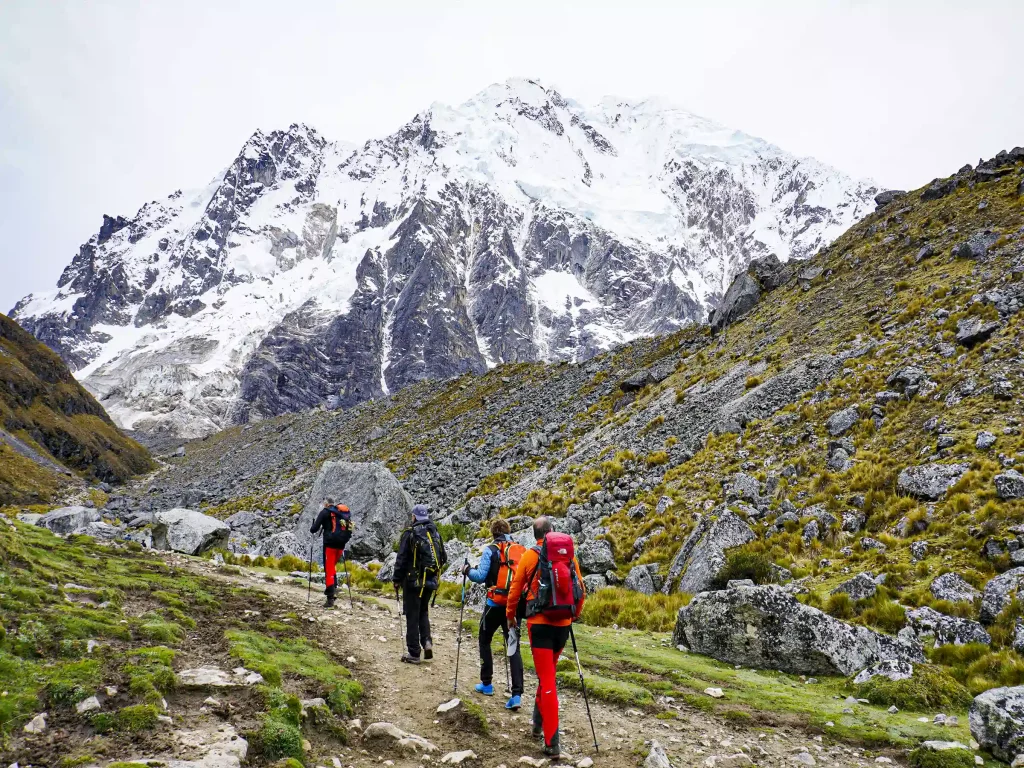
Salkantay trek
Salkantay trek with Incredible Peru Tours

what is really the best time: a criteria-based answer

If your main goal is to see the Salkantay glacier clearly from the pass and get the most striking photos, the dry season from May to October—especially May, September, and October—offers the best chances.

If your goal is fewer crowds, lower prices, and greener landscapes, November, March, and early December are the best options.

If you are traveling in February and originally wanted to do the Inca Trail, the Salkantay Trek is the strongest alternative and a highly rewarding experience.

What does not change regardless of the month is the essence of the trek: the effort of the second day, the pass crossing, the ecosystem transition, and the arrival at Machu Picchu. The season changes the conditions, but not the core experience.

Do you have fixed travel dates and want to know if they are suitable for the Salkantay Trek? At Incredible Peru Tours, we guide each group based on real monthly conditions and what they want from the experience.

Partners

Partners and Agreements

Backed by the world's best tourism organizations

Dircetur
Fodor's
Lonely Planet
PromPerú
TripAdvisor