2026 Book your spot for the Inca Trail 2026!

Inicio » Cusco » Page 9

Pisac is an Inca town and archaeological complex in the Sacred Valley of the Incas, about 33 km from Cusco and roughly 2,970 m.a.s.l. It’s a top stop for its agricultural terraces, stone enclosures, views over the valley, and one of the best-known artisan markets in the area. From Cusco, it’s about an hour by road; to see the ruins, the market, and the town without rushing, a full day works best, though a half-day visit can work if you plan it well.

Why visit Pisac in the Sacred Valley?

Pisac brings three different experiences together in one destination: a sprawling archaeological park, a lively town with restaurants and cafés, and a market selling textiles, ceramics, jewelry, and local products. That makes it a fit for travelers looking for history as well as for those who want to see the Sacred Valley without spending all day on the road.

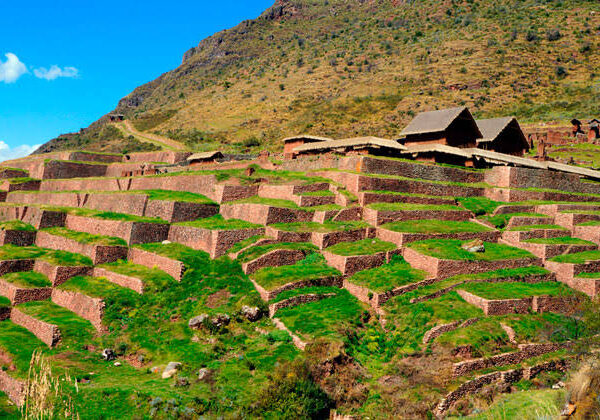
The archaeological complex sits on a mountainside above the town. From there you can see the terraces dropping toward the valley and the course of the Vilcanota River. The visit helps you understand how the Incas made use of sloping ground for farming, territorial control, and ceremonial activities.

Compared with other Sacred Valley sites, Pisac lets you pair an archaeological visit with free time in town. The thing to keep in mind is that the ruins require additional transportation or a demanding hike from the urban area, so it’s worth calculating your timing before leaving Cusco.

What to see in Pisac: the essentials

Pisac’s attractions are split between the upper area, where the archaeological park is, and the town in the valley. To make the most of your visit, start with the ruins early, follow with lunch in town, and save the market for the end.

If you only have a few hours, prioritize the archaeological park and the main square. If your trip falls on the busiest market days, it’s worth setting aside more time to browse the stalls and compare products before buying.

Viewpoint in Pisac
Viewpoint in Pisac

Pisac Archaeological Park

Pisac Archaeological Park is one of the largest Inca sites in the Sacred Valley. It’s made up of terraces, residential sectors, ceremonial areas, water channels, pre-Hispanic cemeteries, and paths connecting different points on the mountain.

The visit isn’t a single enclosure. The route crosses several sectors and involves elevation changes, stairways, and uneven trails. Wearing shoes with good grip and setting aside two to three hours lets you see the main highlights without rushing.

Agricultural terraces and viewpoints

Pisac’s terraces cover broad hillsides and showcase the Inca farming system on steeply sloping ground. Their retaining walls stabilized the soil, managed water, and created growing surfaces at different levels.

From the viewpoints you get an open view of the Sacred Valley, the Vilcanota River, and the nearby communities. Early morning generally offers better light and fewer visitors, while midday brings stronger sun exposure.

Inca temples and structures

The upper zones of the complex hold ceremonial enclosures and stonework cut with greater precision than in the farming sectors. The Temple of the Sun is one of the most visited spaces thanks to the finish of its walls and its position within the site.

You’ll also find residential enclosures, fountains, channels, and trapezoidal doorways. A local guide can help you read these spaces with more context, though you can also tour the park on your own by following the marked paths and respecting the restricted areas.

Terraces

Pisac market

The Pisac market gathers stalls selling alpaca and wool textiles, knitted garments, ceramics, musical instruments, silver jewelry, paintings, souvenirs, and farm products. The selection is wide, so it’s worth checking quality, materials, and finishes before deciding on a purchase.

The market usually operates every day on a smaller scale, while Tuesdays, Thursdays, and Sundays tend to draw more vendors and visitors. Hours and stall layout can shift with the season, holidays, or local rules, so it’s a good idea to confirm once you arrive.

To buy crafts, it helps to carry cash in soles, though some businesses accept cards or digital payments. Negotiating is common at many stalls, but do it respectfully and without assuming every item shares the same origin or level of craftsmanship.

Pisac Market
Pisac Market

Main square and town of Pisac

The town of Pisac is organized around its main square, where you’ll find craft stalls, restaurants, cafés, and small shops. It’s a practical spot to rest after visiting the ruins, have lunch, or catch a ride back to Cusco.

The nearby streets keep a calmer pace than the city of Cusco, though market days ramp up the activity considerably. There are Peruvian food options, vegetarian spots, and cafés geared toward travelers who decide to spend more time in town.

Beyond shopping, walking through the center lets you take in everyday local life. If you’re looking for lower prices on food or basic goods, it’s usually better to head a few blocks away from the tourist stalls on the square.

town of Pisac
Town of Pisac

How to get to Pisac from Cusco

From Cusco you can reach Pisac by shared van, taxi, private transportation, or an organized tour. The shared van is the cheapest option, while a taxi or private vehicle gives you more freedom to leave early, drive straight up to the archaeological park, or continue on to other points in the Sacred Valley.

Travel time usually runs from 45 minutes to 1 hour and 15 minutes, depending on traffic in Cusco, the route, and any stops. Tours are a good option if you want to combine several destinations in a single day without coordinating each transfer yourself.

How to get from Cusco to Pisac by shared van

Shared vans to Pisac generally leave from the area around Puputi street and near the Coliseo Cerrado in Cusco, heading toward the Pisac highway. The trip normally takes 50 minutes to 1 hour and 15 minutes, depending on traffic and how many stops the vehicle makes.

As a reference, the fare usually runs USD 1.50 to USD 3 per person, roughly 5 to 10 soles. Rates change by company, time of day, and season, so ask the price before getting in. Ask to be dropped off at the square or at the Pisac bridge, near the town center and the market.

This option suits travelers on a tight budget without rigid schedules. It’s not the most comfortable if you’re carrying large luggage or want to reach the upper entrance to the ruins first, since from town you’ll still need another taxi or a hike.

How to get to Pisac by taxi or private transportation

A taxi or private transfer from Cusco to Pisac generally takes 45 minutes to 1 hour. The cost varies depending on whether the service is one way, includes waiting time, drives up to the archaeological park, or continues on to other Sacred Valley destinations.

For a simple transfer into town, a reasonable reference is USD 22 to USD 35 per vehicle, roughly 80 to 130 soles. Before setting off, agree on the price, the exact destination, and whether the driver will wait during your visit. Prices can climb in high season or if the vehicle has to pick you up in outlying parts of Cusco.

This option works well for families, small groups, travelers with limited mobility, or anyone who wants to enter the park early. It also makes it easier to combine Pisac with Urubamba, Ollantaytambo, or Chinchero without depending on public transportation schedules.

How to visit Pisac on an organized tour

Organized tours usually combine Pisac with other Sacred Valley sites and normally include transportation and a guide. They’re practical if you only have one day available, though free time at the market or in each archaeological sector may be limited by the group itinerary.

If you want to visit several destinations without arranging shared vans, taxis, and tickets on your own, a Sacred Valley Tour lets you handle the logistics in a single day. Before booking, check which sites are included, whether the tourist ticket is covered, and how much time is allotted to each stop.

Standard tours generally leave Cusco early and return in the late afternoon. If you’d rather take your time in Pisac, a private service usually gives you more room to walk through the ruins and browse the market without following a group’s pace.

Pisac tour entrance
Pisac tour entrance

How to get from the town to the Pisac ruins

The town of Pisac and the main entrance to the archaeological park are in different areas. The urban center sits at the bottom of the valley, while the most-used access to the ruins is high up the mountain, several kilometers away by road.

For that reason, taking a shared van from Cusco doesn’t put you at the entrance to the complex. From town you can go up by taxi, hike a trail with considerable elevation gain, or take a vehicle to the upper area and cover part of the archaeological route on foot going down.

Going up to the ruins by taxi

You can catch taxis near the main square, the market, or the streets close to the Pisac bridge. The ride to the park’s upper entrance usually takes 20 to 30 minutes, depending on road conditions and your exact starting point.

As a reference, the trip usually costs USD 8 to USD 14 per vehicle, roughly 30 to 50 soles. Confirm whether the price is per vehicle or per passenger, and agree on whether the driver will drop you at the upper entrance or wait for the return.

Going up by taxi saves energy and lets you tour the ruins mostly downhill. It’s the most convenient option for travelers short on time, people still acclimatizing to the altitude, or anyone who wants to avoid a long climb in the sun.

Hiking up

The hike from town to the ruins takes roughly 1 hour and 30 minutes to 2 hours and 30 minutes, depending on your pace, acclimatization, and which sector you want to reach. The trail has significant elevation gain and can feel demanding at this altitude.

It’s recommended for travelers used to mountain walking, in good physical shape, and with enough time. Leave early, bring water, sun protection, and a charged phone. Don’t start the climb if you have strong symptoms of altitude sickness or if heavy rain is forecast.

The payoff is that the route lets you watch the shift from the town to the terraces to the upper sectors of the complex. Even so, it isn’t the best choice for a quick visit or for anyone arriving in Cusco the same day without acclimatizing.

Driving up and walking down

Driving up to the upper entrance and walking down is one of the most practical ways to tour Pisac. It saves your energy for exploring the archaeological sectors and lets you descend toward town along roads and trails with open views of the valley.

The descent can take anywhere from 1 hour and 30 minutes to 3 hours, depending on the route, your stops, and your fitness. Not every trail ends right at the square, so it’s worth asking the site staff or a guide which route is safest that day.

Wear trekking shoes or sneakers with firm soles. In the rainy season, some stretches can be slippery and walking down calls for extra caution.

How much time to spend in Pisac

To cover the essentials of Pisac, plan on four to five hours from the moment you arrive in town or at the archaeological park. To tour the ruins at an easy pace, browse the market, have lunch, and walk through the center, a full day from Cusco is the better option.

The time you need depends on how you reach the ruins. If you go up by taxi and do a partial route, half a day can be enough. If you plan to hike up from town or explore the park in detail, you’ll need more hours.

Visiting Pisac in half a day

A visit of roughly four or five hours lets you see the main sectors of the archaeological park, take photos from the viewpoints, and browse the market or the square briefly. To make it work, leave Cusco early and take a taxi up to the ruins.

This option suits you if you have another plan for the afternoon or want to combine Pisac with a transfer to Urubamba. The main limitation is that you’ll have less time to walk between the sectors of the complex, sit down for an unhurried meal, or compare crafts.

Visiting Pisac in a full day

A full day lets you leave Cusco in the morning, tour the ruins without rushing, head down to town, have lunch, and browse the market before heading back. It also leaves room for a partial hike, a stop at a café, or waiting until the square thins out.

This pace is recommended for independent travelers who want to see Pisac as more than a quick stop. If you choose this option, avoid scheduling a fixed-time activity in Cusco for the late afternoon, since return traffic can vary.

Is it worth spending a night in Pisac?

Spending a night in Pisac is worth it for travelers who want a slower pace, plan to walk the park first thing, or intend to continue through the Sacred Valley the next day. The town has lodging in a range of categories, from simple guesthouses to small hotels and retreats in the surrounding area.

Sleeping there lets you browse the market without time pressure and skip a second trip from Cusco. It can also help if you want to acclimatize gradually before hiking, though Cusco sits at a higher altitude and remains the main connection point for many itineraries.

On the downside, nighttime transportation and services are more limited than in Cusco. If you need early connections to Machu Picchu or flights out of Cusco, check schedules and transfers well in advance.

Admission, prices, and hours at Pisac

To enter Pisac Archaeological Park you need the Cusco Tourist Ticket, not a standalone admission for the site. Prices, circuits, student conditions, and hours can change, so confirm them before your visit through official COSITUC channels or authorized points of sale.

The rates below are common references for foreign visitors. Bring your passport or ID, since the ticket is personal and may be requested at the entrance to each included attraction.

Which ticket do you need to visit Pisac?

To visit Pisac you can use the Partial Tourist Ticket for Circuit III or the Full Tourist Ticket. The partial one usually covers Pisac, Ollantaytambo, Chinchero, and Moray, while the full ticket covers those plus other cultural attractions in Cusco, such as museums and archaeological sites near the city.

As a reference, the Partial Ticket for foreign visitors usually costs around USD 19, roughly 70 soles, and is typically valid for two days. The Full Ticket for foreign visitors usually costs about USD 35, roughly 130 soles, and is normally valid for ten days. Rates for national visitors are generally lower.

The partial ticket makes sense if you’ll only visit the Sacred Valley for one or two days. The full ticket is a better fit if you also plan to see Sacsayhuaman, Qenqo, Tambomachay, Cusco’s museums, and other included sites during a longer stay.

Pisac Archaeological Park hours

Pisac Archaeological Park generally opens daily from roughly 7:00 a.m. to 5:30 p.m. The last admission time, the sectors that are open, and access conditions can change due to maintenance, rain, conservation measures, or local events.

It’s best to arrive before 9:00 a.m., especially in the dry season and on the busiest market days. Confirm the current hours before leaving Cusco, since arriving late cuts down the time available to tour the complex and get back to town in daylight.

Best time of year and time of day to visit Pisac

The dry season, generally from April to October, tends to bring more stable days and less muddy trails. It’s a good time to walk the archaeological park, but it also coincides with higher demand for transportation, tours, and lodging in Cusco and the Sacred Valley.

The rainy season, roughly from November to March, brings greener landscapes and can mean fewer visitors at certain moments. In exchange, afternoon rain is common, trails can be slippery, and clouds can limit the views from the lookouts.

The best time of day to visit Pisac is early, ideally right when the park opens. That way you dodge some of the organized groups, walk in milder temperatures, and have more time to head down to town. If the market is your priority, keep in mind that morning and midday tend to be busiest, especially on Tuesdays, Thursdays, and Sundays.

Recommended one-day itinerary for Pisac

A practical itinerary starts with leaving Cusco between 7:00 a.m. and 8:00 a.m. By taxi or private transportation, you can drive straight up to the park’s upper entrance; by shared van, factor in the extra time to reach town and catch a taxi to the ruins.

Spend the morning, two to three hours, at Pisac Archaeological Park. Walk the terraces, the ceremonial sectors, and the viewpoints without trying to cover every trail if your time is limited. Bring a light snack, but don’t leave trash inside the complex.

At midday, head down to town for lunch near the main square. After lunch, set aside one to two hours to walk the market, visit craft shops, and grab a coffee before returning to Cusco.

Try to start heading back between 3:30 p.m. and 5:00 p.m. if you’re traveling independently. That leaves a buffer for transportation delays and keeps you from getting into Cusco late, especially during the rainy season or on busy dates.

Tips for visiting Pisac

Before visiting Pisac, try to spend at least one night in Cusco or the Sacred Valley to acclimatize. Although the town sits lower than Cusco, the ruins are high up and the physical effort can feel greater than expected.

Wear layered clothing, since the temperature shifts through the day. Bring a light waterproof jacket, a hat, sunglasses, and sunscreen. In the rainy season, add a rain layer and protect your phone or camera.

Your footwear should have good soles, especially if you’ll be walking the park’s trails. Bring a reusable water bottle and a snack, and don’t count on stalls inside the complex, since services are easier to find in town.

Carry cash in soles for shared vans, taxis, small purchases, and tips if you hire a guide. Keep your Tourist Ticket with you all day, and don’t climb on walls, terraces, or any areas marked as restricted. Damage to these structures directly affects the preservation of the site.

Frequently asked questions about Pisac

These answers cover common questions that come up when planning a visit to Pisac from Cusco. Times and rates can vary with traffic, weather, season, and transportation availability.

How long is the trip from Cusco to Pisac?

The trip from Cusco to Pisac normally takes 45 minutes to 1 hour by taxi or private transportation. By shared van, plan on 50 minutes to 1 hour and 15 minutes because of the stops and city traffic.

During peak hours, on market days, or in high season, the trip can take longer. If you have a booking afterward, leave extra buffer.

Can you visit Pisac in half a day?

Yes, you can visit Pisac in half a day if you prioritize the ruins and a quick loop through town or the market. The most efficient approach is to leave Cusco early and take a taxi up to the park’s upper entrance.

Go with a full day if you want to hike up from town, tour several archaeological sectors, have an unhurried lunch, and shop for crafts without rushing.

Is the Pisac market open every day?

The market has daily activity on the square and nearby streets, though the number of stalls can be smaller on some days. Tuesdays, Thursdays, and Sundays are traditionally the busiest trading days.

Hours can change with holidays, the season, or local decisions. If the market is a priority for your trip, ask at your lodging or directly in Pisac before arranging your transfer.

Can you visit Pisac and Ollantaytambo on the same day?

Yes, you can visit Pisac and Ollantaytambo on the same day, especially with private transportation or a tour that follows a Sacred Valley route. That said, your time at each site will be limited if you also want to fit in the market, Moray, Chinchero, or a long meal.

It’s a good option if you’ll be sleeping in Ollantaytambo afterward to catch the train to Machu Picchu the next day. If you want to explore Pisac thoroughly, it’s better not to add too many stops.

Can you visit Pisac on your own?

Yes, you can visit Pisac on your own. You can take a shared van from Cusco, go up to the ruins by taxi, buy the authorized Tourist Ticket, and head back to town to see the market and the square.

The key is leaving early, carrying cash, and planning transportation between the town and the archaeological park. For a long hike or less-traveled routes, it’s worth asking for up-to-date information on trail conditions.

Is Pisac worth visiting?

Pisac is worth visiting for travelers who want to combine Inca heritage, Sacred Valley scenery, and free time in a town with an artisan market. It’s especially fitting if you’re after a more flexible visit than a quick group tour and you’re interested in walking among terraces and archaeological enclosures.

Give it half a day if your itinerary is tight and prioritize the archaeological park. If you have more time, set aside a full day to tour the ruins, have lunch in town, and browse the market. The terraces, the viewpoints, and the ceremonial sectors are the spots you shouldn’t leave off your route.

Inicio » Cusco » Page 9

Tambomachay is an Inca archaeological site located about 8 kilometers northeast of Cusco’s Plaza de Armas, right along the road that leads to Pisac. It’s one of the most interesting places around the city thanks to its hydraulic system of channels, fountains, and small waterfalls that still carry a steady flow. Its likely function was tied to ceremonies involving water, and because it sits so close to Puka Pukara, it’s usually visited on the same route. To enter you need the Cusco Tourist Ticket, since there normally isn’t an individual admission for this site.

What is Tambomachay?

Tambomachay is an Inca archaeological complex on the outskirts of the city of Cusco, set on a mountain slope at a higher elevation than the historic center. The main sector open to the public brings together stone walls, terraces, niches, channels, aqueducts, and fountains that draw on water from a nearby spring.

The place is known for the precision with which the Incas moved water through the different levels of the site. Although guidebooks often describe it as a resting spot or a bath of the Inca, that definition falls short. Its hydraulic and architectural features connect it above all to a ceremonial function and to the management of water within the Cusco landscape.

What does Tambomachay mean?

The origin of the name Tambomachay has several interpretations. One common explanation links the word tampu to a place of lodging, a stop, or a rest point along the Inca roads. Machay, for its part, can be translated as cave, grotto, or hollow.

These references help explain why the name has been associated both with a possible waystation and with the natural formations of the surroundings. Even so, there is no single definitive accepted translation for the full term, so these versions are best presented as linguistic interpretations rather than absolute certainties.

Tambomachay or Tampumachay

Tambomachay and Tampumachay refer to the same archaeological site. The first form is the one most used on tourist signage, in travel publications, and in internet searches, which is why it’s used as the primary variant in this guide.

Tampumachay shows up often when people look for a spelling closer to the Quechua origin of the name. Both are valid, but they don’t point to different sites or to separate sectors of the complex.

Why is it known as the Bath of the Inca?

The popular name “Bath of the Inca” comes from the fountains and the water that flows constantly through the main sector of Tambomachay. The arrangement of the channels and small waterfalls gave rise to the idea that the Inca may have used this place to bathe or rest.

It has never been proven that it worked as a bath in the modern sense. The most widely held archaeological interpretation is that the water may have served a ritual purpose, tied to ceremonies of purification, fertility, and renewal. So “Bath of the Inca” should be understood as a traditional name, not as a conclusively proven function.

History of Tambomachay

Tambomachay was built during the Inca period and formed part of the ceremonial territory surrounding the ancient imperial capital. Its location, outside the urban core but close to the access routes into Cusco, made it possible to bring architecture, water, and terrain together in a single site.

The exact history of the site and all of its functions are still not fully established. The walls, channels, and fountains are visible archaeological evidence; the explanations about specific ceremonies, elite retreats, or road surveillance, on the other hand, are interpretations that should be read with caution.

Origin of the Inca archaeological complex

The Tambomachay complex was raised by taking advantage of the natural springs, the slope of the mountain, and the conditions of the terrain. The Inca builders adapted the walls and conduits to the relief in order to carry water down to the fountains on the lower levels.

This integration of architecture, water, and landscape reflects careful planning. It wasn’t just a matter of moving water: the layout of the channels, the built spaces, and the presence of high-status architectural elements suggest the place held particular importance within the area around Cusco.

The importance of Tambomachay within the Antisuyo

Tambomachay sat near one of the ancient roads linked to the Antisuyo, one of the four territorial divisions of the Tahuantinsuyo. This area connected Cusco with territories on the eastern slopes, making it a significant route for travel and imperial organization.

Its location may have given it ceremonial, territorial, and strategic importance. Its closeness to Puka Pukara has reinforced interpretations about the movement and control of those arriving in or leaving the city, though the site shouldn’t be defined solely by a surveillance function.

What was Tambomachay used for?

Tambomachay probably had more than one function. The main interpretations connect it to water worship, purification ceremonies, rest for the Inca elite, and the control of routes near Cusco.

The available evidence makes it clear that water was a central element in the design of the complex. The specific activities carried out there, though, aren’t fully documented, so it’s more accurate to speak of archaeological and historical possibilities.

Water worship and Inca ceremonies

The system of fountains and channels connects Tambomachay to the religious importance of water within the Inca worldview. Water was an element linked to fertility, life, purification, and the renewal of natural cycles.

The steady channeling of the resource from a spring toward built fountains may have been part of ritual ceremonies. The orderly handling of the water doesn’t appear accidental, and it helps explain why Tambomachay is considered primarily a ceremonial space.

A resting place for the Inca elite

A traditional interpretation holds that Tambomachay may have worked as a resting place for the Inca and his retinue while traveling the routes near the capital. This idea ties in with the possible meaning of tampu as a stop or lodging.

The presence of water, built areas, and a setting removed from the urban center makes this reading plausible. Even so, the explanation doesn’t on its own define the complete function of the complex, since its fountains and ceremonial elements point to a broader use.

Was Tambomachay a temple or a bathing site?

Tambomachay is considered primarily a ceremonial space connected to water. Its fountains and channels don’t allow us to claim it was an enclosed temple like other Inca structures, but they do indicate the place may have been intended for ritual practices.

The term “bathing site” comes up frequently in tourist descriptions because of the fountains and waterfalls. That doesn’t mean Tambomachay had the same functions as a modern bathing resort, or that it was used only for bathing.

Possible connection to road surveillance

Tambomachay’s position and its closeness to Puka Pukara have given rise to interpretations about the control of the access roads into Cusco. Puka Pukara is usually associated with surveillance, temporary lodging, or traffic control in this area.

Tambomachay may have been tied to those dynamics by proximity and by its location beside an important route. Even so, it isn’t accurate to define it exclusively as a military or defensive structure, since its water system and architectural features point to other functions.

Architecture of Tambomachay

Tambomachay’s architecture adapts to the mountain slope through walls, terraces, platforms, entryways, niches, channels, and fountains. The best-known sector concentrates the hydraulic structures that receive the water and distribute it across different levels.

The site reveals precise planning, especially in how the slopes were handled and in the stonework needed to keep the water flowing. Some walls feature well-cut blocks, while other sectors use a simpler technique adapted to the hillside.

Tambomachay’s hydraulic system

The main architectural feature of Tambomachay is its network of channels and aqueducts. This system carries water from a spring toward the fountains visible in the complex, making use of the natural incline of the terrain.

The flow stays continuous under normal conditions, which lets you appreciate how effective Inca water engineering was. That said, the exact location of the water’s full source and the complete path of the conduits shouldn’t be presented as confirmed facts without specific technical studies.

Fountains and waterfalls

The stepped fountains are the most recognizable visual feature of Tambomachay. The water falls through small conduits and spreads across levels built of stone, creating a path that follows the shape of the wall.

The layout demonstrates knowledge of water channeling, gradients, and the use of natural springs. For visitors, watching the water in motion helps make clear that hydraulic design was a central part of the site rather than a minor detail.

Stone walls and terraces

Tambomachay features walls and terraces built along the hillside. These structures made it possible to stabilize the ground, organize the levels of the complex, and create spaces connected to the fountains and entryways.

Some sectors show carefully cut and fitted stones, especially near the main areas. In other zones the work is simpler, adapted to a retaining function and to the natural characteristics of the site.

Niches and trapezoidal entryways

On the upper walls you’ll see niches and trapezoidal entryways, elements common in Inca architecture. These openings didn’t just bring visual order to the structures; they could also respond to functional or ceremonial needs.

The presence of these features suggests that certain areas held greater importance within the complex. Although the precise use of each niche isn’t known, their placement beside the fountains and finished walls reinforces the ceremonial interpretation of Tambomachay.

The double-jamb doorway

A double-jamb doorway has a stepped frame made up of two levels. This type of entrance is identified by the repetition of the trapezoidal outline around the main opening.

In several Inca constructions, double-jamb doorways are associated with spaces considered important. At Tambomachay, this architectural detail helps you recognize that certain enclosures weren’t areas of common use, though their exact function remains a matter of interpretation.

Niches and trapezoidal entryways

What to see during your visit to Tambomachay

During your visit to Tambomachay, the route focuses on the open sector around the fountains, walls, and channels. It’s a site of manageable size, so it’s worth moving slowly and taking in the details of the hydraulic system.

The appeal doesn’t depend on long walks inside the site but on understanding how the water, the structures, and the slope work together as a whole. A guide can help you tell the visible elements apart from the traditional interpretations of the place.

The ceremonial fountains

The fountains are the main feature of Tambomachay. They’re built into the stone walls and receive water from the upper channels, forming small waterfalls that stay active for much of the year.

The sound and constant movement of the water are a meaningful part of the visit. From the permitted areas, you can see how the fountains were arranged across levels and how the water follows a carefully calculated path.

The carved channels and aqueducts

You can spot carved conduits and channels that distribute water through the different levels of the complex. Some are discreetly built into the walls, so it’s worth looking closely before moving on.

The precision of the hydraulic system shows in the continuity of the flow and in the use of the gradient. There’s no need to credit unproven mechanisms to appreciate the technical skill it took to move water permanently across a hillside.

Terraces, niches, and Inca walls

The terraces, niches, and walls surround the fountains and shape the visible route. These elements let you see how the construction adapted to the mountain, combining retaining sectors with more elaborate spaces.

The different types of stone and finishes show that not every wall served the same purpose. Noticing these details helps you avoid a rushed visit focused only on the waterfalls.

The Andean landscape surrounding Tambomachay

The site is surrounded by hills, grasslands, and mountains that contrast with Cusco’s urban area. From the open sectors, you can take in the elevated position of the complex and the direct relationship between the construction and the natural springs of the surroundings.

This landscape helps you understand why water played a decisive role in the choice of location. The architecture wasn’t set down in isolation: it was designed around the slope, the springs, and the routes that connected this area with the city.

Terraces at Tambomachay

The relationship between Tambomachay and Puka Pukara

Tambomachay and Puka Pukara are very close to each other and are usually visited on the same route. The short distance between them makes them easy to combine, whether by taxi, tourist transportation, or an organized tour.

Historically, it has been suggested that Puka Pukara may have carried out control, surveillance, or lodging functions tied to the activities at Tambomachay. This relationship is an interpretation based on proximity and on the context of the Inca roads, not a fully proven function for either site.

Where is Tambomachay?

Tambomachay is roughly 8 kilometers northeast of the city of Cusco, beside the highway that leads to Pisac. From the Plaza de Armas, the drive usually takes 25 to 40 minutes, depending on traffic and the type of transportation.

The complex sits in an area higher than the historic center, near other frequently visited archaeological parks such as Puka Pukara, Qenqo, and Sacsayhuaman. Using the Plaza de Armas as a reference point is useful for calculating departure times and organizing your route.

What is the altitude of Tambomachay?

Tambomachay sits at an approximate altitude of 3,700 m.a.s.l. This figure can vary slightly depending on the exact measurement point within the complex and the mapping sources consulted.

The site is higher than Cusco’s historic center. If you’ve just arrived in the city, it’s best to acclimatize, stay hydrated, and avoid demanding walks before visiting high-elevation areas. Anyone with a headache, dizziness, or shortness of breath should ease up on the effort and prioritize rest.

How far is Tambomachay from Puka Pukara?

Tambomachay and Puka Pukara are separated by a short distance, a few minutes by road or on foot depending on your starting point and the entrance used. That’s why both sites are typically included in the same itinerary.

The combination works well for travelers with limited time, since it lets you see two nearby complexes without returning to downtown Cusco in between. Keep the altitude in mind and walk at an easy pace if you decide to cover the stretch on foot.

Half-Day City Tour Map

Tambomachay visiting hours

Tambomachay’s hours can change due to conservation work, Ministry of Culture regulations, holidays, or operational conditions. Before you travel, check the current schedule directly with the site administration, COSITUC, or an official tourist information point in Cusco.

As a planning reference, the archaeological parks near Cusco generally operate during daytime hours. It’s not a good idea to show up late in the afternoon without confirming the last admission time, especially if your visit depends on public transportation or on a route covering several attractions.

What is the best time of day to visit Tambomachay?

Early morning is a good choice if you prefer milder temperatures, good light, and fewer visitors. It also lets you walk the site without rushing and combine it afterward with Puka Pukara or other nearby places.

Afternoon is a common alternative when Tambomachay is part of a route through Cusco’s archaeological parks. At that hour there may be more tour groups, and the temperature tends to drop quickly, so it’s worth bringing a warm layer.

How much time do you need to visit Tambomachay?

An individual visit to Tambomachay usually takes 30 to 45 minutes in the main open sector. That’s enough time to take in the fountains, channels, walls, and landscape without needing a long walk.

If you’re traveling with a guide, taking photos, or combining the visit with Puka Pukara, plan on one to one and a half hours for both places. During the rainy season, wet surfaces or the movement of groups can make the route take a little longer.

Admission to Tambomachay and the Cusco Tourist Ticket

Tambomachay is one of the attractions included in the Cusco Tourist Ticket. It normally doesn’t have a separate individual admission, so you’ll need to buy a ticket option that covers the archaeological parks near the city.

Rates, validity periods, discount conditions, and points of sale can change. Before booking a trip, check the official COSITUC information, the entity in charge of the Cusco Tourist Ticket.

Admission price for Tambomachay

It isn’t advisable to treat an old rate as the current admission price for Tambomachay, because access depends on the Cusco Tourist Ticket and its conditions can be updated. COSITUC usually distinguishes between foreign visitors, nationals, and students, where applicable.

Since the ticket covers several attractions rather than exclusive admission to Tambomachay, the final cost depends on the option you choose. Check the official rate list before buying and confirm which documents are required to qualify for a national or student rate.

Which ticket do you need to visit Tambomachay?

To visit Tambomachay, travelers generally use the Partial Tourist Ticket for the archaeological parks near Cusco or the Full Tourist Ticket. The partial ticket is designed for those who want to tour the sites on the circuit near the city within a limited validity period.

The Full Tourist Ticket covers a wider group of cultural and archaeological attractions in Cusco and the Sacred Valley. The exact validity, the sites included, and any restrictions should be confirmed on the official COSITUC rate list before you finalize your itinerary.

Where to buy the ticket for Tambomachay

The Cusco Tourist Ticket is sold at official points of sale authorized by COSITUC and, depending on availability, at some entrances to the included attractions. Confirm before heading out whether the booth at Tambomachay will be selling tickets on the day of your visit.

It’s also a good idea to ask at Cusco’s official tourist information offices about the current points of sale. If an official online sales option exists, look for it only through COSITUC channels to avoid paying unauthorized intermediaries.

How to get to Tambomachay from Cusco

From Cusco’s historic center, you can reach Tambomachay by taxi, public transportation, on foot, or on an organized tour. A taxi offers more comfort and speed; public transportation is cheaper, while walking requires good acclimatization given the distance and the elevation gain.

The best option depends on your time, budget, and fitness. If you plan to visit several archaeological parks in a single afternoon, an organized service usually simplifies the logistics and cuts down the time spent looking for transportation between sites.

How to get to Tambomachay by taxi

A taxi is a fast option from the Plaza de Armas or from any lodging in the historic center. The ride usually takes 25 to 40 minutes, depending on traffic, the time of day, and your starting point.

Agree on the price before getting in and ask whether the driver will wait during your visit or only handle the trip out. Use formal transportation, arranged through your lodging or booked with a trusted driver, especially if you plan to head back when fewer vehicles are around.

How to get to Tambomachay by public transportation

Some vehicles running along the highway toward Pisac pass near Tambomachay. This option is usually cheaper than a taxi, but it calls for more flexibility and may involve walking from the stop to the entrance.

Confirm the boarding point, the right stop, the fare, and current schedules locally before you head out. Routes and frequencies can vary, so it’s best not to rely on an old reference found online.

How to walk to Tambomachay

The walk from downtown Cusco to Tambomachay is long, uphill, and demanding because of the altitude. It can take several hours, depending on your pace, the route you choose, and any stops at other archaeological sites.

It’s mainly an option for travelers who are already acclimatized, have hiking experience, and are wearing proper footwear. Bring water, sunscreen, layered clothing, and an offline map. It isn’t a good choice for your first day in Cusco or for anyone with symptoms of altitude sickness.

How to visit Tambomachay on an organized tour

Organized tours usually combine Tambomachay with Coricancha, Sacsayhuaman, Qenqo, and Puka Pukara. This option normally includes tourist transportation, a planned route, and professional guiding, which helps if you want to see several places in a short time.

If you’d rather have a coordinated departure with set times, the Cusco City Tour brings these archaeological parks together in a single afternoon. Before booking, confirm which admissions are included and whether you need to buy the Tourist Ticket separately.

Ticket includes other sites

Best time of year to visit Tambomachay

Tambomachay can be visited year-round, but conditions change between the dry season and the rainy season in Cusco. Your choice affects the state of the paths, visibility, the color of the landscape, the temperature, and the number of visitors.

The dry season generally makes outdoor touring easier, while the rainy season offers a greener setting but calls for more preparation. In both cases, layered clothing helps with the temperature swings typical of the high country around Cusco.

Visiting Tambomachay during the dry season

During the dry season, which generally runs from April to October, there is less rain and more comfortable conditions for touring Tambomachay. The trails and walkways tend to be less damp, which makes the visit easier.

The downside is heavier tourist traffic, especially from June to August. Days can feel mild in the sun, but mornings and evenings are cold. Bring sunscreen, a hat, and a jacket for when the temperature drops.

Visiting Tambomachay during the rainy season

During the rainy season, generally from November to March, the landscape around Tambomachay can look greener. Rainfall tends to concentrate in the afternoon, though the weather can shift suddenly.

It’s worth bringing a rain jacket, shoes with good grip, and protection for cameras or phones. Surfaces can be wet and slippery, so it’s better to walk slowly and stay within the marked visitor areas.

Tips for visiting Tambomachay

A comfortable visit to Tambomachay depends more on good preparation than on complex planning. The altitude, sun exposure, and weather changes are all worth considering before you leave Cusco.

Always respect the designated areas and avoid turning the visit into a rushed walk. The complex is small, but its fountains and architectural details come through better when you take your time and follow the conservation rules.

What to bring to Tambomachay

Bring your ID and your Cusco Tourist Ticket, since they may be requested at the entrance. It’s also a good idea to carry water, sunscreen, a hat, layered clothing, and shoes with good grip.

During the rainy season, add a rain jacket and a cover to protect your devices. The visit is short, but the altitude and the weather can make an unprepared outing uncomfortable.

What you can’t do at Tambomachay

Don’t enter restricted zones, don’t cross barriers, don’t climb on the walls, and don’t touch the fountains. These actions can damage the structures and disturb the water system that is part of the site’s archaeological value.

Don’t leave trash behind, don’t write on anything, and don’t move stones. Follow the instructions of the staff on site, respect other visitors, and stick to the designated paths. The preservation of Tambomachay depends heavily on these basic practices.

Is it a good idea to visit Tambomachay on your first day in Cusco?

You can visit Tambomachay on your first day only if you’ve already rested, stayed hydrated, and have no altitude-related discomfort. Since it sits at about 3,700 m.a.s.l., some people feel the effort even on short walks.

If you have a headache, nausea, dizziness, or shortness of breath, it’s better to postpone the visit and rest in downtown Cusco. Avoid long walks on your arrival day and don’t push the pace to keep a tight itinerary.

Key facts before visiting Tambomachay

This sheet brings together the basic details for planning your visit. Hours, rates, and entry conditions can change, so confirm them through official channels before you head out.

DetailInformation
LocationApproximately 8 kilometers northeast of Cusco’s Plaza de Armas, beside the highway to Pisac.
Approximate altitude3,700 m.a.s.l.
Distance from CuscoAbout 8 kilometers by road from the historic center.
HoursCheck current hours with COSITUC or the site administration before your visit.
Ticket typeCusco Tourist Ticket, either the partial archaeological parks option or the full ticket, depending on your itinerary.
Estimated duration30 to 45 minutes for Tambomachay; up to an hour and a half if combined with Puka Pukara.
Transportation optionsTaxi, public transportation on the Pisac route, walking for acclimatized travelers, or an organized tour.
Inicio » Cusco » Page 9

Puka Pukara is an Inca archaeological complex located northeast of the city of Cusco, in an elevated position along the road that leads to Pisac. It ranks among the main archaeological sites near the city because of its connection to the ancient access routes into the Inca capital, its stone construction, and its proximity to Tambomachay. It is associated with surveillance and control functions, though its use may have been broader. To enter, you need the Cusco Tourist Ticket covering the archaeological parks, and it’s worth confirming its validity and conditions before you travel.

During the visit you can walk among walls, terraces, enclosures, entryways, and open spaces spread across a hillside. The tour is usually combined with Tambomachay, Qenqo, and Sacsayhuaman, whether on a City Tour, in a private vehicle, or in a tourist shuttle.

What is Puka Pukara?

Puka Pukara is an Inca archaeological complex on the outskirts of Cusco. Its position on high ground gave it a wide view of the nearby roads and ravines, a feature that explains why it is linked to the surveillance of one of the entrances to the ancient capital of the Tahuantinsuyo.

Although it is popularly known as a fortress, the site should not be understood as a purely military structure. Its walls, terraces, enclosures, stairways, and paths suggest it may have served functions tied to control, administration, rest, and support for the activities that took place in this part of Cusco.

Meaning of the name “Red Fortress”

The name Puka Pukara comes from Quechua. “Puka” relates to the color red and “pukara” to a fortress or fortified place. That is why the most widespread translation is “Red Fortress.”

This name is usually associated with the reddish tone that some of the complex’s stones take on at certain hours of the day, especially when they catch direct sunlight. The color can also shift depending on humidity, the season, and sky conditions, so it isn’t always visible with the same intensity.

Location of Puka Pukara near Cusco

Puka Pukara sits northeast of the city of Cusco, right along the highway heading toward Pisac and the Sacred Valley. From the Plaza de Armas, the drive takes roughly 25 to 40 minutes, depending on traffic, the type of transportation, and your exact starting point.

The complex is part of the circuit of archaeological parks near Cusco. Its location makes it easy to link the visit with Tambomachay, just a few minutes away, along with Qenqo and Sacsayhuaman. For that reason, many people tour it during their first afternoon in the city.

The relationship between Puka Pukara and Tambomachay

Puka Pukara is very close to Tambomachay, so both sites are typically visited on the same outing. The short distance between the two complexes makes them practical to combine even when you travel on your own by taxi or public transportation.

Some interpretations suggest that Puka Pukara may have supported the activities carried out at Tambomachay through control, surveillance, or temporary lodging. However, these proposals have not been definitively confirmed, so they should be presented as archaeological hypotheses rather than proven facts.

History of Puka Pukara

Puka Pukara is Inca in origin and formed part of the territory surrounding the ancient imperial capital. Its construction responded to the need to organize the entrances to Cusco and take advantage of high points from which the immediate surroundings could be observed.

The available information makes its strategic value clear, but it does not settle every detail about its occupation and day-to-day use. Historical sources and archaeological evidence have produced different interpretations, so a responsible visit should distinguish between what is visible on the ground and the theories about its function.

Origin of the Inca archaeological complex

Puka Pukara was built during the Inca period, taking advantage of the mountain’s natural shape. Rather than leveling the hillside completely, the builders adapted walls, terraces, and enclosures to its slopes, a common practice in the works developed around Cusco.

The location and characteristics of the site connect it to territorial control and to the activities carried out at the entrances to the city. Its structures show varying levels of stonework and a layout designed to make the most of both the incline and the visibility across the landscape.

Importance within the access roads to Cusco

Puka Pukara sits beside an ancient route that connected Cusco with territories to the east. This position made it possible to watch the movement of people, animals, and goods traveling between the Inca capital and other parts of its territory.

From the complex, stretches of the road could be monitored and one of the entrances to the city controlled. This geographic advantage supports the idea that the place had a function tied to managing circulation, though on its own it doesn’t reveal how the site was internally organized or who occupied it permanently.

What was Puka Pukara used for?

There is no single, fully proven explanation for Puka Pukara’s function. The most widely accepted interpretations link it to surveillance, traffic control, administrative support, and temporary rest for people traveling along the nearby route.

Its elevated position, the presence of walls, and the layout of its enclosures explain why it was described for so long as primarily a fortress. Even so, the interior sectors and open spaces point to a more varied occupation than that of a purely defensive outpost.

Control and surveillance function

Puka Pukara’s position allowed people to watch the road and several areas near Cusco. From this point there was a favorable view of anyone entering or leaving along the route, a useful condition for monitoring the movement of travelers and groups tied to the Inca administration.

It has also been suggested that the transport of goods and pack animals could be supervised from there. This possibility rests on its strategic location, but it should not be taken as proof of a specific system of tolls, record-keeping, or inspection, since the details of such activities are not known with certainty.

Military and administrative function

Puka Pukara has been described as a military structure because of its walls, its elevation, and its proximity to an access road. These traits would have made it possible to respond to situations of territorial control or to protect the passage into the city.

At the same time, the complex may have handled administrative, logistical, or travel-organization tasks. Presenting it only as a fortress narrows how the site can be read, since its enclosures and terraces allow for complementary uses tied to transit and to the management of this area near Cusco.

Lodging for the Inca’s retinue

One of the best-known theories holds that Puka Pukara served as a resting place for soldiers, attendants, and members of the Inca’s retinue. This proposal is connected to the closeness of Tambomachay, where activities tied to water and the natural surroundings would have taken place.

The idea is that part of the retinue could stay at Puka Pukara while the Inca and other high-ranking figures carried out activities at the neighboring complex. It’s an interpretation widely repeated on tours, but it has not been conclusively demonstrated by direct historical documentation.

Control and surveillance Puka Pukara

Architecture of Puka Pukara

Puka Pukara’s architecture adapts to the mountain slope through stepped construction. The site combines stone, terraces, retaining walls, enclosures, and circulation areas that take advantage of the uneven ground.

Walking through the site, you notice different levels and changes in height. This layout didn’t just solve the challenges of the hillside; it also organized the entryways, open areas, and interior spaces of the complex.

Walls and terraces built on the mountainside

The complex is made up of walls and terraces raised to follow the irregular shape of the terrain. The platforms bring order to the hillside and create more stable surfaces for movement and for building enclosures.

These structures show how the Incas adapted their work to the landscape without separating construction from topography. At Puka Pukara you can see sectors with different stone finishes, which may reflect differences in function, location, or building process.

Small plaza, rooms, and interior enclosures

Along the route you’ll see open spaces resembling small plazas, along with rooms, passageways, and interior enclosures. Some spaces still clearly preserve their walls, while others are recognizable from the base of the structures and the arrangement of the stones.

The layout of these sectors supports the possibility that Puka Pukara served several functions. The presence of circulation areas, enclosed spaces, and open areas is consistent with activities of control, temporary stay, and organization of people, even though no single enclosure can be assigned a specific use with full certainty.

The double-jamb doorway

A double-jamb doorway is an entrance formed by two stepped frames or recesses around an opening. This architectural device appears in various Inca constructions and usually indicates that the entrance led to a space of some importance within the site.

At Puka Pukara you can see this type of entrance in one of its sectors. Its presence helps you recognize the range of building solutions used in the complex, though on its own it doesn’t define with certainty the exact function of the enclosure it belonged to.

The fountains at the front of the site

At the front of the complex there are structures related to channeling or releasing water. These elements are part of the site’s organization and show that water management was also considered during construction.

There isn’t enough evidence to attribute a specific ceremonial function to them. During your visit, the best approach is to observe how they relate to the walls and changes in ground level, without assuming that every water structure within an Inca site necessarily had a ritual use.

What to see during your visit to Puka Pukara

A visit to Puka Pukara lets you take in a compact set of Inca constructions spread across a hillside. The walk is short compared with other archaeological parks around Cusco, but it rewards you with a variety of architectural elements and with views over the historic route into the city.

It’s worth walking slowly, pausing at the changes in level, and looking at how the walls, terraces, and surroundings relate to one another. That helps you understand why this spot was useful for controlling movement through the area.

Puka Pukara
Puka Pukara

Main archaeological structures

Among the most visible elements of Puka Pukara are the outer walls, terraces, stairways, enclosures, passageways, small plazas, and entryways. The walls follow the shape of the slope, while the terraces organize the levels of the terrain.

The stairways and passageways connect the different sectors of the complex. In the interior enclosures you can appreciate stone walls and doorways, while the open areas let you make out the overall layout of the site without attributing functions that archaeological research has not confirmed.

Views of the Andean landscape and the ancient road to Cusco

From Puka Pukara you can see mountains, ravines, rural areas, and the road that connects Cusco with Pisac. These views help you grasp how much visual range the place offered to those who controlled passage along this route.

The surroundings help explain why this site was chosen. Rather than looking only at stone walls, it’s worth taking in the orientation of the complex and the natural corridors around it, because that’s where its connection to one of the access routes into the city of Cusco becomes clear.

How to visit Puka Pukara

You can visit Puka Pukara from Cusco by taxi, public transportation, tourist vehicle, or on a City Tour that includes the nearby archaeological parks. The most convenient option for a first visit is usually an organized tour, since it normally links the complex with Sacsayhuaman, Qenqo, and Tambomachay.

If you prefer to go on your own, it’s a good idea to check road conditions, boarding points, visiting hours, and the validity of the Tourist Ticket before heading out. The weather can change quickly in this area, especially during the rainy season.

How to get there from the city of Cusco

The most direct option is to take a taxi from downtown Cusco to Puka Pukara. Before getting in, agree on the price, ask whether the driver can wait during your visit, and confirm whether the service will include a stop at Tambomachay or other nearby sites.

There is also public transportation and there are vehicles running along the route toward Pisac, though boarding points and routes can vary. City Tours simplify the logistics, but they give you less free time at each park. Walking from downtown Cusco is more demanding because of the distance, the inclines, and the altitude, so it usually isn’t the best choice for travelers who have just arrived.

Admission and access with the Cusco Tourist Ticket

Puka Pukara is one of the attractions included in the Cusco Tourist Ticket. To visit the nearby archaeological parks, travelers generally use the partial ticket for this circuit, while the full ticket covers a wider selection of sites, museums, and cultural attractions.

Prices, validity periods, terms of use, and included sites can change. Before buying, check the official COSITUC information to confirm which ticket suits your itinerary. Avoid buying tickets from resellers or assuming that a partial ticket works for every circuit in Cusco.

Tips for touring the site

Bring your ID and your Cusco Tourist Ticket, since they may be requested at the entrance. It’s also worth carrying water, sunscreen, a hat, layered clothing, and shoes with good grip, since there are uneven surfaces and changes in level.

During the rainy season, add a waterproof layer and protect your electronics. Respect the marked trails, the barriers, and the restricted areas. Don’t climb on the walls or wander off the permitted paths, both for your safety and for the preservation of the archaeological complex.

Inicio » Cusco » Page 9

Qenqo is an Inca archaeological site located about 2 miles from Cusco’s Plaza de Armas, near Sacsayhuamán and the road toward Pisac. It’s one of the most interesting spots on the outskirts of the city for its carved rocks, winding channels, interior galleries, and spaces linked to religious ceremonies. To get in you need the Cusco Tourist Ticket, since there’s normally no individual entry ticket. You can visit on your own by taxi, on foot, or by local transportation, and it’s also part of the Cusco City Tour.

The visit lets you see how the Incas adapted large natural rock formations to create spaces for ritual use. The tour is brief, but it’s worth doing at a relaxed pace or with a guide to better understand the interpretations of each section.

What Qenqo is in Cusco

Qenqo is an archaeological complex from the Inca period located in the highlands of Cusco. It consists of carved rock outcrops, a semicircular plaza, stairways, niches, channels, and interior passages built by working with the natural shape of the stone.

The site is mainly associated with religious practices carried out around the former imperial capital. Although some specific functions remain a matter of interpretation, its architectural elements indicate it was a space set up for ceremonial activities rather than an ordinary residential area.

What Qenqo means

The name Qenqo comes from a Quechua word related to a winding path, a zigzagging route, or a labyrinth. This description fits well with the appearance of the channels and passages carved into the site’s main rock.

The zigzagging grooves are one of the most visible features during the visit. The exact meaning of each channel isn’t known for certain, but their design reinforces the connection between the site’s current name and the winding shapes carved into the stone.

Qenqo, Q’enqo, Kenko, or Q’inqu

Qenqo, Q’enqo, Kenko, and Q’inqu are spelling variants that refer to the same archaeological site. The differences mainly come from the various ways Quechua terms are rendered in Spanish.

On maps, tickets, guides, and with agencies you may come across more than one of these spellings. This article uses Qenqo as the main variant, but all of them refer to the complex located near Sacsayhuamán.

History of Qenqo

Qenqo belongs to the Inca period and was part of the ceremonial area developed on the hills near Cusco. Its location, close to other complexes such as Sacsayhuamán, Puca Pucara, and Tambomachay, shows how important this area was for religious activities and territorial control at the time.

Archaeological interpretations are based on the visible architecture, the shapes of the rock, and the site’s relationship to the surrounding landscape. Because of that, it’s worth distinguishing between verifiable elements, such as the carvings and galleries, and the hypotheses about the specific rituals carried out there.

Who built Qenqo

There’s no conclusive record attributing the entire construction of Qenqo to a single Inca ruler. The site is identified as a work from the Inca period, but there’s no definitive source linking each section to a specific Inca.

The visible evidence indicates that the builders worked with natural rock formations and adapted them through cuts, channels, stairways, and chambers. This way of integrating architecture with the landscape is a common feature at several Inca ceremonial sites.

What Qenqo was used for

Qenqo would have functioned as a ceremonial space linked to the worship of nature, the earth, water, and other religious practices of Inca society. The presence of channels, niches, a plaza, and an interior chamber suggests the site served a ritual purpose.

Some interpretations link the rock chamber to funerary ceremonies or rituals involving offerings. However, these ideas shouldn’t be presented as fully confirmed facts, since the exact function of each element remains debated.

Was Qenqo a temple or a ceremonial center

Qenqo is considered primarily a religious and ceremonial space. Its layout doesn’t match that of a home or an administrative area, but rather that of a place set up for ritual activities centered on the rock and the surrounding landscape.

One of its sections is known as the amphitheater because of its semicircular shape. This term describes the space visually, but it doesn’t mean it served the same function as European amphitheaters built for public spectacles.

What to see at Qenqo

During your visit to Qenqo you can walk through a semicircular plaza, see channels carved into a large rock, enter an interior gallery when it’s open, and climb up to the rock formations at the top. The tour doesn’t take much time, but there are elevation changes and uneven surfaces.

The site’s architecture stands out for the way the existing rock was worked. Rather than freestanding buildings, you’ll find spaces carved and adapted from the natural rock formations of the terrain.

Semicircular amphitheater at Qenqo

The so-called amphitheater at Qenqo is a semicircular plaza bordered by a wall with niches. At its center stands a large stone monolith, now incomplete, which would have played a significant role in the activities carried out in this section.

Given the layout of the space, it’s considered likely that this area was linked to religious gatherings or ceremonies. It’s one of the first stops guides typically explain during organized tours.

Zigzag-carved channels

On Qenqo’s main rock you can see narrow, winding channels carved into the surface. Their zigzag shape is one of the elements that best represents the meaning behind the site’s name.

Ceremonial interpretations have been proposed relating to the flow of liquids during rituals. However, there’s no definitive explanation confirming what substance ran through them or the precise purpose of each channel.

Underground galleries and stone altar

Qenqo has interior passages carved into a large rock formation. Inside is a stone surface commonly known as a ceremonial table or altar, though that name reflects an interpretation of its possible use.

This section lets you see up close how the Incas modified natural rock without separating the construction from its surroundings. Access to the galleries may depend on conservation conditions, visitor numbers, and current restrictions at the site.

Intihuatana and rock formations at Qenqo

At the upper part of the complex there are worked structures, steps, and rock outcrops. Some are referred to as intihuatana in tourist explanations and have been linked to solar observations or ceremonies tied to the ritual calendar.

The exact function of these features isn’t fully determined. While walking through this area, avoid climbing onto rocks or platforms without authorization, since several areas are protected and have designated access points.

Qenqo Grande and Qenqo Chico

The complex is usually divided into Qenqo Grande and Qenqo Chico. Qenqo Grande contains the amphitheater, the main rock, the channels, and the galleries that receive most visitors.

Qenqo Chico is a short distance away and has less-visited structures. Most guided tours focus on Qenqo Grande, so travelers who want to see the other sections should confirm beforehand whether they’re open and included in the route.

Where Qenqo is located

Qenqo is located about 2 miles from downtown Cusco, in the highlands near Sacsayhuamán and next to the road connecting the city with Pisac. From the Plaza de Armas, the route climbs toward the north side of the city.

Its proximity to Cusco’s archaeological circuit makes it easy to combine with Sacsayhuamán, Puca Pucara, and Tambomachay. If you’re traveling on your own, use an updated map and confirm the correct access point for Qenqo Grande with your driver.

How high up Qenqo is

Qenqo sits at an approximate altitude of 11,745 feet above sea level, higher than Cusco’s historic center. The difference in altitude isn’t extreme, but it can be noticeable if you’ve just arrived from a city at sea level.

It’s a good idea to acclimatize before taking on long walks in this area. Walk slowly, drink water, and avoid pushing yourself if you have a severe headache, unusual shortness of breath, dizziness, or other altitude-related discomfort.

How far Qenqo is from Sacsayhuamán

Qenqo and Sacsayhuamán are very close to each other and are usually included on the same visiting route. The distance between the two sites is short, though the actual travel time depends on the access point, the internal route, and each traveler’s pace.

Visiting both places the same day is a practical option, especially if you already have the Tourist Ticket and are acclimatized. Bring water and keep in mind that some stretches have slopes or uneven terrain.

Qenqo hours

The reference hours for the archaeological parks included in the Cusco Tourist Ticket, Qenqo among them, are usually 7:00 a.m. to 5:30 p.m. The last entry may be subject to staff discretion depending on how much time is needed to tour the site.

Hours can change during festivities, conservation work, weather conditions, or special dates. Before traveling, confirm the current information directly with COSITUC, at the Tourist Ticket point of sale, or at the entrance to the archaeological park.

What’s the best time to visit Qenqo

Early morning is a good option if you’d rather tour Qenqo with fewer visitors and cooler temperatures. You’ll also have more time to visit other nearby sites without rushing.

The afternoon works well for those doing the Cusco City Tour, since Qenqo is usually part of the half-day route. At that time there may be more groups, especially during the dry season and holidays.

How much time you need to visit Qenqo

A visit to Qenqo on your own usually takes between 30 and 60 minutes, depending on your pace, how much time you spend observing each section, and which areas are open. If you’re traveling without a guide, allow a bit more time to get your bearings and read the signage.

On a City Tour, the stop tends to be shorter and more structured, since the itinerary also includes other attractions. This option is useful if you have limited time and want to see several archaeological parks in a single afternoon.

Qenqo entry ticket and the Cusco Tourist Ticket

Qenqo is included in the Cusco Tourist Ticket, and generally there’s no separate individual ticket for it. This ticket also grants access to other archaeological sites and museums, depending on the type chosen.

Check the current conditions before your trip, especially if you’re planning to visit several attractions. The ticket is personal, must be presented along with an ID document, and generally isn’t refundable once issued.

Qenqo entry price

Since Qenqo is visited using the Tourist Ticket, the cost depends on the type chosen. According to COSITUC’s reference rate sheet, the Partial Ticket for the archaeological parks circuit costs around USD 19 for foreigners (S/70) and USD 11 for national visitors (S/40).

The Integral Tourist Ticket has a reference price of USD 35 for foreigners (S/130) and USD 19 for national visitors (S/70). Reduced rates are available for students under specific conditions, subject to presenting valid documentation. These amounts should be verified against COSITUC’s official rate sheet before buying, since they can be updated.

Which ticket do you need to visit Qenqo

To visit Qenqo you need the Partial Tourist Ticket for Circuit I or the Integral Tourist Ticket. Circuit I includes Sacsayhuamán, Qenqo, Puca Pucara, and Tambomachay, and is usually valid for 1 day from first use.

The Integral Tourist Ticket includes the archaeological parks in Circuit I, other cultural circuits, and several museums in Cusco. It’s usually valid for 10 days. It’s a more convenient option if you plan to visit places like Pisac, Ollantaytambo, Chinchero, Moray, museums, and other attractions included by COSITUC.

Where to buy the Tourist Ticket for Qenqo

The Tourist Ticket can be purchased at COSITUC’s official points of sale, such as the office on Avenida El Sol in Cusco and other authorized locations. In many cases it’s also sold at the entrances to the main archaeological parks, including the Sacsayhuamán circuit.

Sales availability at each entrance can vary, so it’s a good idea to carry cash in soles and confirm the payment method before heading out. If online purchase is available, verify it directly through COSITUC’s official channels before making any payment.

How to get to Qenqo from Cusco

From Cusco’s historic center you can reach Qenqo on foot, by taxi, by public transportation, or with a City Tour. Taxi is the fastest and most comfortable option; walking lets you take in the area at a relaxed pace, but requires more effort due to the slope and altitude.

Your choice depends on your time, budget, and level of acclimatization. If it’s your first day in Cusco, it’s usually more practical to take a taxi or an organized tour rather than a long uphill walk.

How to walk to Qenqo

To walk there from the historic center, head up toward the Sacsayhuamán area and continue along the road toward Pisac. The route can take approximately 45 minutes to 1 hour and 30 minutes, depending on your starting point and physical condition.

The walk involves slopes, cobblestone streets, and elevation changes. Wear footwear with good soles, bring water, and avoid this option during your first few days if you’re still feeling the effects of the altitude.

How to get to Qenqo by taxi

Taxi is a quick option from the Plaza de Armas or from lodging in downtown Cusco. The ride usually takes between 10 and 20 minutes, depending on traffic and your exact starting point.

Agree on the price before getting in, since most taxis don’t use a meter. As a reference, a ride from downtown can cost approximately USD 3 to USD 6 (S/10 to S/22), though the fare varies depending on the time of day, demand, and negotiation. Use a formal taxi service or one arranged through your lodging.

How to get to Qenqo by public transportation

There are vehicles that travel the road toward Pisac and pass near Qenqo. This option is affordable, but requires confirming the boarding point, the exact stop, and the schedule with updated local information.

Public transportation may not drop you right at the site’s entrance and usually involves an additional walk. It’s a suitable option for travelers already familiar with Cusco who have flexible time, but it’s less convenient than a taxi or a tour.

How to visit Qenqo with the Cusco City Tour

The Cusco City Tour usually combines Qenqo with Coricancha, Sacsayhuamán, Puca Pucara, and Tambomachay. The route includes tourist transportation, an organized itinerary, and professional accompaniment, so you avoid having to coordinate separate transfers.

Keep in mind that the tour service and the Tourist Ticket are separate things: the tour may include transportation and a guide, while access to the sites may require buying the ticket separately, depending on the booking conditions. Learn about the schedules, services, and availability of the Cusco City Tour with Incredible Peru Tours.

Best time to visit Qenqo

Qenqo can be visited year-round, but conditions change between the dry season and the rainy season. The time of year you choose affects trail conditions, visibility, the color of the landscape, temperature, and how many visitors are around.

The dry season tends to draw more tourism, while the rainy months call for more preparation for wet surfaces and quick weather changes. Regardless of the season, bring sun protection, since UV exposure in Cusco can be intense even under cloudy skies.

Visiting Qenqo during the dry season

The dry season, generally between May and October, brings less rain and paths that are usually more comfortable to walk around Qenqo and nearby sites. Days tend to have better visibility, which is useful if you plan to combine the visit with hikes or viewpoints.

The downside is higher tourist turnout, especially between June and August. There are also sharp temperature swings between day and afternoon, so it’s a good idea to bring a light jacket even when the sun feels strong.

Visiting Qenqo during the rainy season

During the rainy season, generally between November and March, the area around Qenqo tends to look greener. In exchange, it’s common to run into drizzle or heavy rain at certain points during the day.

Wear non-slip footwear, a rain jacket, and protection for your electronic devices. The stone surfaces can be wet, so you should walk more carefully and respect any sections closed for safety or conservation reasons.

Tips for visiting Qenqo

Visiting Qenqo is straightforward if you arrive acclimatized and bring what you need. Even though the tour is short, the altitude, uneven terrain, and sun exposure can affect those who’ve just arrived in Cusco more than expected.

Stick to the marked paths and follow staff instructions. Taking care of the site helps preserve its carvings, galleries, and structures for future visitors.

What to bring to Qenqo

Bring your ID and the Cusco Tourist Ticket, since they may be requested at entry. It’s also a good idea to bring water, sunscreen, a hat or cap, and a small backpack so you can walk around comfortably.

Wear non-slip footwear, layered clothing, and a light jacket, since the weather can change during the visit. During the rainy season, add waterproof protection and avoid bringing items that could be damaged by moisture.

What you can’t do at Qenqo

You shouldn’t touch, scratch, or damage the stone structures. It’s also not allowed to climb into unauthorized areas, cross safety barriers, or enter restricted spaces, even if they seem accessible.

Don’t leave trash or food inside the site. Follow the instructions of the staff on duty and keep a reasonable distance from fragile areas, especially the galleries and worked rock formations.

Is it advisable to visit Qenqo on your first day in Cusco

Qenqo can be visited on your first day if you’ve already rested, feel well, and choose a comfortable way to get there. A taxi ride or a City Tour is usually more advisable than walking up from the historic center right after arriving in Cusco.

If you experience altitude-related discomfort, such as a severe headache, nausea, or excessive fatigue, it’s better to postpone the visit. Dedicating your first day to gentle activities can help you adjust before touring higher areas.

What to know before visiting Qenqo

This summary brings together the practical details worth checking before planning your visit. Hours, rates, and entry conditions can change, so confirm them through COSITUC’s official channels before your trip.

DetailPractical information
LocationAbout 2 miles from Cusco’s Plaza de Armas, near Sacsayhuamán and the road toward Pisac.
Approximate altitude11,745 feet above sea level
Reference hours7:00 a.m. to 5:30 p.m. Check for possible changes before your visit.
Entry typePartial Tourist Ticket for Circuit I or Integral Tourist Ticket.
Circuit I validityGenerally 1 day, subject to COSITUC’s current conditions.
Integral Ticket validityGenerally 10 days, subject to COSITUC’s current conditions.
Visit time30 to 60 minutes on your own. Less time as part of a City Tour.
How to get thereTaxi, walking from downtown, local transportation toward Pisac, or an organized tour.
Main recommendationVisit with non-slip footwear, water, sun protection, and enough acclimatization.

Inicio » Cusco » Page 9

If you’re wondering what to do on your first day in Cusco, the best approach is to rest, drink water, eat light, and choose low-effort activities. Afterward, you can explore part of the historic center or join a City Tour, as long as you’re feeling well. Cusco sits at roughly 11,150 feet above sea level, so your plan should adjust to your arrival time and how your body responds to the altitude.

You don’t need to try to see the whole city the same day. An early flight, a long overland trip, or accumulated fatigue can all affect your energy levels. Taking the first few hours slowly helps you start the trip more comfortably and keeps altitude discomfort from affecting your later visits.

Why acclimatization matters on your first day in Cusco

Cusco’s altitude can be felt within the first few hours, especially for travelers arriving from cities at sea level or lower elevations. Shortness of breath, quick fatigue, mild headaches, or a general lack of energy are discomforts some people experience during the adjustment process.

Devoting part of your first day to acclimatization lets you see how your body reacts before hiking, climbing stairs, or visiting archaeological sites. This decision tends to help you enjoy tours like the Sacred Valley, Machu Picchu, or excursions outside the city more comfortably on the following days.

How long to rest after arriving in Cusco

There’s no exact amount of time that works for every traveler. Some people feel fine after a few hours of rest, while others prefer to take it easy for the entire first day. Age, physical condition, the altitude you’re coming from, and how long your trip was all play a role in your adjustment.

After a flight or a long trip, it’s a good idea to rest for the first few hours at your lodging. You can hydrate, take a warm shower, eat something light, and see how you feel before heading out. If you feel noticeably tired or have a headache, it’s better to scale back your itinerary and save the more demanding activities for another day.

Acclimatizing
Acclimatizing

How to acclimatize to Cusco’s altitude

The most practical way to acclimatize is to keep a slow pace during your first day. Drink water frequently, walk without rushing, and avoid running, carrying heavy luggage, or climbing lots of stairs right after you arrive. Short breaks also help when you’re walking along sloped streets.

It’s a good idea to keep your itinerary flexible. Instead of booking several activities back to back, leave time to head back to the hotel, sit down at a café, or change your route if your body needs a break. A common mistake is assuming altitude will affect every member of a group in the same way.

What to eat and drink during your first day

During the first few hours, it’s best to choose light, easy-to-digest meals. Soups, broths, rice, cooked vegetables, fruit, and moderately sized dishes tend to be suitable choices so you don’t overload your digestion.

Coca tea is a traditional infusion consumed in the Andes and is available at many lodgings and restaurants in Cusco. It can be part of the local experience, but it shouldn’t be considered a medical treatment or a substitute for hydration, rest, or professional care when needed.

Activities to avoid during your first few hours

During your initial adjustment period, avoid long hikes, strenuous exercise, and routes that involve climbing lots of slopes. It’s also best not to schedule adventure activities on your arrival day, even if you’re in good physical shape back home.

Very heavy meals and alcohol can make you feel worse or make it harder to recognize altitude-related discomfort. Saving them for the following days tends to be a more comfortable choice, especially if you’ve just arrived by plane.

What to do if altitude sickness symptoms show up

If you experience discomfort such as headache, dizziness, nausea, unusual fatigue, or shortness of breath while walking, stop the activity and rest. Drink small amounts of water, and don’t try to push through the tour just to keep to a schedule or make the most of a reservation.

Let your companion, guide, or lodging staff know how you’re feeling. If the discomfort is intense, gets worse, doesn’t go away with rest, or comes with difficulty breathing, confusion, or strong chest pain, seek professional care right away.

What to see in Cusco on your first day without too much effort

On your first day you can take a short, flexible walk around places close to the historic center. There’s no need to see every attraction or follow a long route. The most useful approach is to pick one or two spots, walk at a relaxed pace, and head back to your lodging whenever you need to.

The distance between some downtown spots is short, but the cobblestone streets and slopes can feel more demanding at 11,150 feet above sea level. Bring water, wear comfortable footwear, and consider taking a taxi if your lodging is in an elevated area.

Plaza de Armas and Cusco’s historic center

The Plaza de Armas is a good place to start getting to know Cusco without too much effort. From there you can sit for a few minutes, watch the city’s activity, and get your bearings before deciding whether to keep walking through the nearby streets.

Around it you’ll find arcades, churches, restaurants, cafes, and colonial buildings. It’s a convenient choice for a first outing since it lets you combine a short walk with frequent breaks, without straying too far from your lodging or tourist services.

Loreto Street and the Twelve Angle Stone

Loreto Street and the Twelve Angle Stone can be visited on a short walk from the Plaza de Armas. Both stops let you take a close look at the precision of the Inca walls still built into today’s city layout.

In this area you can see how colonial buildings were constructed on top of old Inca stone foundations. The walk doesn’t take much time, making it a good fit if you want to see part of the historic center without cutting into the rest you need on arrival day.

San Blas neighborhood

San Blas is known for its traditional streets, artisan workshops, small galleries, and viewpoints over the city. It can be a pleasant visit for those who already feel comfortable after resting, especially if you want to explore an area at a slower pace.

That said, several routes into the neighborhood involve slopes and stairs. For that reason, it’s best to visit only once you feel well acclimatized. If you notice shortness of breath or fatigue, you can save it for the next day and prioritize flatter parts of downtown instead.

San Pedro Market

The San Pedro Market is a nearby option for seeing local products, fruit, bread, crafts, and a slice of everyday life in Cusco. It’s useful for picking up water, fruit, or simple snacks before heading back to your lodging.

The visit can be short and adjusted to your energy level. On your first day, it’s best to stick to light food and check the stall’s cleanliness if you decide to eat there. If the market is crowded, walk slowly and avoid standing for too long if you’re still feeling tired.

Cusco City Tour: a practical option for the afternoon

The Cusco City Tour is a half-day archaeological and cultural excursion that lets you see several attractions with tourist transportation and a professional guide. It can be a practical option for the afternoon of your first day if you’ve already rested, feel fine, and have no altitude-related discomfort.

Its main advantage is that it cuts down on walking between sites spread out from downtown. Even so, the tour includes short walks and outdoor areas, so you shouldn’t book it just because it’s available. Your physical condition should be the main factor in deciding.

City Tour

Is it advisable to do the City Tour the same day you arrive

The City Tour can be a good option for those arriving in Cusco in the morning who rest for a few hours and feel stable by the time they head out. In that case, the afternoon slot lets you make the most of the day without having to arrange your own transportation or visits.

It’s better to put it off until the next day if you arrive around midday, had an exhausting trip, or have a headache, nausea, dizziness, or intense fatigue. Skipping the tour on your arrival day doesn’t mean wasting time — good acclimatization tends to make the tours that follow much easier to enjoy.

Which places the Cusco City Tour includes

The Incredible Peru Tours route visits Coricancha and four archaeological sites on the outskirts of the city: Sacsayhuamán, Qenqo, Puca Pucara, and Tambomachay. The route combines an in-town stop with visits outside the historic center.

The order of the visits can vary due to operational reasons, traffic, or group coordination. Because of that, it’s a good idea to check the current itinerary before booking and to ask about any mobility limitations or specific timing you need to plan for your return transfer.

Coricancha and the Convent of Santo Domingo

The visit to Coricancha lets you see where the Inca architecture of the former Temple of the Sun meets the colonial construction of the Convent of Santo Domingo. It’s a stop located within the city and is often one of the first encounters with Cusco’s historical heritage.

The tour helps you tell apart the original Inca stone walls from the structures built later on. Since it includes indoor sections, follow the guide’s instructions and keep in mind there may be stairs in some parts.

Sacsayhuamán and its panoramic views of Cusco

Sacsayhuamán stands out for its large stone blocks and Inca walls. The site sits on high ground above the city, so traveling there by tourist transportation makes it easier to reach from downtown Cusco.

From different points you get a panoramic view of the city. Walking around the site should be done at a relaxed pace, especially on your first day, since the altitude and sun exposure can make you feel more tired than usual.

Qenqo, Puca Pucara, and Tambomachay

Qenqo features ceremonial spaces carved into rock and sections that are toured on foot as a group. Puca Pucara has structures linked to control points and offers an open view of the surrounding area.

Tambomachay is known for its water fountains and stone channels. At all three sites, it’s a good idea to walk slowly, stick to the marked trails, and bring an extra layer of clothing, since the weather can change during the afternoon.

Hours and duration of the Cusco City Tour

The Cusco City Tour is a half-day excursion. The published page shows two daily groups: 9:00 a.m. to 1:30 p.m. and 1:30 p.m. to 6:00 p.m.

These schedules may be adjusted for operational reasons, depending on the season, group logistics, or outside conditions. Confirm the pickup time, meeting point, and current duration when you book, especially if you have flights, trains, or other transfers scheduled.

What the Cusco City Tour includes

The published service includes tourist transportation, a professional guide, entry to Coricancha, and tickets for Sacsayhuamán, Qenqo, Puca Pucara, and Tambomachay. This makes for simpler logistics during an afternoon in Cusco.

Before finalizing your booking, check the current inclusions and conditions. Ask whether pickup is done from your hotel, verify what documents are required, and confirm which personal expenses aren’t covered by the service.

What to bring on the Cusco City Tour

For the City Tour, bring a small backpack with your ID or passport, water, comfortable footwear, a hat, sunscreen, and sunglasses. Even though the tour lasts half a day, sun exposure can feel intense in Cusco.

It’s also a good idea to bring warm clothing and a rain jacket or poncho, since weather conditions can change. Bring cash for personal expenses, and carry your current student ID if you booked at the student rate, since it may be requested to confirm that status.

Itinerary for your first day in Cusco based on arrival time

Your arrival time determines how much you can fit into your first day in Cusco. A traveler landing early has more room to rest and consider an afternoon tour, while someone arriving around midday or at night should prioritize checking into lodging and adjusting to the altitude.

These plans are meant as general guidance. You can scale them back or adjust them depending on the weather, your hotel’s location, and above all, how you feel once you arrive in the city.

What to do if you arrive in Cusco in the morning

Head to your lodging, drop off your luggage, and rest during the first few hours. Drink water, have a late breakfast or a light lunch, and avoid rushing straight out to explore the city.

If you feel good after resting, you can consider the afternoon City Tour. If you’d rather take it easier, or you have some discomfort, take a short walk around the Plaza de Armas and its surroundings before heading back to the hotel.

What to do if you arrive in Cusco at midday

If you arrive at midday, check in, have a light lunch, and set aside part of the afternoon to rest. This lets you gauge how you’re adjusting before deciding whether to head out briefly near your lodging.

Keep your outing limited to the area around the historic center, such as the Plaza de Armas, Loreto Street, or the San Pedro Market. In this case, it’s usually more convenient to book the City Tour for the morning or afternoon of the following day.

What to do if you arrive in Cusco at night

If you arrive at night, head straight to your lodging, drink water, and have a light dinner. It’s not advisable to start sightseeing or walk around for a long time, even if you still have energy after the trip.

It’s best to go to bed early and start your activities the next day, after seeing how your body responds to the altitude. You can begin with a short walk around the historic center or choose the City Tour if you wake up feeling fine and free of discomfort.

Inicio » Cusco » Page 9

Sacsayhuamán is an Inca archaeological complex located north of Cusco’s historic center, just a few miles from the Plaza de Armas. It’s one of the city’s most important archaeological sites for its massive stone walls, its role in the planning of the Inca capital, and its ceremonial use. Entry requires the Cusco Tourist Ticket, the usual visiting hours are 7:00 a.m. to 5:30 p.m., and you can visit on your own, by taxi, on foot, or as part of a City Tour.

The visit lets you walk along zigzagging walls, a wide esplanade, rocky sectors, and former spaces linked to the Inca elite. Given its location above 11,800 feet above sea level, it’s a good idea to spend at least one or two days in Cusco before taking on demanding walks around the complex.

What Sacsayhuamán is

Sacsayhuamán, also spelled Saqsaywaman, is an Inca archaeological complex located on a hill near the city of Cusco. It’s part of the historic setting of the former Tahuantinsuyo capital and preserves large-scale stone structures, platforms, enclosures, and open areas.

The site is especially known for its megalithic walls, assembled with remarkable precision. Its elevated position also helps convey the territorial connection that existed between the complex and the Inca city of Cusco.

What Sacsayhuamán means

The name Saqsaywaman comes from Quechua and is usually interpreted as “satisfied falcon” or “well-fed falcon.” The translation can vary depending on the source and how the Quechua terms are analyzed, so there’s no single, universally accepted interpretation.

In Spanish, the spelling Sacsayhuamán is commonly used. You’ll also find the spellings Saqsaywaman, closer to contemporary Quechua writing, and Sacsayhuaman, without an accent, common in online searches and tourism documents.

Where Sacsayhuamán is located

Sacsayhuamán sits north of Cusco’s historic center, on the slopes that rise behind the city. From the Plaza de Armas, the drive is short, and a taxi ride usually takes around 10 to 15 minutes, depending on traffic.

Its proximity to downtown makes it easy to fit into a half-day itinerary. Even so, the route up has curves, slopes, and a quick gain in altitude, so walking to the entrance takes more effort than the distance on a map might suggest.

How high up Sacsayhuamán is

The Sacsayhuamán complex sits at an approximate altitude of 11,800 feet above sea level. This is higher than downtown Cusco, which sits at around 11,150 feet above sea level.

If you’ve just arrived in Cusco, prioritize rest, light meals, and good hydration before heading up. Walking around the complex can feel more demanding due to the altitude, the slopes, and sun exposure, even when the route doesn’t look long.

History of Sacsayhuamán

The construction of Sacsayhuamán is tied to the expansion of the Inca state during the 15th century. The complex was built as part of Cusco’s urban and political reorganization, a city the Incas designed with a defined symbolic and territorial layout.

After the Spanish invasion, much of its structure was dismantled to reuse the stones in Cusco’s colonial buildings. The largest blocks from the main walls stayed in place because of how difficult they were to move.

Who built Sacsayhuamán

The construction of Sacsayhuamán is mainly linked to the reign of the Inca Pachacútec, who drove a major transformation of Cusco during the 15th century. Colonial chronicles indicate that its development continued under his successors, including Túpac Inca Yupanqui and Huayna Cápac.

The project required skilled labor and workers brought in from various parts of the Tahuantinsuyo. It wasn’t an isolated construction, but part of a broader state expansion that included temples, roads, canals, administrative centers, and production areas.

Was Sacsayhuamán a fortress or a temple

Sacsayhuamán served ceremonial, political, and defensive functions. For a long time it was mainly presented as a fortress because of its elevated location and its walls, but that definition doesn’t fully account for the variety of spaces found within the complex.

Its visual relationship with Cusco, the presence of esplanades and enclosures, and the ceremonies still held there today all point to a significant ritual and state function. It may also have served as a control and protection point in a strategic part of the city.

Architecture of Sacsayhuamán

The architecture of Sacsayhuamán stands out for the stonework applied to blocks of widely varying sizes. The pieces were carved to fit together without visible mortar, forming stable structures that have withstood earthquakes for centuries.

The main walls follow a multi-level zigzag design. This shape increases the structure’s strength and creates a clearly recognizable image of the site when viewed from the esplanade or from the higher points along the route.

How Sacsayhuamán was built

The Incas quarried stone from nearby sites and from farther locations, then transported it using collective labor, ramps, ropes, and stone tools. Moving the heaviest blocks demanded considerable organization and precise knowledge of the terrain.

Once on site, stonemasons carved and tested each block until it fit tightly against its neighbors. No mortar was used to join them; the structure’s stability comes from the shape, weight, and fit of each stone.

What to see at Sacsayhuamán

A visit to Sacsayhuamán lets you see the main walls, the ceremonial esplanade, the sectors where the towers once stood, and several rock formations. The route combines open trails, grassy areas, and sections with stairs or elevation changes.

The time you have available affects how much of the site you can cover. Visiting with a guide gives you more context on the structures and the archaeological interpretations; if you go on your own, it’s a good idea to have a map of the park and stick to the marked routes.

Walls of Sacsayhuamán

The walls of Sacsayhuamán are arranged in three stacked levels and follow a zigzag shape. Their blocks fit together with precision, and some measure several yards tall and wide, with estimated weights of dozens of tons.

The appeal of the site doesn’t come only from the size of the stones, but from how they were fitted together. Looking closely, you can see irregularly shaped pieces that align without wide gaps, a technique characteristic of high-quality Inca stonework.

Towers and esplanade of Sacsayhuamán

Towers described by colonial chroniclers once stood at the upper part of the complex. The best known is Muyuqmarca, a circular structure associated with observation, control, and elite activities. Today, mainly its foundations and archaeological evidence remain.

The Sacsayhuamán esplanade is a large open space in front of the main walls. Every June 24, it hosts the modern reenactment of Inti Raymi, so access and circulation can change around that date due to the event’s organization.

Rodadero and chincanas of Sacsayhuamán

The Rodadero is an area of polished, weathered natural rock located near the complex. It’s known for its sloped surfaces and is a common stop during tours around Sacsayhuamán.

The chincanas are rocky tunnels and passages tied to the site’s geography. Some access points may be closed or restricted for safety and conservation reasons, so you shouldn’t try to enter through unauthorized openings or stray from the marked trails.

Sacsayhuamán hours

The usual visiting hours at Sacsayhuamán are 7:00 a.m. to 5:30 p.m. These hours can change due to official events, conservation work, weather conditions, or local festivities, especially around Inti Raymi.

Before heading out, confirm the current hours with the archaeological park’s administration or with the entity in charge of the Cusco Tourist Ticket. Try to arrive with enough time to tour the site before closing, and keep in mind that the last entry may be cut off before the closing time.

What’s the best time to visit Sacsayhuamán

The best time to visit Sacsayhuamán is usually early, shortly after opening. At that hour there are fewer groups, the light is softer, and you can walk around the walls more calmly before visitor numbers pick up.

The afternoon is also a practical option if you’re joining the Cusco City Tour, which usually visits the complex after touring Coricancha. During the rainy season, try not to leave the visit too late in the day, since rainfall tends to be more frequent in the afternoon.

How long the visit to Sacsayhuamán takes

A visit to Sacsayhuamán usually lasts between one and two hours. The time varies depending on your pace, how much you want to take photos, how many sectors are open, and whether you tour with a guide.

On a City Tour, your time there may be shorter since the program includes other archaeological sites. If you go on your own and want to walk around the surrounding area, set aside at least two and a half hours, including the transfer from the historic center.

Sacsayhuamán entry ticket

To enter Sacsayhuamán you need a valid type of the Cusco Tourist Ticket. There’s no individual ticket sold exclusively for this complex, so you need to choose the corresponding partial ticket or the integral ticket, depending on the other places you plan to visit.

The ticket can be purchased at authorized points in Cusco and, depending on the type, also at some entrances of the included attractions. Bring your ID or passport, since visitor information is recorded on the ticket and may be requested at entry.

Sacsayhuamán entry price

Access to Sacsayhuamán is included in the Cusco Tourist Ticket, but the price depends on the type chosen, the visitor’s category, and current rates. Since these figures can be updated, it’s a good idea to check the official COSITUC information before buying.

It’s not advisable to base your budget on old rates published by third parties. Also check each ticket’s validity period, since buying a cheaper option might not be worthwhile if you plan to visit several archaeological sites over the following days.

Which ticket do you need to visit Sacsayhuamán

To visit Sacsayhuamán you can use the Partial Tourist Ticket, Circuit I. This type tends to suit those who want to see the archaeological sites near Cusco, such as Sacsayhuamán, Qenqo, Puca Pucara, and Tambomachay, within its validity period.

The Integral Tourist Ticket includes these sites along with other cultural and archaeological attractions in Cusco, the Sacred Valley, and the southern area. It’s a more convenient option if your itinerary spans several days of sightseeing and you’d rather avoid buying separate partial tickets.

How to get to Sacsayhuamán

From Cusco’s historic center you can reach Sacsayhuamán on foot, by taxi, or with a City Tour. The best option depends on your physical condition, the time you have available, and the level of comfort you want for the transfer.

Walking costs less, but involves a demanding climb due to the altitude. A taxi is fast and comfortable for most travelers. A City Tour simplifies logistics since it bundles transportation and a guide, though it follows a fixed schedule and limits your time at each stop.

How to walk to Sacsayhuamán

You can walk from Cusco’s historic center by following routes uphill toward the upper neighborhoods and the entrance to the archaeological park. The walk can take between 35 minutes and over an hour, depending on your starting point, pace, and stops.

The main downside is the constant slope and the altitude. It’s not the best option for your first day in Cusco, nor for people with symptoms of altitude sickness. Wear footwear with good soles, bring water, and avoid walking at night along quiet routes.

How to get to Sacsayhuamán by taxi

Taking a taxi from the Plaza de Armas is one of the fastest ways to reach Sacsayhuamán. The ride usually takes between 10 and 15 minutes, though it can take longer during traffic hours or local celebrations.

Agree on the fare before getting in, and use a formal taxi service or one arranged through your lodging. If you’d like the driver to wait for you, confirm the wait time and total fare in advance; otherwise, you can find another taxi once you finish the visit, depending on availability at the time.

How to visit Sacsayhuamán on a City Tour

The Cusco City Tour usually combines Sacsayhuamán with Coricancha, Qenqo, Puca Pucara, and Tambomachay. It’s a useful option for those with limited time who’d rather handle transfers with a guide and a pre-organized itinerary.

Before booking, check whether the service includes the Cusco Tourist Ticket or whether you need to buy it separately. Also confirm the meeting point, total duration, the language of the guiding, and the time allotted to each site, since programs can vary between operators.

Best time to visit Sacsayhuamán

The dry season, roughly from May to October, tends to offer days with a lower chance of rain and better conditions for walking the trails at Sacsayhuamán. It’s also the period with the most visitors, especially between June and August.

The rainy season, from November to March, leaves the landscape greener and can mean fewer visitors on certain days, but it calls for more preparation. Bring waterproof protection, keep in mind the paths can be slippery, and plan your visit early in the day to lower the risk of heavy rain.

Tips for visiting Sacsayhuamán

Plan your visit after acclimatizing in Cusco, and avoid combining it with too many other walks the same day if you’ve just arrived. Sun exposure is strong even when the sky is cloudy, and the temperature can shift quickly between morning and afternoon.

Stick to the trails, follow staff instructions, and respect the marked-off areas. Sacsayhuamán is a protected archaeological site; taking care of it lets other travelers enjoy it in good condition too.

What to bring to Sacsayhuamán

Bring comfortable footwear with good grip, a water bottle, sunscreen, and a hat or cap. Because of the altitude, it’s best to walk at a relaxed pace and avoid carrying unnecessary items during the tour.

Also bring your ID or passport, since it may be requested along with the Tourist Ticket. Between November and March, it’s a good idea to add a rain jacket or poncho; during the dry season, a warm layer is useful for the morning and late-afternoon cold.

What you can’t do at Sacsayhuamán

You shouldn’t climb on the walls, sit on archaeological structures, or enter areas marked as restricted. It’s also not allowed to damage, scratch, or move stones, even if they appear to be outside the tour’s main sectors.

Drone use requires prior authorization from the relevant authorities. Avoid leaving trash, feeding animals in the area, or straying from the designated paths, especially near tunnels, elevation changes, and rock formations.

Frequently asked questions about Sacsayhuamán

These answers clear up common questions when planning a visit to Sacsayhuamán from Cusco. Always check the operational details before traveling, since hours and entry conditions can change.

Can you visit Sacsayhuamán without a tour

Yes, you can visit Sacsayhuamán without a tour. You’ll need to arrange your own transportation, get a valid type of the Cusco Tourist Ticket, and tour the site on your own. It’s a good option if you’d like to move at your own pace and spend more time at the complex.

Can you buy a ticket just for Sacsayhuamán

There’s no individual ticket just for Sacsayhuamán. Access is included in the Partial Tourist Ticket, Circuit I, or in the Integral Tourist Ticket. Your choice depends on the other attractions you want to visit during your stay in Cusco.

Is Sacsayhuamán included in the Cusco City Tour

Yes, Sacsayhuamán is one of the main attractions included in the traditional Cusco City Tour, along with Coricancha, Qenqo, Puca Pucara, and Tambomachay. If you need help coordinating the tour, schedules, and tickets, you can consult with Incredible Peru Tours to organize the logistics of your visit.

Partners

Partners and Agreements

Backed by the world's best tourism organizations

Dircetur
Fodor's
Lonely Planet
PromPerú
TripAdvisor